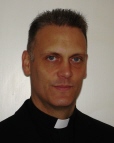
Short sermon preached at 8am Eucharist at St Alphege Church, Parish of Solihull
Sunday 27th September 2009, Back to Church Sunday
Readings for Back to Church Sunday, taken from Year C, Proper 26.
Isaiah 1: 10-18 2 Thessalonians 1: 1-4 & 11-12 Luke 19: 1-10
Quite often, when I meet people from the fringes of our church community I get the comment, “Of course you don’t have to go to church to be a good Christian!” Well, you won’t be surprised to know that vicar/curate types like me don’t particularly like this kind of comment; it reveals very restricted form of Christian life in which the worship and community life of the church are marginalised.
But if you wanted to try and prove from scripture that, “You don’t have to go to church to be a good Christian,” one of the texts that you might well go for is the reading from Isaiah that we heard this morning. The reading is from the eighth century BC. In it, God, through the prophet Isaiah, complains bitterly against his chosen people, the nation of Israel. And God’s particular complaint appears to be their worship. He says, “What to me is the multitude of your sacrifices? …Trample my courts no more; bringing offerings is futile; incense is an abomination to me. … I can’t endure your solemn assemblies with iniquity.” On the face of it God is complaining about their worship. He hates their worship. So there you have it; it is better not to worship. It is better to be a Christian who never comes to church! QED!
Well, no! To understand the passage in this way is to misunderstand it completely. If we read the passage carefully we will see that the real problem is the iniquity of the people, the evil of their doings. The real problem is their bad behaviour. If people behave badly then their worship becomes hypocrisy. It’s becomes like a child telling you that you are a wonderful Dad, while steeling your money. It becomes like a neighbour praising your good nature, while bringing a lawsuit against you. It becomes like a work colleague who is all sweetness and light, but who is quietly stabbing you in the back.
So the message of the passage is not, “Don’t Worship!” On the contrary, the message of the passage is, “Wash yourselves; make yourselves clean; …cease to do evil, learn to do good; seek justice … then your worship will be acceptable to God. Then God will listen to your prayers. Then God will not hide himself from you.”
And this might feel like a challenge too far. You try and do a favour for God by coming to church, and then God turns round and tells you that you need to get you whole life in order first. He tells us that we need to live a good life before we can worship. Well, we might as all well go home right now!
But no! This isn’t the message either, and we can see this in the story of Zacchaeus. Zacchaeus was a public sinner of the first order. He conspired with the Romans to take taxes off the Jews. His work strengthened the occupying Roman army and weakened the Jewish people. To the Jews he was the lowest of the low; a betrayer of God’s people, a traitor. And Jesus knew all this. Jesus knew that Zacchaeus’ whole lifestyle was embroiled in sin. And yet Jesus called to him. Jesus came to visit him. People criticised Jesus for visiting a sinner, but Jesus went all the same and stayed at Zacchaeus’ house.
And when Zacchaeus realised he was loved by Jesus, suddenly he found the capacity to change. Suddenly he could throw off his sin, he could give generously to the poor, he could make good fourfold the loses of anyone he had cheated. He remained a tax collector, but now a just one, and Jesus confirmed that salvation had come to his house.
When we come to church, we come to meet Jesus. It can be a bit awkward and uncomfortable, a bit like climbing a tree. But let’s listen to Jesus calling to us. Let’s listen to Jesus wanting to stay with us. Let’s know that Jesus loves us, and calls us to walk the path to heaven. And with our fixed on Jesus, we will find the grace to put aside our sinful ways. We will start to live lives worthy of our calling. Our worship will become pleasing to God. We will find ourselves able to walk the journey to heaven and to dwell always in the presence of God. Amen.
Showing posts with label Zacchaeus. Show all posts
Showing posts with label Zacchaeus. Show all posts
27 September 2009

15 March 2009
The Call of God - Leaving things behind
Sermon preached at 9.15am “Teaching Eucharist” at St Alphege, Solihull on Sunday 15th March 2009.
Lent 3, Year B, but with a special gospel reading from the Parish Lent Course. The Parish Lent Course follows the book Life Calling by Robert Warren and Kate Bruce (London, Church House Publishing, 2007).
Readings: [Psalm 40: 1-8] Luke 19: 1-10
In our Lent Courses so far we have been thinking about God’s call in our lives. We have seen how God’s call is very personal to each one of us. We have seen how God calls us from where we are right now. God’s call takes perfect account of the person we are with all our specific talents and attributes and virtues, and also with all our many sins and hurts and difficulties and weaknesses. God calls me “just as I am”.
But although God’s call starts with us “just as we are”, it leads us to somewhere new. It is a calling to draw closer to God. It is a calling to grow in love, because God is love. It’s a calling that draws us forward towards our true identity, towards being the person God created us to be. It is a calling to live in perfect harmony with God and with all the other citizens of God’s kingdom. It is a calling to holiness and to the life of heaven.
So it is that we can think of our lives as a journey, a journey towards heaven, towards complete fulfilment, towards discovering our true identity within the love of God. And how do we make progress on this journey. We make progress by following the call of God, by following God’s will for our lives. Now I think sometimes when people think about following God’s call, following the will of God, they think only about the big decisions in our lives. They think about choosing what subject to study at “A” level, or choosing what job or profession to enter, or choosing who or when to marry…And it is certainly true that these are important decisions that we must take in front of God and in accordance with God’s will for our lives. But responding to God’s call is not only about big decisions. Much more importantly it about our day to day lives and how we seek to grow in love and follow God’s will, God’s call, God’s prompting in each present moment of our lives. Most of the time, this is about little things. It is about being interested in what the children what to tell us about their day at school. It is about doing our daily work well, and out of love for God. It is about trying to see and love Jesus present, even in that person who is frankly rather annoying. It’s about giving ourselves enough rest and looking after our bodies. And if we practice following God’s call moment by moment in all the simple things in life, we build within ourselves the desire and capability to follow God’s call well when the big decisions come.
[This discipline of moment by moment seeking to understand and respond to God’s call in our lives does not mean we go about like some pre-programmed robot “Obey God’s will, obey God’s will”. God’s will perfectly fits the deepest aspirations of our humanity. We have huge freedom to choose what we do and how we do it. God values our creativity and want us to share with him in his work of creation. As St Augustine put it, “Love, and do what you like”. So long as you are seeking to love as God loves then you are within God’s calling, whatever you are doing.
And again although this practice of following God’s call in each present moment of our lives is a discipline, it is not meant to be burdensome or heavy. It is not like obeying the orders of some remote and far away despot who has no understanding of our local situation and no love for us. Rather when we follow God’s will we are following in the way of the person who created us, who loves us and who wants to share his life with us. We are walking in the way of our salvation. It is a discipline, but as Jesus says, “my Yoke is easy and my burden is light” (Matt 11:30)
Neither does obeying God’s will compromise our freedom. Our true freedom comes from acting as the person we were created to be. We think of the birds of the air as free, but they are not free to behave like fish. We think of the fish in the seas as free, but they are not free to behave like rabbits. Our true freedom comes from acting as God created us to act. Another thing that St Augustine said was that the service of God is perfect freedom, and this is quoted in the Lent Course prayer that will be familiar to those in the Lent Groups.]
Now let’s pause for a moment and think together about the story of Zacchaeus that we heard in our gospel reading today. We have a picture of Zacchaeus and four questions to consider.
Do you think Zacchaeus was following God’s call at the start of the story?
[No – he was a tax collector and rich. There is a suggested that he cheated people and he is publicly referred to as a sinner]
Do you think he was following God’s call by the end of the story?
[Yes, - he literally answered Jesus call and invited Jesus in. He gave generously from his wealth. He made good any past cheating. Jesus confirmed that salvation had come to this house.]
What had changed?
[He had repented of his sin, by putting God above his wealth]
What had enabled this to happen?
[The presence of Jesus. Jesus asks to come to his house, and Zacchaeus welcomes him. The story suggests that Zacchaeus gave away his money without further prompting from Jesus. But in the presence of Jesus, Zacchaeus knew this was the right thing to do, and he had the grace to do it.]
Now Zacchaeus we now made a big step on his journey towards God. He turned from his sin, and responded to Jesus. And this is something that we all have to do too. We all experience barriers and difficulties in responding to God’s call that arises from our sin and the sin of the world around us. What is sin? Sin is going against God’s will, and turning away from God’s love. Whether we like it or not we are all affected by sin. We all have our own tendency to sin, and we are all caused trouble because we grow up with sin in the people around us and because we live in a sinful society.
When we are turned away from God, and we are not putting God in the first place in our lives then we inevitably start to give other things priorities above God. Perhaps we start to prioritise our career, or the house or the car above God. Perhaps we start to prioritise our holidays or our hobbies or our clothes or our children above God. These things then become for us idols, things which take the rightful place of God in our lives.
The psalmist says that those who make idols, or who trust in them will become like them (Ps 115:8 and 135: 18). And it is certainly true that if we prioritise things ahead of God then we start to construct for ourselves a false identity. For example if we prioritise our career above God then we start to build our identity around success and money and worldly recognition. We become addicted to these things because our self understanding, our self esteem and our identity depend of them. But if these things do not come from God then they will sooner or later all pass away. They will be shown to be empty and futile and we will be put to shame (c.f. Is 42: 17 or Ps 97: 7). Similarly if we make celebrities our idol then our identity becomes very tied up with our clothes, and our image and our lifestyle. We become dependent on these things. They become addictions for us. Once again, if these things do not come from God then they soon pass away and the shameful truth of our compromised identity is revealed.
Now let’s pause for a moment and read about a C.S. Lewis character called Mrs Fidget. This is from page 70 of the Life Calling books, used by the Lent Groups.
Read Mrs Fidget from Life Calling, page 70.
Now let’s discuss, was Mrs Fidget’s work for her family a call from God, or an addiction.
Who thinks call from God? Why?
Who thinks an addiction? Why?
Well I suspect that it was a bit of both. I suspect that on the one hand God did call her to care for her family, but that means loving the family as they need to be loved, not loving them as I need to love them. I suspect that “living for her family” was also for Mrs Fidget a false identity, behind which she would hide many anxieties and past hurts. If she was more attentive to the call of God, he would have drawn her forward on her journey. There would have been uncomfortable and challenging moments when she would have needed to face up to those anxieties and hurts, but over time God would have healed her and delivered her into a renewed and greater identity.
So as we follow God’s call we will from time to time have to leave things behind. We will have to give up on parts of our old identity which did not come from God. Sometimes this can be a painful. Sometimes it can be very hard. Sometimes we might be tempted to fall into self-hatred or despair or self-pity, but this would be a mistake. We must entrust ourselves to the great mercy of God. God loves us as we are. If we can truly turn to God and accept his love, then we too can learn to love ourselves as we are. We can learn to accept the pain and suffering caused by sin and in this way, somehow, God overcomes our sin.
Let’s summarise. As we follow God’s call, and walk the journey towards heaven there will be times when God calls us to leave behind past behaviours or addictions or self understandings. Certainly we will be called to leave behind our sins, but sometimes there are even good things that we have to leave behind because God no longer wants them for us, their moment has past. This can be hard, but if like Zacchaeus, we place ourselves in the presence of Christ, then we will have the grace we need to move forward.
Subscribe to:
Posts (Atom)