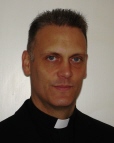
Sermon preached at 11am Parish Eucharist at St Mary the Virgin, Lapworth on Sunday 31st October 2010. A shortened version of this sermon was also preached at the 8.30am Said Eucharist and at 9.45am Holy Communion (BCP) at St Michael’s, Baddesley Clinton.
All Saints’ Sunday – Year C
Readings: Ephesians 1: 11-23 Luke 6: 20-31
So today we are celebrating All Saints Day, transferred from Monday 1st November and on Tuesday 2nd November we shall be remembering All Souls Day. So today we remember people who have died and who are holy, close to God and who dwell joyfully in the fullness of God’s presence. Then on Tuesday we remember all other people who have died with good will towards God but who we hesitate to think of as Saints.
Let’s think about this more carefully using the metaphor of a journey. We think of the Christian life as a journey towards God. The journey ends (or better: reaches fulfilment) when we come to share in the life of the Trinity in heaven. Walking the journey towards heaven is therefore about drawing ever closer to God. Christ is both the “the way” we must follow, the road, and the shepherd who leads us along it. As we draw closer to God we understand him better. We learn his ways and we learn to move in harmony with them. It is about being freed from sin, so that we can stand in the presence of God. It is about becoming pure in heart, so that we can see God.
Or we can use the metaphor of healing. As humans we were created in the image of God, and made good. Yet, somehow, we have been diseased by sin and our humanity has been compromised. We are now in a process of recovery. Healing is about overcoming sin and developing truly and fully into the human being that God created us to be. Christ is the both the healer and the example of perfect humanity to which we aspire. We can think of the church as the hospital in which we are treated and in which we convalesce. As we listen to the doctor in hospital, so we listen to God in the bible. As we receive medicines in a hospital, so we receive sacraments in the church. As we might receive surgery in hospital, so God sometimes cuts open and reorders our earthly lives. As physiotherapy or occupational therapy might prepare us for life outside the hospital, so the situations we face in our earthly lives prepares us for the life of heaven.
Or we might use the metaphor of an apprenticeship or professional training. Earthly life is a training ground in which we learn the skills that we need to live the life of heaven. Qualification in the trade is like attaining to the norms of heaven. Christ is the teacher, our trainer, and we seek to become like him. As trainees read their manuals, so Christians study the bible. As trainees get day-release in college, so Christians come to church once a week. As trainees listen to and copy the expert, so Christians listen to Christ and copy him.
Whichever of these metaphors we use, it is important to see our earthly lives as process of becoming more Christ-like, more God-like. This process is God’s work in us. When we remember “All Saints” we are thinking of people who have died and in whom this work of God shows a certain completeness or fulfilment; people who are ready and fit to be good citizens of heaven. When we think of “All Souls” we think or people who have died for whom this process of becoming holy is still work in progress. And if we think of the people who we have known who have died, probably most of them are more holiness-in-progress rather than holiness-realised, and so we especially remember them on All Souls day.
Now I said that this process of becoming holy is “God’s work in us”. It is important that we remember that, because we can only progress by God’s grace. We can’t achieve holiness in our own strength! But we certainly do have a part to play. It is crucially important that we respond positively to God’s love for us. We need to co-operate with God’s grace in our lives. We need to want the things that God wants for us. The desire for holiness must grow within us. We need to pray for this. We need to order our daily lives, our days and our minutes, according to God’s will and purpose for us.
And this process of becoming holy, of becoming saints, is very important and often we don’t take it seriously enough. Do we think of ourselves as saints in the making? Do we think of ourselves as drawing ever closer to God? Do we think of ourselves as recovering from sin and becoming perfect, as our heavenly father is perfect? Do we think of ourselves saints in training? Well we can and should think of ourselves in this way. Ultimately we must go to heaven or hell; we are either with God or against him. It seems to me sensible to walk firmly and boldly towards God and towards the life of heaven!
And it has to be said that we Christians can often seem woefully negligent in this respect. We tend to drift along wanting to think of ourselves as “good people” but not as “holy people” or saints. I was interested to read something [“Finding Happiness” by Christopher Jamison, London: Weidenfield & Nicolson 2008] about the seven deadly sins. Apparently at one stage there were eight deadly sins. The one that somehow got lost is “acedia” which means spiritual carelessness or apathy. Certainly acedia seems a terrible problem for many Christians in these present times.
So let’s not suffer from this spiritual apathy of acedia. Let’s be attentive to God’s work in us. Let’s want it and pray for it. Let’s co-operate fully with it. Let’s thirst for the life of heaven. Let’s trust in its goodness and power. As Paul said in our reading today, “…may you know the hope to which [Christ] has called you, what are the riches of his glorious inheritance among the saints”. In this way we can make progress on the journey, we can be healed and made whole, we can be trained up for the life heaven, and these are things of everlasting value. They are real riches. Let’s be keen to receive them!
Showing posts with label saints. Show all posts
Showing posts with label saints. Show all posts
31 October 2010

16 August 2009
The Blessed Virgin Mary
Sermon preached at 11am Eucharist at St Alphege, Solihull
Sunday 16th August 2009, The Blessed Virgin Mary
Readings: Revelation 11: 19-end 12: 1-6 & 10 Galatians 4: 4-7 Luke 1: 46-55
Today we celebrate the festival of the Blessed Virgin Mary, transferred from its normal date of 15th August. There are many different festivals in the churches year when we remember different events in Mary’s life, but this is perhaps the festival where we think especially of her. It is a very important date; 15th August is a public holiday in many countries because of this festival.
And why is it so important to have a special day set aside for Mary? Well first of all we have to acknowledge that not all Christians think it is important. More protestant Christians tend to play down the significance of the saints and encourage us to focus on Christ and on God. But this kind of thinking is relatively modern. It has only been around in the church for 500 years or so. The much older and much more widely established tradition of the wider Church has been to place great importance on the saints and on the BVM in particular. And why is this?
Well I believe the saints are important because they show us what can and should be happening to us. God calls all of us to holiness (Matt 5: 48, Rom 6: 19-23, Eph 4:23, 1Peter 1:15-16). We are all called to become saints, to take up our own special place in heaven, fulfilling our own special function for the good of all.
But the holiness that we aspire to does not come from our own resources. Our human nature can be very base and ordinary. Rather our holiness comes from Jesus, it is a sharing in the holiness of God (Heb 12:10). We are co-heirs with Christ, destined to inherit his glory (Rom 8:17). So this pattern of shared life in Christ becomes very important and it is the saints who show us how to do it.
Looking at the saints, and studying their lives helps us to understand how all this can come about in practice. There are many, many saints and their lives are all very different. But some of them have personalities that we can identify with. Some of them have passed through situations that we can recognise. There are some extremely inspiring examples here.
And the Blessed Virgin Mary is probably the most inspiring of them all because her co-operation with God is so perfect, so intimate and so very important to the salvation of the world. I would like to highlight some of her qualities in particular.
The first quality is her readiness to follow God’s plans. At the annunciation Mary famously says, “Here am I, the servant of the Lord; let it be with me according to your word” Luke 1: 38. With great simplicity and humility she agrees to go along with God plans and to do her part, at great personal risk. Through her, Jesus is brought into the world, and by her Jesus is brought up and educated in the values of family life.
A second quality is her readiness to suffer with Jesus. Unlike most of the disciples, who ran away when Jesus was crucified, Mary stood near the foot of the cross and suffered in her own way alongside Jesus until he died. She was not able to do anything practical to help Jesus in that situation, but she stayed there in solidarity with him. We are left with a sense that she has a mother’s love, a great big heart overflowing with motherly love. She is ready to care for and to suffer for all her children, and in a certain sense this includes all of us.
A third quality is her ability to persuade Jesus to act. We see this most obviously at the wedding in Cena in Galilee (John 2: 1-11). The family who have run out of wine approach her. She approaches Jesus, and Jesus gives a couple of good reasons for doing nothing, but in the end he cannot refuse his mother so he performs an extraordinary miracle creating the equivalent of about 800 bottles of wine! And many, many Christians repeat this pattern in their prayers. Rather than pray directly to Jesus or to God, they pray to Mary, and invite Mary to somehow sort things out with God. And for reasons that are hard to understand this does seem to work. It seems to be a very powerful way of praying and it continues to be extremely popular.
Now I have to admit that, in the past, I personally have had a bit of a problem with this. I used to think that it must surely always be better to pray directly to God. But as I have got older I have come to realise that life doesn’t necessarily work like this. The kingdom of heaven is not just about God; we all share in it. Things happen by the mutual love and co-operation of a great many angels and saints. Just as we all have different roles in our local church, so different angels and saints have different roles in the life of heaven. Now you might be best mates with Fr Tim, so when you want a Baptism Information Pack sending out you telephone Fr Tim and ask for one. Well, Fr Tim, however pleased he is to talk to you, is eventually going to pass that request on to Paula in the Parish Office, because it is Paula who does that job of sending out Baptism Information Packs on behalf of Fr Tim and the whole parish. And if you were to regularly ring up Fr Tim asking for Baptism Information Packs he would certainly tell you to start telephoning Paula directly, and the truth is that the whole business would work much quicker and more efficiently if you did go directly to Paula. Well it is my belief that there are many things that we can ask for in prayer that actually get sorted quicker and more cleanly if we address them directly to Mary. That in no way undermines the authority of God. Rather it properly and respectfully recognises the way that God as ordered things, and the way that he wishes relationships to work. Also Mary knows how to approach God and to ask for things. So, it seems to me that very often God would prefer us to communicate in pray directly with is his servant Mary, and in my experience this does seem to work.
A forth quality of Mary is her ability to get things done very quietly and with no fuss and without blowing a big trumpet to announce all that is happening. This is to do with humility and simplicity and beauty and love. She has the absolute opposite attitude to our current day world where everybody has to seek to raise their own profiles, to publicise and promote their activities and to draw attention to themselves by shouting loader and more persistently than the other people. This very low key approach of Mary’s makes it very easy for us to overlook her, to fail to take her seriously, to judge her by the standards of this world. There is something very quiet and recessive about Mary, but in the kingdom of heaven this is not a weakness, rather it is a way of serving others that we are called to emulate.
So I would like to encourage all of us to develop our own personal relationship with Mary, by praying to her. We don’t worship Mary, because she is not God, but we do venerate her, because she is in very close relationship with God. She is a person and we can talk to her, in prayer, just as we can talk to any other person. Let’s talk to her, trusting in her motherly love for us. And let’s become students of all the relationships in heaven, so that when we ask for things in prayer we know who to ask, and how to ask, and so our prayers can become more effective. Amen.
Subscribe to:
Posts (Atom)