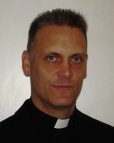
Short sermon preached at 8am Eucharist at St Helen’s Church, Solihull
Sunday 24th January 2010, Epiphany 3
Readings: Nehemiah 8: 2-3,5-6,8-10 1Corinthians 12: 12-31a Luke 4: 14-21
The story we heard in our gospel reading today comes right from the very start of Jesus’ public ministry. It is the first public teaching of Jesus recorded in Luke’s gospel. And Jesus uses this occasion to announce his manifesto, to declare publicly what he is all about, what he is going to do. He says he has come, “…to declare good news to the poor…to proclaim release to the captives…recovery of sight to the blind…to let the oppressed go free…” Jesus is reading from Isaiah 61, but it is interesting that Jesus chooses to define his ministry in this way. We might perhaps expect him to say he has come to reconcile humanity to God, or to teach us to walk the road to heaven, or to bring about the kingdom of God. But no, Jesus chooses to emphasise the social revolution which is implicit in the gospel message. The gospel is good news for the poor, the captives, the blind and the oppressed.
But it is not immediately clear how this social revolution comes about. How is the gospel good news for the poor, how are the captives released? Well one suggestion has been “Liberation Theology”. This was an attempt to import some socialist and communist ideas into the gospel so as to bring about this revolution. The trouble was Liberation Theology was not always true to the whole gospel, which also urges us to respect legitimate worldly authority and demands that we love the rich as well as the poor. Liberation Theology has now mainly passed away.
It seems to me that a much more realistic, more demanding and ultimately more complete model for the Christian social revolution arises from the teaching that we heard from St Paul in our epistle reading today. The Church is the body of Christ. We are all members of this same body. When one is honoured, all are honoured. When one is hurt, all are hurt. All have different roles and purposes in the service of the whole body. Some might be thought of as higher or greater, so lower and less respectable, but we cloth with greater honour the less honourable members and afford greater respect to the less respectable. It makes no sense for the ear to try to be an eye or to worry that it is less than the eye, or for the head to reject the feet. As part of this body the poor are uplifted, the captives freed, the blind receive their sight. The churches social revolution is realised when we fully live out this reality of all being part of the body of Christ.
So it is a question of living this better, in a more complete way, and this is the road to fulfilment both for individuals and communities. So I would like to offer a few tips on living better as one body; the body of Christ.
First of all, we need to be mindful that the human body is conscious that it is one body because there is sharing and circulation. Blood flows round to all the cells, bringing oxygen and removing waste. Nerves transmit commands around the whole body and ensure that the whole body is aware of what is being sensed in one part. Well we too as church need sharing and circulation. News, good and bad, must be shared and rejoiced in or wept over together. Hopes and fears, needs and resources must all be shared and owned by all. Sharing is a key skill. It is through sharing that Christ gives to us his eternal life.
Secondly, to bring about this sharing we need to grow in the virtues. We need to be generous in giving to others. We need to be humble and simple enough to receive from others. Certainly we need patience because sharing never works out quite as we first hope. And the way to grow in the virtues is to practise, especially to practice sharing effectively.
Thirdly we need love. Immediately after this teaching Paul spends the whole of 1 Corinthians 13 talking about love. Love is patient, love is kind… the famous passage that is often read at weddings. And just as a couple need love if they are to be one family, so the church needs love if it is to be the body of Christ and to share effectively.
So these are my tips for realising the Church as the body of Christ, and realising the social revolution of the gospel. We need lots of sharing and circulation. We need to grow in the virtues. Above all we need to grow in Love. Amen.
Showing posts with label social transformation. Show all posts
Showing posts with label social transformation. Show all posts
24 January 2010

20 December 2009
Magnificat
Sermon preached at St Alphege, Solihull at the 9.15am Eucharist on Sunday 20th December 2009 – Advent 4 Year C. A shorter version was also preached at St Catherine's, Catherine-de-Barnes at 11am.
Readings Micah 5: 2-5a Hebrews 10: 5-10 Luke 1:39-56
If you are one of those people who simply can’t stand looking at other people’s holiday photos, then now is the moment to bury your head in your hands. As you probably know I was went on a pilgrimage to the Holy Land in November and I came back with 208 photos. Well, before you all run for the doors, I am not going to show all 208 to you now. I am going to show you three! So that should be pretty painless.
Here’s the first one. This is the Church of the Visitation at Ein Karem, on the western outskirts of Jerusalem. It is the site traditionally associated with Mary’s visit to Elizabeth that we heard about in our gospel reading today. Now you can’t really see it from the photo, but the site is about three quarters of the way up a steep mountain side. It seems that Zachariah and Elizabeth had two houses. One here, high in the hills, for the summer, and another one lower down in the valley for the winter. The church on the lower site is associated with the birth of John the Baptist, this church higher up is associated with the Visitation. There is also a tradition that when King Herod sent his soldiers to murder all the baby boys under two years old, that Elizabeth hid the baby John the Baptist here. The rocky hillside somehow swallowed them up and concealed them from the soldiers.
Now we have to recognise that there is a great deal of uncertainty associated with all these traditions. Many of the stories come from an ancient book called the Protevangelium of St James. The Church has never regarded this book as authoritative, and which has never been counted as one of the books of the bible. Also the archaeology is uncertain. Unquestionably, the remains of ancient churches have found on these sites, but the tradition of Christian worship here has been broken for many centuries, on three different occasions; first by the Romans, then by the Persians and then by the Ottoman Empire.
But despite the uncertainties, I found that this place did draw me into the mysteries of the Visitation. In particular I found the artwork inspiring. There was this picture in the roof vaults of a lower chapel. Look how the two women are being filled with the Holy Spirit. Also notice how the ground on which they are standing is bursting with grass and trees, while in other places it looks arid and dry.
Then there is this sculpture. Mary is on the left, in the first months of pregnancy, and Elizabeth on the right, in the last. It could all be very awkward. Elizabeth was really far too old to be pregnant, and Mary really too young. Then there is the problem that Mary is not married, and the worry of what Joseph will say when he finds out that his betrothed is pregnant. Yet despite these difficulties there seems to be a real closeness between the two women.
Our gospel reading tells us what happens when Mary arrives at Elizabeth’s house. First of all, when Elizabeth hears Mary’s greeting the child in her womb, John the Baptist, leaps for joy. Elizabeth makes a big speech, declaring Mary blessed, and recognising that the child Mary carries is the Lord. She says that Mary is blessed because she believed that what the Lord had promise her would come to pass.
Then Mary makes this extraordinary speech, which we call the Magnificat. We repete it everyday in this church at evening prayer. It starts “My soul magnifies the Lord, and my spirit rejoices in God my saviour.” If you look at the photo again, you will see on the wall behind the sculpture lots of plaques with writing on them. Each of the plaques has the words of the Magnificat in a different language. There are dozens of plaques in the courtyard and it is quite fun to look around them all until you find the English one. When our group arrived in the courtyard an American group were also there. They found the English plaque before we did, and one of them read it out very loudly in a powerful American ascent, “MY SOUL MAGNIFIES THE LORD…”
I couldn’t help but be struck by the contrast between the way the Magnificat was being read, and what its words seem to mean. The words of the Magnificat speak of the faithfulness of God, his patience and his mercy. They speak of the lowliness of Mary and of her blessedness. Perhaps it is uncharitable to say it, but the booming voice seemed to speak of earthly power and self-sufficiency. And nowhere was the contrast stronger than where the Magnificat says of the Lord,
He has brought down the powerful from their thrones
and lifted up the lowly;
he has filled the hungry with good things
and sent rich away empty.
And these words are such a challenge to us in the western world. We might not have the wealth of the Americans, but we do share in a prosperity which is unprecedented in history and which appears unsustainable. The words remind us that there is a complete social transformation implicit in the gospel message. We are seeking to build a world in which we administer our wealth with generosity for the good of all; we exercise our power and influence for the common good. It’s a world in which the sharing of problems and opportunities becomes so well done that it become impossible to distinguish the rich from the poor.
So how do we play our part in this social transformation? How do we build the Kingdom of Heaven? Well, first of all, let’s remember that it is God’s work not ours, so our first contribution is to do what God wants from us, nothing more and nothing less. And very often this will be very simple things; listening to the person next to us, sharing some gift, being ready to lose our own aspirations for the sake of the others. We can treat our daily lives as a training ground in which we can grow in patience and generosity and in trust in God. Certainly there will be problems and failures but if we keep on training we build up treasure in heaven. Sooner or later this has to flow over from heaven to earth and transform everything. Let’s be like Mary, blessed because we believe that what the Lord has promised will come to pass. And let’s play all our part so that it comes to pass sooner rather than later! Amen.
Readings Micah 5: 2-5a Hebrews 10: 5-10 Luke 1:39-56
If you are one of those people who simply can’t stand looking at other people’s holiday photos, then now is the moment to bury your head in your hands. As you probably know I was went on a pilgrimage to the Holy Land in November and I came back with 208 photos. Well, before you all run for the doors, I am not going to show all 208 to you now. I am going to show you three! So that should be pretty painless.
Here’s the first one. This is the Church of the Visitation at Ein Karem, on the western outskirts of Jerusalem. It is the site traditionally associated with Mary’s visit to Elizabeth that we heard about in our gospel reading today. Now you can’t really see it from the photo, but the site is about three quarters of the way up a steep mountain side. It seems that Zachariah and Elizabeth had two houses. One here, high in the hills, for the summer, and another one lower down in the valley for the winter. The church on the lower site is associated with the birth of John the Baptist, this church higher up is associated with the Visitation. There is also a tradition that when King Herod sent his soldiers to murder all the baby boys under two years old, that Elizabeth hid the baby John the Baptist here. The rocky hillside somehow swallowed them up and concealed them from the soldiers.
Now we have to recognise that there is a great deal of uncertainty associated with all these traditions. Many of the stories come from an ancient book called the Protevangelium of St James. The Church has never regarded this book as authoritative, and which has never been counted as one of the books of the bible. Also the archaeology is uncertain. Unquestionably, the remains of ancient churches have found on these sites, but the tradition of Christian worship here has been broken for many centuries, on three different occasions; first by the Romans, then by the Persians and then by the Ottoman Empire.
But despite the uncertainties, I found that this place did draw me into the mysteries of the Visitation. In particular I found the artwork inspiring. There was this picture in the roof vaults of a lower chapel. Look how the two women are being filled with the Holy Spirit. Also notice how the ground on which they are standing is bursting with grass and trees, while in other places it looks arid and dry.
Then there is this sculpture. Mary is on the left, in the first months of pregnancy, and Elizabeth on the right, in the last. It could all be very awkward. Elizabeth was really far too old to be pregnant, and Mary really too young. Then there is the problem that Mary is not married, and the worry of what Joseph will say when he finds out that his betrothed is pregnant. Yet despite these difficulties there seems to be a real closeness between the two women.
Our gospel reading tells us what happens when Mary arrives at Elizabeth’s house. First of all, when Elizabeth hears Mary’s greeting the child in her womb, John the Baptist, leaps for joy. Elizabeth makes a big speech, declaring Mary blessed, and recognising that the child Mary carries is the Lord. She says that Mary is blessed because she believed that what the Lord had promise her would come to pass.
Then Mary makes this extraordinary speech, which we call the Magnificat. We repete it everyday in this church at evening prayer. It starts “My soul magnifies the Lord, and my spirit rejoices in God my saviour.” If you look at the photo again, you will see on the wall behind the sculpture lots of plaques with writing on them. Each of the plaques has the words of the Magnificat in a different language. There are dozens of plaques in the courtyard and it is quite fun to look around them all until you find the English one. When our group arrived in the courtyard an American group were also there. They found the English plaque before we did, and one of them read it out very loudly in a powerful American ascent, “MY SOUL MAGNIFIES THE LORD…”
I couldn’t help but be struck by the contrast between the way the Magnificat was being read, and what its words seem to mean. The words of the Magnificat speak of the faithfulness of God, his patience and his mercy. They speak of the lowliness of Mary and of her blessedness. Perhaps it is uncharitable to say it, but the booming voice seemed to speak of earthly power and self-sufficiency. And nowhere was the contrast stronger than where the Magnificat says of the Lord,
He has brought down the powerful from their thrones
and lifted up the lowly;
he has filled the hungry with good things
and sent rich away empty.
And these words are such a challenge to us in the western world. We might not have the wealth of the Americans, but we do share in a prosperity which is unprecedented in history and which appears unsustainable. The words remind us that there is a complete social transformation implicit in the gospel message. We are seeking to build a world in which we administer our wealth with generosity for the good of all; we exercise our power and influence for the common good. It’s a world in which the sharing of problems and opportunities becomes so well done that it become impossible to distinguish the rich from the poor.
So how do we play our part in this social transformation? How do we build the Kingdom of Heaven? Well, first of all, let’s remember that it is God’s work not ours, so our first contribution is to do what God wants from us, nothing more and nothing less. And very often this will be very simple things; listening to the person next to us, sharing some gift, being ready to lose our own aspirations for the sake of the others. We can treat our daily lives as a training ground in which we can grow in patience and generosity and in trust in God. Certainly there will be problems and failures but if we keep on training we build up treasure in heaven. Sooner or later this has to flow over from heaven to earth and transform everything. Let’s be like Mary, blessed because we believe that what the Lord has promised will come to pass. And let’s play all our part so that it comes to pass sooner rather than later! Amen.
Subscribe to:
Posts (Atom)