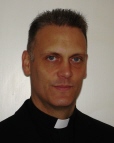
Sermon preached at 11am Parish Eucharist at St Mary’s Lapworth on Sunday 16th January 2011. A shorter version of this sermon was also preached at the 8.30am Said Eucharist and at St Michael’s Baddesley Clinton’s 9.45am Holy communion (BCP).
Second Sunday after Epiphany – Year A
Readings: 1 Corinthians 1: 1-9 John 1: 29-42
The Epiphany season is all about Jesus being revealed or shown to the people, so that people can begin to understand who he really is. In last week’s gospel reading (Matt 3: 13-17) we heard the story of the Baptism of Christ, as it is described in Matthew’s Gospel. You will recall that when Jesus came up out of the water the Spirit of God, in the form of a dove descended and came to alight on Jesus. This revealed Jesus to be the Messiah, the one anointed with God’s spirit. And then you will recall that a great voice proclaimed, “This is my Son the Beloved, with whom I am well pleased.” A by this voice Jesus was revealed to be “Son of God”.
This week’s gospel reading came from St John’s gospel, and it records the things that John the Baptist said to his own disciples, on two different occasions when he saw Jesus walk by. And for the most part John the Baptist talks about the baptism of Jesus. He says, “I came baptising with water…that he might be revealed to Israel.” John talks about seeing the Spirit descend onto Jesus, and how significant that is. Also John specifically testifies that Jesus is Son of God. But what is very striking is the title that John the Baptist uses for Jesus when he sees him walk by. He doesn’t use the title “Messiah” (or Christ or anointed one, which mean the same thing.) He doesn’t use the title “Son of God” despite his testimony that Jesus is “Son of God”. Rather the title he uses is “Lamb of God”. We hear him say, “Here is the Lamb of God who takes away the sin of the world!” And then the second time she says, “Look, here is the Lamb of God”.
This new title which John the Baptist gives Jesus, “Lamb of God”, is very mysterious. It is hard to understand but it crops up several times in the New Testament. It has been incorporated into the liturgy, and we shall hear it again, twice, just before we receive Holy Communion. So what is the title “Lamb of God” all about?
Well, in the Jewish tradition that Jesus was born into, a lamb was sin offering, used in temple sacrifices. We can read in the book of Leviticus all the detailed rules and regulations about sin offerings. If a member of the community sinned then that person had to bring a lamb to the priest. It had to be a good lamb, without blemish and valuable. The lamb would be slaughtered and the priest would take some of the blood on his finger and mark it on special parts of the altar. The rest of the blood would be poured out at the foot of the altar. The priest would cut off the fat from the lamb and burn it on the altar. Through this ceremony the person was forgiven their sins and their relationship with God and the community was restored.
So when we think of Jesus as Lamb of God, we are thinking of him as someone who was killed, so as to make good for our sin, to restore our relationship with God. Of course this is the great sacrifice that Jesus made for us, once for all time, upon the cross. And it is a sacrifice that we remember and are drawn into through our participation in the Eucharist and especially when we receive Holy Communion.
Now I don’t know about you, but I have always found talk of sacrifices very difficult. Lots of unpleasant pictures appear in my mind; the killing of animals, priests with sharp knives, blood and fire and smoke. It all seems very unpleasant and I am always very glad that that animal sacrifice is not part of our religion.
Well animal sacrifices might not be part of our religion, but in Christianity we certainly do talk about sacrifice. It is not always easy to understand what this means. When I was studying theology I was very struck to read St Augustine of Hippo’s definition of a sacrifice. He said that a true sacrifice is “any action which is designed to unite us to God.” “Any action which is designed to unite us with God.” I was amazed by this idea, and I have spent a lot of time pondering it over.
I find it very helpful because it really opens up the possibility of our daily lives being lived as a sacrifice, as an action designed to unite us with God. For example, according to St Augustine, our coming to church can be a sacrifice. Saying our prayers can be a sacrifice. Reading the bible can be a sacrifice. Anything we do with the intention of drawing closer to God is a sacrifice. And this can include so many things. In fact, if we love, it can include everything that we do. Loving our neighbour draws us closer to God. Sweeping the floor with love draws us closer to God. Listening to the teacher with love draws us closer to God. Typing on the computer with love draws us closer to God. Even resting after lunch, if it is truly done with love, draws us closer to God.
And at this point I noticed something. There is always a cost involved in a sacrifice. In Old Testament times it was the cost of the lamb. In fact the regulations in Leviticus had a special provision for people who could not afford a lamb. They were to offer two doves or young pigeons instead. But even today our little sacrifices have a cost. Coming to church costs us part of our Sunday morning. Saying our prayers costs us time and energy and requires discipline. The same is true of reading the bible. There is a cost involved in loving our neighbour. We all know how difficult it is to love people who we don’t instinctively like. Sweeping the floor with love requires that we concentrate and do it well. It requires that we are patient with the people who get in the way, or who never say thank you after it is done. Even resting after lunch, if it is done with love, requires us to be attentive to the needs of the people around us, so there is some cost however small.
But you have probably noticed, certainly I have, that whenever we try to draw closer to God, we quickly encounter limitations and barriers within ourselves. “I want to go to church, but I don’t like the service.” “I want to say my prayers but I am angry with God.” “I want to read the bible, but I can’t be bothered.” “I want to love my colleague at work but I find him so boring.” “I would sweep the floor out of love, but I just need to get it done.” “I would rest after lunch with love, but someone has upset me!”
We are all too painfully aware of the many limitations, temptations, distractions and barriers that prevent us from drawing closer to God. Sometimes they are quite overwhelming and in our own strength we can do nothing about them. But Jesus has already overcome these things. His sacrifice on the cross allows us to draw closer to God, despite our limitations and inadequacies, sometimes even because of them! So when we hit these barriers and limitations within ourselves, let us not be discouraged. Let us simply hold them before Jesus in prayer, counting on the grace of his death and resurrection to help us.
And there is no better time to do this, than when we receive Holy Communion. Through the Eucharist we remember Christ’s death on the cross and its grace is made present to us. When we receive Holy Communion we receive the presence of Jesus and that grace right inside our bodies. So, as we come up to receive Holy Communion today, let us give thanks for Jesus and for the sacrifice that he made for us on the cross. Let us offer up to Jesus all those things that prevent us from drawing closer to God. Let us entrust them to his mercy, to the great mercy of the Lamb of God who takes away the sin of the world.
Showing posts with label Lamb of God. Show all posts
Showing posts with label Lamb of God. Show all posts
16 January 2011

20 January 2008
The Lamb of God
Preached at St Alphege Church on Sunday 20th January 2008 at 8am Eucharist
Second Sunday after Epiphany, Year A
Readings: Isaiah 49:1-7 1 Corinthians 1:1-9 John 1: 29-42
In today’s Gospel we hear John the Baptist’s testimony about Jesus. He says, “Here is the Lamb of God who takes away the sin of the world!” John the Baptist explains that Jesus is the one for whom he has been preparing the way. He testifies that, “I saw the spirit descending from heaven, like a dove, and it remained on him. I myself did not know him, but the one who sent me to baptise with water said to me, ‘He on whom you see the Spirit descend and remain is the one who baptises with the Holy Spirit.’ And I myself have seen and have testified that this is the Son of God. The next day he sees Jesus again and says again, “Look, here is the Lamb of God.”
So John is as clear as he can be that Jesus is the Son of God, the one on whom the Holy Spirit rests, the one for whom John has been preparing the people. He also twice calls Jesus “Lamb of God”.
The “Lamb of God”. It is a rather strange title, but one that we use a lot. In this service we have already used the phrase once in the Gloria. We will repeat it three times when we say the Agnus Dei after the breaking of the bread, and I shall repeat it again at the invitation to communion. (Agnus Dei is of course Latin for Lamb of God).
When John the Baptist says, “Here is the Lamb of God who takes away the sin of the world!” it is likely that he is thinking of the sin offerings stipulated in the Law of Moses. It is fascinating to read in the book of Leviticus (chapters 4 and 5) the procedures for sin offerings. If a member of the community sinned then that person had to bring a lamb to the priest. It had to be a good lamb, without blemish and valuable. The lamb would be slaughtered and the priest would take some of the blood on his finger and mark it on special parts of the altar. The rest of the blood would be poured out at the foot of the altar. The priest would cut off the fat from the lamb and burn it on the altar. Through this ceremony the person was forgiven their sins and their relationship with God and the community was restored.
Animal sacrifices now seem a very antiquated idea both for Jews and for Christians, but the idea of sacrifice is still very relevant. Christianity is founded on the sacrifice that Christ made for us on the cross. When we celebrate the Eucharist we make a memorial of that sacrifice, which helps us to receive its benefits, even today. St Augustine defined a sacrifice as “any action which is designed to unite us to God.” “Any action which is designed to unite us with God.” I find this an astonishing definition and I spend a lot of time pondering it.
“Any action which is designed to unite us with God.” This means that, according to St Augustine, our coming to church can be a sacrifice. Saying our prayers can be a sacrifice. Reading the bible can be a sacrifice. Anything we do with the intention of drawing closer to God is a sacrifice. And this can include so many things. In fact, in any present moment of our lives, if we seek to do well what God wants from us in that moment then we can draw closer to God in that moment; we can live that moment as a sacrifice. It might be sweeping the floor. It might be typing on the computer. It might be listening to someone. It might be helping someone. It might be resting or playing or catching up with the family. All these things, if they are done in accordance with what God wants, and done for love of God, all these things can draw us closer to God, all these things can be a sacrifice.
And there is a sense in which they are a sacrifice, because there is always cost involved. In the Old Testament sacrifices it was the cost of the lamb. In fact the regulations in Leviticus had a special provision for people who could not afford a lamb. They were to offer two doves or young pigeons instead. But even today our drawing closer to God has a cost. Coming to church costs us part of our Sunday morning. Saying our prayers costs us time and energy and requires discipline. The same is true of reading the bible. Following what God wants from us in each present moment also has a cost. We have to focus on doing that thing properly and well, for love of God, be it sweeping the floor, typing on the computer or listening to someone or helping someone. Certainly there can be a big cost involved in loving our neighbour, especially when it is someone we do not instinctively like. We have to be attentive to our neighbours needs, being prepared to put aside our own agenda.
So, as we reflect on Jesus, the Lamb of God, let us give thanks for his sacrifice on the cross, that drew humanity closer to God. Let us give thanks for the Eucharist which draws us closer to God each time we share in it. Let’s try to draw closer to God in each present moment of our lives, by seeking to do well what God wants from us in that moment. And let’s not be surprised if there is a cost or an effort involved. We can think of that as our own very small contribution to lay alongside the big sacrifice made by the Lamb of God.
Subscribe to:
Posts (Atom)