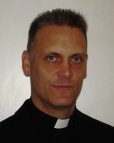
Sermon preached at 11am Eucharist at St Alphege, Solihull on Sunday 8th March 2009
Lent 2, Year B, but with a special reading from the Parish Lent Course. The Parish Lent Course follows the book Life Calling by Robert Warren and Kate Bruce (London, Church House Publishing, 2007).
Readings: Genesis 1: 26-31 Mark 9: 1-2-9
Many of you will be familiar with the Life Calling course used by the Parish Lent Groups this Lent. In week two of the Lent the course encourages us to reflect on the relationship between our creation and God’s calling to us. To do this the course invites us to listen to the part of the creation story from Genesis 1, which we heard as our first reading today. This creation story does not provide many details about the way in which humanity was created, but it does offer some profound reflections on what human beings are, and on how they relate to God. Above all, the story affirms that human beings are created in the image of God. Created in the image of God! What does this mean?
Well it means that there is something about us which is like God, or at least has the potential to be like God. I once read a fascinating commentary on this passage which noted that in verse 26 of the story, God resolves to make humanity in his own image and likeness. But when God actually creates human beings in verse 27 we are told that they are created in the image of God, but nothing is said about the likeness of God. The commentator’s explanation of this point was that although humanity was created in the image of God, we still need to be nurtured and to grow and to develop in order to attain the likeness of God. It is a bit like a baby, who is born the image of its parents, but who still needs to grow up in order to become the likeness of his parents. Or perhaps it is like an apple pip, which already contains the blueprint or DNA of an apple tree, but still has to be planted and watered and to grow, before it attains the likeness of an apple tree.
I think this understanding of our creation has much to commend it because it suggests that there is a profound link between what we are now, as we have been created, and what we are destined to become. It recognised that God is always calling us, drawing forward, seeking to move us forward towards our destiny in the likeness of God. This call of God is uniquely personal to each one of us. Importantly, it reflects both the person we already are, and the person we shall be.
For example, let’s think about God’s call to Abram or Abraham, as he later becomes, in Genesis chapter 12. God calls Abraham to leave his country and his father’s house and to go to a new land that God will show him. God promises to make Abraham the father of a great nation and to bless him richly, such that through him all the families on earth will be blessed.
Now this call of God to Abraham reflects many aspects of who Abraham already is. It reflects the fact that Abraham’s father Terah had already moved his family away from their origins in Ur and to Haran, which is half way round the fertile crescent, towards the land of Canaan, the land that God promises to give to Abraham. God’s call to Abraham also reflects that fact that Abraham is already master of a household, so he has the freedom to make the kind of choice that God is requiring.
On the other hand this call of God is also about what Abraham is destined to become. Abraham is called to be the father of a great nation. Now at the moment when God makes this call to Abraham it has to be said that being the father of a great nation looks very unlikely. Abraham has no children. He is seventy five years old. His wife Sarai is not much younger and she is barren. Abraham’s anxiety about his lack of children becomes an on-going theme of the story, but we know, that in the end that Abraham does in deed become the father of several great nations. God’s call brings new dimensions to Abraham’s life, dimensions which would have been quite impossible to predict at the time of his call.
Notice however that while God’s call draws Abraham forward towards a wonderful destiny, it also requires Abraham to leave certain things behind. He has to leave behind his father’s house and all the securities of Haran. Later in the story he has to leave behind his nephew Lot, and later still his slave wife Hagar and his son by her Ishmael. These are costly losses to Abraham, but it is characteristic of God’s call that we have to leave things behind in order to take on the new things that God wants for us.
Now it is unlikely that any of us have a calling as important as Abraham’s, but we can all be certain that God does call us. The call is directed to us, exactly as we are right now, with all our sins and weaknesses and failings as well as our few good qualities and our particular talents. The call draws us towards the fullness of life in heaven, where we will be more in the likeness of God, more like Jesus (1 John 3: 2).
So how, in practice, do we follow God’s call? Well I believe that the best way to do this is to always practice following God’s promptings in each present moment of our lives. God prompts us through his commandments, especially his commandment to love other people. Growing in love is, after all, growing in the likeness of God. Sometimes God prompts us through the things people ask us to do. Sometimes, if we listen, we can hear God prompting us deep in our hearts. In most present moments of our lives the things that God want from us are very simple; to concentrate properly when driving, to listen properly to those who speak to us, to help with household jobs, to set aside time for prayer, to take care of our bodies and rest properly. However by doing these things well, for love of God and for love of the people around us, we build a discipline of listening to the prompting of God and following his call, moment by moment through are lives. And if we do this in all the small things of life we can be confident that we have the training and discipline to do it when the bigger decisions come.
Our gospel reading today was the story of the transfiguration. Jesus’ disciples saw Jesus in his heavenly glory. This is the glory which we are called to share (Romans 8: 17, 2 Thessalonians 2: 14). Let us try to follow the promptings of God in each present moment of our lives. In this way, moment by moment, we follow God’s calling and will realise the great destiny he has promised us.
Showing posts with label present moment. Show all posts
Showing posts with label present moment. Show all posts
08 March 2009

20 January 2008
The Lamb of God
Preached at St Alphege Church on Sunday 20th January 2008 at 8am Eucharist
Second Sunday after Epiphany, Year A
Readings: Isaiah 49:1-7 1 Corinthians 1:1-9 John 1: 29-42
In today’s Gospel we hear John the Baptist’s testimony about Jesus. He says, “Here is the Lamb of God who takes away the sin of the world!” John the Baptist explains that Jesus is the one for whom he has been preparing the way. He testifies that, “I saw the spirit descending from heaven, like a dove, and it remained on him. I myself did not know him, but the one who sent me to baptise with water said to me, ‘He on whom you see the Spirit descend and remain is the one who baptises with the Holy Spirit.’ And I myself have seen and have testified that this is the Son of God. The next day he sees Jesus again and says again, “Look, here is the Lamb of God.”
So John is as clear as he can be that Jesus is the Son of God, the one on whom the Holy Spirit rests, the one for whom John has been preparing the people. He also twice calls Jesus “Lamb of God”.
The “Lamb of God”. It is a rather strange title, but one that we use a lot. In this service we have already used the phrase once in the Gloria. We will repeat it three times when we say the Agnus Dei after the breaking of the bread, and I shall repeat it again at the invitation to communion. (Agnus Dei is of course Latin for Lamb of God).
When John the Baptist says, “Here is the Lamb of God who takes away the sin of the world!” it is likely that he is thinking of the sin offerings stipulated in the Law of Moses. It is fascinating to read in the book of Leviticus (chapters 4 and 5) the procedures for sin offerings. If a member of the community sinned then that person had to bring a lamb to the priest. It had to be a good lamb, without blemish and valuable. The lamb would be slaughtered and the priest would take some of the blood on his finger and mark it on special parts of the altar. The rest of the blood would be poured out at the foot of the altar. The priest would cut off the fat from the lamb and burn it on the altar. Through this ceremony the person was forgiven their sins and their relationship with God and the community was restored.
Animal sacrifices now seem a very antiquated idea both for Jews and for Christians, but the idea of sacrifice is still very relevant. Christianity is founded on the sacrifice that Christ made for us on the cross. When we celebrate the Eucharist we make a memorial of that sacrifice, which helps us to receive its benefits, even today. St Augustine defined a sacrifice as “any action which is designed to unite us to God.” “Any action which is designed to unite us with God.” I find this an astonishing definition and I spend a lot of time pondering it.
“Any action which is designed to unite us with God.” This means that, according to St Augustine, our coming to church can be a sacrifice. Saying our prayers can be a sacrifice. Reading the bible can be a sacrifice. Anything we do with the intention of drawing closer to God is a sacrifice. And this can include so many things. In fact, in any present moment of our lives, if we seek to do well what God wants from us in that moment then we can draw closer to God in that moment; we can live that moment as a sacrifice. It might be sweeping the floor. It might be typing on the computer. It might be listening to someone. It might be helping someone. It might be resting or playing or catching up with the family. All these things, if they are done in accordance with what God wants, and done for love of God, all these things can draw us closer to God, all these things can be a sacrifice.
And there is a sense in which they are a sacrifice, because there is always cost involved. In the Old Testament sacrifices it was the cost of the lamb. In fact the regulations in Leviticus had a special provision for people who could not afford a lamb. They were to offer two doves or young pigeons instead. But even today our drawing closer to God has a cost. Coming to church costs us part of our Sunday morning. Saying our prayers costs us time and energy and requires discipline. The same is true of reading the bible. Following what God wants from us in each present moment also has a cost. We have to focus on doing that thing properly and well, for love of God, be it sweeping the floor, typing on the computer or listening to someone or helping someone. Certainly there can be a big cost involved in loving our neighbour, especially when it is someone we do not instinctively like. We have to be attentive to our neighbours needs, being prepared to put aside our own agenda.
So, as we reflect on Jesus, the Lamb of God, let us give thanks for his sacrifice on the cross, that drew humanity closer to God. Let us give thanks for the Eucharist which draws us closer to God each time we share in it. Let’s try to draw closer to God in each present moment of our lives, by seeking to do well what God wants from us in that moment. And let’s not be surprised if there is a cost or an effort involved. We can think of that as our own very small contribution to lay alongside the big sacrifice made by the Lamb of God.
Second Sunday after Epiphany, Year A
Readings: Isaiah 49:1-7 1 Corinthians 1:1-9 John 1: 29-42
In today’s Gospel we hear John the Baptist’s testimony about Jesus. He says, “Here is the Lamb of God who takes away the sin of the world!” John the Baptist explains that Jesus is the one for whom he has been preparing the way. He testifies that, “I saw the spirit descending from heaven, like a dove, and it remained on him. I myself did not know him, but the one who sent me to baptise with water said to me, ‘He on whom you see the Spirit descend and remain is the one who baptises with the Holy Spirit.’ And I myself have seen and have testified that this is the Son of God. The next day he sees Jesus again and says again, “Look, here is the Lamb of God.”
So John is as clear as he can be that Jesus is the Son of God, the one on whom the Holy Spirit rests, the one for whom John has been preparing the people. He also twice calls Jesus “Lamb of God”.
The “Lamb of God”. It is a rather strange title, but one that we use a lot. In this service we have already used the phrase once in the Gloria. We will repeat it three times when we say the Agnus Dei after the breaking of the bread, and I shall repeat it again at the invitation to communion. (Agnus Dei is of course Latin for Lamb of God).
When John the Baptist says, “Here is the Lamb of God who takes away the sin of the world!” it is likely that he is thinking of the sin offerings stipulated in the Law of Moses. It is fascinating to read in the book of Leviticus (chapters 4 and 5) the procedures for sin offerings. If a member of the community sinned then that person had to bring a lamb to the priest. It had to be a good lamb, without blemish and valuable. The lamb would be slaughtered and the priest would take some of the blood on his finger and mark it on special parts of the altar. The rest of the blood would be poured out at the foot of the altar. The priest would cut off the fat from the lamb and burn it on the altar. Through this ceremony the person was forgiven their sins and their relationship with God and the community was restored.
Animal sacrifices now seem a very antiquated idea both for Jews and for Christians, but the idea of sacrifice is still very relevant. Christianity is founded on the sacrifice that Christ made for us on the cross. When we celebrate the Eucharist we make a memorial of that sacrifice, which helps us to receive its benefits, even today. St Augustine defined a sacrifice as “any action which is designed to unite us to God.” “Any action which is designed to unite us with God.” I find this an astonishing definition and I spend a lot of time pondering it.
“Any action which is designed to unite us with God.” This means that, according to St Augustine, our coming to church can be a sacrifice. Saying our prayers can be a sacrifice. Reading the bible can be a sacrifice. Anything we do with the intention of drawing closer to God is a sacrifice. And this can include so many things. In fact, in any present moment of our lives, if we seek to do well what God wants from us in that moment then we can draw closer to God in that moment; we can live that moment as a sacrifice. It might be sweeping the floor. It might be typing on the computer. It might be listening to someone. It might be helping someone. It might be resting or playing or catching up with the family. All these things, if they are done in accordance with what God wants, and done for love of God, all these things can draw us closer to God, all these things can be a sacrifice.
And there is a sense in which they are a sacrifice, because there is always cost involved. In the Old Testament sacrifices it was the cost of the lamb. In fact the regulations in Leviticus had a special provision for people who could not afford a lamb. They were to offer two doves or young pigeons instead. But even today our drawing closer to God has a cost. Coming to church costs us part of our Sunday morning. Saying our prayers costs us time and energy and requires discipline. The same is true of reading the bible. Following what God wants from us in each present moment also has a cost. We have to focus on doing that thing properly and well, for love of God, be it sweeping the floor, typing on the computer or listening to someone or helping someone. Certainly there can be a big cost involved in loving our neighbour, especially when it is someone we do not instinctively like. We have to be attentive to our neighbours needs, being prepared to put aside our own agenda.
So, as we reflect on Jesus, the Lamb of God, let us give thanks for his sacrifice on the cross, that drew humanity closer to God. Let us give thanks for the Eucharist which draws us closer to God each time we share in it. Let’s try to draw closer to God in each present moment of our lives, by seeking to do well what God wants from us in that moment. And let’s not be surprised if there is a cost or an effort involved. We can think of that as our own very small contribution to lay alongside the big sacrifice made by the Lamb of God.
01 January 2008
The journey of faith
Magazine article for Solihull Parish News
January 2008 Edition, written for the "Faith Matters" section.
It is often helpful to think of our Christian life as a journey. It is a journey that starts on earth and takes us to heaven. For this reason we might call it a Journey of Faith or a Holy Journey.
Our journey towards heaven, towards God, is a journey that we make step by step in each present moment of our lives. Each present moment of our lives is an opportunity to draw closer to God, by seeking to do well what God asks from us in that moment. Perhaps in this present moment God asks us to drop a child of at school? If so then let’s drive well to school as an act of love for God and for the child. Perhaps in this moment God asks us to pray? If so then let’s find a quiet place and pray well, so that our relationship with God can be strengthened.
Each present moment that we live well is a small step on our journey towards God. As we practice we get better at living each present moment well, and over time the effect of all these small steps really adds up. Did you know that walking 10 miles a day for seven years is equivalent to walking round the full circumference of the earth?
It is helpful to think of our lives in this way because we start to see everything that happens to us, the good things and the bad, the happy and the sad, as part of our journey towards God. And this gives meaning to everything; everything starts to have value. Even our sufferings become an opportunity to grow in love for Christ who suffered and died for us on the cross.
Despite this we all know that it can be very hard to make a good journey of faith. Often hours or even days might go by without us even thinking about God. It is all too easy to lose lots of time pursuing our own agenda and not being properly attentive to what God wants from us.
The bible is a key resource for our journey. The bible tells us about Jesus, who is the “way” for our journey (John 14:6) and the example we should follow (John 13:15, 1 Cor 11.1, 1 Peter 2:21). He also our teacher (Matt 23:10) and our friend for the journey who is always with us (Matt 28:20).
Our worship in church also helps us on our journey. When we receive Holy Communion we receive Jesus, present in the bread and wine, inside us. Through Holy Communion Jesus shares his life with us, nourishing us, strengthening us and renewing our orientation for our journey.
As we travel on our journey of faith we go through many different phases. There are periods of excitement and discovery, periods where we have to work on our discipline and consistency, periods of great grace when God seems very present, and periods of desolation where God seems absent and we have to really search for him.
It is very helpful to talk about our faith journey we others. This is one of the huge advantages of house groups or courses like Just Explore or 3D. Simple discussion about what is easy or hard in our faith can really clarify things for us. Also, as we journey on, we become more aware of how our own journey of faith is related to the journeys of the people around us. Helping others and being helped by others becomes an important part of the journey.
Footnote about St Alphege Bookstall and New City books
I am delighted that the St Alphege bookstall has a new arrangement with New City publishers that allows it to stock a wider range of books. Most of the New City books that have been selected for the St Alphege bookstall are books designed to help people on their journey of faith.
Some of these books are collections of meditations or short reflections on different spiritual topics. These are intended to be used for five or ten minutes for quiet reflection each day, ideally in the morning. We read the meditation slowly perhaps two or three times and then we pause to reflect on it for a few minutes, so that it can start to enter into us, body, mind and spirit.
There are also books about particular saints. These too can be read in short chunks and reflected upon. New City books usually present saints to us in ways that help us to see their relevance for our lives today.
When we first start to read about the saints or look at books of meditations it can feel like we are entering a different world. The attitudes and assumptions of the writers and the way that they use language can feel very foreign to us. It is like we are rich Western tourists with cameras looking round a market town in rural India; lots of things seem to be happening, but it seems very confused and it is certainly a very different world from our own. And yet the attitude of the saints is the attitude of heaven. It may feel a very different world, but it is a world we most definitely aspire to become part of. Spending time reading about these things and pondering them can help us on our journey into that most holy and wonderful place.
I commend the books to you – Fr Gerard.
January 2008 Edition, written for the "Faith Matters" section.
It is often helpful to think of our Christian life as a journey. It is a journey that starts on earth and takes us to heaven. For this reason we might call it a Journey of Faith or a Holy Journey.
Our journey towards heaven, towards God, is a journey that we make step by step in each present moment of our lives. Each present moment of our lives is an opportunity to draw closer to God, by seeking to do well what God asks from us in that moment. Perhaps in this present moment God asks us to drop a child of at school? If so then let’s drive well to school as an act of love for God and for the child. Perhaps in this moment God asks us to pray? If so then let’s find a quiet place and pray well, so that our relationship with God can be strengthened.
Each present moment that we live well is a small step on our journey towards God. As we practice we get better at living each present moment well, and over time the effect of all these small steps really adds up. Did you know that walking 10 miles a day for seven years is equivalent to walking round the full circumference of the earth?
It is helpful to think of our lives in this way because we start to see everything that happens to us, the good things and the bad, the happy and the sad, as part of our journey towards God. And this gives meaning to everything; everything starts to have value. Even our sufferings become an opportunity to grow in love for Christ who suffered and died for us on the cross.
Despite this we all know that it can be very hard to make a good journey of faith. Often hours or even days might go by without us even thinking about God. It is all too easy to lose lots of time pursuing our own agenda and not being properly attentive to what God wants from us.
The bible is a key resource for our journey. The bible tells us about Jesus, who is the “way” for our journey (John 14:6) and the example we should follow (John 13:15, 1 Cor 11.1, 1 Peter 2:21). He also our teacher (Matt 23:10) and our friend for the journey who is always with us (Matt 28:20).
Our worship in church also helps us on our journey. When we receive Holy Communion we receive Jesus, present in the bread and wine, inside us. Through Holy Communion Jesus shares his life with us, nourishing us, strengthening us and renewing our orientation for our journey.
As we travel on our journey of faith we go through many different phases. There are periods of excitement and discovery, periods where we have to work on our discipline and consistency, periods of great grace when God seems very present, and periods of desolation where God seems absent and we have to really search for him.
It is very helpful to talk about our faith journey we others. This is one of the huge advantages of house groups or courses like Just Explore or 3D. Simple discussion about what is easy or hard in our faith can really clarify things for us. Also, as we journey on, we become more aware of how our own journey of faith is related to the journeys of the people around us. Helping others and being helped by others becomes an important part of the journey.
Footnote about St Alphege Bookstall and New City books
I am delighted that the St Alphege bookstall has a new arrangement with New City publishers that allows it to stock a wider range of books. Most of the New City books that have been selected for the St Alphege bookstall are books designed to help people on their journey of faith.
Some of these books are collections of meditations or short reflections on different spiritual topics. These are intended to be used for five or ten minutes for quiet reflection each day, ideally in the morning. We read the meditation slowly perhaps two or three times and then we pause to reflect on it for a few minutes, so that it can start to enter into us, body, mind and spirit.
There are also books about particular saints. These too can be read in short chunks and reflected upon. New City books usually present saints to us in ways that help us to see their relevance for our lives today.
When we first start to read about the saints or look at books of meditations it can feel like we are entering a different world. The attitudes and assumptions of the writers and the way that they use language can feel very foreign to us. It is like we are rich Western tourists with cameras looking round a market town in rural India; lots of things seem to be happening, but it seems very confused and it is certainly a very different world from our own. And yet the attitude of the saints is the attitude of heaven. It may feel a very different world, but it is a world we most definitely aspire to become part of. Spending time reading about these things and pondering them can help us on our journey into that most holy and wonderful place.
I commend the books to you – Fr Gerard.
19 February 2007
Creation by God's will
Thought for Pew Slip - Sunday 11th February 2007 – Second Sunday before Lent
Readings Genesis 2:4b-9&15-25 Revelation 4 Luke 8:22-25
Today our reading from Revelation presents us with a vision of heaven. There the elders continually worship God saying, “You are worthy, our Lord and God, to receive glory and honour and power, for you created all things, and by your will they existed and were created.”
It is all too easy for us to get bogged down thinking about scientific mechanisms and lose sight of the underlying reality that all things come into being because God wills them to be. God’s will is the driving force behind all creation. When Jesus, who is God, commands the winds and the waves, they inevitably obey him.
As human beings we achieve the fullest potential of our creation when we move in harmony with what God wills. We have the capacity to sin, that is to go against the will of God, but this undermines our own being. Rather the way to fullness of life is to follow the path that God wills for us. We do this moment by moment in our daily lives. Let’s use the grace that God gives us in each present moment of our lives to be and do precisely what God wants from us in that moment. This way we make our lives a series of many small steps on the pathway to heaven.
Readings Genesis 2:4b-9&15-25 Revelation 4 Luke 8:22-25
Today our reading from Revelation presents us with a vision of heaven. There the elders continually worship God saying, “You are worthy, our Lord and God, to receive glory and honour and power, for you created all things, and by your will they existed and were created.”
It is all too easy for us to get bogged down thinking about scientific mechanisms and lose sight of the underlying reality that all things come into being because God wills them to be. God’s will is the driving force behind all creation. When Jesus, who is God, commands the winds and the waves, they inevitably obey him.
As human beings we achieve the fullest potential of our creation when we move in harmony with what God wills. We have the capacity to sin, that is to go against the will of God, but this undermines our own being. Rather the way to fullness of life is to follow the path that God wills for us. We do this moment by moment in our daily lives. Let’s use the grace that God gives us in each present moment of our lives to be and do precisely what God wants from us in that moment. This way we make our lives a series of many small steps on the pathway to heaven.
Subscribe to:
Posts (Atom)