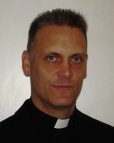
Sermon preached at 11am Mattins at St Mary’s, Lapworth on Sunday 25th July 2010
Festival of St James the Great
Readings: Ps 126 Jeremiah 45: 1-5 Acts: 11: 27 – 12: 2 (Matthew 20: 20-28)
So today we celebrate the festival of St James the Great. It is only one year in seven on average that 25th July falls on a Sunday, so today is a good opportunity to reflect on St James and to get to know him a bit better.
First of all, let’s get straight who we are talking about. We are talking about James, as in James and John, the sons of Zebedee. James and John were among the first disciples to be called by Jesus. I am sure you remember the story. They were sitting in their father’s fishing boat mending their nets when Jesus came and said: “Follow me”. And they left their father in the boat with the hired men and followed Jesus. At the same time Jesus also called Simon and Andrew and said that they would become fishers of men. And in fact Peter, James and John became like Jesus’ inner cabinet. They were the ones he took with him up Mount Tabor for the Transfiguration. They were the ones who went into the room with him when he brought the young girl back from the dead. They were the ones who he took to one side with him as he prayed in the garden of Gethsemane. And perhaps it is because of this very privileged position that James, son of Zebedee, held that he is often called James the Great.
Because we have to acknowledge that there were a lot of other Jameses around in the New Testament. There is James, Son of Alphaeus, who was also one of the 12. There is James, called Brother of the Lord, James the younger and James, writer of the New Testament book. It’s not completely clear to the scholars if those James are all the same person, or two people or three or perhaps even four different people. But anyway we are not talking about them, we are talking about James, brother of John, son of Zebedee, one of the Lord’s three closest companions.
I have already mentioned some of the New Testament stories about James but I have not mentioned the most famous story. This is the story where the mother of James and John asks Jesus if her two sons, James and John might sit at his right and his left in his glory. Jesus says, “You don’t know what you are asking. Can you drink the cup that I will drink, or be baptised with my baptism?” “We can” they boldly responded. “Very well,” said Jesus, “The cup that I drink, you shall drink, and my baptism will be your baptism, but to sit at my right and my left is not mine to grant, it is for those to whom it has already been given.”
It was perhaps rather brave or perhaps foolhardy to say to Jesus, “Yes, we can drink your cup, yes, we can be baptised with your baptism.” By his “cup” Jesus probably meant his passion and death, as he did in Gethsemane when he prayed “Father, take this cup away from me! Yet not my will but your will be done.” After James and John had been so enthusiastic about Jesus’ cup, a martyrdom always seemed possible. As we heard in our reading from Acts, James was indeed martyred, probably about 44AD, by the sword. There is a tradition that he was beheaded by King Herod in person.
But the interchange with Jesus was very important because it lead to Jesus’ explanation of what leadership must be like in the church. Jesus explained that in worldly circles masters lord it over their servants, but it must not be like this in the church. Whoever wishes to be great among you must be your servant and whoever wishes to be first among you must be your slave, for the Son of Man came to serve, not to be served and to give his life as a ransom for many.
And this model of servant leadership has been crucial in the church and in Christian society ever since. Of course we often fail to live up to it, and certainly our leadership in our society today seems to be completely tied up with money and power and have very little to do with service. However there have been powerful moments of witness.
For example, in the sixth century there was an uncomfortable power struggle between the Patriarch of Constantinople (traditionally seen as the second most important bishop in the church) and the Bishop of Rome, traditionally seen as the first. The Patriach gave himself a new title: Ecumenical Patriarch – Patriarch of the whole church. Pope Gregory the Great was under pressure to respond, and he adopted the title Servant of the Servants of God. What is more, is he managed to live his papacy in that reality. A crucially important point was made.
So what does servant leadership mean? It doesn’t usually mean that we expect our archbishops and popes to do the washing up and to wait at table. It is very symbolically important when they do these things, but if they were to do them all the time then they would not be doing their jobs. What we do hope for and expect, and what we should certainly try to live out when we are in positions of leadership ourselves, is that the office is to be used and powers exercised for the benefit of all the people, not for the benefit of the leader in question. The bishop must act for the benefit of all the people of the diocese. The headmaster must work for the benefit of all the people in the school; the Chief Executive for the benefit of the whole company. And, just as a waiter must be attentive to the needs of the person he serves, and a good waiter will even anticipate these needs, so a good leader must be attentive to the needs of those that are led.
Personally I think we need to have a special sensitivity to St James and to servant leadership in this church. We know that before the reformation there was an altar in the south aisle dedicated to St James. So the saint was important in this place, but the link has been lost. And in fact the situation is even more dramatic at Baddesley Clinton. That whole church was originally dedicate to St James, but at some time that was changed to St Michael. So once again an important link to the saint has somehow been lost. Now I am not suggesting that we should rush to reinstall an altar to St James, but I do think we need to recognise and honour aspects of this saint, with whom we have had these links. So servant leadership would be one aspect of that, which of course applies especially to Rectors, wardens and PCC members. Another aspect is being willing, perhaps even in a foolhardy way, to drink the cup that Jesus drinks and to share his baptism. Most of us are not called to full martyrdom, but a willingness to share sufferings with Jesus is important, as we were discussing last week. And a third aspect would be to be a good disciple of Jesus, responding to his “follow me” and seeking to be especially close to him as James was. I think if we can live well these three aspects we will honour St James well, and altars that we have lost, or dedications we have changed will matter far less. Amen.
Prayer for St James' Day
Almighty God, remember your church, built on the foundation of the apostles and prophets, with Christ Jesus himself as the chief cornerstone. We pray for all bishops and all leaders in your church. By their example may we follow close to Jesus. May we continue always in the apostles' teaching and in the fellowship, in the breaking of bread and in prayer. We make our prayer through the same Christ Jesus our Lord. Amen.
Showing posts with label apostle. Show all posts
Showing posts with label apostle. Show all posts
25 July 2010

29 June 2008
SS Peter and Paul
29th June 2008, Feast of SS Peter and Paul
Informal sermon with images, preached at St Alphege, Solihull at the 9.15 Eucharist.
Readings: Acts 12: 1-11 2 Timothy 4: 6-8 & 17-18 Matthew 16: 13-19
So today we remember Saint Peter and Saint Paul. Here is a picture of them.
[Picture - SS Peter and Paul]
That is St Peter on the left holding the two keys. St Peter is often depicted holding keys because of the incident that we heard about in our gospel reading today. Jesus declares that Peter is the Rock on which he will build his church. Jesus says, “I will give you the keys of the kingdom of heaven, and whatever you bind on earth will be bound in heaven, and whatever you loose on earth will be loosed in heaven.” It is not easy for us to know exactly what that means, but clearly great authority in heaven and earth has been given to him.
So obviously, that is St Paul on the right. He is often depicted carrying the Word of God, as a book or as a double edged sword. A sharp double edged sword is used as a symbol for the word of the Lord in the book of Hebrews (4:12) and in Revelation (chapters 1 and 2).
But why do we make such a fuss about Peter and Paul? They died almost 2000 years ago, why are they relevant to us now? Well first of all they are important because they are saints, and they show us the way to be saints. We are all called to become saints. We are all called to holiness. God has created us for an extraordinary destiny. We want us to take our place in the kingdom of heaven, and to share in his glory (2 Thes 2:14, 1 Pet 5:1). It is like we are called to be a small crystal of glass in the great chandelier of heaven, where we are illuminated completely by the glory of God.
[Picture - Chandelier]
Of course for this to happen we have to be raised up and cut into shape and cleaned and purified, but eventually will take our place alongside all the other saints around God, the source of all light and life. So the saints are important to us because they show us what our destiny is. They show us how by following Christ and his commandments we can grow in love and become holy.
[Camera on speaker]
But Paul and Peter are also important because they are the great apostles and preachers central to the setting up of the church. Peter was sent (apostle means “sent”) to preach the gospel to the Jews, to the circumcised, and Paul was sent to preach the gospel to the gentiles, the non-Jews, the uncircumcised. (c.f. Gal 2:7ff)
Let’s think about Peter for a moment.
[Picture – icon of Peter]
Peter was originally called Simon. He grew up us as a fisherman, with his brother Andrew. He got to know Jesus, who came to his house and healed his mother-in-law and performed many other miracles (Luke 4: 38ff). Then one day Jesus used Peter’s boat as a platform to preach from.
[Picture – boat]
After this they put out into deep water and caught a miraculous catch of fish. Peter became terrified of the power of Jesus, but Jesus told him not to be afraid, but to follow him and become a catcher of people rather than of fish. (Luke 5: 1-11).
Peter was the leader of the disciples, but he was also the one who made lots of mistakes. Jesus was forever correcting him, and in particular forgave Peter for his three fold denials of Christ, during Christ’s trial. After the day of Pentecost Peter becomes a great preacher and works many wonders. We heard today the story of his miraculous escape from jail. For the apostles he was the first among equals. He was indeed the rock on which the church was founded.
Now let’s think about Paul
[Picture – icon of Paul]
Paul came from an impeccable background. He was a Pharisee, the son of a Pharisee and had had a full Jewish religious education. He was also a Roman citizen by birth and had received an Greek education. As a young man his name was Saul. Like many Pharisees he did not approve of the innovations that Jesus proposed within Judaism, and he actively persecuted the Church. He was present at the stoning of Stephen, and was on his way to Damascus to arrest more Christians when he had an extraordinary vision of Christ.
[Picture – conversion of St Paul]
The experience completely transformed Paul, who became a great preacher and teacher of the faith. He undertook three major missionary journeys to visit the fledgling churches in different places. He endured all kinds of sufferings including shipwreck, prison and being floged. He wrote many letters to the young churches and these quickly became important to the whole church and were included in the New Testament. He was the great theologian of the early church.
[Camera on speaker]
Another important reason why we particularly remember Peter and Paul is their importance as martyrs. There is nothing in scripture about how Peter and Paul died, but there are some traditions found in early church writings. In AD 64 there was a terrible fire in Rome, which destroyed a large part of the city. Nero, the unpopular emperor, was accused of playing his fiddle while Rome burned around him. Nero needed a scapegoat, and he blamed the Christians. A terrible persecution followed. Nero devised extraordinary new tortures to inflict on the Christians. The traditions suggest that Peter was crucified upside down on the site which is now St Peter’s basilica in Rome. Paul, who being a Roman citizen could not be crucified, was beheaded. The early church quickly started to remember Peter and Paul together.
[Pictue - Picture of Peter and Paul embracing]
They were the martyrs on whom the church in Rome was founded.
So as we remember Peter and Paul, we need to give thanks for their great witness to Christ. We need to give thanks for the secure spiritual foundations that they laid for the Church, and the church in Rome in particular. As we think about our own spiritual lives, and our own journeys of faith, let’s be inspired by their examples. Let’s each of us follow the path Christ has prepared for us; Peter and Paul show us that what ever the cost, it is worth it!
Informal sermon with images, preached at St Alphege, Solihull at the 9.15 Eucharist.
Readings: Acts 12: 1-11 2 Timothy 4: 6-8 & 17-18 Matthew 16: 13-19
So today we remember Saint Peter and Saint Paul. Here is a picture of them.
[Picture - SS Peter and Paul]
That is St Peter on the left holding the two keys. St Peter is often depicted holding keys because of the incident that we heard about in our gospel reading today. Jesus declares that Peter is the Rock on which he will build his church. Jesus says, “I will give you the keys of the kingdom of heaven, and whatever you bind on earth will be bound in heaven, and whatever you loose on earth will be loosed in heaven.” It is not easy for us to know exactly what that means, but clearly great authority in heaven and earth has been given to him.
So obviously, that is St Paul on the right. He is often depicted carrying the Word of God, as a book or as a double edged sword. A sharp double edged sword is used as a symbol for the word of the Lord in the book of Hebrews (4:12) and in Revelation (chapters 1 and 2).
But why do we make such a fuss about Peter and Paul? They died almost 2000 years ago, why are they relevant to us now? Well first of all they are important because they are saints, and they show us the way to be saints. We are all called to become saints. We are all called to holiness. God has created us for an extraordinary destiny. We want us to take our place in the kingdom of heaven, and to share in his glory (2 Thes 2:14, 1 Pet 5:1). It is like we are called to be a small crystal of glass in the great chandelier of heaven, where we are illuminated completely by the glory of God.
[Picture - Chandelier]
Of course for this to happen we have to be raised up and cut into shape and cleaned and purified, but eventually will take our place alongside all the other saints around God, the source of all light and life. So the saints are important to us because they show us what our destiny is. They show us how by following Christ and his commandments we can grow in love and become holy.
[Camera on speaker]
But Paul and Peter are also important because they are the great apostles and preachers central to the setting up of the church. Peter was sent (apostle means “sent”) to preach the gospel to the Jews, to the circumcised, and Paul was sent to preach the gospel to the gentiles, the non-Jews, the uncircumcised. (c.f. Gal 2:7ff)
Let’s think about Peter for a moment.
[Picture – icon of Peter]
Peter was originally called Simon. He grew up us as a fisherman, with his brother Andrew. He got to know Jesus, who came to his house and healed his mother-in-law and performed many other miracles (Luke 4: 38ff). Then one day Jesus used Peter’s boat as a platform to preach from.
[Picture – boat]
After this they put out into deep water and caught a miraculous catch of fish. Peter became terrified of the power of Jesus, but Jesus told him not to be afraid, but to follow him and become a catcher of people rather than of fish. (Luke 5: 1-11).
Peter was the leader of the disciples, but he was also the one who made lots of mistakes. Jesus was forever correcting him, and in particular forgave Peter for his three fold denials of Christ, during Christ’s trial. After the day of Pentecost Peter becomes a great preacher and works many wonders. We heard today the story of his miraculous escape from jail. For the apostles he was the first among equals. He was indeed the rock on which the church was founded.
Now let’s think about Paul
[Picture – icon of Paul]
Paul came from an impeccable background. He was a Pharisee, the son of a Pharisee and had had a full Jewish religious education. He was also a Roman citizen by birth and had received an Greek education. As a young man his name was Saul. Like many Pharisees he did not approve of the innovations that Jesus proposed within Judaism, and he actively persecuted the Church. He was present at the stoning of Stephen, and was on his way to Damascus to arrest more Christians when he had an extraordinary vision of Christ.
[Picture – conversion of St Paul]
The experience completely transformed Paul, who became a great preacher and teacher of the faith. He undertook three major missionary journeys to visit the fledgling churches in different places. He endured all kinds of sufferings including shipwreck, prison and being floged. He wrote many letters to the young churches and these quickly became important to the whole church and were included in the New Testament. He was the great theologian of the early church.
[Camera on speaker]
Another important reason why we particularly remember Peter and Paul is their importance as martyrs. There is nothing in scripture about how Peter and Paul died, but there are some traditions found in early church writings. In AD 64 there was a terrible fire in Rome, which destroyed a large part of the city. Nero, the unpopular emperor, was accused of playing his fiddle while Rome burned around him. Nero needed a scapegoat, and he blamed the Christians. A terrible persecution followed. Nero devised extraordinary new tortures to inflict on the Christians. The traditions suggest that Peter was crucified upside down on the site which is now St Peter’s basilica in Rome. Paul, who being a Roman citizen could not be crucified, was beheaded. The early church quickly started to remember Peter and Paul together.
[Pictue - Picture of Peter and Paul embracing]
They were the martyrs on whom the church in Rome was founded.
So as we remember Peter and Paul, we need to give thanks for their great witness to Christ. We need to give thanks for the secure spiritual foundations that they laid for the Church, and the church in Rome in particular. As we think about our own spiritual lives, and our own journeys of faith, let’s be inspired by their examples. Let’s each of us follow the path Christ has prepared for us; Peter and Paul show us that what ever the cost, it is worth it!
18 May 2008
Baptised in the name of the Father and of the Son and of the Holy Spirit
Sermon
Preached on Trinity Sunday – Year A - 18th May 2008
at the 9.15am Eucharist at St Alphege Solihull.
A shortened version was also preached at the 11am Eucharist at St Catherine’s, Catherine de Barnes, Solihull.
Readings: Isaiah 40: 12-17, 27-31 2 Cor13:11-13 Matthew 28:16-20
In our gospel reading this morning we heard the words of Jesus, which are known as, “The Great Commission”. They are Jesus’ last words to his disciples in Matthew’s gospel. He says,
All authority in heaven and on earth has been given to me. Go therefore and make disciples of all nations, baptising them in the name of the Father and of the Son and of the Holy Spirit, and teaching them to obey everything that I have commanded you, and remember, I am with you always, to the end of the age.
These words brought about a dramatic change for the first disciples. Up until this point Jesus’ main message to them had been “follow me”, and “follow my commandments”, and the disciples had done this as best they could. We know that there were all kinds of errors and problems (like Peter denying Christ) but as best they could the disciples had followed Jesus, through his death and resurrection. This had been a completely life changing experience for them. But with these words of the Great Commission and with the arrival of the Holy Spirit at Pentecost, suddenly the focus for the disciples changes completely. Rather than following, suddenly they are sent out to call others to follow. The 11 disciples become apostles – that is people sent out by God. Suddenly they become preachers, teachers and leaders of the Christian community. This is the start of mission. Mission also means “being sent”.
And included in the great commission is a remarkably good and very short summary of what Jesus wants from people to whom the apostles preach the gospel. He wants these people to become disciples, that is “followers” of Jesus. He wants the people to be baptised. He wants the people to obey his commandments. This is such an excellent summary of what we must do to be Christians; follow Christ, be baptised and obey Christ’s commandments.
But because today is Trinity Sunday, and because next week we have several baptisms taking place in this service, I would like focus today on what it means to be baptised in the name of the Father and of the Son and of the Holy Spirit.
This formula for Baptism “in the name of the father and of the Son and of the Holy Spirit” is recognised as the correct formula for baptism in all the main stream Christian churches. This is because the formula is recorded in Matthew’s gospel as a direct command from Jesus. All the mainstream churches recognise as valid a baptism made in “the name of the Father and of the Son and of the Holy Spirit”. The only exception to this is that Baptist churches often do not accept infant baptism, but they do certainly accept this as the correct formula for baptising people.
And this is a very significant thing because the mainstream churches all recognise as valid each others baptism certificates. And although the Church of God has suffered all kind of painful divisions and has been separated into various different denominations there is a level of unity that remains in our baptism. Whatever our denomination, we are all baptised into the body of Christ, into the Church, and we all have become members of that one body.
There are some interesting stories in the Acts of the Apostles about the incompleteness of other forms of baptism. There are stories (Chapter 8) where people have been baptised in the name of the Lord Jesus, but have not yet been baptised in the Holy Spirit. There are other stories the other way around (chapter 10). Through these experiences the early church quickly realised that baptism needs to be in the name of the father and of the son and of the Holy Spirit.
Of course the formula “Father, Son and Holy Spirit” is familiar to us, not only because of baptism, but also because Father, Son and Holy Spirit are the three persons of the Most Holy Trinity. Today is Trinity Sunday, when we reflect on the great mystery of our God who is both three persons (Father, Son and Holy Spirit) and is also perfectly “one” such that we say with great confidence that there is just one true God.
And this can be difficult to understand. But really we should not be surprised that we find it hard to understand God. God is much bigger and deeper and greater than we are. If we think we have got God “all sust out” then we are putting God in a box; we are placing our own intellect above God’s. We are deceiving ourselves and being somewhat arrogant!
And yet, despite the difficulty in understanding the Trinity, I believe it is important that we always make the effort to increase the understanding that we have. Human beings are created in the image of God (Genesis 1:27) so looking at the Trinity gives us insights into the way that human life is meant to be.
If we look at the Trinity it seems that the perfect unity and harmony is maintained by love; by the love of God. There is lots of self-giving going on. The Father gives himself completely to the Son. The Son gives himself completely to the Father. The Spirit is likewise involved. This love and complete self-giving sustains the harmony and unity. This surely gives us an insight into how a Christian marriage might work. Similarly it throws light on how a community can sustain itself and become harmonious. And what about nations and the whole world even?
So as we celebrate Trinity Sunday, let’s ponder the mystery of the Trinity and seek to understand it better. Let’s seek to grow in relationships of love and mutual self- giving like those that we see in the Trinity. And by this let us come to live out ever better what it means to be a human being, created in the image of God.
Preached on Trinity Sunday – Year A - 18th May 2008
at the 9.15am Eucharist at St Alphege Solihull.
A shortened version was also preached at the 11am Eucharist at St Catherine’s, Catherine de Barnes, Solihull.
Readings: Isaiah 40: 12-17, 27-31 2 Cor13:11-13 Matthew 28:16-20
In our gospel reading this morning we heard the words of Jesus, which are known as, “The Great Commission”. They are Jesus’ last words to his disciples in Matthew’s gospel. He says,
All authority in heaven and on earth has been given to me. Go therefore and make disciples of all nations, baptising them in the name of the Father and of the Son and of the Holy Spirit, and teaching them to obey everything that I have commanded you, and remember, I am with you always, to the end of the age.
These words brought about a dramatic change for the first disciples. Up until this point Jesus’ main message to them had been “follow me”, and “follow my commandments”, and the disciples had done this as best they could. We know that there were all kinds of errors and problems (like Peter denying Christ) but as best they could the disciples had followed Jesus, through his death and resurrection. This had been a completely life changing experience for them. But with these words of the Great Commission and with the arrival of the Holy Spirit at Pentecost, suddenly the focus for the disciples changes completely. Rather than following, suddenly they are sent out to call others to follow. The 11 disciples become apostles – that is people sent out by God. Suddenly they become preachers, teachers and leaders of the Christian community. This is the start of mission. Mission also means “being sent”.
And included in the great commission is a remarkably good and very short summary of what Jesus wants from people to whom the apostles preach the gospel. He wants these people to become disciples, that is “followers” of Jesus. He wants the people to be baptised. He wants the people to obey his commandments. This is such an excellent summary of what we must do to be Christians; follow Christ, be baptised and obey Christ’s commandments.
But because today is Trinity Sunday, and because next week we have several baptisms taking place in this service, I would like focus today on what it means to be baptised in the name of the Father and of the Son and of the Holy Spirit.
This formula for Baptism “in the name of the father and of the Son and of the Holy Spirit” is recognised as the correct formula for baptism in all the main stream Christian churches. This is because the formula is recorded in Matthew’s gospel as a direct command from Jesus. All the mainstream churches recognise as valid a baptism made in “the name of the Father and of the Son and of the Holy Spirit”. The only exception to this is that Baptist churches often do not accept infant baptism, but they do certainly accept this as the correct formula for baptising people.
And this is a very significant thing because the mainstream churches all recognise as valid each others baptism certificates. And although the Church of God has suffered all kind of painful divisions and has been separated into various different denominations there is a level of unity that remains in our baptism. Whatever our denomination, we are all baptised into the body of Christ, into the Church, and we all have become members of that one body.
There are some interesting stories in the Acts of the Apostles about the incompleteness of other forms of baptism. There are stories (Chapter 8) where people have been baptised in the name of the Lord Jesus, but have not yet been baptised in the Holy Spirit. There are other stories the other way around (chapter 10). Through these experiences the early church quickly realised that baptism needs to be in the name of the father and of the son and of the Holy Spirit.
Of course the formula “Father, Son and Holy Spirit” is familiar to us, not only because of baptism, but also because Father, Son and Holy Spirit are the three persons of the Most Holy Trinity. Today is Trinity Sunday, when we reflect on the great mystery of our God who is both three persons (Father, Son and Holy Spirit) and is also perfectly “one” such that we say with great confidence that there is just one true God.
And this can be difficult to understand. But really we should not be surprised that we find it hard to understand God. God is much bigger and deeper and greater than we are. If we think we have got God “all sust out” then we are putting God in a box; we are placing our own intellect above God’s. We are deceiving ourselves and being somewhat arrogant!
And yet, despite the difficulty in understanding the Trinity, I believe it is important that we always make the effort to increase the understanding that we have. Human beings are created in the image of God (Genesis 1:27) so looking at the Trinity gives us insights into the way that human life is meant to be.
If we look at the Trinity it seems that the perfect unity and harmony is maintained by love; by the love of God. There is lots of self-giving going on. The Father gives himself completely to the Son. The Son gives himself completely to the Father. The Spirit is likewise involved. This love and complete self-giving sustains the harmony and unity. This surely gives us an insight into how a Christian marriage might work. Similarly it throws light on how a community can sustain itself and become harmonious. And what about nations and the whole world even?
So as we celebrate Trinity Sunday, let’s ponder the mystery of the Trinity and seek to understand it better. Let’s seek to grow in relationships of love and mutual self- giving like those that we see in the Trinity. And by this let us come to live out ever better what it means to be a human being, created in the image of God.
Subscribe to:
Posts (Atom)