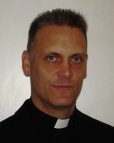
Sermon preached at 9.45am Holy Communion (Book of Common Prayer) at St Michael’s Baddesley Clinton’s on Sunday 20th March 2011. A shorter version of this sermon was preached at the 8.30am Said Eucharist at St Mary the Virgin, Lapworth
Second Sunday of Lent – Year A
Readings: Romans 4: 1-5 & 13-17 John 3: 1-17
Jesus conversation with Nicodemus is very famous
- He was a Pharisee, a leader of the Jews, perhaps the only such leader who really believed in Jesus
- Came to Jesus by night, because of fear
- Nicodemus crops us throughout John’s gospel
o He is argues that Jesus should be given a hearing, when Pharisees plot his arrest (7: 45-52)
o He is perhaps the example of a leading Jew who did believe in Jesus but dare not admit it (12: 42)
o At the death of Jesus he brings myrrh and aloes for his burial (19: 39)
Jesus gives him a hard time by talking of being born from above, or born again.
Nicodemus tries to flush out what Jesus means by being “born from above”
Jesus confirms that he does not mean a physical re-birth, but rather being born of “water and the Spirit”.
So just as a human person must be born of the flesh, and physically grow up, so that person must also be born of the Spirit and grow up in the Spirit, and come to maturity in the Spirit. Jesus says that this is essential to enter the kingdom of God. It is as though it is our life in the Spirit that enters into the kingdom of God, while out earthly body rots in the ground.
Now in the Church we associate “being born through water and the Spirit” with baptism – the moment when the life of the Spirit begins within us in a characteristic Christian way. This birth is certainly an essential step, but it is also essential that this life in the Spirit must grow and develop and reach its full stature. The fathers of the church always talk about baptism as essential for salvation.
So what is it that is essential for salvation?
- To be Baptised?
- To be born of the Spirit?
- to believe in Jesus? – as is often repeated in John’s gospel
- to live by faith – as Paul tells us in our epistle today
Sometimes there can be anxiety of this point.
- Perhaps you met Christians who ask “have you been born again?”
- Perhaps you have met Christians who scramble to get a new born baby baptised for fear that it might die un-baptised
Well to seek salvation is clearly a good thing, but I we are meant to get anxious about it. Salvation is God’s gift, freely given. We have to learn to trust God and to have faith in his love for us. First and foremost we must believe that God wants our good, wants our salvation and, one way or another, God will secure that salvation if we just do our part, and respond positively to the invitation of God. Perfect love casts out fear (1 John 4: 18).
Neither should we think of salvation as a tick list:
“I just need to be baptised, then I am saved”
“I just need to be born again, then I am saved”
“I just need to believe in Jesus, then I am saved”
“I just need to lead a good life, then I am saved”
The truth is that all these things go together and grow together in our spiritual lives. Everyone is different and God calls people in different ways. Many are baptised as babies and then need to grow into their faith. Other come to Christ differently and in certain ways might already be fairly mature as Christians before they are baptised. Some Christians emphasise faith in God, others emphasise the importance of living a good life and of loving our neighbour. But ultimately all these things go together and build on each other. Ultimately all are important, all our signs of each other. The Christian who emphasises faith, but has no love is clearly lacking (1 Cor 13: 2). The Christian who knows the scriptures but does not know Christ is clearly lacking (John 5: 39-40). The person who responds positively to Christ, but who has not be baptised or “born from above” clearly is lacking, as Jesus’ conversation with Nicodemus shows.
So as we think of our salvation, let’s not worry about specific tests to determine if we are saved or not saved. Rather let’s seek to make progress in all the different aspects of the Christian life so that we can grow up into our salvation (c.f. 1 peter 2: 2) in a balanced way. Certainly, if we are not baptised then we should seek baptism. If we were baptised as babies then we should seek Confirmation, taking our personal ownership of our baptismal promises. Certainly we should seek to grow in faith and trust in God. We should seek to build our personal relationship with Jesus through prayer, by reading the gospels and by living as Jesus commands. Similarly we must live by the Spirit. Above all we must seek to grow in love for God and for our neighbours, because ultimately it is on love that the saved the unsaved are separated (Matt 25: 31ff). Amen.
Showing posts with label baptism. Show all posts
Showing posts with label baptism. Show all posts
20 March 2011

09 January 2011
Baptism of Christ - Making yourself one
Sermon preached at 11am Choral Mattins at Mary the Virgin, Lapworth on Sunday 9th January 2011. Shorter versions of this sermon were preached at the 8.30am Said Eucharist at Mary’s and at 3pm Evensong at St Michael’s Baddesley Clinton.
Baptism of Christ – Year A
Readings: Isaiah 42: 1-9, Matthew 3: 13-17
My grandfather, when he was getting married, rather boldly assumed that he would not need a ticket to get into the church for his wedding. It turned out that this rather bold assumption was wrong. He was marrying the daughter of an archbishop, and the cathedral had all its “big event” procedures in place, including ticket only entrance. My grandfather and the best man finally entered the cathedral by climbing over some railings at the back. He ripped his trousers in the process so had to cope with torn trousers all day, but then he dined out on the story for the rest of his life!
In one way it seems quite reasonable that my grandfather should not need a ticket to attend his own wedding. If he really had been unable to get in, they would presumably have noticed! People would have gone to find him.
But Jesus, when he entered this world, which he created, seemed to seek none of the special privileges which, as Son of God or Messiah, he might reasonably have expected. This lack of special treatment is especially clear in the Christmas/Epiphany season. On 1st January the church marks the “Circumcision of Christ”. Just like any other new born baby boy in Judaism, Jesus was circumcised on the eighth day. In three weeks time we shall remember the “Presentation of Christ in the Temple”. Just like any other newborn, Jesus is taken to the Temple with his mother on the 40th day for the rites of purification. And in our gospel reading today, we see Jesus, just like any repent Jew at that time, coming to John the Baptist for Baptism so as to prepare for the coming Messiah.
Well, as we heard in the gospel reading, John the Baptist could see that it would be more appropriate if he, John, was baptised by Jesus. But Jesus persuades him to go along with the baptism, at least for the time being. And this obedience of Jesus, and his parents, to the normal religious rules for normal people shows us something of the great humility of the God who became human. It shows us how Jesus is completely and fully human.
And this is very important. Because somehow it is the way that Jesus, who is God, becomes like us, fully human, that opens up the possibility of us to become like him; of us coming to share in God’s own divine life.
The Baptism of Christ shows us this especially. At the baptism the Spirit of God descended like a dove, and came to rest upon Jesus. This was a sure sign that Jesus had received the Spirit. It was a reminded of the prophecy of Isaiah that we read earlier, “I have put my spirit upon him”. It reveals Jesus to be the Messiah, the anointed one of God, the one who has received God’s own Spirit. This is something very special and specific to Jesus, but ultimately we all come to share in its benefits. So, for example, at our own Baptism we receive the gifts of the Holy Spirit and we are strengthened in the Holy Spirit at our confirmation.
Also at the Baptism of Christ, God’s voice declares “This is my Son, the Beloved, with whom I am well pleased.” This voice reveals Jesus to be Son of God. Again it echo the Isaiah prophecy, “Here is my servant…the chosen one, in whom my soul delights.” Again this is something very special and specific to Jesus, about being Son of God, but also once again it is something in which ultimately we come to share. Through our Baptism we become a new creation, like an adopted son of God, a co-heir with Christ.
So it is strange and interesting that at the Baptism of Christ, when the Holy Spirit descends and reveals Jesus to be Messiah, and the voice of the Father reveals him to be Son of God, Jesus, by the humility of his own actions is revealing himself to be completely and fully human, Son of Man as much as he is Son of God.
And this humility of Jesus, losing all the privileges of being God, in order to be fully human like us, demonstrates a very typical characteristic of Christian love, a characteristic which we are all called to practice and grow into. This is the practice being ready to let go of our own identity and our own ideas in order to fully share in the life of the person in front of us. So, for example, we put to one side what we think about a particular situation in order to hear properly what another person has to say about it. I had an experience of this recently when someone was upset about a funeral service I had conducted at the crematorium. I felt defensive and rather than listen properly I wanted to explain why the service was the way it was. I have to admit that I did do that a bit, but to the extent that I did listen properly what emerged was much more upset about the person lost than about the service. Listening properly would have helped the truth to emerge and heeling to take place.
This characteristic Christian way of loving has been described as “making yourself one” with the person beside you. It is involves temporarily setting aside our own thoughts and agendas in order to fully appreciate the thoughts and agendas of another person. It involves placing ourselves in their shoes, as though we are living their lives, with their hopes and fears, their joys and sorrows. It is not an action of weakness, or about allowing others to dominate us, but it is about seeking and valuing the experience and attitudes of Jesus in a different person. It is a practice in line with St Paul, who became Jewish to the Jews, Greek to the Greeks and even weak to the weak (cf 1 Corinthians 9: 19ff) in order to love in this way. And it is a very powerful way of loving that builds shared understanding, appreciation of difference, unity and communion; real shared life. I commend it to you, but the ultimate example must always be Jesus, who put aside being God in order to be completely human.
Baptism of Christ – Year A
Readings: Isaiah 42: 1-9, Matthew 3: 13-17
My grandfather, when he was getting married, rather boldly assumed that he would not need a ticket to get into the church for his wedding. It turned out that this rather bold assumption was wrong. He was marrying the daughter of an archbishop, and the cathedral had all its “big event” procedures in place, including ticket only entrance. My grandfather and the best man finally entered the cathedral by climbing over some railings at the back. He ripped his trousers in the process so had to cope with torn trousers all day, but then he dined out on the story for the rest of his life!
In one way it seems quite reasonable that my grandfather should not need a ticket to attend his own wedding. If he really had been unable to get in, they would presumably have noticed! People would have gone to find him.
But Jesus, when he entered this world, which he created, seemed to seek none of the special privileges which, as Son of God or Messiah, he might reasonably have expected. This lack of special treatment is especially clear in the Christmas/Epiphany season. On 1st January the church marks the “Circumcision of Christ”. Just like any other new born baby boy in Judaism, Jesus was circumcised on the eighth day. In three weeks time we shall remember the “Presentation of Christ in the Temple”. Just like any other newborn, Jesus is taken to the Temple with his mother on the 40th day for the rites of purification. And in our gospel reading today, we see Jesus, just like any repent Jew at that time, coming to John the Baptist for Baptism so as to prepare for the coming Messiah.
Well, as we heard in the gospel reading, John the Baptist could see that it would be more appropriate if he, John, was baptised by Jesus. But Jesus persuades him to go along with the baptism, at least for the time being. And this obedience of Jesus, and his parents, to the normal religious rules for normal people shows us something of the great humility of the God who became human. It shows us how Jesus is completely and fully human.
And this is very important. Because somehow it is the way that Jesus, who is God, becomes like us, fully human, that opens up the possibility of us to become like him; of us coming to share in God’s own divine life.
The Baptism of Christ shows us this especially. At the baptism the Spirit of God descended like a dove, and came to rest upon Jesus. This was a sure sign that Jesus had received the Spirit. It was a reminded of the prophecy of Isaiah that we read earlier, “I have put my spirit upon him”. It reveals Jesus to be the Messiah, the anointed one of God, the one who has received God’s own Spirit. This is something very special and specific to Jesus, but ultimately we all come to share in its benefits. So, for example, at our own Baptism we receive the gifts of the Holy Spirit and we are strengthened in the Holy Spirit at our confirmation.
Also at the Baptism of Christ, God’s voice declares “This is my Son, the Beloved, with whom I am well pleased.” This voice reveals Jesus to be Son of God. Again it echo the Isaiah prophecy, “Here is my servant…the chosen one, in whom my soul delights.” Again this is something very special and specific to Jesus, about being Son of God, but also once again it is something in which ultimately we come to share. Through our Baptism we become a new creation, like an adopted son of God, a co-heir with Christ.
So it is strange and interesting that at the Baptism of Christ, when the Holy Spirit descends and reveals Jesus to be Messiah, and the voice of the Father reveals him to be Son of God, Jesus, by the humility of his own actions is revealing himself to be completely and fully human, Son of Man as much as he is Son of God.
And this humility of Jesus, losing all the privileges of being God, in order to be fully human like us, demonstrates a very typical characteristic of Christian love, a characteristic which we are all called to practice and grow into. This is the practice being ready to let go of our own identity and our own ideas in order to fully share in the life of the person in front of us. So, for example, we put to one side what we think about a particular situation in order to hear properly what another person has to say about it. I had an experience of this recently when someone was upset about a funeral service I had conducted at the crematorium. I felt defensive and rather than listen properly I wanted to explain why the service was the way it was. I have to admit that I did do that a bit, but to the extent that I did listen properly what emerged was much more upset about the person lost than about the service. Listening properly would have helped the truth to emerge and heeling to take place.
This characteristic Christian way of loving has been described as “making yourself one” with the person beside you. It is involves temporarily setting aside our own thoughts and agendas in order to fully appreciate the thoughts and agendas of another person. It involves placing ourselves in their shoes, as though we are living their lives, with their hopes and fears, their joys and sorrows. It is not an action of weakness, or about allowing others to dominate us, but it is about seeking and valuing the experience and attitudes of Jesus in a different person. It is a practice in line with St Paul, who became Jewish to the Jews, Greek to the Greeks and even weak to the weak (cf 1 Corinthians 9: 19ff) in order to love in this way. And it is a very powerful way of loving that builds shared understanding, appreciation of difference, unity and communion; real shared life. I commend it to you, but the ultimate example must always be Jesus, who put aside being God in order to be completely human.
10 January 2010
Baptism and the healing cycle
Sermon for wholeness and healing service at St Helen’s Church
6.30pm - Sunday 10th January 2010 – Baptism of Christ
Rdngs: Isaiah 55: 1-11, Romans 6: 1-11, Mark 1: 4-11, Dismissal Gospel Luke 5: 12-14
At the age of 21, in my last year as an undergraduate, I had a crisis. I didn’t realise it was a crisis at the time; I just thought I was ill. I had a problem with itchy skin. If I got embarrassed, or laughed, or put under pressure or just spent too long in a hot room then my skin would start to itch. It would itch all over. There would be nothing that you could see but for me it was completely unbearable. All I could do was go outside in the cold and take my coat off. My skin would cool down and I would be fine…until I the next time. This started as a minor irritation in about November time, but by Christmas it was a major problem. In fact I really struggled to do my Christmas shopping. I find shopping pretty stressful at the best of times, and perhaps because of that I found I was especially likely to start itching in the shops, which were also very warm. I found that I could not stay in the shops long enough to get to the front of the queue to pay for the things I wanted to buy. It was very frustrating and difficult.
Anyway, I went to the doctors. The first doctor I went to realised that something psychosomatic was going on and suggested that I do some yoga. I was reluctant to do this; I was very suspicious of yoga. The second doctor I went to gave me an assortment of pills and creams and lotions. I discovered that with antihistamine tablets I could control the itching, such that I still knew when it was happening, but it was not painful and I could just about get by in my day to day life. However I knew that this was not the same as being healthy, and I did want to get better so I started looking around for ways to get better. I started going to yoga classes.
In about February a Catholic friend of mine, who with hindsight obviously had a gift for dealing with young men, started to take an interest my difficulties. He wanted me to go a see a Catholic counselling woman at the school he worked in. I was reluctant to go. I was a bit suspicious of Catholicism and profoundly suspicious of counselling. However, this man Tony, said one or two things and asked me one or two questions that made me realise that he understood far more about what was wrong with me that I did. I realised that I had to trust him and go and meet this counselling woman. Tony said to me, “Right now you are in crisis, and things are very rough for you, but one day you will look back at this and think it was the best thing that every happened to you!” Of course he was absolutely right, but I hesitated to believe it at the time.
Anyway, once I started seeing the counselling lady, she started asking me questions and very quickly she started to draw to my attention all kinds of contradictions and inconsistencies in my attitudes to life. Slowly I learned to trust her. I started to make new choices which reflected my own choices rather than what I had been taught to think of as “good”. I started to dress more expressively, to spend more money, to drink more beer, to be more independent of my parents and in many ways to behave more like a normal student. Really it was about growing up and having the courage to make my own choices. Also, through the yoga, I became more aware of my inner feelings and needs and became more able to address them. It was a very difficult process, and some of my experiments turned out to be very unhelpful, but slowly I did begin to improve. After my final exams in June I was able to rest more and this really helped. By September I had stopped itching. A year later I was well enough to get a job. A year after that I met Elaine, and a year after that we got married. I carried on seeing, Sr Clare, the counselling woman on and off for many years. I was in my late thirties before I really felt I had full recovered.
As I look back on that experience now I think of it in a way very different from how I thought about it at the time. At the time I just thought I was ill, which was true. Then later I started to think of it as a psychological crisis to do with growing up, which was also true. However more recently as I look back I start to notice the spiritual aspects of the experience. A huge part of it was about being ready to let go of attitudes and beliefs that had stood me in good stead as I grew up. For example, I had to let go of my prejudices about yoga and Catholics and counselling. I had to let go of my rather cerebral Christian faith beliefs and more ridged religious practices. I had to let go of any sense that I was a “good” Christian, or better than other people, or that I could do things in my own strength or that I could be independent, or that I could serve others without being served myself. This letting go was an experience of loss. In some ways it was like dying lots of small deaths. Then there was another part of the experience which was all to do with acceptance. I had to accept my human limitations. I had to accept my inner needs. I had to accept the inner pain that I carried and I was carrying a lot. I had to accept my need for love and my dependence on other people. I had to accept that I was a sinner in need of God’s mercy. And this process of acceptance was profoundly linked to healing, and it took a long time.
And then there was the surprise of new life and new hope which I had not been expecting. I discovered that I had a Christian faith that was deeper and more profound and more real than my earlier more cerebral faith had been. I discovered that through my prayers and my sufferings I could grow in faith and contribute to the life of the Church, even if I was not well enough to do very much. I discovered that God really did love me, and that I was much more loveable than I could ever have imagined. I discovered that I was much closer to other people, in their joys and sorrows, in their hopes and fears than I would ever have considered possible. I found healing and renewal and the ability to build a new life.
But the interesting thing is that this experience of losing and dying, leading to acceptance and healing, leading to new life and new possibilities is very like the experience of Baptism that our reading today have meditated upon.
Our OT reading was written for the Jews in the sixth century BC, at a real low point in their history. They had been conquered by the Babylonians and taken away into exile. Many of them had been killed in battle. They had lost the Promised Land, they had lost Jerusalem. The temple had been destroyed. They had lost their livelihoods and their freedom. Everything spoke of death and loss. Yet into this bitter, bitter suffering the second Isaiah proclaims a message of hope and new life. “You that have no money, come buy and eat, buy wine and milk without money and without price,” “Return to the Lord, that he may have mercy…to our God for he will abundantly pardon”.
Then we heard St Paul teaching that we must die to sin. We were baptised with Christ, baptised into his death. Our old self was crucified with Christ so that the body of sin might be destroyed and we might longer be enslaved to sin. But, having been united to Christ in his death, so we will be united with him in a resurrection like his. We are called to walk in newness of life. We are dead to sin, but alive to God in Christ Jesus.
And then we heard Marks account of the baptism of Christ. There is a losing; the Son of God submits to a moral man for baptism. There is a going down into the water, there is a moment under the water, a moment of being overwhelmed, a moment like death. Then there is a coming up out of the water, new life, an anointing with the Spirit and affirmation from the voice of the Father himself. This is indeed new life, with new possibilities.
So I hope that as we think about sickness and illness and wholeness and healing, so we will experience something of this Baptism cycle, this death of the old and the rising up of something new. I hope we shall have the courage to let go, to lose, to go through the process like death. I hope that we shall have the grace of acceptance, accepting the truth, accepting the pain, accepting reality of the situation. Then, from God, not from us, I hope we will find new things start to emerge; new life, new possibilities, new hope, new way of serving others.
And I hope that if we can practice this through the crisis of illness, so it will stand us in good stead when we come to the great crisis of death. May we accept the loss our mortal bodies and our earthly life, but may we come to rejoice in the resurrection life of Christ, the eternal life, the life free from sin and death. Amen.
6.30pm - Sunday 10th January 2010 – Baptism of Christ
Rdngs: Isaiah 55: 1-11, Romans 6: 1-11, Mark 1: 4-11, Dismissal Gospel Luke 5: 12-14
At the age of 21, in my last year as an undergraduate, I had a crisis. I didn’t realise it was a crisis at the time; I just thought I was ill. I had a problem with itchy skin. If I got embarrassed, or laughed, or put under pressure or just spent too long in a hot room then my skin would start to itch. It would itch all over. There would be nothing that you could see but for me it was completely unbearable. All I could do was go outside in the cold and take my coat off. My skin would cool down and I would be fine…until I the next time. This started as a minor irritation in about November time, but by Christmas it was a major problem. In fact I really struggled to do my Christmas shopping. I find shopping pretty stressful at the best of times, and perhaps because of that I found I was especially likely to start itching in the shops, which were also very warm. I found that I could not stay in the shops long enough to get to the front of the queue to pay for the things I wanted to buy. It was very frustrating and difficult.
Anyway, I went to the doctors. The first doctor I went to realised that something psychosomatic was going on and suggested that I do some yoga. I was reluctant to do this; I was very suspicious of yoga. The second doctor I went to gave me an assortment of pills and creams and lotions. I discovered that with antihistamine tablets I could control the itching, such that I still knew when it was happening, but it was not painful and I could just about get by in my day to day life. However I knew that this was not the same as being healthy, and I did want to get better so I started looking around for ways to get better. I started going to yoga classes.
In about February a Catholic friend of mine, who with hindsight obviously had a gift for dealing with young men, started to take an interest my difficulties. He wanted me to go a see a Catholic counselling woman at the school he worked in. I was reluctant to go. I was a bit suspicious of Catholicism and profoundly suspicious of counselling. However, this man Tony, said one or two things and asked me one or two questions that made me realise that he understood far more about what was wrong with me that I did. I realised that I had to trust him and go and meet this counselling woman. Tony said to me, “Right now you are in crisis, and things are very rough for you, but one day you will look back at this and think it was the best thing that every happened to you!” Of course he was absolutely right, but I hesitated to believe it at the time.
Anyway, once I started seeing the counselling lady, she started asking me questions and very quickly she started to draw to my attention all kinds of contradictions and inconsistencies in my attitudes to life. Slowly I learned to trust her. I started to make new choices which reflected my own choices rather than what I had been taught to think of as “good”. I started to dress more expressively, to spend more money, to drink more beer, to be more independent of my parents and in many ways to behave more like a normal student. Really it was about growing up and having the courage to make my own choices. Also, through the yoga, I became more aware of my inner feelings and needs and became more able to address them. It was a very difficult process, and some of my experiments turned out to be very unhelpful, but slowly I did begin to improve. After my final exams in June I was able to rest more and this really helped. By September I had stopped itching. A year later I was well enough to get a job. A year after that I met Elaine, and a year after that we got married. I carried on seeing, Sr Clare, the counselling woman on and off for many years. I was in my late thirties before I really felt I had full recovered.
As I look back on that experience now I think of it in a way very different from how I thought about it at the time. At the time I just thought I was ill, which was true. Then later I started to think of it as a psychological crisis to do with growing up, which was also true. However more recently as I look back I start to notice the spiritual aspects of the experience. A huge part of it was about being ready to let go of attitudes and beliefs that had stood me in good stead as I grew up. For example, I had to let go of my prejudices about yoga and Catholics and counselling. I had to let go of my rather cerebral Christian faith beliefs and more ridged religious practices. I had to let go of any sense that I was a “good” Christian, or better than other people, or that I could do things in my own strength or that I could be independent, or that I could serve others without being served myself. This letting go was an experience of loss. In some ways it was like dying lots of small deaths. Then there was another part of the experience which was all to do with acceptance. I had to accept my human limitations. I had to accept my inner needs. I had to accept the inner pain that I carried and I was carrying a lot. I had to accept my need for love and my dependence on other people. I had to accept that I was a sinner in need of God’s mercy. And this process of acceptance was profoundly linked to healing, and it took a long time.
And then there was the surprise of new life and new hope which I had not been expecting. I discovered that I had a Christian faith that was deeper and more profound and more real than my earlier more cerebral faith had been. I discovered that through my prayers and my sufferings I could grow in faith and contribute to the life of the Church, even if I was not well enough to do very much. I discovered that God really did love me, and that I was much more loveable than I could ever have imagined. I discovered that I was much closer to other people, in their joys and sorrows, in their hopes and fears than I would ever have considered possible. I found healing and renewal and the ability to build a new life.
But the interesting thing is that this experience of losing and dying, leading to acceptance and healing, leading to new life and new possibilities is very like the experience of Baptism that our reading today have meditated upon.
Our OT reading was written for the Jews in the sixth century BC, at a real low point in their history. They had been conquered by the Babylonians and taken away into exile. Many of them had been killed in battle. They had lost the Promised Land, they had lost Jerusalem. The temple had been destroyed. They had lost their livelihoods and their freedom. Everything spoke of death and loss. Yet into this bitter, bitter suffering the second Isaiah proclaims a message of hope and new life. “You that have no money, come buy and eat, buy wine and milk without money and without price,” “Return to the Lord, that he may have mercy…to our God for he will abundantly pardon”.
Then we heard St Paul teaching that we must die to sin. We were baptised with Christ, baptised into his death. Our old self was crucified with Christ so that the body of sin might be destroyed and we might longer be enslaved to sin. But, having been united to Christ in his death, so we will be united with him in a resurrection like his. We are called to walk in newness of life. We are dead to sin, but alive to God in Christ Jesus.
And then we heard Marks account of the baptism of Christ. There is a losing; the Son of God submits to a moral man for baptism. There is a going down into the water, there is a moment under the water, a moment of being overwhelmed, a moment like death. Then there is a coming up out of the water, new life, an anointing with the Spirit and affirmation from the voice of the Father himself. This is indeed new life, with new possibilities.
So I hope that as we think about sickness and illness and wholeness and healing, so we will experience something of this Baptism cycle, this death of the old and the rising up of something new. I hope we shall have the courage to let go, to lose, to go through the process like death. I hope that we shall have the grace of acceptance, accepting the truth, accepting the pain, accepting reality of the situation. Then, from God, not from us, I hope we will find new things start to emerge; new life, new possibilities, new hope, new way of serving others.
And I hope that if we can practice this through the crisis of illness, so it will stand us in good stead when we come to the great crisis of death. May we accept the loss our mortal bodies and our earthly life, but may we come to rejoice in the resurrection life of Christ, the eternal life, the life free from sin and death. Amen.
Spirit driven lives
Short sermon preached at 8am Eucharist at St Helen’s Church, Solihull
Sunday 10th January 2010 – Baptism of Christ – Year C
Readings: Isaiah 43: 1-7 Acts 8: 14-17 Luke 3: 15-17 & 21-22
In the Epiphany season we think about Jesus being “manifest” or “revealed”. Last week we focused on the baby Jesus being revealed to the whole wide world, symbolised by the wise men from far away in the East. Today we think of the revelation that occurred at the baptism of Jesus, which we heard about in our gospel reading. Specifically we think of the Holy Spirit descending onto Jesus and the voice from heaven, “You are my Son, the beloved, with you I am well pleased.
All four gospels tell the story of this event. Many of the details are different between the four accounts, but one thing they all agree on is that the Holy Spirit, like a dove, descended upon Jesus. And this is very significant because it reveals Jesus to be God’s anointed one, the Messiah, the saviour of Israel, the one promised from of old by the prophets.
In John’s gospel the story is told by John the Baptist. The descent of the Holy Spirit is the specific sign that John has been told to look for, and from this John knows that Jesus is the Son of God. John says, “I came baptizing with water for this reason, that he might be revealed to Israel” (John 1: 31). The great revelation that we think of this week is Jesus being revealed to the Jews as the Messiah. So today I would like to spend a little time reflecting on the role of the Holy Spirit, and its links to the revelation of Jesus as Christ, which is so important to our mission.
In Luke’s gospel especially, the Holy Spirit seems to be involved in just about all the important happenings. Mary is overshadowed by the Holy Spirit when she conceives Jesus. Elizabeth and Zachariah are filled with the Holy Spirit when they make their big speeches. Jesus’ public ministry seems to be completely driven by the Spirit.
In Christianity we seek to become Christ like, to have Christ grow within us. So like Jesus we too need to be filled with the Holy Spirit and live Spirit driven lives. In John’s gospel we are told that we must be born anew of the Spirit (John 3) and we link this with our own Baptism. Just as Jesus’ received a particular anointing with the Spirit at his Baptism, which gave purpose and direction to his ministry, so we have received great gifts of the Spirit through our Baptism and Confirmation. And to make the most of these gifts we need to be true to our baptismal promises. We need to renounce evil and follow Christ. Following Christ means following his commandments, especially his commandment to love one another. So in day to day life, seeking to love other people is often the best practical route to life in the Spirit.
But there is also a prayerful side to it. We can and should seek to pray with the Spirit, who is far better at prayer than we are. St Paul says, “And the Spirit helps us in our weakness; for we do not know how to pray as we ought, but that very Spirit intercedes with sighs too deep for words.” (Romans 8: 26) Jesus also tells us to worship in spirit and in truth (John 4:23). So as we pray and as we worship let’s try to be attentive to the Spirit praying within us, and let’s try to join our prayers to the prayer of the Spirit.
And this is very important, especially as we think about mission and church growth. It was the Holy Spirit who revealed Jesus to be the Messiah at his baptism. So we should hope and expect that if we live Spirit driven lives, then Holy Spirit will reveal to the people around us Christ working in us and in the church. And it is the revelation of Christ which makes all the difference.
Sunday 10th January 2010 – Baptism of Christ – Year C
Readings: Isaiah 43: 1-7 Acts 8: 14-17 Luke 3: 15-17 & 21-22
In the Epiphany season we think about Jesus being “manifest” or “revealed”. Last week we focused on the baby Jesus being revealed to the whole wide world, symbolised by the wise men from far away in the East. Today we think of the revelation that occurred at the baptism of Jesus, which we heard about in our gospel reading. Specifically we think of the Holy Spirit descending onto Jesus and the voice from heaven, “You are my Son, the beloved, with you I am well pleased.
All four gospels tell the story of this event. Many of the details are different between the four accounts, but one thing they all agree on is that the Holy Spirit, like a dove, descended upon Jesus. And this is very significant because it reveals Jesus to be God’s anointed one, the Messiah, the saviour of Israel, the one promised from of old by the prophets.
In John’s gospel the story is told by John the Baptist. The descent of the Holy Spirit is the specific sign that John has been told to look for, and from this John knows that Jesus is the Son of God. John says, “I came baptizing with water for this reason, that he might be revealed to Israel” (John 1: 31). The great revelation that we think of this week is Jesus being revealed to the Jews as the Messiah. So today I would like to spend a little time reflecting on the role of the Holy Spirit, and its links to the revelation of Jesus as Christ, which is so important to our mission.
In Luke’s gospel especially, the Holy Spirit seems to be involved in just about all the important happenings. Mary is overshadowed by the Holy Spirit when she conceives Jesus. Elizabeth and Zachariah are filled with the Holy Spirit when they make their big speeches. Jesus’ public ministry seems to be completely driven by the Spirit.
In Christianity we seek to become Christ like, to have Christ grow within us. So like Jesus we too need to be filled with the Holy Spirit and live Spirit driven lives. In John’s gospel we are told that we must be born anew of the Spirit (John 3) and we link this with our own Baptism. Just as Jesus’ received a particular anointing with the Spirit at his Baptism, which gave purpose and direction to his ministry, so we have received great gifts of the Spirit through our Baptism and Confirmation. And to make the most of these gifts we need to be true to our baptismal promises. We need to renounce evil and follow Christ. Following Christ means following his commandments, especially his commandment to love one another. So in day to day life, seeking to love other people is often the best practical route to life in the Spirit.
But there is also a prayerful side to it. We can and should seek to pray with the Spirit, who is far better at prayer than we are. St Paul says, “And the Spirit helps us in our weakness; for we do not know how to pray as we ought, but that very Spirit intercedes with sighs too deep for words.” (Romans 8: 26) Jesus also tells us to worship in spirit and in truth (John 4:23). So as we pray and as we worship let’s try to be attentive to the Spirit praying within us, and let’s try to join our prayers to the prayer of the Spirit.
And this is very important, especially as we think about mission and church growth. It was the Holy Spirit who revealed Jesus to be the Messiah at his baptism. So we should hope and expect that if we live Spirit driven lives, then Holy Spirit will reveal to the people around us Christ working in us and in the church. And it is the revelation of Christ which makes all the difference.
01 November 2009
All saints day
Informal sermon preached at St Alphege 9.15 Eucharist
Sunday 1st November 2009 – All Saints Day – Year B
(A more traditional version of this sermon was also preached at the 11am Eucharist.)
Readings: Wisdom 3: 1-9 Rev 21: 1-6 John 11: 32-44
[AV - Camera]
So it’s All Saints Day; the day when we remind ourselves about all the saints in heaven, both those who are famous and have their own special days in the churches calendar, and especially those who are not so famous, those whose holiness is known to God alone.
And what is a Saint? Well a saint is a person who is holy. A saint is a person who has drawn very close to God, who is illuminated by the holiness of God. A saint is someone who is completely filled with the love of God, who moves in complete harmony with God. A saint is someone who has at last become precisely what God created them to be. God’s creation in them has been realised in all its fullness.
[AV - Picture of saints in heaven]
And here we have a picture of the saints in heaven. In the centre you can see Jesus on the cross, above him God the Father, and above him the Holy Spirit in the form of a dove. And around the three persons of God we have countless saints, all looking to Christ and all moving in perfect harmony with God.
And the good news is that we are all saints. In the New Testament, all the baptised people are commonly called saints. And we have been baptised. We are a new creation (2 Cor 5: 17), we are members of Christ’s body (1 Cor 6: 15), children of God, and co-heirs of God with Christ (Roman 8: 16-17). By our baptism we become part of God’s chosen people, part of his royal priesthood, and holy nation (1 Peter 2: 9). And all this because we have believed and been baptised (Mark 16: 16). So there is a sense in which we are all saints, already!
[AV - Camera]
Well you are probably sat there looking at the person next to you and thinking, “Well she’s not a saint. I know that for sure. If my wife was a saint she would be far better at cooking!”
And this is where we get to the bad news. Although all of us in the church are saints, we are also all sinners. We all have this part of us that rebels against God’s love; that says, “No, I want to do it my way.” And this sin affects us in many ways. First of all it clouds our vision. It makes us look at things selfishly and not as God sees them. There is a sense in which your wife really is a saint, but in your sinfulness you don’t see it. You are too busy thinking about your stomach! But then our sinfulness also leads us into bad attitudes and bad behaviours. We treat other people as enemies or threats and not as children of God. And as we all know, it gets worse.
So we are all saints, and we are all sinners. Well we probably knew that already, because we know that everyone has their good points and their bad points. But the very important point that we must not overlook is that the saint within us has an eternal and blessed future with God in heaven, and with the saints, whereas the sinner within us has no future. He can only shrivel up and die. The wages of sin is death (Rom 6: 23). So the skill of life on earth is to always make the saint within us grow, and flourish because the saint is our future. And the sinner we allow to die, because in the end that is all he can do.
And how do we do this? How do we make the saint within us grow? Well we do it by focusing on Christ, who is THE saint, the holy one, the source of our holiness.
Our gospel reading today presented a powerful picture of Christ as the resurrection and the life. Jesus was able to restore the body of Lazarus despite the stench of four days of decay in the tomb. Jesus was able to call Lazarus back from the dead and give him life once more. So it is that Jesus is the source of our resurrection life. He is the one who gives life to the saint within us makes it grow. Our holiness does not come from us, it comes from God. It is the gift of grace. Our part is to want it, to pray for it, and to accept it and co-operate with it. And accepting this grace means accepting the commandments of Jesus, especially the commandments to love other people. If we practise loving then the saint grows within us. The kingdom of God within us might feel like a very small mustard seed, but it has the potential to grow into a great tree (c.f. Matt 13: 31).
And as the saint grows within us, so the sinner within gets marginalised and squeezed out. And this can be painful; it a kind of death. But its worth it because it allows the saint to grow.
[AV - Picture of saints in heaven]
Let’s go back to that picture of the saints. One of the amazing things is that they are all very different. In Revelation 7 (v 9) we are told that they come from every tribe and nation, every people and language, and they all have a specific role in heaven. They all have their own distinctive way of ministering to the other saints. And the church on earth is like this too. We are all very different. We do come from many different tribes and peoples, nations and languages. And we all have a distinctive ministry to one another, each of us our own particular way of helping the others.
[AV - Picture of listening]
And today I would like to emphasise one particular ministry that lies beneath all the others; the ministry of listening. It is so important to listen properly to one another, to create the space for the other person to express themselves. Listening is the basis of so many other ministries because only by listening can we understand the needs of the other person, only by being attentive to them can we be sure that our ministry is exercised for their benefit and not out of our own pride. And listening is also very counter cultural. Our culture always emphasises the importance of getting our message across. Listening, in contrast seeks to hear the truth of the other person; not the bluster and self propaganda, but the truth of the person created by God. In October’s parish magazine we advertised a taster evening of training on Christian listening coming up on 17th November. I commend this to you. Look out for more details in the next weeks pewslip.
[AV - Camera]
So, on All Saints day let us rejoice with the saints in heaven. Let’s praise God for our baptism which like a small mustard seed means that we too can grow up to become great saints. And let’s focus on Christ. Even if our lives are sinful and putrid, like a body four days in the grave, Christ can show us the way and make it happen, so that we grow up to discover our own small place in heaven, along side all the other saints. Amen.
Sunday 1st November 2009 – All Saints Day – Year B
(A more traditional version of this sermon was also preached at the 11am Eucharist.)
Readings: Wisdom 3: 1-9 Rev 21: 1-6 John 11: 32-44
[AV - Camera]
So it’s All Saints Day; the day when we remind ourselves about all the saints in heaven, both those who are famous and have their own special days in the churches calendar, and especially those who are not so famous, those whose holiness is known to God alone.
And what is a Saint? Well a saint is a person who is holy. A saint is a person who has drawn very close to God, who is illuminated by the holiness of God. A saint is someone who is completely filled with the love of God, who moves in complete harmony with God. A saint is someone who has at last become precisely what God created them to be. God’s creation in them has been realised in all its fullness.
[AV - Picture of saints in heaven]
And here we have a picture of the saints in heaven. In the centre you can see Jesus on the cross, above him God the Father, and above him the Holy Spirit in the form of a dove. And around the three persons of God we have countless saints, all looking to Christ and all moving in perfect harmony with God.
And the good news is that we are all saints. In the New Testament, all the baptised people are commonly called saints. And we have been baptised. We are a new creation (2 Cor 5: 17), we are members of Christ’s body (1 Cor 6: 15), children of God, and co-heirs of God with Christ (Roman 8: 16-17). By our baptism we become part of God’s chosen people, part of his royal priesthood, and holy nation (1 Peter 2: 9). And all this because we have believed and been baptised (Mark 16: 16). So there is a sense in which we are all saints, already!
[AV - Camera]
Well you are probably sat there looking at the person next to you and thinking, “Well she’s not a saint. I know that for sure. If my wife was a saint she would be far better at cooking!”
And this is where we get to the bad news. Although all of us in the church are saints, we are also all sinners. We all have this part of us that rebels against God’s love; that says, “No, I want to do it my way.” And this sin affects us in many ways. First of all it clouds our vision. It makes us look at things selfishly and not as God sees them. There is a sense in which your wife really is a saint, but in your sinfulness you don’t see it. You are too busy thinking about your stomach! But then our sinfulness also leads us into bad attitudes and bad behaviours. We treat other people as enemies or threats and not as children of God. And as we all know, it gets worse.
So we are all saints, and we are all sinners. Well we probably knew that already, because we know that everyone has their good points and their bad points. But the very important point that we must not overlook is that the saint within us has an eternal and blessed future with God in heaven, and with the saints, whereas the sinner within us has no future. He can only shrivel up and die. The wages of sin is death (Rom 6: 23). So the skill of life on earth is to always make the saint within us grow, and flourish because the saint is our future. And the sinner we allow to die, because in the end that is all he can do.
And how do we do this? How do we make the saint within us grow? Well we do it by focusing on Christ, who is THE saint, the holy one, the source of our holiness.
Our gospel reading today presented a powerful picture of Christ as the resurrection and the life. Jesus was able to restore the body of Lazarus despite the stench of four days of decay in the tomb. Jesus was able to call Lazarus back from the dead and give him life once more. So it is that Jesus is the source of our resurrection life. He is the one who gives life to the saint within us makes it grow. Our holiness does not come from us, it comes from God. It is the gift of grace. Our part is to want it, to pray for it, and to accept it and co-operate with it. And accepting this grace means accepting the commandments of Jesus, especially the commandments to love other people. If we practise loving then the saint grows within us. The kingdom of God within us might feel like a very small mustard seed, but it has the potential to grow into a great tree (c.f. Matt 13: 31).
And as the saint grows within us, so the sinner within gets marginalised and squeezed out. And this can be painful; it a kind of death. But its worth it because it allows the saint to grow.
[AV - Picture of saints in heaven]
Let’s go back to that picture of the saints. One of the amazing things is that they are all very different. In Revelation 7 (v 9) we are told that they come from every tribe and nation, every people and language, and they all have a specific role in heaven. They all have their own distinctive way of ministering to the other saints. And the church on earth is like this too. We are all very different. We do come from many different tribes and peoples, nations and languages. And we all have a distinctive ministry to one another, each of us our own particular way of helping the others.
[AV - Picture of listening]
And today I would like to emphasise one particular ministry that lies beneath all the others; the ministry of listening. It is so important to listen properly to one another, to create the space for the other person to express themselves. Listening is the basis of so many other ministries because only by listening can we understand the needs of the other person, only by being attentive to them can we be sure that our ministry is exercised for their benefit and not out of our own pride. And listening is also very counter cultural. Our culture always emphasises the importance of getting our message across. Listening, in contrast seeks to hear the truth of the other person; not the bluster and self propaganda, but the truth of the person created by God. In October’s parish magazine we advertised a taster evening of training on Christian listening coming up on 17th November. I commend this to you. Look out for more details in the next weeks pewslip.
[AV - Camera]
So, on All Saints day let us rejoice with the saints in heaven. Let’s praise God for our baptism which like a small mustard seed means that we too can grow up to become great saints. And let’s focus on Christ. Even if our lives are sinful and putrid, like a body four days in the grave, Christ can show us the way and make it happen, so that we grow up to discover our own small place in heaven, along side all the other saints. Amen.
11 January 2009
The Holy Spirit at the Baptism of Christ
Sermon preached at St Alphege, Solihull, 11am Eucharist on Sunday 11th January 2009
Epiphany 1 - The Baptism of Christ, Year B.
Readings: Genesis 1: 1-5 Acts 19: 1-7 Mark 1: 4-11
Our readings today make us reflect on the Holy Spirit. They remind us how incredibly important the Holy Spirit is, and how significant his role is in so many crucial moments.
In our reading from Genesis we heard the first five verses of the bible; the beginning of the creation story. And this included, in the second verse of the bible, a reference to the Holy Spirit. You may have missed it because we read from the NRSV of the bible, which translates the Hebrew as, “A wind from God swept over the face of the waters.” But the Authorised Version of the Bible translates this as “And the Spirit of God moved upon the face of the waters.” The NIV translates it as “the Spirit of God was hovering over the waters”. However it is translated, the point remains the same; the Holy Spirit was present and participating at the very beginning of creation.
In our gospel reading we heard Mark’s very brief account of the ministry of John the Baptist. We heard how people went see John in the wilderness. They confessed their sins and were baptised with a baptism of repentance. And John proclaimed that the one coming after him, was much greater than he was, because John baptised only with water, whereas the one who was coming would baptise with the Holy Spirit.
And is seems that there is some very profound link between Jesus, baptism and the Holy Spirit. This first comes to light when Jesus is baptised by John, and we heard this story at the end of our gospel reading. Jesus came up out of the water and he saw heaven torn open and the spirit descending like a dove upon him. Then there was the voice from heaven. “You are my Son, the beloved, with you I am well pleased.”
This incident is recorded in all four gospels. In Mark’s gospel, which we heard today, it is not very clear that anyone else other that Jesus actually saw the spirit descend or heard the voice. Luke’s account suggests that the incident might have been clearly visible to the many people who were present. In John’s account John the Baptist testifies that he saw the Spirit alight on Jesus and remain there, and that this for him was a clear sign that Jesus was the one to baptise with the Holy Spirit; the Son of God. In the Church we always think of the baptism of Christ as a key “epiphany moment”; a moment when Jesus is revealed to the world as someone very important. In fact this is a particularly significant epiphany moment because the descending Spirit shows Jesus to be the anointed one, the Messiah, and the voice from heaven goes further telling us that he is God’s own son, the beloved.
But the links between Jesus, the Holy Spirit and baptism go well beyond the decent of the Holy Spirit onto Jesus at his own baptism. As John the Baptist explained, the baptism of Jesus is a baptism with the Holy Spirit, whereas John’s baptism with water is a much simpler symbol of repentance. This distinction between the baptism of John and the baptism of Jesus became even more important in the life of the early church, after the resurrection and ascension of Jesus. This is because of incidents like the one we heard about in our reading from the Acts of the Apostles. Paul arrived in Ephesus and found some followers of Jesus there. However they had been baptised only with the baptism of John, and their baptism was in some way incomplete. But when Paul baptised them in the name of the Lord Jesus they received the Holy Spirit, and suddenly they started to speak in tongues and to prophesise.
Because of incidents like this the early Church quickly resolved to baptise, “In the name of the Father and of the Son and of the Holy Spirit”. This formulation used in Baptism emerged very early on in the life of the infant Church, several centuries before the doctrine of the Holy Trinity was formulated.
So those of us who have been baptised have received the Holy Spirit in our baptism. Those of us who have been Confirmed have been further strengthened in the Holy Spirit as we give our own ascent to our baptismal promises, and as the bishop lays hands on us.
So what difference does it make for us, that we have received the Holy Spirit in our baptism? Well these are deep mysteries that mystics and theologians continue to dwell upon. But John’s gospel gives us some pointers in the conversation between Jesus and Nicodemus. As Jesus says, “I tell you the truth, no one can enter the kingdom of God unless he is born of water and the Spirit. Flesh gives birth to flesh, but the Spirit gives birth to spirit” (John 3: 5-6). Somehow, in our baptism, the Holy Spirit brings to birth within us a new life in the Spirit, which is also a new life in Christ. With the correct care and nurture this new life in the spirit can grow and develop within us, until we become mature, to the measure of the full stature of Christ (c.f. Eph 4: 13). And this maturity is deeply tied up with our unity with the other people who have been baptized into Christ, with unity in the life of the Church (e.g. Eph 4: 13, Gal 3: 26-28).
So the challenge for us is to nurture ourselves well so that we can grow in the Spirit and grow in Christ. And this is a great challenge because so many things about our contemporary society are very unhelpful to this growth. However there are things we can do. Coming to Mass regularly is a very helpful thing. Confessing our sins is very helpful. Prayer is very helpful. Studying the bible and reflecting on it is very helpful. Seeking to see Jesus in the people around us, and to love Jesus in them is also very, very helpful. It is very helpful if we can share something of our spiritual lives with others, so it becomes not just an individual things that I do on my own, but something I do together with other people, together with the others in the Church.
So today let’s give thanks for the Holy Spirit, let’s praise God for the new life that he gives us through baptism, and let’s pray that the Spirit will help us to grow in that life and to bring it to maturity.
Epiphany 1 - The Baptism of Christ, Year B.
Readings: Genesis 1: 1-5 Acts 19: 1-7 Mark 1: 4-11
Our readings today make us reflect on the Holy Spirit. They remind us how incredibly important the Holy Spirit is, and how significant his role is in so many crucial moments.
In our reading from Genesis we heard the first five verses of the bible; the beginning of the creation story. And this included, in the second verse of the bible, a reference to the Holy Spirit. You may have missed it because we read from the NRSV of the bible, which translates the Hebrew as, “A wind from God swept over the face of the waters.” But the Authorised Version of the Bible translates this as “And the Spirit of God moved upon the face of the waters.” The NIV translates it as “the Spirit of God was hovering over the waters”. However it is translated, the point remains the same; the Holy Spirit was present and participating at the very beginning of creation.
In our gospel reading we heard Mark’s very brief account of the ministry of John the Baptist. We heard how people went see John in the wilderness. They confessed their sins and were baptised with a baptism of repentance. And John proclaimed that the one coming after him, was much greater than he was, because John baptised only with water, whereas the one who was coming would baptise with the Holy Spirit.
And is seems that there is some very profound link between Jesus, baptism and the Holy Spirit. This first comes to light when Jesus is baptised by John, and we heard this story at the end of our gospel reading. Jesus came up out of the water and he saw heaven torn open and the spirit descending like a dove upon him. Then there was the voice from heaven. “You are my Son, the beloved, with you I am well pleased.”
This incident is recorded in all four gospels. In Mark’s gospel, which we heard today, it is not very clear that anyone else other that Jesus actually saw the spirit descend or heard the voice. Luke’s account suggests that the incident might have been clearly visible to the many people who were present. In John’s account John the Baptist testifies that he saw the Spirit alight on Jesus and remain there, and that this for him was a clear sign that Jesus was the one to baptise with the Holy Spirit; the Son of God. In the Church we always think of the baptism of Christ as a key “epiphany moment”; a moment when Jesus is revealed to the world as someone very important. In fact this is a particularly significant epiphany moment because the descending Spirit shows Jesus to be the anointed one, the Messiah, and the voice from heaven goes further telling us that he is God’s own son, the beloved.
But the links between Jesus, the Holy Spirit and baptism go well beyond the decent of the Holy Spirit onto Jesus at his own baptism. As John the Baptist explained, the baptism of Jesus is a baptism with the Holy Spirit, whereas John’s baptism with water is a much simpler symbol of repentance. This distinction between the baptism of John and the baptism of Jesus became even more important in the life of the early church, after the resurrection and ascension of Jesus. This is because of incidents like the one we heard about in our reading from the Acts of the Apostles. Paul arrived in Ephesus and found some followers of Jesus there. However they had been baptised only with the baptism of John, and their baptism was in some way incomplete. But when Paul baptised them in the name of the Lord Jesus they received the Holy Spirit, and suddenly they started to speak in tongues and to prophesise.
Because of incidents like this the early Church quickly resolved to baptise, “In the name of the Father and of the Son and of the Holy Spirit”. This formulation used in Baptism emerged very early on in the life of the infant Church, several centuries before the doctrine of the Holy Trinity was formulated.
So those of us who have been baptised have received the Holy Spirit in our baptism. Those of us who have been Confirmed have been further strengthened in the Holy Spirit as we give our own ascent to our baptismal promises, and as the bishop lays hands on us.
So what difference does it make for us, that we have received the Holy Spirit in our baptism? Well these are deep mysteries that mystics and theologians continue to dwell upon. But John’s gospel gives us some pointers in the conversation between Jesus and Nicodemus. As Jesus says, “I tell you the truth, no one can enter the kingdom of God unless he is born of water and the Spirit. Flesh gives birth to flesh, but the Spirit gives birth to spirit” (John 3: 5-6). Somehow, in our baptism, the Holy Spirit brings to birth within us a new life in the Spirit, which is also a new life in Christ. With the correct care and nurture this new life in the spirit can grow and develop within us, until we become mature, to the measure of the full stature of Christ (c.f. Eph 4: 13). And this maturity is deeply tied up with our unity with the other people who have been baptized into Christ, with unity in the life of the Church (e.g. Eph 4: 13, Gal 3: 26-28).
So the challenge for us is to nurture ourselves well so that we can grow in the Spirit and grow in Christ. And this is a great challenge because so many things about our contemporary society are very unhelpful to this growth. However there are things we can do. Coming to Mass regularly is a very helpful thing. Confessing our sins is very helpful. Prayer is very helpful. Studying the bible and reflecting on it is very helpful. Seeking to see Jesus in the people around us, and to love Jesus in them is also very, very helpful. It is very helpful if we can share something of our spiritual lives with others, so it becomes not just an individual things that I do on my own, but something I do together with other people, together with the others in the Church.
So today let’s give thanks for the Holy Spirit, let’s praise God for the new life that he gives us through baptism, and let’s pray that the Spirit will help us to grow in that life and to bring it to maturity.
18 May 2008
Baptised in the name of the Father and of the Son and of the Holy Spirit
Sermon
Preached on Trinity Sunday – Year A - 18th May 2008
at the 9.15am Eucharist at St Alphege Solihull.
A shortened version was also preached at the 11am Eucharist at St Catherine’s, Catherine de Barnes, Solihull.
Readings: Isaiah 40: 12-17, 27-31 2 Cor13:11-13 Matthew 28:16-20
In our gospel reading this morning we heard the words of Jesus, which are known as, “The Great Commission”. They are Jesus’ last words to his disciples in Matthew’s gospel. He says,
All authority in heaven and on earth has been given to me. Go therefore and make disciples of all nations, baptising them in the name of the Father and of the Son and of the Holy Spirit, and teaching them to obey everything that I have commanded you, and remember, I am with you always, to the end of the age.
These words brought about a dramatic change for the first disciples. Up until this point Jesus’ main message to them had been “follow me”, and “follow my commandments”, and the disciples had done this as best they could. We know that there were all kinds of errors and problems (like Peter denying Christ) but as best they could the disciples had followed Jesus, through his death and resurrection. This had been a completely life changing experience for them. But with these words of the Great Commission and with the arrival of the Holy Spirit at Pentecost, suddenly the focus for the disciples changes completely. Rather than following, suddenly they are sent out to call others to follow. The 11 disciples become apostles – that is people sent out by God. Suddenly they become preachers, teachers and leaders of the Christian community. This is the start of mission. Mission also means “being sent”.
And included in the great commission is a remarkably good and very short summary of what Jesus wants from people to whom the apostles preach the gospel. He wants these people to become disciples, that is “followers” of Jesus. He wants the people to be baptised. He wants the people to obey his commandments. This is such an excellent summary of what we must do to be Christians; follow Christ, be baptised and obey Christ’s commandments.
But because today is Trinity Sunday, and because next week we have several baptisms taking place in this service, I would like focus today on what it means to be baptised in the name of the Father and of the Son and of the Holy Spirit.
This formula for Baptism “in the name of the father and of the Son and of the Holy Spirit” is recognised as the correct formula for baptism in all the main stream Christian churches. This is because the formula is recorded in Matthew’s gospel as a direct command from Jesus. All the mainstream churches recognise as valid a baptism made in “the name of the Father and of the Son and of the Holy Spirit”. The only exception to this is that Baptist churches often do not accept infant baptism, but they do certainly accept this as the correct formula for baptising people.
And this is a very significant thing because the mainstream churches all recognise as valid each others baptism certificates. And although the Church of God has suffered all kind of painful divisions and has been separated into various different denominations there is a level of unity that remains in our baptism. Whatever our denomination, we are all baptised into the body of Christ, into the Church, and we all have become members of that one body.
There are some interesting stories in the Acts of the Apostles about the incompleteness of other forms of baptism. There are stories (Chapter 8) where people have been baptised in the name of the Lord Jesus, but have not yet been baptised in the Holy Spirit. There are other stories the other way around (chapter 10). Through these experiences the early church quickly realised that baptism needs to be in the name of the father and of the son and of the Holy Spirit.
Of course the formula “Father, Son and Holy Spirit” is familiar to us, not only because of baptism, but also because Father, Son and Holy Spirit are the three persons of the Most Holy Trinity. Today is Trinity Sunday, when we reflect on the great mystery of our God who is both three persons (Father, Son and Holy Spirit) and is also perfectly “one” such that we say with great confidence that there is just one true God.
And this can be difficult to understand. But really we should not be surprised that we find it hard to understand God. God is much bigger and deeper and greater than we are. If we think we have got God “all sust out” then we are putting God in a box; we are placing our own intellect above God’s. We are deceiving ourselves and being somewhat arrogant!
And yet, despite the difficulty in understanding the Trinity, I believe it is important that we always make the effort to increase the understanding that we have. Human beings are created in the image of God (Genesis 1:27) so looking at the Trinity gives us insights into the way that human life is meant to be.
If we look at the Trinity it seems that the perfect unity and harmony is maintained by love; by the love of God. There is lots of self-giving going on. The Father gives himself completely to the Son. The Son gives himself completely to the Father. The Spirit is likewise involved. This love and complete self-giving sustains the harmony and unity. This surely gives us an insight into how a Christian marriage might work. Similarly it throws light on how a community can sustain itself and become harmonious. And what about nations and the whole world even?
So as we celebrate Trinity Sunday, let’s ponder the mystery of the Trinity and seek to understand it better. Let’s seek to grow in relationships of love and mutual self- giving like those that we see in the Trinity. And by this let us come to live out ever better what it means to be a human being, created in the image of God.
Preached on Trinity Sunday – Year A - 18th May 2008
at the 9.15am Eucharist at St Alphege Solihull.
A shortened version was also preached at the 11am Eucharist at St Catherine’s, Catherine de Barnes, Solihull.
Readings: Isaiah 40: 12-17, 27-31 2 Cor13:11-13 Matthew 28:16-20
In our gospel reading this morning we heard the words of Jesus, which are known as, “The Great Commission”. They are Jesus’ last words to his disciples in Matthew’s gospel. He says,
All authority in heaven and on earth has been given to me. Go therefore and make disciples of all nations, baptising them in the name of the Father and of the Son and of the Holy Spirit, and teaching them to obey everything that I have commanded you, and remember, I am with you always, to the end of the age.
These words brought about a dramatic change for the first disciples. Up until this point Jesus’ main message to them had been “follow me”, and “follow my commandments”, and the disciples had done this as best they could. We know that there were all kinds of errors and problems (like Peter denying Christ) but as best they could the disciples had followed Jesus, through his death and resurrection. This had been a completely life changing experience for them. But with these words of the Great Commission and with the arrival of the Holy Spirit at Pentecost, suddenly the focus for the disciples changes completely. Rather than following, suddenly they are sent out to call others to follow. The 11 disciples become apostles – that is people sent out by God. Suddenly they become preachers, teachers and leaders of the Christian community. This is the start of mission. Mission also means “being sent”.
And included in the great commission is a remarkably good and very short summary of what Jesus wants from people to whom the apostles preach the gospel. He wants these people to become disciples, that is “followers” of Jesus. He wants the people to be baptised. He wants the people to obey his commandments. This is such an excellent summary of what we must do to be Christians; follow Christ, be baptised and obey Christ’s commandments.
But because today is Trinity Sunday, and because next week we have several baptisms taking place in this service, I would like focus today on what it means to be baptised in the name of the Father and of the Son and of the Holy Spirit.
This formula for Baptism “in the name of the father and of the Son and of the Holy Spirit” is recognised as the correct formula for baptism in all the main stream Christian churches. This is because the formula is recorded in Matthew’s gospel as a direct command from Jesus. All the mainstream churches recognise as valid a baptism made in “the name of the Father and of the Son and of the Holy Spirit”. The only exception to this is that Baptist churches often do not accept infant baptism, but they do certainly accept this as the correct formula for baptising people.
And this is a very significant thing because the mainstream churches all recognise as valid each others baptism certificates. And although the Church of God has suffered all kind of painful divisions and has been separated into various different denominations there is a level of unity that remains in our baptism. Whatever our denomination, we are all baptised into the body of Christ, into the Church, and we all have become members of that one body.
There are some interesting stories in the Acts of the Apostles about the incompleteness of other forms of baptism. There are stories (Chapter 8) where people have been baptised in the name of the Lord Jesus, but have not yet been baptised in the Holy Spirit. There are other stories the other way around (chapter 10). Through these experiences the early church quickly realised that baptism needs to be in the name of the father and of the son and of the Holy Spirit.
Of course the formula “Father, Son and Holy Spirit” is familiar to us, not only because of baptism, but also because Father, Son and Holy Spirit are the three persons of the Most Holy Trinity. Today is Trinity Sunday, when we reflect on the great mystery of our God who is both three persons (Father, Son and Holy Spirit) and is also perfectly “one” such that we say with great confidence that there is just one true God.
And this can be difficult to understand. But really we should not be surprised that we find it hard to understand God. God is much bigger and deeper and greater than we are. If we think we have got God “all sust out” then we are putting God in a box; we are placing our own intellect above God’s. We are deceiving ourselves and being somewhat arrogant!
And yet, despite the difficulty in understanding the Trinity, I believe it is important that we always make the effort to increase the understanding that we have. Human beings are created in the image of God (Genesis 1:27) so looking at the Trinity gives us insights into the way that human life is meant to be.
If we look at the Trinity it seems that the perfect unity and harmony is maintained by love; by the love of God. There is lots of self-giving going on. The Father gives himself completely to the Son. The Son gives himself completely to the Father. The Spirit is likewise involved. This love and complete self-giving sustains the harmony and unity. This surely gives us an insight into how a Christian marriage might work. Similarly it throws light on how a community can sustain itself and become harmonious. And what about nations and the whole world even?
So as we celebrate Trinity Sunday, let’s ponder the mystery of the Trinity and seek to understand it better. Let’s seek to grow in relationships of love and mutual self- giving like those that we see in the Trinity. And by this let us come to live out ever better what it means to be a human being, created in the image of God.
10 September 2007
Funeral Homily - Joseph Foote - Hope
Funeral Homily - 10th September 2007
Funeral of Joseph Foote - 1.45pm St Alphege Church
Background: Joseph Foote was an inspiring 9 year old who died on 1st September after seven years with a brain cancer. More about Joeseph can be found on his website at http://www.josephfoote.co.uk/ including the funeral order of service and Joeseph's father's tribute.
Reading: Matthew 18:1-5,10
Today we have heard a wonderful tribute to Joe from Andy his father. We have heard a piano piece and a very moving poem from Nancy, Joe’s sister. We have also heard a poignant tribute from Ash, who is Joe’s Godfather and who was present at Joe’s baptism.
In his words, Andy described Joe’s story as one of Love, Laughter, Courage and Hope. Today Andy has spoken particularly of the Love the Laughter and the Courage, but when I went to visit Andy and Judy in their home, it was particularly the Hope that we spoke of. And that might, at first sight, seem strange. Someone might ask, “Where is the hope in the story of a child who dies?”
Right from the time of Joe’s first diagnosis back in 2000 Andy and Judy always believed that Joe would get better. They worked hard, and Judy in particular worked hard, to make sure that Joe too believed he would get better; that things would be alright. And this hope gave the family great energy. They did everything possible. They made sure that Joe got the very best medical treatment. They established the Joe Foote Trust to fund research in the treatment of brain cancer. Andy told me how empowering he found this hope. “If you have got hope you can do anything. You can walk through walls if you have got hope,” he said.
And this hope was also very helpful to Joe. According to Andy it was this belief that he would get better that gave Joe his courage and his strength of character. This was the reason that he never moaned and never complained.
Then there was a critical moment, about two years ago. Joe’s condition developed to such a point that the hospitals refused to perform any further operations. And with news came the terrible realisation that the hospitals were not going to make Joe better. And this point all hope seemed to disappear. Andy told me about a terrible two hours, during which he and Judy languished in complete despair. The loss of hope was completely debilitating. They could do nothing. They could barely even stand up. It was a terrible, terrible moment.
But then, as emptiness and despair sank deeper and deeper into their hearts, something strange happened. They realised that at a deeper level there was something solid within them, something that had not drained away in the despair. Something that was still there, that could be counted upon. Despite the terrible news from the hospitals hope was still present in their hearts. They could carry on. They could still do things for Joe. They did not know quite what, but they could find things. They could move forward.
And so hope returned; a deeper and more profound hope. And with this, energy returned. They were able to take Joe to the States for further treatments. They redoubled all their efforts in looking after Joe. The belief that Joe would be alright sustained them and kept them going these last two years.
When I heard this I was quite concerned. I asked Andy, “And what happens to this hope two years later, when the child finally dies.” He told me, “Hope is still there. It is still there. We still have each other. We still have Nancy. We still have the grandparents and wider family. There are still things we can do, people we can work for. And we can still have hope for Joe.”
[Pause]
This extraordinary and inexplicable resilience of hope goes right to the heart of the Christian story.
When Jesus of Nazareth was teaching in Judah and Galilee many people started to place their hope in him. Jesus was a great prophet, who worked great miracles. People thought he would do great things; restore the fortunes of Israel, kick out the Roman occupation and rule as a great and just king.
And then it all went terribly wrong. Jesus was put on trial by his own people. He was scourged, mocked and crucified. He died a most terrible death, hanging on a cross. The friends of Jesus ran away and hid. For two days they suffered the most terrible despair. Was all that teaching for nothing? Could the one who healed others simply be killed himself? Then, on the third day, the strange news of the resurrection started to filter through. Jesus appeared to Mary Magdalene and to some of the apostles, not as a ghost, but as a complete and real human being, still bearing his scares from the crucifixion. There were more and more appearances, and slowly the realisation set in that Jesus had conquered death. Jesus truly was the resurrection and the life. Hope was born again. Not the futile hope that we can somehow escape death, but rather the deep and profound realisation that death is not the end. We can come to share in the new life of Christ. We can share in his resurrection.
Ash and the other godparents present hear today remind us of Joe’s baptism. When we are baptised we are baptised into the death and resurrection of Christ. Through the darkness and despair of the cross, Christ came to the hope and new life of the resurrection. By baptism we too can pass through the loss and emptiness of our own death, as we come to share in the new life of Christ. And this is our hope for Joe. And this is the hope for each one of us. In particular this is the hope for Joe’s family. I have no doubt that there will be some difficult days and months ahead as the loss of Joe’s earthly presence really sinks in, but through our baptism we have a hope that is deeper and more profound. And with hope we can do anything!
Funeral of Joseph Foote - 1.45pm St Alphege Church
Background: Joseph Foote was an inspiring 9 year old who died on 1st September after seven years with a brain cancer. More about Joeseph can be found on his website at http://www.josephfoote.co.uk/ including the funeral order of service and Joeseph's father's tribute.
Reading: Matthew 18:1-5,10
Today we have heard a wonderful tribute to Joe from Andy his father. We have heard a piano piece and a very moving poem from Nancy, Joe’s sister. We have also heard a poignant tribute from Ash, who is Joe’s Godfather and who was present at Joe’s baptism.
In his words, Andy described Joe’s story as one of Love, Laughter, Courage and Hope. Today Andy has spoken particularly of the Love the Laughter and the Courage, but when I went to visit Andy and Judy in their home, it was particularly the Hope that we spoke of. And that might, at first sight, seem strange. Someone might ask, “Where is the hope in the story of a child who dies?”
Right from the time of Joe’s first diagnosis back in 2000 Andy and Judy always believed that Joe would get better. They worked hard, and Judy in particular worked hard, to make sure that Joe too believed he would get better; that things would be alright. And this hope gave the family great energy. They did everything possible. They made sure that Joe got the very best medical treatment. They established the Joe Foote Trust to fund research in the treatment of brain cancer. Andy told me how empowering he found this hope. “If you have got hope you can do anything. You can walk through walls if you have got hope,” he said.
And this hope was also very helpful to Joe. According to Andy it was this belief that he would get better that gave Joe his courage and his strength of character. This was the reason that he never moaned and never complained.
Then there was a critical moment, about two years ago. Joe’s condition developed to such a point that the hospitals refused to perform any further operations. And with news came the terrible realisation that the hospitals were not going to make Joe better. And this point all hope seemed to disappear. Andy told me about a terrible two hours, during which he and Judy languished in complete despair. The loss of hope was completely debilitating. They could do nothing. They could barely even stand up. It was a terrible, terrible moment.
But then, as emptiness and despair sank deeper and deeper into their hearts, something strange happened. They realised that at a deeper level there was something solid within them, something that had not drained away in the despair. Something that was still there, that could be counted upon. Despite the terrible news from the hospitals hope was still present in their hearts. They could carry on. They could still do things for Joe. They did not know quite what, but they could find things. They could move forward.
And so hope returned; a deeper and more profound hope. And with this, energy returned. They were able to take Joe to the States for further treatments. They redoubled all their efforts in looking after Joe. The belief that Joe would be alright sustained them and kept them going these last two years.
When I heard this I was quite concerned. I asked Andy, “And what happens to this hope two years later, when the child finally dies.” He told me, “Hope is still there. It is still there. We still have each other. We still have Nancy. We still have the grandparents and wider family. There are still things we can do, people we can work for. And we can still have hope for Joe.”
[Pause]
This extraordinary and inexplicable resilience of hope goes right to the heart of the Christian story.
When Jesus of Nazareth was teaching in Judah and Galilee many people started to place their hope in him. Jesus was a great prophet, who worked great miracles. People thought he would do great things; restore the fortunes of Israel, kick out the Roman occupation and rule as a great and just king.
And then it all went terribly wrong. Jesus was put on trial by his own people. He was scourged, mocked and crucified. He died a most terrible death, hanging on a cross. The friends of Jesus ran away and hid. For two days they suffered the most terrible despair. Was all that teaching for nothing? Could the one who healed others simply be killed himself? Then, on the third day, the strange news of the resurrection started to filter through. Jesus appeared to Mary Magdalene and to some of the apostles, not as a ghost, but as a complete and real human being, still bearing his scares from the crucifixion. There were more and more appearances, and slowly the realisation set in that Jesus had conquered death. Jesus truly was the resurrection and the life. Hope was born again. Not the futile hope that we can somehow escape death, but rather the deep and profound realisation that death is not the end. We can come to share in the new life of Christ. We can share in his resurrection.
Ash and the other godparents present hear today remind us of Joe’s baptism. When we are baptised we are baptised into the death and resurrection of Christ. Through the darkness and despair of the cross, Christ came to the hope and new life of the resurrection. By baptism we too can pass through the loss and emptiness of our own death, as we come to share in the new life of Christ. And this is our hope for Joe. And this is the hope for each one of us. In particular this is the hope for Joe’s family. I have no doubt that there will be some difficult days and months ahead as the loss of Joe’s earthly presence really sinks in, but through our baptism we have a hope that is deeper and more profound. And with hope we can do anything!
Subscribe to:
Posts (Atom)