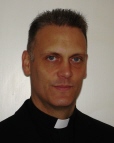
Preached at the Civic Remembrance Day Service at St Alphege Church, Solihull following the 11am Act of Remembrance at the War Memorial.
Remembrance Sunday, 9th November 2008
Why is it that we feel such a compelling need to remember those who have been killed or injured by war? Why is it that this annual time Remembrance in November is so important to us?
Well these are deep questions. But, we need periodically to remind ourselves of the great sacrifices made for us by other people. We need to remind ourselves of our history, and how we came to be the people we now are. We need to show our respect for the fallen and to give thanks for what they have won for us. And this annual reflection in November is not simply about looking back. It has profound implications for the way we live our lives and for the future that we seek to bring about.
I would like to share with you a story about Remembrance Sunday 1999 and about the changes that that it brought about for me personally. 1999 was before my priesthood days. I was working for British Gas on Homer Road, here in Solihull. We lived in Shirley, and we worshipped at St James the Great in Shirley where Fr Michael Caddy is the Rector.
Some weeks beforehand, Fr Michael had asked my wife Elaine to sing a song at the 9.30 service on Remembrance Sunday. The song was “Green Fields of France”. The song recounts the words of a weary traveller who sits down beside the gravestone of a Great War soldier and starts talking to the dead Soldier.
In the days building up to Remembrance Sunday Elaine was practising her singing around the house. As this went on I began to find it more and more annoying! It’s not, I am sure you understand, that my wife is bad at singing; quite the opposite in fact, but I realised it was a particular line from the song which was annoying me. The line was “I hope you died quick and I hope you died clean.” I pondered this line, “I hope you died quick and I hope you died clean” and I realised that the reason I did not like it was because it seemed to me that to hope for a quick and clean death, is rather a limited hope. Certainly I found that my own hope for the dead soldier was much bigger than that, much fuller than that.
First of all I found that I wanted to hope that the soldier was now enjoying eternal life. I wanted to hope that as he died on the battle field he was met by the angels and saints and led away to a heavenly reward in Jesus’ eternal kingdom.
Then I wanted to hope that the value of his sacrifice was properly recognised. Surely, his sacrifice makes up for a multitude of sins, and helps humanity to be reconciled to God. Surely his sacrifice contributed towards the winning of the war, and the securing of freedom for this nation. I found I wanted to hope that it also contributed to reconciliation between nations, and towards the building of peace and justice in the whole world.
Then I found I wanted to say thank you to the soldier for the great contribution he has made. To thank him for his sacrifice, to recognise and value the great cost that was paid. To recognise and value the loss borne by others; by the parents who mourn, by the sweetheart who perhaps lost a future husband, by friends and comrades and those who had lost a brother.
As I said, I pondered these things and wrote them down and discussed them with Fr Michael. Fr Michael invited me to share these things with the congregation after Elaine had sung the song. I did that, and I suppose, in a way, it was one of my first ever sermons.
In my reactions to the song I said that “I wanted to hope”. And I think that this is the situation for many of us on Remembrance Sunday. We want to hope in these things. We profoundly want them. At the same time, we have to admit that it can be difficult. In this day and age it is hard to have faith. It is hard to see value in suffering. It is hard to have hope that the world is guided by a God who is good, that it is getting closer to a destiny that is good.
And that was the strange thing; the truly remarkable thing. As I worked through the Remembrance process in 1999, I discovered that despite all the difficulties, despite all the suffering, I really did believe in these things. I really did hope for the eternal life of the soldier. I really did value his sacrifice. I really did believe that it brought closer the peace and unity of the world. I really was thankful for the difference the dead soldier made. I did feel some real empathy with the great cost that was paid.
After the remembrance service of 1999 my wife asked when I was going to get ordained; that is to become a priest. I laughed it off, but just seven weeks later I had an extraordinary dream. I realised that ordination was indeed the way forward for me, the way that God calls me, personally, to make my own small contribution.
So the process of remembrance in 1999 made a huge difference to me. It is my hope that in 2008, and indeed in every year, the Remembrance process that we go through will make a difference. I hope that it will remind us of the blood, sweat and tears, and above all the many, many lives that have been invested in the freedom of our nation today. I hope that it will encourage us to value that freedom, and to give thanks for it. Above all I hope that it will give us courage to face the future, not bowed down by fears and disappointment, but with hope, because through the extraordinary horror and suffering of the world wars, a new and better world was born.
Showing posts with label hope. Show all posts
Showing posts with label hope. Show all posts
09 November 2008

17 August 2008
Everybody called to share in the life of heaven
Preached at 9.15am Eucharist at St Alphege, Solihull on Sunday 17th August 2008
Trinity 13, Proper 15, Year A.
Readings Isaiah 56:1,6-8 Romans 11: 1-2a, 29-32 Matthew 15: 21-28
Years ago the Church Times published a letter. It said something like this: “Sermons – what is the point of them? Our Vicar’s preached hundreds of sermons over the years and I can’t remember any of them.” The next week the Church Times published a letter in response. It said, “Over the years, my wife’s cooked me thousands of dinners. I can’t remember many of them, but I am ever so grateful.”
I think it is a very, very helpful letter. It reminds us that, just as we need to keep feeding our bodies with food, so we need to keep feeding our souls with the presence of God. Coming to the Eucharist is a good way of doing this, because we encounter God in his Word proclaimed in scripture and when we receive Jesus present in the bread and wine of Holy Communion.
So, just as we don’t worry that we can’t remember all the good meals that we have eaten, so we should not worry that we can’t remember all the good sermons we’ve heard. And this is a good job, because I know that I have listened to hundreds and hundreds of sermons and I can hardly remember any of them!
But here is the funny thing, although it feels like I can hardly remember any sermons, I can remember two sermons about the particular gospel reading that we heard today! They were completely different sermons, by different preachers given years apart, and yet I can remember them both! And the reason I remember them is that they both surprised me, shocked me! So, I’ll tell you what the two preachers said, and let’s see if I can surprise you!
The first preacher said something like, “Well, of course, the big thing about this gospel reading is that Jesus is so rude to the Canaanite woman. She comes to him, wanting him to heal her daughter. To start with Jesus ignores her. When she won’t go away, he explains that he is sent to the people of Israel, not to the Canaanites. Then she comes and kneels in front of him. He can’t ignore her then, and so he says to her, ‘It is not fair to take the children’s food and throw it to the dogs.’ Well you can’t get much ruder than that, can you? Basically he is calling the Canaanites, dogs. Nowadays we might call that racist.”
I found this a deeply shocking viewpoint. I was very surprised. I was not ready to think about Jesus being either “rude” or “racist”, even if the woman was being completely unreasonable. Fortunately Jesus’ tone does change dramatically at this point in the story. The woman answers him very graciously and with great faith. She says, “Yes Lord, but even the dogs eat the crumbs that fall from their masters table.” She means that Jesus may have been sent to the people of Israel, but the goodness of Jesus spills over beyond the people of Israel. Like crumbs falling from a table it spills over. Perhaps it spills over because it is so abundant. Perhaps it spills over because the people of Israel don’t value it properly, don’t take it seriously enough. Either way, it spills over and the Canaanites get to share in the goodness of Jesus. Jesus is deeply impressed with this answer. He say’s to her, “Woman, great is your faith! Let it be done for you as you wish.” And the woman’s daughter was heeled at that moment.
So that was the surprise from the first preacher. The second preacher to surprise me when discussing this story said something like this: “This was a crucial moment of Jesus. This was the moment when Jesus realised that his mission was for everybody, not just for the people of Israel. This was the moment when he realised that he had come to save, not just the Jews, but the whole world.” Again, this was a big surprise for me. Since Sunday school I have been taught that Jesus came to save the whole world. I thought everybody knew that! It had never occurred to me that Jesus himself must have learned that at some point. Because Jesus has a divine nature and is God we sometimes forget how humble and ordinary his human nature was. Just like us he had to start as baby and grow up. He had to lean things. We sometimes thing of Jesus as being like some great superhero, but in fact in so many ways he was just like us.
Now I have to say that I am not altogether sure that either of the two preachers was entirely correct. There are certainly other considerations here, but the point is that both sermons helped me to move forward in my journey of faith, and remarkably I remembered them both.
So as we leave church today let’s remember that Jesus came to save everybody. That means he came to save each one of you, and he came to save me. And we might think, “I’m not the religious type”, or “I’m a terrible sinner” or “I’m not worth it” but the fact remains that Jesus came for each one of us. God calls each one of us to our place in heaven. Now we all have a journey to walk. Even Jesus had to walk a journey as he grew up and grew in understanding. We all have to grow in love. We all have to grow in repentance. We all have to become good citizens of heaven. Some of us are starting from places a long way from God, places of great sin and darkness and we have a long, long journey ahead of us, but we are still called. God still wants to share the life of heaven with us. Jesus will still give us the grace we need to walk the journey.
And if we are already on the journey, if we are already growing in love, already growing in repentance then let’s work with God on all these other people, who he also calls to heaven. Let’s love them as God loves them. Let’s have hope for them, as God has hope for them. Let’s want to share the life of heaven with them as God does. And this can be quite a challenge. Do I really want to share heaven with that nasty man at the bus top? We need to grow in love. We need to help the man at the bus stop to grow in love. We will be ready for heaven ourselves when our love is like Jesus’ love; when we truly want to share heaven with everybody.
20 July 2008
Why does God tolerate evil?
Thought for the parish pewslip.
Readings: Wisdom 12: 13,16-19 Romans 8: 12-25 Matthew 13:24-30, 36-43
(N.B. – The “Book of Wisdom” or “Wisdom of Solomon” does not appear in many standard bibles. To find it you need a bible that includes the Apocrypha, or a Catholic Edition)
If God is all powerful, and all good, why does he tolerate evil? Why does God allow bad things to happen? Our readings today give some insights into these deep mysteries.
The book of wisdom reminds us that God is all powerful, but cares for ALL people, and judges them with mildness and forbearance. Above all he allows time for repentance (verses 10&20).
In Romans, St. Paul tells us not to live in accordance with our flesh, because we know that one day we will die and our flesh will turn to dust and ashes. Rather he tells us to live by the Spirit because by the Spirit we share the destiny of Christ. He tells us that we suffer with Christ, so that we may be glorified with him. Certainly we suffer as earthly things pass away (our health, our bodies, our wealth) just as Christ suffered, but Paul tells us to have hope and confidence that a much more wonderful glory will be revealed, just as Christ’s resurrection was revealed. And this glory of renewal is not just for us, and our bodies, but for the whole of creation.
From Matthew’s gospel we hear the parable of the weeds among the wheat. We need to concentrate on doing good, and growing up like the wheat, which has a great future. We should do our best to ignore the weeds in us and in other people, because at the end of the age the weeds are destroyed.
06 February 2008
Funeral homily for Ash Wednesday
Preached at Robin Hood Crematorium Chapel, 1.30pm 6th February 2008: Ash Wednesday
Reading John 14:1-6
Now today is Ash Wednesday. It is the start of Lent, the 40 day period of penitence and fasting that prepares us for Easter. And Ash Wednesday is a very appropriate day for a funeral. One of the things we remember on Ash Wednesday is our dependence on God; as human beings we were created from dust and our human bodies return to dust and ashes and the end of our earthly lives. In church this morning we were marked with the sign of the cross on our foreheads with ash to remind us of our own mortality. Perhaps you can still see the cross of ash on my forehead. Now we have come to a funeral and this too is a poignant reminder of our mortality.
Being reminded that we will one day die can be quite unpleasant. It makes us question what we are about, what we value. Death can feel like a dark shadow looming somewhere over the horizon. Sometimes it is easier just to not think about it.
And yet the Christian Faith teaches us not to fear death. It teaches us that our true life comes from God, and that bodily death changes this life, it does not take it way. The essential part of us, our soul, survives death and goes to be with God. In the scripture reading that we heard just now Jesus was comforting his disciples before he died. He tells them that he goes to prepare a place for them, and that later him will come and take them to be with him so that they can be together. Jesus says this to his disciples, but the New Testament is very clear that we are all called to this shared life with Jesus in heaven. And this is a source of great hope. This allows us to hope that our relationships can survive death and can be restored and renewed in Jesus. It allows us to have hope for ???? and for his wife. It allows us to hope for ourselves when our own time comes.
And the scripture reading is very important because it also tells us how this hope can be realised. Thomas says the Jesus, “We do not know where you are going, how can we know the way,” and Jesus assures him that he, Jesus, is the way the life and the truth. So let’s look to Jesus and have hope. Let’s bury ???? in confidence that we will see him again after our own death. Let’s base our life on the life of Jesus; the life that is more powerful than death.
10 September 2007
Funeral Homily - Joseph Foote - Hope
Funeral Homily - 10th September 2007
Funeral of Joseph Foote - 1.45pm St Alphege Church
Background: Joseph Foote was an inspiring 9 year old who died on 1st September after seven years with a brain cancer. More about Joeseph can be found on his website at http://www.josephfoote.co.uk/ including the funeral order of service and Joeseph's father's tribute.
Reading: Matthew 18:1-5,10
Today we have heard a wonderful tribute to Joe from Andy his father. We have heard a piano piece and a very moving poem from Nancy, Joe’s sister. We have also heard a poignant tribute from Ash, who is Joe’s Godfather and who was present at Joe’s baptism.
In his words, Andy described Joe’s story as one of Love, Laughter, Courage and Hope. Today Andy has spoken particularly of the Love the Laughter and the Courage, but when I went to visit Andy and Judy in their home, it was particularly the Hope that we spoke of. And that might, at first sight, seem strange. Someone might ask, “Where is the hope in the story of a child who dies?”
Right from the time of Joe’s first diagnosis back in 2000 Andy and Judy always believed that Joe would get better. They worked hard, and Judy in particular worked hard, to make sure that Joe too believed he would get better; that things would be alright. And this hope gave the family great energy. They did everything possible. They made sure that Joe got the very best medical treatment. They established the Joe Foote Trust to fund research in the treatment of brain cancer. Andy told me how empowering he found this hope. “If you have got hope you can do anything. You can walk through walls if you have got hope,” he said.
And this hope was also very helpful to Joe. According to Andy it was this belief that he would get better that gave Joe his courage and his strength of character. This was the reason that he never moaned and never complained.
Then there was a critical moment, about two years ago. Joe’s condition developed to such a point that the hospitals refused to perform any further operations. And with news came the terrible realisation that the hospitals were not going to make Joe better. And this point all hope seemed to disappear. Andy told me about a terrible two hours, during which he and Judy languished in complete despair. The loss of hope was completely debilitating. They could do nothing. They could barely even stand up. It was a terrible, terrible moment.
But then, as emptiness and despair sank deeper and deeper into their hearts, something strange happened. They realised that at a deeper level there was something solid within them, something that had not drained away in the despair. Something that was still there, that could be counted upon. Despite the terrible news from the hospitals hope was still present in their hearts. They could carry on. They could still do things for Joe. They did not know quite what, but they could find things. They could move forward.
And so hope returned; a deeper and more profound hope. And with this, energy returned. They were able to take Joe to the States for further treatments. They redoubled all their efforts in looking after Joe. The belief that Joe would be alright sustained them and kept them going these last two years.
When I heard this I was quite concerned. I asked Andy, “And what happens to this hope two years later, when the child finally dies.” He told me, “Hope is still there. It is still there. We still have each other. We still have Nancy. We still have the grandparents and wider family. There are still things we can do, people we can work for. And we can still have hope for Joe.”
[Pause]
This extraordinary and inexplicable resilience of hope goes right to the heart of the Christian story.
When Jesus of Nazareth was teaching in Judah and Galilee many people started to place their hope in him. Jesus was a great prophet, who worked great miracles. People thought he would do great things; restore the fortunes of Israel, kick out the Roman occupation and rule as a great and just king.
And then it all went terribly wrong. Jesus was put on trial by his own people. He was scourged, mocked and crucified. He died a most terrible death, hanging on a cross. The friends of Jesus ran away and hid. For two days they suffered the most terrible despair. Was all that teaching for nothing? Could the one who healed others simply be killed himself? Then, on the third day, the strange news of the resurrection started to filter through. Jesus appeared to Mary Magdalene and to some of the apostles, not as a ghost, but as a complete and real human being, still bearing his scares from the crucifixion. There were more and more appearances, and slowly the realisation set in that Jesus had conquered death. Jesus truly was the resurrection and the life. Hope was born again. Not the futile hope that we can somehow escape death, but rather the deep and profound realisation that death is not the end. We can come to share in the new life of Christ. We can share in his resurrection.
Ash and the other godparents present hear today remind us of Joe’s baptism. When we are baptised we are baptised into the death and resurrection of Christ. Through the darkness and despair of the cross, Christ came to the hope and new life of the resurrection. By baptism we too can pass through the loss and emptiness of our own death, as we come to share in the new life of Christ. And this is our hope for Joe. And this is the hope for each one of us. In particular this is the hope for Joe’s family. I have no doubt that there will be some difficult days and months ahead as the loss of Joe’s earthly presence really sinks in, but through our baptism we have a hope that is deeper and more profound. And with hope we can do anything!
02 April 2007
Funeral Homily - The New Jerusalem
Extract from a funeral homily 02 04 07
Reading: Reverlation 21:1-7
It was ????’s specific request that we should all sing William Blake’s hymn “Jerusalem” at his funeral, and we shall be doing that after the prayers. It is not very clear what the hymn is all about, but it seems that Blake is pondering a medieval legend that suggests that Christ visited Glastonbury as a youth with Joseph of Arimathea. Blake does not tell us whether he believes the legend is true or not, but rather he moves straight on to his compelling desire to build the new Jerusalem here in England’s green and pleasant land. Blake sees this process of building as “mental strife”. It may be that he sees his gold and his desires as weapons with which the battle can be fought.
The reading that we listened to a few moments ago picks out that theme of the new Jerusalem. It talks of the end of time, immediately after the last judgement, when God makes a new heaven and a new earth. In the new earth God dwells continually with his people. He is their light and mourning and crying and pain and death are no more, because the old things have passed away and God has made all things new.
And this is our Christian hope. Death is not the end, but rather is the entrance to everlasting life. Our soul returns to God our creator, and at the end of time we will regain our bodies and dwell with God in the new Jerusalem. So this is our hope for ???, and our hope for each one of us. And like William Blake, let us commit ourselves to the building of the New Jerusalem. Let us prepare ourselves to dwell always with God. Let us learn to live and work in harmony with all that God desires, and let’s develop our own personal relationships with God through prayer.
Subscribe to:
Posts (Atom)