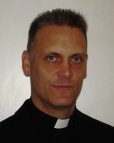
Sermon preached at St Mary the Virgin, Lapworth at 11am Mattins
Sunday 13th June 2010 – Trinity II, Proper 6, Year C
Readings: Ps 32, 2 Samuel: 11: 26- 12: 10, 13-15, Luke 7: 36 – 8: 3
Flower festival in Church.
Our readings give us two stories of sin and repentance.
In our Old Testament lesson we heard the middle part of the story of David and Bathsheba, the beautiful wife of Uriah the Hittite. And it is a pretty salacious story, well worth reading in full starting from 2 Samuel chapter 11. Basically David commits adultery with Bethsheba, gets her pregnant and then goes to great lengths to try and cover this up. The cover up fails, so David assigns Bathsheba’s husband Uriah to what amounts to a suicide mission in one of Israel’s battles. Uriah is killed and David takes Bethsheba as a wife and she bares him a son. The prophet Nathan confronts David with his sin. David repents, the Lord forgives, but nevertheless says that David’s new son will die on account of David’s misdeeds. The son becomes ill, so David enters into an intense period of fasting and pleading with God. After seven days the child dies. David gives up his fast and carries on with his life, restored in his relationship with God.
Then in our gospel reading we heard about the sinful woman who washes the feet of Jesus with her tears, dries them with her hair and anoints them with expensive ointment. The text suggests that this woman may have been Mary Magdalene, but it is far from clear and biblical scholars spend a lot of time debating whether or not it was her. But the point is that Jesus says she loves him a lot because she has been forgiven a lot, and her tells her to go in peace. Elsewhere Jesus says that, just as the doctor comes for the benefit of those who are sick, not those who are well, so he, Jesus, comes for the sinners more than for the righteous people. These words of Jesus are very reassuring to us as we become aware of all our own sins and inadequacies.
So what do we mean by sin? Well sin is rebellion against God. Sin is turning away from God, refusing his love, and setting our own agenda and priorities independent of God. And sin causes damage. God created us in love, and sets before us a journey towards fullness of life in heaven. He wants to bring his creation in us to fulfilment, he wants our good, he wants to share the life of heaven with us. When we rebel against God and go our own way, we put all these good things in jeopardy. Like David and like Mary Magdalene we have to repent and return to the Lord, and seek to walk the path that he sets before us. We have to give up on our own ideas and do the things God wants of us.
And just as we might use a sat-nav to guide us on a journey here on earth, so we should listen to that still, small voice of our conscience to guide us on our spiritual journey towards heaven. Sin is like making a mistake on the journey, doing something different from what the sat-nav says. Sometimes we might make a mistake and perhaps it is not very serious. The sat-nav immediately re-computes the journey and takes us via a slightly different route. We might loose a little time and energy, but the consequence is small. Sometimes we can make a serious mistake and find ourselves heading in altogether the wrong direction. The sat-nav probably blares out at us, “turn around as soon as possible, turn around as soon as possible.” In the same way our conscience tells us when we are going against God. It calls us to repent, turn around and accept God’s love, to trust in him and his plan for our lives. But however badly we go wrong, the sat-nav can always recomputed our route and find a way to take us to our destination. In the same way our conscience can always lead us back towards the destination that God has planned for us.
And we must not underestimate the depth of God’s mercy. Sometimes we are aware that we have made so many mistakes. Our journey has been endlessly disrupted by failures and wrong turns. We look back over our lives and it is like looking at the underside of a tapestry riddled with lose ends and knots and with no clear pattern. But just occasionally God allows us to catch a glimpse of the front side of the tapestry, the side that is visible from heaven. Suddenly we can see a clear pattern. Suddenly we realise that despite all our stumbling and failings, a beautiful tapestry has been created. And as we look back at this tapestry that our lives have woven we see that it is consistently held together and made good by the love of God, by his mercy, by his perseverance, by his willingness to suffer for us in Jesus. God is the ultimate master craftsman. His love is like a mysterious golden thread running through every part of the tapestry, making everything good. Even our mistakes have somehow been woven into the design by this mysterious golden thread.
Now I think that this is most beautifully illustrated in the flowers of this flower festival. The theme is Deus Caritas Est; God is Love. And each of the 34 arrangements illustrates some different aspect of God’s love, from the most spiritual (the fruits of the spirit) to the most practical (documents and treasurers in the antique chest). And if you look carefully you will see winding its way through the whole collection a golden thread. Often the golden thread is very fine, and hardly visible, sometimes it is thicker and clearer. But it is always there, always strong enough, and it binds the whole collection together in a beautiful harmony, like the heavenward side of the tapestry of our lives.
So do have a look at the flowers before you leave church today. See if you can see the golden tread that runs through all the arrangements. And as you look think about the love of God as it runs through our lives. And let’s try always to live our lives in harmony with God’s love, co-operating with all that he does in our lives and working with him to weave the most beautiful tapestry for our own good and the good of those around us. Amen.
Showing posts with label mercy. Show all posts
Showing posts with label mercy. Show all posts
13 June 2010

08 June 2008
Dealing with our sin
Preached at the 11am Eucharist at St Alphege, Solihull on Sunday 8th June 2008
3rd Sunday after Trinity, Proper 5 – Year A
Readings: Hosea 5:15 – 6:6 Romans 4:13-25 Matthew 9:9-13, 18-26
Our gospel reading today tells us a great deal about Jesus’ approach to sin and sinners. To understand it properly we need to understand the role of tax collectors in the society in which Jesus lived. Tax collectors were considered to be very public sinners. They were key collaborators with the Roman army of occupation. The occupying Roman powers gave to the tax collectors both right and the obligation to collect taxes from the local people. Most of the taxes went straight to the Romans, increasing the strength and resilience of their occupation. However the tax collectors were entitled to collect slightly more than they handed over to the Romans in order to cover their own living expenses. Of course some tax collectors had grand ideas about their own living expenses and became very rich at other people’s expense. To collect taxes effectively the tax collectors needed information about people, income and wealth so they would always be prying people for information. Nobody would voluntarily speak to a tax collector. The tax collectors were outcasts, treated with the utmost suspicion and often deeply hated.
And yet, most surprisingly, Jesus calls a tax collector, Matthew, to be one his disciples. Mathew becomes one of the 12 chosen by Jesus as apostles. He also becomes the writer of one of the gospels. The choice of Matthew can only have been damaging to Jesus’ reputation as a religious leader. How would we feel nowadays about a religious leader who chose a terrorist or paedophile to be one of his closest followers? Clearly Matthew must have left behind his tax collecting ways in order to follow Jesus, but it is still rather shocking. Clearly, in the mind of Jesus, sin, even very serious public sin, does not disqualify a person from being called by God. Coming from a background of sin does not prevent someone from eventually becoming absolutely central to the life and ministry of the Church. This is not saying that sin does not matter or is not a problem, but it is giving the most categorical assurance that, in relationship with Jesus, the problem of sin can and will be overcome. Through a relationship with Jesus, even the worst sinners can and will be made good.
And the gospel reading goes on to reinforce this by telling us about Jesus and his disciples eating with tax collectors and sinners. In those times, sharing food with someone was seen as a very intimate act of sharing. Eating food with tax collectors and sinners could easily be interpreted as condoning their sin. For the Pharisees this is a scandal, and they ask why Jesus does it. In his answer Jesus’ compares himself to a doctor, whose role is to heal the sick. He is not pretending that the sinners are righteous, but rather he is recognising that they need help and that he has come to give them help. “I have come to call not for the righteous, but sinners,” he said.
We all like to think of ourselves as righteous. We, none of us, like to think of ourselves as sinners. And yet we know that all of us are both saints and sinners at the same time. Particularly through our baptism, we all have the new life of Christ somewhere within us. Hopefully it is being well looked after, well nurtured and we are steadily growing up into the full stature of Christ. However we also know that sin, that is rebellion against God, is also present in each one of us, causing problems for ourselves and for others, and seeking to stop us growing up into Christ. And it is very important to be honest with ourselves about sin, otherwise we do ourselves a great disfavour and sell ourselves far short of what we are called to be.
Suppose (although it is quite impossible) that there was a scale for measuring how good or bad a person is, and suppose we are quite a good person, say plus seven or plus eight! This might sound quite good, but we must realise that this plus eight is actually made up of a plus 80 for our saintly part, and a -72 for our sinful part. Further we have the opportunity to make the 80 grow by choosing always to live in our saint, and we can reduce the effect of the -72, by recognising our sin, commending it to God’s mercy and asking for his help in overcoming it. Being honest before God about our sin is the really important first step towards its being healed. It is all too easy to say, “Well that’s not sin because everyone does it. It’s beyond my control. I can’t help it that I hate that person. I can’t hep it that I have this greed, this resentment, this disordered desire.” And often this is true, often our sin is not directly “our fault”. Often our sin arises from hurts and pains that we have received from other people. Often it arises because we have not been loved as we need to be loved. Often it arises because of the culture we live in. It can arise from adverts that teach us to want things that we do not need. It can arise from TV and films that fill our mind with sex and with selfish ideas of fulfilment. It can arise from newspapers that teach us to have fear; to fear bird flu or teenagers or other faith groups. And it may well be that much of this is not “our fault” as individuals. Much of it is not our personal rebellion against God. We may not be culpable, but this sin is still our problem. It is still limiting our development as human beings. It is still down to us to do something about it.
So what do we do about our sin. Well, as I have said, the first step is to honestly acknowledge our sin before God, without pretending its not there, or pretending it is not sin, or that it is not our responsibility. The second step is to continue loving ourselves, despite our sin, as God continues to loves us. We need to love ourselves with the same love that Jesus had for the tax collectors and sinners that he eat with. As we become aware of our sin we might be tempted towards self hatred, but this is quite wrong. We have to learn to forgive ourselves and believe in God’s love for us. Often this means accepting some pain associated with our sin, just as Jesus on the cross accepted the pain of human sin. Jesus, suffering for the sin of others, is the ultimate model here. We need to grow in love, honour and respect for Jesus in his suffering, and this will help us to approach our own sufferings with the right mindset.
Above let’s remember Jesus, quoting our first reading from Hosea, “I desire mercy not sacrifice.” We can’t buy our way out of sin with the blood of lambs or with burnt offerings, still less with money. Rather sin is overcome by mercy, that quality of love which has compassion on those in difficulty. Let’s pray that God will fill our hearts with mercy for our own sins and the sins of the people around us. Amen.
3rd Sunday after Trinity, Proper 5 – Year A
Readings: Hosea 5:15 – 6:6 Romans 4:13-25 Matthew 9:9-13, 18-26
Our gospel reading today tells us a great deal about Jesus’ approach to sin and sinners. To understand it properly we need to understand the role of tax collectors in the society in which Jesus lived. Tax collectors were considered to be very public sinners. They were key collaborators with the Roman army of occupation. The occupying Roman powers gave to the tax collectors both right and the obligation to collect taxes from the local people. Most of the taxes went straight to the Romans, increasing the strength and resilience of their occupation. However the tax collectors were entitled to collect slightly more than they handed over to the Romans in order to cover their own living expenses. Of course some tax collectors had grand ideas about their own living expenses and became very rich at other people’s expense. To collect taxes effectively the tax collectors needed information about people, income and wealth so they would always be prying people for information. Nobody would voluntarily speak to a tax collector. The tax collectors were outcasts, treated with the utmost suspicion and often deeply hated.
And yet, most surprisingly, Jesus calls a tax collector, Matthew, to be one his disciples. Mathew becomes one of the 12 chosen by Jesus as apostles. He also becomes the writer of one of the gospels. The choice of Matthew can only have been damaging to Jesus’ reputation as a religious leader. How would we feel nowadays about a religious leader who chose a terrorist or paedophile to be one of his closest followers? Clearly Matthew must have left behind his tax collecting ways in order to follow Jesus, but it is still rather shocking. Clearly, in the mind of Jesus, sin, even very serious public sin, does not disqualify a person from being called by God. Coming from a background of sin does not prevent someone from eventually becoming absolutely central to the life and ministry of the Church. This is not saying that sin does not matter or is not a problem, but it is giving the most categorical assurance that, in relationship with Jesus, the problem of sin can and will be overcome. Through a relationship with Jesus, even the worst sinners can and will be made good.
And the gospel reading goes on to reinforce this by telling us about Jesus and his disciples eating with tax collectors and sinners. In those times, sharing food with someone was seen as a very intimate act of sharing. Eating food with tax collectors and sinners could easily be interpreted as condoning their sin. For the Pharisees this is a scandal, and they ask why Jesus does it. In his answer Jesus’ compares himself to a doctor, whose role is to heal the sick. He is not pretending that the sinners are righteous, but rather he is recognising that they need help and that he has come to give them help. “I have come to call not for the righteous, but sinners,” he said.
We all like to think of ourselves as righteous. We, none of us, like to think of ourselves as sinners. And yet we know that all of us are both saints and sinners at the same time. Particularly through our baptism, we all have the new life of Christ somewhere within us. Hopefully it is being well looked after, well nurtured and we are steadily growing up into the full stature of Christ. However we also know that sin, that is rebellion against God, is also present in each one of us, causing problems for ourselves and for others, and seeking to stop us growing up into Christ. And it is very important to be honest with ourselves about sin, otherwise we do ourselves a great disfavour and sell ourselves far short of what we are called to be.
Suppose (although it is quite impossible) that there was a scale for measuring how good or bad a person is, and suppose we are quite a good person, say plus seven or plus eight! This might sound quite good, but we must realise that this plus eight is actually made up of a plus 80 for our saintly part, and a -72 for our sinful part. Further we have the opportunity to make the 80 grow by choosing always to live in our saint, and we can reduce the effect of the -72, by recognising our sin, commending it to God’s mercy and asking for his help in overcoming it. Being honest before God about our sin is the really important first step towards its being healed. It is all too easy to say, “Well that’s not sin because everyone does it. It’s beyond my control. I can’t help it that I hate that person. I can’t hep it that I have this greed, this resentment, this disordered desire.” And often this is true, often our sin is not directly “our fault”. Often our sin arises from hurts and pains that we have received from other people. Often it arises because we have not been loved as we need to be loved. Often it arises because of the culture we live in. It can arise from adverts that teach us to want things that we do not need. It can arise from TV and films that fill our mind with sex and with selfish ideas of fulfilment. It can arise from newspapers that teach us to have fear; to fear bird flu or teenagers or other faith groups. And it may well be that much of this is not “our fault” as individuals. Much of it is not our personal rebellion against God. We may not be culpable, but this sin is still our problem. It is still limiting our development as human beings. It is still down to us to do something about it.
So what do we do about our sin. Well, as I have said, the first step is to honestly acknowledge our sin before God, without pretending its not there, or pretending it is not sin, or that it is not our responsibility. The second step is to continue loving ourselves, despite our sin, as God continues to loves us. We need to love ourselves with the same love that Jesus had for the tax collectors and sinners that he eat with. As we become aware of our sin we might be tempted towards self hatred, but this is quite wrong. We have to learn to forgive ourselves and believe in God’s love for us. Often this means accepting some pain associated with our sin, just as Jesus on the cross accepted the pain of human sin. Jesus, suffering for the sin of others, is the ultimate model here. We need to grow in love, honour and respect for Jesus in his suffering, and this will help us to approach our own sufferings with the right mindset.
Above let’s remember Jesus, quoting our first reading from Hosea, “I desire mercy not sacrifice.” We can’t buy our way out of sin with the blood of lambs or with burnt offerings, still less with money. Rather sin is overcome by mercy, that quality of love which has compassion on those in difficulty. Let’s pray that God will fill our hearts with mercy for our own sins and the sins of the people around us. Amen.
28 October 2007
Knowing our need of God
Informal sermon - 28/10/07 – Last Sunday after Trinity – Year C
Readings: Ecclesiasticus 35:12-17 2 Timothy 4:6-8,16-18 Luke 18:9-14
First of all I would like to thank Club 1 for proclaiming the gospel for us today, via video clip! As you know, Club 1 have been reflecting on the parable the we heard in today’s gospel reading, so I thought it might be good to ask them a question or two!
[What do we know about the Pharisees at the time of Jesus? Tell me about the Pharisees.]
In the world that Jesus grew up in the Pharisees were pretty much the most respectable people around. They were religious leaders, usually well educated and usually from good families. People would like to be associated with the Pharisees; they would like to invite them to their parties and to talk to them in the streets.
[What do we know about Tax Collectors at the time of Jesus? Tell me about Tax Collectors.]
By contrast the tax collectors were about the least respectable people in society. The tax collectors worked for the occupying Roman force. They had the power to decide how much or how little tax you paid, so you could afford to fall out with them. If they wanted to take money off you they had the full power of the Roman army behind them. Also they often took a bit of money on the side for themselves, in addition to the money that they took for the Romans, and there was nothing you could do about it. People hated the tax collectors. It was dangerous to talk to tax collectors, because everything they knew about you or your friends they used to get taxes out of you. So people stayed away from the tax collectors and tried to have nothing to do with them.
[Last question! What is it about the parable that would have been rather
shocking to the people that Jesus was talking to?]
The parable is shocking because, when they pray to God, it is the Tax Collector not the Pharisee who walks away justified, that is who walks away in the right relationship with God. This could be very unsettling. It tells us that the ordinary values of human society can be very different from what matters to God. I was wondering how the parable might look if we switched it into modern times.
Solihull is a very respectable place. Someone from Solihull, a priest even, might go up to the church and pray “I thank you God that I have a nice house and a nice car and a nice family. I thank you that I obey the law of the land and go to church and I keep the Ten Commandments and I give money to the church. I thank you that I am a really respectable person.”
And perhaps somewhere else in the Borough, perhaps in Chelmsley Wood a drug addict might go into church, and he might have all kinds of debts, and problems, and a broken family and he might pray “God, be merciful to me, a sinner.” And perhaps it is that person who is in the right relationship with God.
To be in the right relationship with God! To be in a right relationship with God we have to humbly accept our need of God. We have to humbly accept the love that God has shown us in making us, in giving us our families, our friends and all the good things that we have. And above all we have to humbly accept that God has overcome our sins, through the passion and death of Jesus.
It is very easy to think, “I am a very respectable person…I’m not a sinner…well that’s not a sin…well everyone does that nowadays.” But that’s the Pharisee talking! It is much, much harder to be honest about the painful reality of our own sin; we have to cry out with the tax collector “God be merciful to me, a sinner.”
And the key thing here is to believe ever more truly and ever more deeply in the mercy of God. The more that we can truly trust in God’s love for us, despite all the worst things about us, the more we can start to love ourselves as God loves us, to forgive ourselves as God forgives us and to move beyond denial, to move beyond self hatred, to move beyond our sin.
And I think it is important to acknowledge that this can be a painful process. Sin can cause pain in our relationship with God and our relationship with other people. Jesus on the cross has accepted that pain and we too need to accept some of the hurt before relationships can be properly restored.
Now I would like to tell you about a prayer that can help us to do this. Perhaps you know it already. It is called the “Jesus Prayer”, and it is rather similar to the prayer that the Tax Collector made in our gospel today. The prayer has many forms, but probably the most common is the simple phrase, “Lord Jesus Christ, Son of God, have mercy on me, a sinner.” , “Lord Jesus Christ, Son of God, have mercy on me, a sinner.” In the tradition of the Orthodox Church it is recommended to repete this phase time and time again for several minutes. To start with we say the prayer with our lips, but the idea is that we build up a rhythm of prayer and slowly we start to say the prayer with our whole mind, our whole body and our whole spirit. And this is very helpful, because it reminds us ever more deeply who Jesus is, the Son of God, who we are, sinners, and of the mercy of God in which we are held.
So as we continue our service today, and as we go home, let us continue to reflect on this parable. Let’s be honest about our sin to God, and honest about our need of God. And let’s use the Jesus prayer to remind us that we stand always and only in the mercy of God. Amen.
Readings: Ecclesiasticus 35:12-17 2 Timothy 4:6-8,16-18 Luke 18:9-14
First of all I would like to thank Club 1 for proclaiming the gospel for us today, via video clip! As you know, Club 1 have been reflecting on the parable the we heard in today’s gospel reading, so I thought it might be good to ask them a question or two!
[What do we know about the Pharisees at the time of Jesus? Tell me about the Pharisees.]
In the world that Jesus grew up in the Pharisees were pretty much the most respectable people around. They were religious leaders, usually well educated and usually from good families. People would like to be associated with the Pharisees; they would like to invite them to their parties and to talk to them in the streets.
[What do we know about Tax Collectors at the time of Jesus? Tell me about Tax Collectors.]
By contrast the tax collectors were about the least respectable people in society. The tax collectors worked for the occupying Roman force. They had the power to decide how much or how little tax you paid, so you could afford to fall out with them. If they wanted to take money off you they had the full power of the Roman army behind them. Also they often took a bit of money on the side for themselves, in addition to the money that they took for the Romans, and there was nothing you could do about it. People hated the tax collectors. It was dangerous to talk to tax collectors, because everything they knew about you or your friends they used to get taxes out of you. So people stayed away from the tax collectors and tried to have nothing to do with them.
[Last question! What is it about the parable that would have been rather
shocking to the people that Jesus was talking to?]
The parable is shocking because, when they pray to God, it is the Tax Collector not the Pharisee who walks away justified, that is who walks away in the right relationship with God. This could be very unsettling. It tells us that the ordinary values of human society can be very different from what matters to God. I was wondering how the parable might look if we switched it into modern times.
Solihull is a very respectable place. Someone from Solihull, a priest even, might go up to the church and pray “I thank you God that I have a nice house and a nice car and a nice family. I thank you that I obey the law of the land and go to church and I keep the Ten Commandments and I give money to the church. I thank you that I am a really respectable person.”
And perhaps somewhere else in the Borough, perhaps in Chelmsley Wood a drug addict might go into church, and he might have all kinds of debts, and problems, and a broken family and he might pray “God, be merciful to me, a sinner.” And perhaps it is that person who is in the right relationship with God.
To be in the right relationship with God! To be in a right relationship with God we have to humbly accept our need of God. We have to humbly accept the love that God has shown us in making us, in giving us our families, our friends and all the good things that we have. And above all we have to humbly accept that God has overcome our sins, through the passion and death of Jesus.
It is very easy to think, “I am a very respectable person…I’m not a sinner…well that’s not a sin…well everyone does that nowadays.” But that’s the Pharisee talking! It is much, much harder to be honest about the painful reality of our own sin; we have to cry out with the tax collector “God be merciful to me, a sinner.”
And the key thing here is to believe ever more truly and ever more deeply in the mercy of God. The more that we can truly trust in God’s love for us, despite all the worst things about us, the more we can start to love ourselves as God loves us, to forgive ourselves as God forgives us and to move beyond denial, to move beyond self hatred, to move beyond our sin.
And I think it is important to acknowledge that this can be a painful process. Sin can cause pain in our relationship with God and our relationship with other people. Jesus on the cross has accepted that pain and we too need to accept some of the hurt before relationships can be properly restored.
Now I would like to tell you about a prayer that can help us to do this. Perhaps you know it already. It is called the “Jesus Prayer”, and it is rather similar to the prayer that the Tax Collector made in our gospel today. The prayer has many forms, but probably the most common is the simple phrase, “Lord Jesus Christ, Son of God, have mercy on me, a sinner.” , “Lord Jesus Christ, Son of God, have mercy on me, a sinner.” In the tradition of the Orthodox Church it is recommended to repete this phase time and time again for several minutes. To start with we say the prayer with our lips, but the idea is that we build up a rhythm of prayer and slowly we start to say the prayer with our whole mind, our whole body and our whole spirit. And this is very helpful, because it reminds us ever more deeply who Jesus is, the Son of God, who we are, sinners, and of the mercy of God in which we are held.
So as we continue our service today, and as we go home, let us continue to reflect on this parable. Let’s be honest about our sin to God, and honest about our need of God. And let’s use the Jesus prayer to remind us that we stand always and only in the mercy of God. Amen.
16 September 2007
Mercy and repentance
Sermon - 16/09/07 – Trinity 15 (Proper 19) – Year C
Preached at St Michael’s, Sharman Cross School, Solihull 10.30am Eucharist, 16/09/07
Readings: Exodus 32:7-14 (1 Timothy 1:12-17) Luke 15:1-10
When I was a boy, about 9 years old, it was very clear to me that my parents wanted me to be good at school. And by and large I was good at school, but not all the time. There was one occasion when a group of us had got into trouble for messing around and we had to spend our break inside writing out lines. Well, things like this happened from time to time and as I sat down with the others at the start of break to do the lines I was not unduly concerned. But then a terrible thing happened. I heard, very clearly, my father’s voice in the hallway. I realised that my father was visiting the school, as he often did (he was the local rector). I realised that he was about to walk through the classroom and he would find me, writing my lines for having been naughty. For me, it was one thing to be punished at school, it was quite another to have it known about at home. I was thrown into a terrible panic.
When my father finally entered the classroom I fell of my chair, in my panic, and tried to hide under the table. Of course it was hopeless. The teacher fished me out from under the table, and I hung my head while it was explained that I was writing lines for messing about earlier that morning. My Dad said something like, “Oh dear! So you’re in trouble for messing around are you?” He picked me up and hugged me, and while still hugging me he carried on discussing a completely different matter with the teacher. Eventually he put me down, and went on to the next classroom. I went back to writing my lines. The incident was never mentioned again, but I was changed person.
I had an overwhelming sense of relief that my crime was not going to cause problems at home. I also had a huge sense of gratitude to my Dad who continued to love me and support me even though I had done something wrong. I had learnt something about mercy and I had experienced repentance.
The readings that we read this morning make us think about mercy and repentance. Mercy is love and compassion expressed towards those who are in difficult situations. There are works of mercy that seek to help those with bodily needs, so we try to feed the hungry, clothe the naked and shelter the homeless. There are also works of mercy that seek to help those with spiritual needs, so we try to console those who mourn, we try to patiently put up with the faults we perceive in other people and we try to forgive the sins of others. It is especially this mercy towards those who sin, that we think about in today’s readings.
In our OT lesson we hear about God who is angry with the Israelites because they have made a calf of gold and started to worship it, rather than worshiping the one true God. God says that his wrath will burn hot against them and he will destroy them all. but Moses, who scriptures tell us was the most humble of men, courageously pleaded with God and he managed to persuaded God not to wipe out the Israelites totally. Now had we read on a bit we would have discover that that was not the end of the matter. Moses returned to the Israelites very angry; he ground their golden calf into a fine power, mixed it with water and made the people drink it. Later 3000 Israelites died by the sword, and many more through a plague on account of the golden calf, but after that it seems that there was real repentance. Certainly God was able to continue to help the Israelites on their journey to the promised land.
Repentance. That is the other key word from our scripture readings today. In the gospel reading Jesus told the story of the lost sheep. When the sheep is finally found there is great joy. Jesus says that there will be more joy in heaven over one sinner who repents that over 99 righteous people who need no repentance. Similarly he tells the story of the woman who lost one of her ten silver coins. She searches high and low, and when she eventually finds it there is great rejoicing. Similarly, says Jesus, there is joy in heaven when one sinner repents.
Repentance means saying that we are sorry, and starting again in obedience to God. It means putting God in the first place in our lives, and letting everything else (houses, families, jobs, holidays) letting all these things find their right place under God.
So as we leave this church today, let us try to put into practice mercy and repentance. First of all let’s have an attitude of repentance ourselves. Let’s make sure that God has first place in our lives and that everything else is done in obedience to him. And after that, let’s have an attitude of mercy. Especially when we encounter faults in other people, let’s have an attitude of mercy. In fact it is the love and compassion of our mercy that is the most helpful thing in bringing them to repentance.
Preached at St Michael’s, Sharman Cross School, Solihull 10.30am Eucharist, 16/09/07
Readings: Exodus 32:7-14 (1 Timothy 1:12-17) Luke 15:1-10
When I was a boy, about 9 years old, it was very clear to me that my parents wanted me to be good at school. And by and large I was good at school, but not all the time. There was one occasion when a group of us had got into trouble for messing around and we had to spend our break inside writing out lines. Well, things like this happened from time to time and as I sat down with the others at the start of break to do the lines I was not unduly concerned. But then a terrible thing happened. I heard, very clearly, my father’s voice in the hallway. I realised that my father was visiting the school, as he often did (he was the local rector). I realised that he was about to walk through the classroom and he would find me, writing my lines for having been naughty. For me, it was one thing to be punished at school, it was quite another to have it known about at home. I was thrown into a terrible panic.
When my father finally entered the classroom I fell of my chair, in my panic, and tried to hide under the table. Of course it was hopeless. The teacher fished me out from under the table, and I hung my head while it was explained that I was writing lines for messing about earlier that morning. My Dad said something like, “Oh dear! So you’re in trouble for messing around are you?” He picked me up and hugged me, and while still hugging me he carried on discussing a completely different matter with the teacher. Eventually he put me down, and went on to the next classroom. I went back to writing my lines. The incident was never mentioned again, but I was changed person.
I had an overwhelming sense of relief that my crime was not going to cause problems at home. I also had a huge sense of gratitude to my Dad who continued to love me and support me even though I had done something wrong. I had learnt something about mercy and I had experienced repentance.
The readings that we read this morning make us think about mercy and repentance. Mercy is love and compassion expressed towards those who are in difficult situations. There are works of mercy that seek to help those with bodily needs, so we try to feed the hungry, clothe the naked and shelter the homeless. There are also works of mercy that seek to help those with spiritual needs, so we try to console those who mourn, we try to patiently put up with the faults we perceive in other people and we try to forgive the sins of others. It is especially this mercy towards those who sin, that we think about in today’s readings.
In our OT lesson we hear about God who is angry with the Israelites because they have made a calf of gold and started to worship it, rather than worshiping the one true God. God says that his wrath will burn hot against them and he will destroy them all. but Moses, who scriptures tell us was the most humble of men, courageously pleaded with God and he managed to persuaded God not to wipe out the Israelites totally. Now had we read on a bit we would have discover that that was not the end of the matter. Moses returned to the Israelites very angry; he ground their golden calf into a fine power, mixed it with water and made the people drink it. Later 3000 Israelites died by the sword, and many more through a plague on account of the golden calf, but after that it seems that there was real repentance. Certainly God was able to continue to help the Israelites on their journey to the promised land.
Repentance. That is the other key word from our scripture readings today. In the gospel reading Jesus told the story of the lost sheep. When the sheep is finally found there is great joy. Jesus says that there will be more joy in heaven over one sinner who repents that over 99 righteous people who need no repentance. Similarly he tells the story of the woman who lost one of her ten silver coins. She searches high and low, and when she eventually finds it there is great rejoicing. Similarly, says Jesus, there is joy in heaven when one sinner repents.
Repentance means saying that we are sorry, and starting again in obedience to God. It means putting God in the first place in our lives, and letting everything else (houses, families, jobs, holidays) letting all these things find their right place under God.
So as we leave this church today, let us try to put into practice mercy and repentance. First of all let’s have an attitude of repentance ourselves. Let’s make sure that God has first place in our lives and that everything else is done in obedience to him. And after that, let’s have an attitude of mercy. Especially when we encounter faults in other people, let’s have an attitude of mercy. In fact it is the love and compassion of our mercy that is the most helpful thing in bringing them to repentance.
Subscribe to:
Posts (Atom)