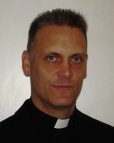
Sermon preached on Sunday 23rd April 2010 at 11am at St Mary’s Lapworth. Other versions of this sermon were preached at 8.30am at St Mary’s, 3pm at St Michael’s Baddesley Clinton and at 6.30pm at Solihull School Chapel.
Pentecost – Year C
Readings: Ps 104: 24-end Genesis 11: 1-9 Acts 2: 1-21
Our two scripture readings today are a kind of mirror image of each other. The story of the Tower of Babel is a story about sin, which leads to the scattering of peoples, their disempowerment and confusion in their language. The story of Pentecost is a story about co-operation with the plan of God, which leads to the gathering and unifying of peoples, the breakdown of language barriers and great power at work amongst the disciples.
So let’s think about the Tower of Babel. The people, who were all of one people with one language said, “Come, let us build ourselves a city, and a tower with its top in the heavens, and lets us make a name for ourselves, otherwise we shall be scattered abroad upon the face of the whole earth.”
And so what it about this that was so sinful? What was it that God found so objectionable? Well above, the sin was pride. Rather than acknowledge their dependence on God, the people wanted to see themselves as self sufficient and to set their own agenda independent of God. They wanted to build a great tower to rise to the heavens and so to place themselves above God. They wanted to make a name for themselves, to be famous, to place themselves above other people who would look up to them and praise them. But pride is in fact a terrible trap. No one can be self sufficient but God alone. If God hides his face people are troubled. If God takes away their breath, then they die. No one can take forward plans and agendas independent of God. The plans and agendas that succeed, that deliver benefits in the longer term, are plans and agendas that are blessed by God, that come about through co-operation with God and by obedience to God’s will. And its seems to me that these people of Babel knew that their plans were ill-founded, were not based on God’s will. Deep down they knew this, and because of it they suffered from fear. They feared that they might be scattered abroad on the face of the whole earth. Fear is not a good thing. We are called not to fear, but rather to trust in the God who is love. “True love casts out fear” as St John teaches (1 John 4: 18). And it is interesting how God responded to the pride and self sufficiency of the people of Babel. The Lord did the very thing that they feared. He scattered them abroad over the whole earth. And he did this by confusing their language so that they could not understand one another. He split them into different peoples and nations and he took away all their power. They never finish building their city.
And it is very interesting to read the story of the Tower of Babel alongside the story of Pentecost, because Pentecost is the mirror image of the story; the very opposite thing happens. The disciples gather in the upper room, as Jesus commanded them, so they are acting in obedience to God. They have just passed through the experience of the death and resurrection of Jesus. They have learnt that they can trust Jesus, even when he seems utterly helpless, dying on a cross. The disciples have been witnesses to the resurrection, and know that it is God who is the giver of life. They know that with God not even death is to be feared. And so God pours out his Holy Spirit among them, and they have this extraordinary experience with a violent rush of wind and divided tongues of fire resting on each one of them. And whereas at Babel people’s languages were confused and they were scattered abroad into different peoples and nations, so with the gift of the Holy Spirit, disperse peoples were gathered into one. There was a remarkable gift of language such that everyone understood the disciples in their native tongue, whatever their background. If we had read to the end of chapter 2 we would have heard that all the disciples in Jerusalem were gathered together and had all things in common, like one family. We would also have read of the great power received by the disciples and of the great wonders and signs were worked by the apostles (Act 2: 43-45). Later St. Paul would declare that in Christianity, “There is no longer Jew or Greek, there is no longer slave or free, there is no longer male and female; for all of you are one in Christ Jesus” (Gal 3: 28). Just as sin dispersed people and divided them at Babel, so at Pentecost the Holy Spirit united people and brought them together.
And so what about us? What does this mean for us now? Well clearly we need to free ourselves from the behaviours and attitudes of Babel, and model ourselves on the disciples at Pentecost. So first of all we need to guard against pride. We should not seek to put ourselves above God or above other people. Instead we must see ourselves and other people as different parts of God’s one creation, called to live in harmony with one another, as many sons and daughters of one heavenly Father.
Then we must not try to be self-sufficient, in a way that seeks independence from God. Rather we must know our need of God, and of his Holy Spirit. We should put our hope in God, and in Jesus who conquered death. Nowadays, as at Babel, it is all too easy to place our hopes in human achievements. There has been much human progress; scientific, technological or economic. These things can certainly be good; medical progress for example has brought us great benefits. But these things cannot save us. They cannot prevent death, or unify us, or heal the problems of the world. These bigger goals depend on the action of God. And if scientific or technological progress is pursued outside of God’s plan then God might once again choose to scatter and divide and to deprive these things of all their power.
But rather we are called to maintain the attitudes and behaviours of Pentecost, so that God will pour out his Spirit upon us. Perhaps we might even experience the rushing wind or tongues of fire, but if even if we don’t we can certainly experience the great power of God’s Spirit, his healing, reconciling and unifying force, his gifts of understanding, and being understood. And as our Psalm suggested, where God sends forth his spirit we can witness his creative powers because new things are brought into being and as the face of the earth is renewed. I hope that this is what things will be like here in this place! Amen.
Showing posts with label Pentecost. Show all posts
Showing posts with label Pentecost. Show all posts
23 May 2010

31 May 2009
Pentecost and the Global Day of Prayer
Sermon preached at 9.15 and 11am Eucharists at St Alphege, Solihull on the feast of Pentecost, 31/05/09.
Pentecost – Year B.
Readings: Act 2: 1-21 Roman 8: 22-27 John 15: 26-27a & 16: 4b-15
In April 2006 I visited South Africa. I was present for Freedom Day, when South Africa marks the anniversary of the first multi-racial elections held after the apartheid era. These were the elections of 27th April 1994, which led to the inauguration of Nelson Mandela as the country’s first black president. It was a watershed moment, almost like the birth of a new nation.
When I visited twelve years had gone by. Great progress had been made, but the scars of Apartheid were still clearly visible in society. I was interested to see that, generally speaking, the churches carried on serving the same communities that they served before the ending of apartheid. This meant that most churches continued to be either overwhelmingly white or overwhelmingly black. I was staying in the town of Walmer in Port Elizabeth, where there are two Anglican churches. The one in the posh suburbs was almost entirely white. The other was in the township and that was almost entirely black. Some efforts had been made to diversify the two congregations. In particular two black priests had been appointed to serve in the white church. This was a very important symbol of the churches desire to move beyond apartheid, but the truth was that it was very difficult to do so. The black and white community were separated by differences in language, education, wealth, history, tradition and location. For very natural and practical reasons it was very difficult to worship with the other community, and very few people did.
The differences I have just described were all within the Anglican Diocese, but the other thing that was noticeable about the Church in South Africa was that it has so many different church denominations. Within the white community it seemed that every different country of origin, be it British, Dutch, German or whatever, has its own church, related to its own denomination and with its own followers from that particular background. Within the black community it seemed that disputes and power struggles would frequently lead to the formation of new Church denominations. There were loads of them, many of them very small. As someone who is very interested in Church unity I found all these different denominations and different community affiliations very challenging.
But then I was amazed by a meeting I attended, organised by a group called Transforming Africa. This group called together Christians from all backgrounds to pray for Africa, and to pray for the world. At this particular meeting they were planning their local participation in a “Global Day of Prayer” at Pentecost. This Global Day of Prayer had grown rapidly from a vision received in Cape Town in the year 2000. It included a message of repentance and prayer, in preparation for a new and transforming presence of God in society. And what amazed me was that people from all the different Church denominations, and all the different communities came along and prayed together. Sometimes the prayer was in English, translated to Xhosa. Sometimes the prayer was in Xhosa translated to English. Sometimes the singing was African harmonies, sometimes it was western style hymns. Despite this all joined in, as best they could, and all were hospitable to the others. But the really striking thing about the meeting was the presence of the Holy Spirit. The vicar I was with said, “I always know the Holy Spirit is there because I can’t stop weeping.” Certainly, he was weeping. I wasn’t weeping, but I was completely chocked up. I could hardly speak. It was an overwhelming experience of fullness and richness and unity. I found myself transformed, and wanting to live this richer, fuller life.
In our first reading today we heard about the extraordinary day of Pentecost, which we often think of as the birthday of the church. For me, that meeting I attended in Africa was a little bit similar to the Day of Pentecost. It was similar, first of all, because of the great pouring out of the Holy Spirit, which all present must have felt and all must have been moved by. It was similar because it was a calling together of people from all different backgrounds. In Jerusalem that was Parthians, Medes and Elamites. In South Africa it was blacks and whites, Protestants and Catholics, institutional church and independent church. Another similarity was a breaking down of barriers and the building of unity. In Jerusalem all could understand the apostles, whatever their language and background. We are told later in the chapter that all the believers were together and held all things in common. In South Africa everything was translated, and there was a hospitable love, such that all felt included. Another similarity was the great impetus to repentance and rapid growth. In Jerusalem we know that 3,000 were added to the Church on the day of Pentecost. In South Africa, and worldwide, the Global Day of Prayer has continued to grow in an extraordinary way. Last year it arrived even in Solihull! And this year too, at our Churches Together Pentecost event, 4pm in Malvern Park, we shall pray the prayers of the Global Day of Prayer in union with millions of people, coming from almost every country of the world.
And I can’t help but be struck by the extraordinary power of the Holy Spirit who fuels this movement of repentance and prayer and spreads it throughout the world. And I can’t help wondering what God is preparing us for. It seems to me that in these times we need to be very attentive to the work of the Holy Spirit, and to co-operate fully with all that the Spirit seems to be doing. So this Pentecost, let’s listen to the voice of the Holy Spirit within us. If we can get to Malvern Park at 4pm for the Global Day of Prayer then let’s do that. Let’s work with the Spirit in loving one another, so that barriers are broken down and unity is built. And, as Paul advises in our second reading today, let’s allow the Spirit within us to intercede for us with sighs too deep for words. Then perhaps we shall have the courage to hope with patience for the things unseen and for the great redemption which is promised. Amen.
Pentecost – Year B.
Readings: Act 2: 1-21 Roman 8: 22-27 John 15: 26-27a & 16: 4b-15
In April 2006 I visited South Africa. I was present for Freedom Day, when South Africa marks the anniversary of the first multi-racial elections held after the apartheid era. These were the elections of 27th April 1994, which led to the inauguration of Nelson Mandela as the country’s first black president. It was a watershed moment, almost like the birth of a new nation.
When I visited twelve years had gone by. Great progress had been made, but the scars of Apartheid were still clearly visible in society. I was interested to see that, generally speaking, the churches carried on serving the same communities that they served before the ending of apartheid. This meant that most churches continued to be either overwhelmingly white or overwhelmingly black. I was staying in the town of Walmer in Port Elizabeth, where there are two Anglican churches. The one in the posh suburbs was almost entirely white. The other was in the township and that was almost entirely black. Some efforts had been made to diversify the two congregations. In particular two black priests had been appointed to serve in the white church. This was a very important symbol of the churches desire to move beyond apartheid, but the truth was that it was very difficult to do so. The black and white community were separated by differences in language, education, wealth, history, tradition and location. For very natural and practical reasons it was very difficult to worship with the other community, and very few people did.
The differences I have just described were all within the Anglican Diocese, but the other thing that was noticeable about the Church in South Africa was that it has so many different church denominations. Within the white community it seemed that every different country of origin, be it British, Dutch, German or whatever, has its own church, related to its own denomination and with its own followers from that particular background. Within the black community it seemed that disputes and power struggles would frequently lead to the formation of new Church denominations. There were loads of them, many of them very small. As someone who is very interested in Church unity I found all these different denominations and different community affiliations very challenging.
But then I was amazed by a meeting I attended, organised by a group called Transforming Africa. This group called together Christians from all backgrounds to pray for Africa, and to pray for the world. At this particular meeting they were planning their local participation in a “Global Day of Prayer” at Pentecost. This Global Day of Prayer had grown rapidly from a vision received in Cape Town in the year 2000. It included a message of repentance and prayer, in preparation for a new and transforming presence of God in society. And what amazed me was that people from all the different Church denominations, and all the different communities came along and prayed together. Sometimes the prayer was in English, translated to Xhosa. Sometimes the prayer was in Xhosa translated to English. Sometimes the singing was African harmonies, sometimes it was western style hymns. Despite this all joined in, as best they could, and all were hospitable to the others. But the really striking thing about the meeting was the presence of the Holy Spirit. The vicar I was with said, “I always know the Holy Spirit is there because I can’t stop weeping.” Certainly, he was weeping. I wasn’t weeping, but I was completely chocked up. I could hardly speak. It was an overwhelming experience of fullness and richness and unity. I found myself transformed, and wanting to live this richer, fuller life.
In our first reading today we heard about the extraordinary day of Pentecost, which we often think of as the birthday of the church. For me, that meeting I attended in Africa was a little bit similar to the Day of Pentecost. It was similar, first of all, because of the great pouring out of the Holy Spirit, which all present must have felt and all must have been moved by. It was similar because it was a calling together of people from all different backgrounds. In Jerusalem that was Parthians, Medes and Elamites. In South Africa it was blacks and whites, Protestants and Catholics, institutional church and independent church. Another similarity was a breaking down of barriers and the building of unity. In Jerusalem all could understand the apostles, whatever their language and background. We are told later in the chapter that all the believers were together and held all things in common. In South Africa everything was translated, and there was a hospitable love, such that all felt included. Another similarity was the great impetus to repentance and rapid growth. In Jerusalem we know that 3,000 were added to the Church on the day of Pentecost. In South Africa, and worldwide, the Global Day of Prayer has continued to grow in an extraordinary way. Last year it arrived even in Solihull! And this year too, at our Churches Together Pentecost event, 4pm in Malvern Park, we shall pray the prayers of the Global Day of Prayer in union with millions of people, coming from almost every country of the world.
And I can’t help but be struck by the extraordinary power of the Holy Spirit who fuels this movement of repentance and prayer and spreads it throughout the world. And I can’t help wondering what God is preparing us for. It seems to me that in these times we need to be very attentive to the work of the Holy Spirit, and to co-operate fully with all that the Spirit seems to be doing. So this Pentecost, let’s listen to the voice of the Holy Spirit within us. If we can get to Malvern Park at 4pm for the Global Day of Prayer then let’s do that. Let’s work with the Spirit in loving one another, so that barriers are broken down and unity is built. And, as Paul advises in our second reading today, let’s allow the Spirit within us to intercede for us with sighs too deep for words. Then perhaps we shall have the courage to hope with patience for the things unseen and for the great redemption which is promised. Amen.
Subscribe to:
Posts (Atom)