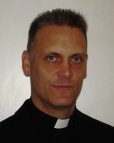
Sermon preach at 9.15am and 11am Eucharists at St Alphege Church on Sunday 29th November 2009 – Advent Sunday, Year C.
Readings: Jeremiah 33: 14-16 I Thessalonians 3: 9-13 Luke 21: 25-36
In the summer we had a family holiday in the south of France. During the long drive back in the car we listened to an audio book. It was William Golding’s Lord of the Flies, read by William Golding himself. Our children have been studying the book in their English lessons at school. Perhaps you are familiar with the story. A group of English school boys get stranded on a tropical island. Away from civilisation they start to form their own society. Like all societies, it has its strengths and its weaknesses, its good points and its bad points. But as the story develops, the forces of evil seem to grow in strength and everything that we might think of as civilisation starts to fall apart. Democracy gives way to dictatorship, hope gives way to superstition and fear, murders are committed and respectable boys from English public schools start to behave like the worst kind of primitive savages.
The storyline suggests that it is only the pressures and benefits of civilisation itself that causes people to behave in a civilised way. It suggests that without civilisation human beings should be expected to degenerate into an animal like depravity. The story therefore presents a somewhat pessimistic assessment of the human condition.
But one has to ask the question, “Well how did civilisation come about in the first place?” At some point in history there must have been a group of people who had the opposite experience from the boys on the island, an experience in which goodness triumphed and civilisation flourished. Without such an experience there could never have been any civilisation in the first place. I asked this question recently, the last time the book was discussed around our dinner table. The answer that came back was that somehow it is precisely the triumph of evil which allows goodness to be born and to grow. This answer suggests that, had Golding’s book continued with the boys still stranded on the island, then, after the most dreadful murders had been committed, evil would have done its worst and good would have had to prevail. Civilisation would have been reborn.
I thought this was a very interesting suggestion, and there are many parallels with Christian theology. In particular it is the great triumph of evil in the crucifixion of Christ, which reveals the resurrection life and which leads to the descent of the Holy Spirit, the birth of the church, and the beginnings of the Christian society.
Or again, we might think of the many terrible martyrdoms that the church suffered at the hands of the Roman Empire in the Coliseum and the Roman Circus. Especially we might think of the thousands who died in the persecution under the emperor Diocletian starting in 303 AD. Did this mass martyrdom not somehow lead to the conversion of the emperor Constantine and the official Christianisation of the Roman Empire, starting from 313 AD?
It is indeed an intriguing thought. Evil must sometimes do its worst, and must appear to triumph, before goodness can be revealed and can flourish. In Advent we reflect on the coming of Jesus. We remember his first coming, as a baby in Bethlehem. But especially in the first half of Advent we focus on the long prophesied second coming of Jesus. And the scriptures suggest to us that the second coming of Christ will contain something of this theme of good being revealed by the apparent triumph and of everything bad. For example, the Gospel reading from Luke which we heard this morning talks of the second coming of Christ. It describes a time of great distress on earth with great confusion among the nations. It talks of people fainting from fear and of a terrible foreboding about what is coming upon the earth. But in the midst of this most terrible moment Luke tells us that people will see the Son of Man coming in a cloud, with power and great glory and with redemption for all who have put their trust in Christ.
And there are many other scripture readings like this one (e.g. Matt 24: 9-14, 2 Peter: 3, Rev 13 and 20: 7-10) which suggest that the second coming of Christ will follow a most terrible and evil time, during which many people will be led astray.
So, what are we to make of all this?
Well first of all it is important not to be discouraged when we hear bad news. Watching the TV and reading the newspapers can be very disheartening. But our Christian hope remains solid, even in the face of bad news, or fearful events or terrible evil. In fact these things can be the very means whereby Christian hope is revealed.
And then I think we must take very seriously the advice that we read from St Paul in 1 Thessalonians this morning. Paul is expecting the second coming of Jesus imminently, and he is very concerned that people should prepare for this well. He says, “May the Lord make you increase and abound in love for one another and for all” (1 Thess 3: 12). He goes on to talk about holiness, and being blameless before God, but it seems that these things come from love. When we set out to do things for love of God, and love of the people around us then we are ordering our lives in accordance with the commands of Jesus, we are living the life of his kingdom and we are preparing ourselves to be good citizens of his kingdom. It is love that continues to have value when we die or when the world comes to an end (1 Cor 13: 13).
So let’s live the season of Advent well, by asking God to help us to increase and abound in love for one another, and for all. This means seeking the good of the other; trying to focus on how we serve others. Ultimately this leads to holiness, and being blameless before Christ. There is no better way of preparing for the coming of Jesus. Amen.
Showing posts with label martyrs. Show all posts
Showing posts with label martyrs. Show all posts
29 November 2009

29 June 2008
SS Peter and Paul
29th June 2008, Feast of SS Peter and Paul
Informal sermon with images, preached at St Alphege, Solihull at the 9.15 Eucharist.
Readings: Acts 12: 1-11 2 Timothy 4: 6-8 & 17-18 Matthew 16: 13-19
So today we remember Saint Peter and Saint Paul. Here is a picture of them.
[Picture - SS Peter and Paul]
That is St Peter on the left holding the two keys. St Peter is often depicted holding keys because of the incident that we heard about in our gospel reading today. Jesus declares that Peter is the Rock on which he will build his church. Jesus says, “I will give you the keys of the kingdom of heaven, and whatever you bind on earth will be bound in heaven, and whatever you loose on earth will be loosed in heaven.” It is not easy for us to know exactly what that means, but clearly great authority in heaven and earth has been given to him.
So obviously, that is St Paul on the right. He is often depicted carrying the Word of God, as a book or as a double edged sword. A sharp double edged sword is used as a symbol for the word of the Lord in the book of Hebrews (4:12) and in Revelation (chapters 1 and 2).
But why do we make such a fuss about Peter and Paul? They died almost 2000 years ago, why are they relevant to us now? Well first of all they are important because they are saints, and they show us the way to be saints. We are all called to become saints. We are all called to holiness. God has created us for an extraordinary destiny. We want us to take our place in the kingdom of heaven, and to share in his glory (2 Thes 2:14, 1 Pet 5:1). It is like we are called to be a small crystal of glass in the great chandelier of heaven, where we are illuminated completely by the glory of God.
[Picture - Chandelier]
Of course for this to happen we have to be raised up and cut into shape and cleaned and purified, but eventually will take our place alongside all the other saints around God, the source of all light and life. So the saints are important to us because they show us what our destiny is. They show us how by following Christ and his commandments we can grow in love and become holy.
[Camera on speaker]
But Paul and Peter are also important because they are the great apostles and preachers central to the setting up of the church. Peter was sent (apostle means “sent”) to preach the gospel to the Jews, to the circumcised, and Paul was sent to preach the gospel to the gentiles, the non-Jews, the uncircumcised. (c.f. Gal 2:7ff)
Let’s think about Peter for a moment.
[Picture – icon of Peter]
Peter was originally called Simon. He grew up us as a fisherman, with his brother Andrew. He got to know Jesus, who came to his house and healed his mother-in-law and performed many other miracles (Luke 4: 38ff). Then one day Jesus used Peter’s boat as a platform to preach from.
[Picture – boat]
After this they put out into deep water and caught a miraculous catch of fish. Peter became terrified of the power of Jesus, but Jesus told him not to be afraid, but to follow him and become a catcher of people rather than of fish. (Luke 5: 1-11).
Peter was the leader of the disciples, but he was also the one who made lots of mistakes. Jesus was forever correcting him, and in particular forgave Peter for his three fold denials of Christ, during Christ’s trial. After the day of Pentecost Peter becomes a great preacher and works many wonders. We heard today the story of his miraculous escape from jail. For the apostles he was the first among equals. He was indeed the rock on which the church was founded.
Now let’s think about Paul
[Picture – icon of Paul]
Paul came from an impeccable background. He was a Pharisee, the son of a Pharisee and had had a full Jewish religious education. He was also a Roman citizen by birth and had received an Greek education. As a young man his name was Saul. Like many Pharisees he did not approve of the innovations that Jesus proposed within Judaism, and he actively persecuted the Church. He was present at the stoning of Stephen, and was on his way to Damascus to arrest more Christians when he had an extraordinary vision of Christ.
[Picture – conversion of St Paul]
The experience completely transformed Paul, who became a great preacher and teacher of the faith. He undertook three major missionary journeys to visit the fledgling churches in different places. He endured all kinds of sufferings including shipwreck, prison and being floged. He wrote many letters to the young churches and these quickly became important to the whole church and were included in the New Testament. He was the great theologian of the early church.
[Camera on speaker]
Another important reason why we particularly remember Peter and Paul is their importance as martyrs. There is nothing in scripture about how Peter and Paul died, but there are some traditions found in early church writings. In AD 64 there was a terrible fire in Rome, which destroyed a large part of the city. Nero, the unpopular emperor, was accused of playing his fiddle while Rome burned around him. Nero needed a scapegoat, and he blamed the Christians. A terrible persecution followed. Nero devised extraordinary new tortures to inflict on the Christians. The traditions suggest that Peter was crucified upside down on the site which is now St Peter’s basilica in Rome. Paul, who being a Roman citizen could not be crucified, was beheaded. The early church quickly started to remember Peter and Paul together.
[Pictue - Picture of Peter and Paul embracing]
They were the martyrs on whom the church in Rome was founded.
So as we remember Peter and Paul, we need to give thanks for their great witness to Christ. We need to give thanks for the secure spiritual foundations that they laid for the Church, and the church in Rome in particular. As we think about our own spiritual lives, and our own journeys of faith, let’s be inspired by their examples. Let’s each of us follow the path Christ has prepared for us; Peter and Paul show us that what ever the cost, it is worth it!
Informal sermon with images, preached at St Alphege, Solihull at the 9.15 Eucharist.
Readings: Acts 12: 1-11 2 Timothy 4: 6-8 & 17-18 Matthew 16: 13-19
So today we remember Saint Peter and Saint Paul. Here is a picture of them.
[Picture - SS Peter and Paul]
That is St Peter on the left holding the two keys. St Peter is often depicted holding keys because of the incident that we heard about in our gospel reading today. Jesus declares that Peter is the Rock on which he will build his church. Jesus says, “I will give you the keys of the kingdom of heaven, and whatever you bind on earth will be bound in heaven, and whatever you loose on earth will be loosed in heaven.” It is not easy for us to know exactly what that means, but clearly great authority in heaven and earth has been given to him.
So obviously, that is St Paul on the right. He is often depicted carrying the Word of God, as a book or as a double edged sword. A sharp double edged sword is used as a symbol for the word of the Lord in the book of Hebrews (4:12) and in Revelation (chapters 1 and 2).
But why do we make such a fuss about Peter and Paul? They died almost 2000 years ago, why are they relevant to us now? Well first of all they are important because they are saints, and they show us the way to be saints. We are all called to become saints. We are all called to holiness. God has created us for an extraordinary destiny. We want us to take our place in the kingdom of heaven, and to share in his glory (2 Thes 2:14, 1 Pet 5:1). It is like we are called to be a small crystal of glass in the great chandelier of heaven, where we are illuminated completely by the glory of God.
[Picture - Chandelier]
Of course for this to happen we have to be raised up and cut into shape and cleaned and purified, but eventually will take our place alongside all the other saints around God, the source of all light and life. So the saints are important to us because they show us what our destiny is. They show us how by following Christ and his commandments we can grow in love and become holy.
[Camera on speaker]
But Paul and Peter are also important because they are the great apostles and preachers central to the setting up of the church. Peter was sent (apostle means “sent”) to preach the gospel to the Jews, to the circumcised, and Paul was sent to preach the gospel to the gentiles, the non-Jews, the uncircumcised. (c.f. Gal 2:7ff)
Let’s think about Peter for a moment.
[Picture – icon of Peter]
Peter was originally called Simon. He grew up us as a fisherman, with his brother Andrew. He got to know Jesus, who came to his house and healed his mother-in-law and performed many other miracles (Luke 4: 38ff). Then one day Jesus used Peter’s boat as a platform to preach from.
[Picture – boat]
After this they put out into deep water and caught a miraculous catch of fish. Peter became terrified of the power of Jesus, but Jesus told him not to be afraid, but to follow him and become a catcher of people rather than of fish. (Luke 5: 1-11).
Peter was the leader of the disciples, but he was also the one who made lots of mistakes. Jesus was forever correcting him, and in particular forgave Peter for his three fold denials of Christ, during Christ’s trial. After the day of Pentecost Peter becomes a great preacher and works many wonders. We heard today the story of his miraculous escape from jail. For the apostles he was the first among equals. He was indeed the rock on which the church was founded.
Now let’s think about Paul
[Picture – icon of Paul]
Paul came from an impeccable background. He was a Pharisee, the son of a Pharisee and had had a full Jewish religious education. He was also a Roman citizen by birth and had received an Greek education. As a young man his name was Saul. Like many Pharisees he did not approve of the innovations that Jesus proposed within Judaism, and he actively persecuted the Church. He was present at the stoning of Stephen, and was on his way to Damascus to arrest more Christians when he had an extraordinary vision of Christ.
[Picture – conversion of St Paul]
The experience completely transformed Paul, who became a great preacher and teacher of the faith. He undertook three major missionary journeys to visit the fledgling churches in different places. He endured all kinds of sufferings including shipwreck, prison and being floged. He wrote many letters to the young churches and these quickly became important to the whole church and were included in the New Testament. He was the great theologian of the early church.
[Camera on speaker]
Another important reason why we particularly remember Peter and Paul is their importance as martyrs. There is nothing in scripture about how Peter and Paul died, but there are some traditions found in early church writings. In AD 64 there was a terrible fire in Rome, which destroyed a large part of the city. Nero, the unpopular emperor, was accused of playing his fiddle while Rome burned around him. Nero needed a scapegoat, and he blamed the Christians. A terrible persecution followed. Nero devised extraordinary new tortures to inflict on the Christians. The traditions suggest that Peter was crucified upside down on the site which is now St Peter’s basilica in Rome. Paul, who being a Roman citizen could not be crucified, was beheaded. The early church quickly started to remember Peter and Paul together.
[Pictue - Picture of Peter and Paul embracing]
They were the martyrs on whom the church in Rome was founded.
So as we remember Peter and Paul, we need to give thanks for their great witness to Christ. We need to give thanks for the secure spiritual foundations that they laid for the Church, and the church in Rome in particular. As we think about our own spiritual lives, and our own journeys of faith, let’s be inspired by their examples. Let’s each of us follow the path Christ has prepared for us; Peter and Paul show us that what ever the cost, it is worth it!
20 April 2008
St Alphege's Day
Sermon, preached at St Alphege, Solihull at 9.15am Eucharist on Sunday 20th April 2008.
(A shortened version was preached at the 8am Eucharist at St Alphege)
Easter 5: Year A (St Alphege’s day transferred from 19th April)
Readings: Acts 7:55-60 1 Peter 2:2-10 John 14:1-14]
Yesterday was the 996th anniversary of the death of St Alphege. In the church, and outside the church and up the high street we held St Alphege fair. There were stalls selling plants and bric-a-brac and refreshments. The Sealed Knot paraded around as mediaeval soldiers. The Guardians of St Alphege Church held a flag day and the infant school performed dances in the high street. In church there was a flower festival and craft displays and trips to the bell tower. The mayor came, and it was the mayoress’s birthday, so we sang happy birthday. Despite a cold east wind many people came and enjoyed themselves. Many, many people helped and contributed in different ways, not least our verger Sandra who did much of the organising. And so we can say thank you to all those people who contributed, and give thanks to God for a wonderful day.
And if you missed it there will be another St Alphege fair next year. And as we think about London preparing to host the Olympic Games in July 2012 it seems to me that we in Solihull need to start thinking about how, in April 2012, we are going to mark the 1000th anniversary of the martyrdom of St Alphege.
So who was St Alphege and why is he so important?
Well, Alphege was a monk who became Archbishop of Canterbury in 1006. He lived an austere and simple life, filled with prayer. He was gentle and merciful to those around him. He could adapt his speech and mind to every type of person. He was generous in giving the church’s money to the poor and his example encouraged others to do the same. He was highly esteemed and greatly loved.
But in the summer of 1011 the Danes invaded South West of England. The raiders attacked Canterbury and after a short siege it fell to the Danes in September 1011. The Danes were extremely brutal. They burned the city and killed most of the people; men, women and children. They also took into captivity anyone for whom they thought they might be able to extract ransom and most prominent amongst these was England’s beloved archbishop, Alphege. He was badly injured and then kept in chains in a dark, damp, dungeon, with frogs to keep him company, but he bore all these insults with great patience. He kept on praying and giving thanks to God in a way that deeply impressed the Danes whose job it was to guard him. The Danes wanted the church in England to pay a great ransom to have Alphege released. The trouble was that Alphege would not co-operate with this plan. He commanded the church not to pay. They tortured Alphege, but he would not ask for a ransom, so for seven months a situation of stalemate existed. Then in April 1012 a terrible disease struck the Danish invaders. They found themselves writhing in pain and two thousand of them died. The Christians told them to repent of their terrible deeds in the sacking of Canterbury and to go with remorse to their prisoner Alphege. More and more of the Danes went to Alphege, repenting of their sins and asking for his prayers for healing. On Maundy Thursday Alphege remembered Jesus, who washed the feet of Judas and shared bread with him, even though he knew that Judas was about to betray him. Alphege asked the Danes to bring him bread. He blessed the bread and gave it back to the Danes, and all the Danes who ate that bread were healed, and the great illness past away. This miracle deeply impressed his Danish captors, but no sooner had they recovered than they demanded a ransom once again. When Alphege refused to help they heaped yet more terrible tortures on him. But then Alphege started to see visions of God. He was miraculously healed from his injuries and his prison was so filled by the power of God that none of the Danes dared to touch him. The Danish leaders became very worried about Alphege, because he was held in such awe and esteem by many of the soldiers that it was no longer clear that they would obey orders about Alphege.
Alphege was summonsed to the court of the Danish leaders. He was brought before them during a big drunken party. They once again demanded gold from him and he once again refused. They started to throw stones and ox bones at him and he fell to the ground, still praying for the church and for his captors. One of the Danes, Thrum, who had been deeply moved by Alphege, saw him struggling at deaths door and decided to end his suffering. He struck Alphege on the back of the head with an axe, and he died on 19th April 1012.
By a strange coincidence our lectionary reading for today, the fifth Sunday of Easter, is the Stoning of Stephen. It is a story very similar to the martyrdom of Alphege. I normally say my morning payers in St Alphege chapel looking forward at two stain glass windows. On my left I have the stoning of Stephen, on my right the martyrdom of Alphege. It is a very humbling way to start the day.
Why is it that the stories of the martyrs are so moving? Why do they have such a big effect on us? Well I think they bare witness to a world beyond this world; the world we were created for; a world where we live with in a full relationship with Jesus. It is world where the Son of Man stands at the right hand of God, as Stephen told us. In our gospel today, Jesus described it as a dwelling place in the father house, where we will be with together with Jesus.
Martyrs are people who have progressed so deeply into their relationship with Jesus that they know, deep in their being, that being true to their relationship with Jesus is the only important thing. The joys and sufferings of this present world will all pass away, but our relationship with Jesus has enduring value.
So let’s build on the witness of the martyrs by building stronger our relationship with Jesus. Let’s grow in our love for Jesus by praying with him to the Father, by following the commandments of Jesus, by loving Jesus present in the people around us (c.f. Matt 25:40). In this way we can build our relationship with Jesus, and this has real and lasting value.
(A shortened version was preached at the 8am Eucharist at St Alphege)
Easter 5: Year A (St Alphege’s day transferred from 19th April)
Readings: Acts 7:55-60 1 Peter 2:2-10 John 14:1-14]
Yesterday was the 996th anniversary of the death of St Alphege. In the church, and outside the church and up the high street we held St Alphege fair. There were stalls selling plants and bric-a-brac and refreshments. The Sealed Knot paraded around as mediaeval soldiers. The Guardians of St Alphege Church held a flag day and the infant school performed dances in the high street. In church there was a flower festival and craft displays and trips to the bell tower. The mayor came, and it was the mayoress’s birthday, so we sang happy birthday. Despite a cold east wind many people came and enjoyed themselves. Many, many people helped and contributed in different ways, not least our verger Sandra who did much of the organising. And so we can say thank you to all those people who contributed, and give thanks to God for a wonderful day.
And if you missed it there will be another St Alphege fair next year. And as we think about London preparing to host the Olympic Games in July 2012 it seems to me that we in Solihull need to start thinking about how, in April 2012, we are going to mark the 1000th anniversary of the martyrdom of St Alphege.
So who was St Alphege and why is he so important?
Well, Alphege was a monk who became Archbishop of Canterbury in 1006. He lived an austere and simple life, filled with prayer. He was gentle and merciful to those around him. He could adapt his speech and mind to every type of person. He was generous in giving the church’s money to the poor and his example encouraged others to do the same. He was highly esteemed and greatly loved.
But in the summer of 1011 the Danes invaded South West of England. The raiders attacked Canterbury and after a short siege it fell to the Danes in September 1011. The Danes were extremely brutal. They burned the city and killed most of the people; men, women and children. They also took into captivity anyone for whom they thought they might be able to extract ransom and most prominent amongst these was England’s beloved archbishop, Alphege. He was badly injured and then kept in chains in a dark, damp, dungeon, with frogs to keep him company, but he bore all these insults with great patience. He kept on praying and giving thanks to God in a way that deeply impressed the Danes whose job it was to guard him. The Danes wanted the church in England to pay a great ransom to have Alphege released. The trouble was that Alphege would not co-operate with this plan. He commanded the church not to pay. They tortured Alphege, but he would not ask for a ransom, so for seven months a situation of stalemate existed. Then in April 1012 a terrible disease struck the Danish invaders. They found themselves writhing in pain and two thousand of them died. The Christians told them to repent of their terrible deeds in the sacking of Canterbury and to go with remorse to their prisoner Alphege. More and more of the Danes went to Alphege, repenting of their sins and asking for his prayers for healing. On Maundy Thursday Alphege remembered Jesus, who washed the feet of Judas and shared bread with him, even though he knew that Judas was about to betray him. Alphege asked the Danes to bring him bread. He blessed the bread and gave it back to the Danes, and all the Danes who ate that bread were healed, and the great illness past away. This miracle deeply impressed his Danish captors, but no sooner had they recovered than they demanded a ransom once again. When Alphege refused to help they heaped yet more terrible tortures on him. But then Alphege started to see visions of God. He was miraculously healed from his injuries and his prison was so filled by the power of God that none of the Danes dared to touch him. The Danish leaders became very worried about Alphege, because he was held in such awe and esteem by many of the soldiers that it was no longer clear that they would obey orders about Alphege.
Alphege was summonsed to the court of the Danish leaders. He was brought before them during a big drunken party. They once again demanded gold from him and he once again refused. They started to throw stones and ox bones at him and he fell to the ground, still praying for the church and for his captors. One of the Danes, Thrum, who had been deeply moved by Alphege, saw him struggling at deaths door and decided to end his suffering. He struck Alphege on the back of the head with an axe, and he died on 19th April 1012.
By a strange coincidence our lectionary reading for today, the fifth Sunday of Easter, is the Stoning of Stephen. It is a story very similar to the martyrdom of Alphege. I normally say my morning payers in St Alphege chapel looking forward at two stain glass windows. On my left I have the stoning of Stephen, on my right the martyrdom of Alphege. It is a very humbling way to start the day.
Why is it that the stories of the martyrs are so moving? Why do they have such a big effect on us? Well I think they bare witness to a world beyond this world; the world we were created for; a world where we live with in a full relationship with Jesus. It is world where the Son of Man stands at the right hand of God, as Stephen told us. In our gospel today, Jesus described it as a dwelling place in the father house, where we will be with together with Jesus.
Martyrs are people who have progressed so deeply into their relationship with Jesus that they know, deep in their being, that being true to their relationship with Jesus is the only important thing. The joys and sufferings of this present world will all pass away, but our relationship with Jesus has enduring value.
So let’s build on the witness of the martyrs by building stronger our relationship with Jesus. Let’s grow in our love for Jesus by praying with him to the Father, by following the commandments of Jesus, by loving Jesus present in the people around us (c.f. Matt 25:40). In this way we can build our relationship with Jesus, and this has real and lasting value.
Subscribe to:
Posts (Atom)