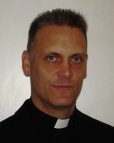
Sermon preached at 9.45 am at St Michael’s, Baddesley Clinton
Sunday 4th July 2010, Trinity V, Proper 9 – Year C
Other versions of this sermon were preached at 8.30am and 11am at St Mary's Lapworth.
Readings: (Gal 6: 7-16) Luke 10: 1-11 & 16-20
My daughter, Caroline, has just returned from a school trip to Snowdonia. It was a week of outdoor pursuits, including gorge walking and climbing Snowdon. In preparation for the trip both our family and the school worked quite hard to ensure that Caroline had all the appropriate kit. As she set off on the trip, with her hiking boots and carefully packed backpack we were confident that she had the things she needed for the different outdoor activities. And just to confirm that all the preparations had paid off, she sent us a text message from the top of Snowdon.
But what a contrast there is between our attitude in kitting Caroline out, the attitude that Jesus had when sending out disciples ahead of him to prepare the ground in the towns and villages that Jesus himself expected to visit. Far from kitting the disciples out, Jesus seems to tell them not to take things with them. Jesus tells them to “carry no purse, no bag, no sandals.” If we had read Matthew’s account (Matt 10) we would also have heard Jesus tells the disciples to take no money (not even coppers), no spare tunic and no staff.
Why would Jesus give such instructions? Surely it would be better if the disciples were properly kitted out for their missionary journey?
Well we can only speculate. It seems to me that Jesus wanted to make sure that the disciples were trusting completely in God, rather than trusting in their own skills, talents and resources. This attitude of complete trust and dependence on God is very healthy especially for people who are engaged in God’s work. If you have no resources of your own, but depend completely on what God gives you, then you have no choice but to stay focused on doing God’s work.
And it worked! The seventy returned with joy saying, “Lord, in your name even the demons submit to us.” Clearly the seventy had worked many miracles of healing. Jesus said, “See, I have given you authority to tread on snakes and scorpions and over all the power of the enemy, and nothing will hurt you.” So it seems that the disciples extraordinary trust in God, going out on their mission with no more than the clothes they were wearing, resulted in extraordinary graces and powers to work great miracles. And this was a cause of great rejoicing. But notice the comment of Jesus: “do not rejoice at this…but that your names are written in heaven.” The significant thing is not that the disciples have extraordinary powers, like comic book superheroes, but rather that this is evidence that they share in the life of heaven, the eternal life in the presence of God.
And this pattern of extraordinary dependence on God, and extraordinary earthly powers is by no means unique to this story about the 70 disciples. At the very end of Mark’s gospel (Mark 16: 17) Jesus says, “These are the signs that will be associated with believers; in my name they will cast out devils, they will have the gift of tongues, they will pick up snakes in their hands, and be unharmed should they drink deadly poison; they will lay their hands on the sick who will recover.” And in the Acts of the Apostles there are lots of stories of the disciples performing healing miracles and of Paul, being unharmed by the bite of a deadly snake.
And in the history of the Church, this story has many resonances. St Francis was deeply struck by precisely this very story, which we heard from the gospel today. He felt called by God to live it out for himself in a very literal way. Francis went on to live in radical poverty, in complete dependence on God and on the gifts of other people. And as we know Francis developed an extraordinary ministry and demonstrated all kinds of miraculous powers, including healing and exorcism.
But what about us? We are ordinary Christians of the 21st century; ordinary believers. Are we too called to this life of radical dependence on God; this life where we go about with no more than the clothes we wear? Are we, too, to receive powers to heal diseases and tread on scorpions and snakes? Well some of us are called by God in a radical way, for example by giving up everything, and going to live in a monasteries or a convent. But probably, for most of us, God does not call most of us to a ministry like that. For most of us our ministries will be much smaller and simpler things; caring for our families, talking to our neighbours, visiting or offering a lift to an elderly person. We might also be called to specific ministries to help in the church, perhaps through a role on the PCC. Or perhaps we are called to a ministries to the wider community. Sometimes we are called to support particular communities groups, or to serve on their committees and help them to play their part in serving the whole community.
The important thing is to be very attentive to what God wants from us; by what ministry he wants us to serve other people. God always supplies the grace needed for the ministries to which he calls us. If the ministries are small then perhaps the grace need not be so big, but if we live our ministries well then perhaps God will call us to bigger things, and give us bigger graces. But we must be attentive to what God wants from us, because it all starts with what God calls us to do.
But we must not deceive ourselves into thinking that we can escape from our radical dependence on God. We all need to build and develop out trust in God, who created us and loves us. Sooner or later any earthly thing that we put our trust in must fail us. Eventually we must all face death. In death we lose all our earthly processions, even our clothes, even our body. In death our utter dependence on God is revealed. Let us pray that by that time we will have learnt to trust completely in God, and let us pray that, like the 70 disciples, we may rejoice to discover that our names are written in heaven. Amen.
Showing posts with label mission. Show all posts
Showing posts with label mission. Show all posts
04 July 2010

26 July 2009
The Dismissal Rite
Sermon preached at St Alphege, Solihull at the 11am Eucharist.
Sunday 26th July 2009, Trinity 7 Proper 12 Year B
A special sermon on the Dismissal Rite within the Liturgy
Readings: 2 kings 4: 42-44 Ephesians 3: 14-21 John 6: 1-21
So this is the final sermon in our series of four sermons during the month of July about the four parts of the Eucharistic Liturgy. On the first Sunday in July Fr Andrew preached about the Gathering Rite. Two weeks ago I spoke about the Liturgy of the Word. Last week it was Fr Andrew on the Liturgy of the Sacrament and today I will be talking about the last part of the Eucharistic Liturgy; the Dismissal Rite. And let’s remind ourselves once again why we are doing all this. We are doing this in response to the question “Why go to Church?” The more we understand what we do in church, the more we are able to enter into worship and participate in the liturgy, the more simply and naturally we will be able to help others do the same. In particular it will help us as we encourage others to come back to church with us on Back to Church Sunday.
Now the good thing about the Dismissal Rite is that is very short, so hopefully we will not need a very extended homily to talk about it! If you look in your order of service book the dismissal rite starts on page n with the final hymn. We have the notices, the blessing and the words of dismissal – “Go in the peace of Christ”, “Thanks be to God”. The Dismissal Rite is all about being sent out, back into the world to live out in our daily lives the heavenly realities than we have been contemplating in church.
As we think about being sent out in this way, it is helpful to think about Jesus sending out his disciples out before him, as he does for example in Luke chapter 10. He says, “Carry no purse, no bag, no sandals…whatever house you enter say, “Peace to this house” … cure the sick who are there and say, “The kingdom of God has come near to you.”” This is perhaps the model for being sent out. What we take is not purse or bag or sandals, but above all it is our relationship we Jesus and his peace. We might struggle to cure the sick, but we do strive to be of practical service to the people we encounter in our day to day lives. Also we take the message of Jesus, “The kingdom of God has come near to you.” Nowadays we know than many people don’t particular want to hear this message, so we have to sensitive in the way we deliver it. Above all we have to deliver it through the example of our lives much more than through the things that we say. So this is what being sent out is all about, and we will see that these themes are picked up as we go through the Dismissal Rite.
But before the Dismissal Rite even starts we have the post communion prayers or the “Prayer after Communion” as Common Worship calls it. These form a sort of bridge between the time of Communion and the Dismissal Rite. The time after receiving Holy Communion is a crucial time for prayer, and for building our communion with Christ, our shared life with Christ. We offer to Christ our hopes and concerns, and receive from him graces to live well over the coming week. It is a very good time to kneel or sit and silence and listen to what God wants to tell us. In Holy Communion Christ has shared his life (his very body and blood) with us. He has physically entered into our bodies so he is abiding us, and hopefully we in him. It is this communion with Christ which is perhaps the most significant thing that we are sent home from church with, for the benefit of all whom we meet.
Now the prayers after communion collect together all the prayers that we have been offering as individuals and bring them, and us back into the liturgy that we work through together as Church. The pattern of the post communion prayers vary, but typically we have one prayer, set for the specific Sunday and printed in the pew slip, that is said by the priest, and another prayer that we say all together.
Having been brought back together by the post communion prayers we enter the Dismissal Rite proper by singing a final hymn together. Hopefully this is a rousing and invigorating hymn to give us hope and joy and encouragement as we are sent out into the world.
After the final hymn we usually have some notices. Now in one sense these are not really part of the liturgy at all, and we might think that the liturgy would work much better and smoother without them. However there is another sense in which the notices are extremely important because they are usually giving us very practical information about our life together as a church community. So, on a typical Sunday there might be one notice about the Parish Garden Party, and one about the way we use the OBH car park. So someone might think, “Well I don’t go to the Garden Party and I don’t use the OBH car park, so this is nothing to do with me.” Well in one way that’s true; notices that don’t concern us, don’t make any practical difference to us. But there is another more spiritual sense in which we are all part of the family of the church, and we all share in the life of the church. So, even if the notices concern other members of the church family rather than ourselves, it is good that we are aware of what is happening in the family. Hopefully we will want to support church activities through our prayers and by words of encouragement, even if we are not personally involved. In fact I find when I visit another church it is the notices that often tell you most about the life of that church. What is it that really matters in that place, is it about a music group, or a mission activity, or some community service, or the prayer ministry or what? I always find it very interesting.
After the notices we have the blessing. This confirms us in all that we have received in word and sacrament, and blesses us for our mission back in the world. Remember that the word mission means being sent out.
Finally we have the words of dismissal, sometimes spoken by a deacon, and the response to them. Usually the dismissal words are, “Go in the peace of Christ” or “Go in peace to love and serve the Lord.” It is very fitting when these words to come from a deacon. Not only is a deacon’s role in the liturgy often concerned with the giving of stage directions, but also a deacon has a wider role like a door between the church and the world. The dismissal sends us out of the church door into the world.
Notice that we are sent out with the peace of Christ. This again reminds us Jesus telling his disciples to say, “Peace to this house”. Christ’s peace is once again one of the big things that we take out to be of service to the world.
So that’s it! That’s what the Dismissal Rite is all about. There will be a handout as you leave church. Hopefully we can all get better at leaving Church with Christ’s communion, his peace and his message so that when we arrive back in our daily lives we bring something really valuable for the benefit of all the people around us. Amen.
Sunday 26th July 2009, Trinity 7 Proper 12 Year B
A special sermon on the Dismissal Rite within the Liturgy
Readings: 2 kings 4: 42-44 Ephesians 3: 14-21 John 6: 1-21
So this is the final sermon in our series of four sermons during the month of July about the four parts of the Eucharistic Liturgy. On the first Sunday in July Fr Andrew preached about the Gathering Rite. Two weeks ago I spoke about the Liturgy of the Word. Last week it was Fr Andrew on the Liturgy of the Sacrament and today I will be talking about the last part of the Eucharistic Liturgy; the Dismissal Rite. And let’s remind ourselves once again why we are doing all this. We are doing this in response to the question “Why go to Church?” The more we understand what we do in church, the more we are able to enter into worship and participate in the liturgy, the more simply and naturally we will be able to help others do the same. In particular it will help us as we encourage others to come back to church with us on Back to Church Sunday.
Now the good thing about the Dismissal Rite is that is very short, so hopefully we will not need a very extended homily to talk about it! If you look in your order of service book the dismissal rite starts on page n with the final hymn. We have the notices, the blessing and the words of dismissal – “Go in the peace of Christ”, “Thanks be to God”. The Dismissal Rite is all about being sent out, back into the world to live out in our daily lives the heavenly realities than we have been contemplating in church.
As we think about being sent out in this way, it is helpful to think about Jesus sending out his disciples out before him, as he does for example in Luke chapter 10. He says, “Carry no purse, no bag, no sandals…whatever house you enter say, “Peace to this house” … cure the sick who are there and say, “The kingdom of God has come near to you.”” This is perhaps the model for being sent out. What we take is not purse or bag or sandals, but above all it is our relationship we Jesus and his peace. We might struggle to cure the sick, but we do strive to be of practical service to the people we encounter in our day to day lives. Also we take the message of Jesus, “The kingdom of God has come near to you.” Nowadays we know than many people don’t particular want to hear this message, so we have to sensitive in the way we deliver it. Above all we have to deliver it through the example of our lives much more than through the things that we say. So this is what being sent out is all about, and we will see that these themes are picked up as we go through the Dismissal Rite.
But before the Dismissal Rite even starts we have the post communion prayers or the “Prayer after Communion” as Common Worship calls it. These form a sort of bridge between the time of Communion and the Dismissal Rite. The time after receiving Holy Communion is a crucial time for prayer, and for building our communion with Christ, our shared life with Christ. We offer to Christ our hopes and concerns, and receive from him graces to live well over the coming week. It is a very good time to kneel or sit and silence and listen to what God wants to tell us. In Holy Communion Christ has shared his life (his very body and blood) with us. He has physically entered into our bodies so he is abiding us, and hopefully we in him. It is this communion with Christ which is perhaps the most significant thing that we are sent home from church with, for the benefit of all whom we meet.
Now the prayers after communion collect together all the prayers that we have been offering as individuals and bring them, and us back into the liturgy that we work through together as Church. The pattern of the post communion prayers vary, but typically we have one prayer, set for the specific Sunday and printed in the pew slip, that is said by the priest, and another prayer that we say all together.
Having been brought back together by the post communion prayers we enter the Dismissal Rite proper by singing a final hymn together. Hopefully this is a rousing and invigorating hymn to give us hope and joy and encouragement as we are sent out into the world.
After the final hymn we usually have some notices. Now in one sense these are not really part of the liturgy at all, and we might think that the liturgy would work much better and smoother without them. However there is another sense in which the notices are extremely important because they are usually giving us very practical information about our life together as a church community. So, on a typical Sunday there might be one notice about the Parish Garden Party, and one about the way we use the OBH car park. So someone might think, “Well I don’t go to the Garden Party and I don’t use the OBH car park, so this is nothing to do with me.” Well in one way that’s true; notices that don’t concern us, don’t make any practical difference to us. But there is another more spiritual sense in which we are all part of the family of the church, and we all share in the life of the church. So, even if the notices concern other members of the church family rather than ourselves, it is good that we are aware of what is happening in the family. Hopefully we will want to support church activities through our prayers and by words of encouragement, even if we are not personally involved. In fact I find when I visit another church it is the notices that often tell you most about the life of that church. What is it that really matters in that place, is it about a music group, or a mission activity, or some community service, or the prayer ministry or what? I always find it very interesting.
After the notices we have the blessing. This confirms us in all that we have received in word and sacrament, and blesses us for our mission back in the world. Remember that the word mission means being sent out.
Finally we have the words of dismissal, sometimes spoken by a deacon, and the response to them. Usually the dismissal words are, “Go in the peace of Christ” or “Go in peace to love and serve the Lord.” It is very fitting when these words to come from a deacon. Not only is a deacon’s role in the liturgy often concerned with the giving of stage directions, but also a deacon has a wider role like a door between the church and the world. The dismissal sends us out of the church door into the world.
Notice that we are sent out with the peace of Christ. This again reminds us Jesus telling his disciples to say, “Peace to this house”. Christ’s peace is once again one of the big things that we take out to be of service to the world.
So that’s it! That’s what the Dismissal Rite is all about. There will be a handout as you leave church. Hopefully we can all get better at leaving Church with Christ’s communion, his peace and his message so that when we arrive back in our daily lives we bring something really valuable for the benefit of all the people around us. Amen.
18 May 2008
Baptised in the name of the Father and of the Son and of the Holy Spirit
Sermon
Preached on Trinity Sunday – Year A - 18th May 2008
at the 9.15am Eucharist at St Alphege Solihull.
A shortened version was also preached at the 11am Eucharist at St Catherine’s, Catherine de Barnes, Solihull.
Readings: Isaiah 40: 12-17, 27-31 2 Cor13:11-13 Matthew 28:16-20
In our gospel reading this morning we heard the words of Jesus, which are known as, “The Great Commission”. They are Jesus’ last words to his disciples in Matthew’s gospel. He says,
All authority in heaven and on earth has been given to me. Go therefore and make disciples of all nations, baptising them in the name of the Father and of the Son and of the Holy Spirit, and teaching them to obey everything that I have commanded you, and remember, I am with you always, to the end of the age.
These words brought about a dramatic change for the first disciples. Up until this point Jesus’ main message to them had been “follow me”, and “follow my commandments”, and the disciples had done this as best they could. We know that there were all kinds of errors and problems (like Peter denying Christ) but as best they could the disciples had followed Jesus, through his death and resurrection. This had been a completely life changing experience for them. But with these words of the Great Commission and with the arrival of the Holy Spirit at Pentecost, suddenly the focus for the disciples changes completely. Rather than following, suddenly they are sent out to call others to follow. The 11 disciples become apostles – that is people sent out by God. Suddenly they become preachers, teachers and leaders of the Christian community. This is the start of mission. Mission also means “being sent”.
And included in the great commission is a remarkably good and very short summary of what Jesus wants from people to whom the apostles preach the gospel. He wants these people to become disciples, that is “followers” of Jesus. He wants the people to be baptised. He wants the people to obey his commandments. This is such an excellent summary of what we must do to be Christians; follow Christ, be baptised and obey Christ’s commandments.
But because today is Trinity Sunday, and because next week we have several baptisms taking place in this service, I would like focus today on what it means to be baptised in the name of the Father and of the Son and of the Holy Spirit.
This formula for Baptism “in the name of the father and of the Son and of the Holy Spirit” is recognised as the correct formula for baptism in all the main stream Christian churches. This is because the formula is recorded in Matthew’s gospel as a direct command from Jesus. All the mainstream churches recognise as valid a baptism made in “the name of the Father and of the Son and of the Holy Spirit”. The only exception to this is that Baptist churches often do not accept infant baptism, but they do certainly accept this as the correct formula for baptising people.
And this is a very significant thing because the mainstream churches all recognise as valid each others baptism certificates. And although the Church of God has suffered all kind of painful divisions and has been separated into various different denominations there is a level of unity that remains in our baptism. Whatever our denomination, we are all baptised into the body of Christ, into the Church, and we all have become members of that one body.
There are some interesting stories in the Acts of the Apostles about the incompleteness of other forms of baptism. There are stories (Chapter 8) where people have been baptised in the name of the Lord Jesus, but have not yet been baptised in the Holy Spirit. There are other stories the other way around (chapter 10). Through these experiences the early church quickly realised that baptism needs to be in the name of the father and of the son and of the Holy Spirit.
Of course the formula “Father, Son and Holy Spirit” is familiar to us, not only because of baptism, but also because Father, Son and Holy Spirit are the three persons of the Most Holy Trinity. Today is Trinity Sunday, when we reflect on the great mystery of our God who is both three persons (Father, Son and Holy Spirit) and is also perfectly “one” such that we say with great confidence that there is just one true God.
And this can be difficult to understand. But really we should not be surprised that we find it hard to understand God. God is much bigger and deeper and greater than we are. If we think we have got God “all sust out” then we are putting God in a box; we are placing our own intellect above God’s. We are deceiving ourselves and being somewhat arrogant!
And yet, despite the difficulty in understanding the Trinity, I believe it is important that we always make the effort to increase the understanding that we have. Human beings are created in the image of God (Genesis 1:27) so looking at the Trinity gives us insights into the way that human life is meant to be.
If we look at the Trinity it seems that the perfect unity and harmony is maintained by love; by the love of God. There is lots of self-giving going on. The Father gives himself completely to the Son. The Son gives himself completely to the Father. The Spirit is likewise involved. This love and complete self-giving sustains the harmony and unity. This surely gives us an insight into how a Christian marriage might work. Similarly it throws light on how a community can sustain itself and become harmonious. And what about nations and the whole world even?
So as we celebrate Trinity Sunday, let’s ponder the mystery of the Trinity and seek to understand it better. Let’s seek to grow in relationships of love and mutual self- giving like those that we see in the Trinity. And by this let us come to live out ever better what it means to be a human being, created in the image of God.
Preached on Trinity Sunday – Year A - 18th May 2008
at the 9.15am Eucharist at St Alphege Solihull.
A shortened version was also preached at the 11am Eucharist at St Catherine’s, Catherine de Barnes, Solihull.
Readings: Isaiah 40: 12-17, 27-31 2 Cor13:11-13 Matthew 28:16-20
In our gospel reading this morning we heard the words of Jesus, which are known as, “The Great Commission”. They are Jesus’ last words to his disciples in Matthew’s gospel. He says,
All authority in heaven and on earth has been given to me. Go therefore and make disciples of all nations, baptising them in the name of the Father and of the Son and of the Holy Spirit, and teaching them to obey everything that I have commanded you, and remember, I am with you always, to the end of the age.
These words brought about a dramatic change for the first disciples. Up until this point Jesus’ main message to them had been “follow me”, and “follow my commandments”, and the disciples had done this as best they could. We know that there were all kinds of errors and problems (like Peter denying Christ) but as best they could the disciples had followed Jesus, through his death and resurrection. This had been a completely life changing experience for them. But with these words of the Great Commission and with the arrival of the Holy Spirit at Pentecost, suddenly the focus for the disciples changes completely. Rather than following, suddenly they are sent out to call others to follow. The 11 disciples become apostles – that is people sent out by God. Suddenly they become preachers, teachers and leaders of the Christian community. This is the start of mission. Mission also means “being sent”.
And included in the great commission is a remarkably good and very short summary of what Jesus wants from people to whom the apostles preach the gospel. He wants these people to become disciples, that is “followers” of Jesus. He wants the people to be baptised. He wants the people to obey his commandments. This is such an excellent summary of what we must do to be Christians; follow Christ, be baptised and obey Christ’s commandments.
But because today is Trinity Sunday, and because next week we have several baptisms taking place in this service, I would like focus today on what it means to be baptised in the name of the Father and of the Son and of the Holy Spirit.
This formula for Baptism “in the name of the father and of the Son and of the Holy Spirit” is recognised as the correct formula for baptism in all the main stream Christian churches. This is because the formula is recorded in Matthew’s gospel as a direct command from Jesus. All the mainstream churches recognise as valid a baptism made in “the name of the Father and of the Son and of the Holy Spirit”. The only exception to this is that Baptist churches often do not accept infant baptism, but they do certainly accept this as the correct formula for baptising people.
And this is a very significant thing because the mainstream churches all recognise as valid each others baptism certificates. And although the Church of God has suffered all kind of painful divisions and has been separated into various different denominations there is a level of unity that remains in our baptism. Whatever our denomination, we are all baptised into the body of Christ, into the Church, and we all have become members of that one body.
There are some interesting stories in the Acts of the Apostles about the incompleteness of other forms of baptism. There are stories (Chapter 8) where people have been baptised in the name of the Lord Jesus, but have not yet been baptised in the Holy Spirit. There are other stories the other way around (chapter 10). Through these experiences the early church quickly realised that baptism needs to be in the name of the father and of the son and of the Holy Spirit.
Of course the formula “Father, Son and Holy Spirit” is familiar to us, not only because of baptism, but also because Father, Son and Holy Spirit are the three persons of the Most Holy Trinity. Today is Trinity Sunday, when we reflect on the great mystery of our God who is both three persons (Father, Son and Holy Spirit) and is also perfectly “one” such that we say with great confidence that there is just one true God.
And this can be difficult to understand. But really we should not be surprised that we find it hard to understand God. God is much bigger and deeper and greater than we are. If we think we have got God “all sust out” then we are putting God in a box; we are placing our own intellect above God’s. We are deceiving ourselves and being somewhat arrogant!
And yet, despite the difficulty in understanding the Trinity, I believe it is important that we always make the effort to increase the understanding that we have. Human beings are created in the image of God (Genesis 1:27) so looking at the Trinity gives us insights into the way that human life is meant to be.
If we look at the Trinity it seems that the perfect unity and harmony is maintained by love; by the love of God. There is lots of self-giving going on. The Father gives himself completely to the Son. The Son gives himself completely to the Father. The Spirit is likewise involved. This love and complete self-giving sustains the harmony and unity. This surely gives us an insight into how a Christian marriage might work. Similarly it throws light on how a community can sustain itself and become harmonious. And what about nations and the whole world even?
So as we celebrate Trinity Sunday, let’s ponder the mystery of the Trinity and seek to understand it better. Let’s seek to grow in relationships of love and mutual self- giving like those that we see in the Trinity. And by this let us come to live out ever better what it means to be a human being, created in the image of God.
06 May 2007
Mutual Love
Thought for Pew Slip - Easter 5 – Year C – 6th May 2007
Readings: Acts 11:1-18 Revelation 21:1-6 John 13:31-35
Our first reading, from Acts, reminds us that the message of Christ is for all peoples. The call to follow Christ stretches out to everyone, irrespective of their birth and their circumstances.
Our second reading from Revelation tells that at the end of time God will renew the whole of his creation. There will be a new heaven and a new earth. People will dwell with God himself and there will be no more death, or crying, or pain anymore.
In our gospel reading we hear Jesus speaking at the last supper. He gives the disciples the New Commandment; “Just as I have loved you, you also should love one another.” He explains that it is through our love for one another that people will recognise us as disciples of Christ.
So mutual love is central in our witness to Christ! Even very great acts, done without love, count for nothing (c.f. 1Cor 13:1-3). As we think about Going for Growth and the quality of our Christian witness, let’s remember that we can’t “love one another” on our own. Let’s think about the other Christians who we love and who love us, and let’s renew our commitment to loving in the way that Jesus has loved us.
Readings: Acts 11:1-18 Revelation 21:1-6 John 13:31-35
Our first reading, from Acts, reminds us that the message of Christ is for all peoples. The call to follow Christ stretches out to everyone, irrespective of their birth and their circumstances.
Our second reading from Revelation tells that at the end of time God will renew the whole of his creation. There will be a new heaven and a new earth. People will dwell with God himself and there will be no more death, or crying, or pain anymore.
In our gospel reading we hear Jesus speaking at the last supper. He gives the disciples the New Commandment; “Just as I have loved you, you also should love one another.” He explains that it is through our love for one another that people will recognise us as disciples of Christ.
So mutual love is central in our witness to Christ! Even very great acts, done without love, count for nothing (c.f. 1Cor 13:1-3). As we think about Going for Growth and the quality of our Christian witness, let’s remember that we can’t “love one another” on our own. Let’s think about the other Christians who we love and who love us, and let’s renew our commitment to loving in the way that Jesus has loved us.
23 December 2006
Mission for an established parish church

It can be useful to think of the influence of a well established parish church as a series of concentric circles. People in the innermost circles have the closest relationship with the church. People in the outermost circles have the least relationship with the church. Notice that people are often held in their relationship with the church through family relationships or through membership of an organisation.
If we are serious about making our church grow then we need to strengthen and grow the Church’s relationship with people in all the circles. Most people who get involved with the church will slowly move from the outer circles inwards. (Of course there are some people who jump straight into the inner circles, but these are the exception rather than the rule.) We should be working to create a general momentum inwards, which really means upwards – towards God.
Gospel love is essential. Our love for God is what draws us upwards. Our love for our neighbour is what holds the tablecloth together. Jesus reminds us that love for God and love for our neighbour are the most important commandments (e.g. Mark
We always have to accept people where they are, and find appropriate ways of building relationships with them. It might be more appropriate to invite people in the outer circles to church social events rather than inviting them to church services. It is people in the middle circles (rather than people in the most central circles) who are most likely to build effective new relationships with people in the outer circles. People in the inner circles should therefore focus their mission efforts on supporting and developing the people in the middle circles, helping the middle circles to help the outer circles. Of course all these circles are only a notional guide; there aren't any real boundaries. We all have important relationships with people in all the circles.
One of the most common mistakes in mission is to neglect the middle circles (who, after all often do not come to church) in order to reach out to the people far away. Too often this results in attempts to jump people into the central circles before they are ready for it. It usually does not work for the people jumped in and it also creates pressure to "dumb down" or "sanitise" the most central circles, weakening the commitment to holiness. It is much more important to maintain a tension towards holiness in the centre and then focus on how people can build better relationships with the people around them.
Subscribe to:
Posts (Atom)