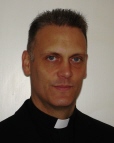
Sermon preached at the 11am Parish Eucharist at St Mary the Virgin, Lapworth on Sunday 19th September 2010. Other versions of this sermon were preached at the 8.30am Said Eucharist and at St Michael’s Baddesley Clinton’s for the 9.45am Service of Holy Communion.
Context: Visit of Pope Benedict XVI to Britain 16th-19th September 2010
Readings: 1 Tim 2: 1-7 Luke 16: 1-13
Our scripture readings today are about living out our Christianity within wider society. In 1 Timothy Paul tells us to make prayers and supplications for all people, not just for Christians. He asks us to pray especially for rulers and those in high position in society. He asks us to live our Christian lives in a quiet and peaceable way, with dignity. He emphasizes that God wills salvation for all people, and that the ransom that Christ paid on the cross was for all people. These are pointers towards the way in which church should fit in with the wider society around it.
Then the parable that Jesus tells is about our economic relationships with one another. It is a parable that biblical scholars often struggle with. It can be helpful to think of the rich man as a shrewd and exacting, absentee landlord, rather than thinking of him as God. Luke himself offers three different interpretations at the end of the parable. It is all to do with how we handle money and wealth, and our economic relationships with the people around us.
In this country, for well over 1000 years, Christianity has been the religion of almost everybody. Our culture and language have been profoundly influenced by Christian values which are foundational to political and legal system. But since the 1960s there has been a change. Immigration has introduced significant religious minorities, especially Muslims, Sikhs and Hindus, and this has disturbed the Christian consensus. And then there has also been a drift towards secularization, such that in the 2001 census about 20% of the population preferred to describe themselves as Atheists or Agnostics rather than as belonging to a major world religion. And this secularization has also affected many of the 72% of the population who chose to describe themselves as Christian. Most of the population still think of themselves as Christian, but most of them seldom come to church and all too easily they pick up behaviours and attitudes which are much more influenced by secular experience than by the teaching and example of Christ.
So as practising, worshiping Christians in this country we find ourselves in a minority position in society. And this feels like a new and frightening experience. There can even be is a temptation to panic! But actually this is not a new experience at all. In the first three hundred years of the churches life, Christians were always a religious minority, sometimes tolerated, sometimes persecuted by the wider society and the Roman empire. Because of this experience, there is a great deal of wisdom in the New Testament and in the writings of the early church to help us to understand and cope with this situation of being a Christian minority.
And I think more than anything else, this is what the Pope has been talking about during his current visit to Britain. I have learned than it is very important with religious leader to read the actual text of their speeches rather than the bits that the media pick out. The media prioritise the items that might boost audience figures or newspaper sales. Consequently they focus on anything controversial, and on anything to do with sex, and this means that we get a very distorted view of our religious leaders if we only follow what is reported in the papers or on TV. Because of this I spent a lot of time yesterday looking at the full text of the speeches made by the Pope, and I have to say I found it very interesting, especially on this point about how Christians and wider society should relate to each other. So what has the Pope been talking about?
Well first thing that is very striking, is the very wide variety of people who the Pope has been talking to. There have of course been speeches and sermons aimed directly at the Catholic faithful, as we would expect, but there have also been speeches aimed specifically at children, young people, non-Catholic Christians, the Archbishop of Canterbury, people from other religions, the Welsh, politicians and leaders of civic society and one speech directly addressed to Her Majesty the Queen.
And what comes over, first and foremost, is a deep love and appreciation of British culture and the things that Britain has contributed to the world stage, to the whole family of humanity. The British heroes mentioned include St Edward the Confessor, St Margaret Queen of Scotland, the venerable Bede, St Thomas More, William Wilberforce, David Livingstone, Florence Nightingale and John Henry Newman, a Birmingham man who appears to be a personal hero of the Pope’s. The British Parliamentary and legal system, so influential throughout the world was also singled out for praise.
Another thing that comes over is the Pope’s appreciation of the Christian heritage in English culture. He often refers to the buildings in which he speaks and points out how profoundly Christian they are in their origins. For example he spoke about the Holy Rood (Crucifix) of Holyrood Palace and the angels on the Ceiling of Westminster Hall. He points out just how deeply and profoundly our society has been affected by Christianity. He urges us not to forget that, and not to marginalise the voice of the church.
The pope talks about the role of the church in a multi-faith society. He emphasises that it is not the role of the church to set political policies. He accepts that it is not even for the church, alone, to set down the moral framework that should underpin a sound political system. Rather he urges people to recognise that the church has a very important contribution to make to a wider discussion of the common moral framework. He emphasises that democracy must be underpinned by moral principles that are more solid and enduring than social consensus or public opinion. He sees the churches role as a participant in this dialogue about moral foundations, helping to purify and refine such principles. He emphasises the importance of political processes working for a common good. He emphasises the importance of a continuing dialogue between different kinds of people, for the common good.
The Pope also appeals for a proper respect for the moral consciences of individuals and of organised religion. Basic freedoms such as the right to follow your religion and to assemble for worship are very important. He advocate respect and openness between people of different religions. Dialogue is all important, from the simple dialogue of living side by side to the more complex discussions on principles. Without these freedom, respect and norms, religion cannot play its proper role in the public square, and he sees the contribution that religion has to make as vital.
Anyway, I have found it all very encouraging. I hope that the Pope’s visit will refresh and enliven Christianity in this country, and will help it contribute constructively to the life of the whole nation. Amen.
Showing posts with label Church. Show all posts
Showing posts with label Church. Show all posts
19 September 2010

14 February 2010
The light for the nations
Short sermon preached at 8am Eucharist at St Alphege, Solihull on 14th February 2010.
The sermon was also preached at St Michael’s, Oak Cottage, Solihull at 4pm that day.
Sunday next before Lent
Readings 1 Kings 8: 22-23 & 41-43 Galatians 1: 1-12 Luke 7: 1b-10
(RCL alternative to the normal CofE readings)
Our first reading today comes from one of the real high points in the history of Israel. King Solomon, the wise and wealthy king, is dedicating the new temple that he has built for God in Jerusalem. No expense has been spared! The temple is huge and richly decorated. The priests have moved the ark of God into the inner sanctuary of the temple, and the glory of God has filled the temple, like a great cloud. And King Solomon is standing before the altar of the Lord in the temple and he makes a great, long prayer dedicating the temple to God, and we read just a short part of that prayer of dedication today.
But the part of the prayer that we read was particularly interesting because it tells us that the temple in Jerusalem was built not just to aid the prayers of the nation of Israel but to aid the prayers of foreigners, as well! And this is very significant. Most of the Old Testament is about God’s covenant with his chosen people Israel. But every now and again, especially at key moments like this one, there are very clear reminders that God’s covenant with Israel is not solely for the benefit of Israel, but ultimately it is for the for benefit of the whole world (e.g. Genesis 12: 2-3, 18: 18, 22: 17-18, 26: 3-5, 28: 13-14 and Isaiah 40: 5, 42: 1-9, 45: 22-25, 49: 5-6, 51: 4-5, 52: 10).
And we see this same thing in the ministry of Jesus. Jesus is born and brought up as a Jew. Simeon in the temple foresaw that the baby Jesus was the “light for revelation to the gentiles” (Luke 2: 32), but much of the time Jesus clearly focused his mission on the people of Israel (e.g. Matt 10: 5-6, 15: 24). But then there are several remarkable moments, like the one in our gospel reading today, when the generosity of Jesus spontaneous pours out over people beyond the Jewish nation.
In our gospel reading we heard that Jesus was profoundly moved by the faith that he found in the centurion. Of course, the centurion was not a Jew, and as an official of the Roman Army he might easily be thought of as an enemy of the Jews, but Jesus did not hesitate to cure the centurion’s servant. He even presented the faith of the centurion as an example to Israel. There was never any suggestion that the centurion should become a Jew.
Those hints in the Old Testament that God will bless all the nations of the earth through Israel do eventually find their fulfilment in Jesus. The religion that Jesus establishes becomes a universal religion. Christianity is for all people. Everyone is called to become part of the church. Rich and poor, young and old, saints and sinners; all called.
But I think it is very helpful for us, in the Church, to reflect on the generosity of Jesus and of his love pouring out upon people beyond the nation of Israel. In the same way we have to pour out love from the Church into the world, even into the non-Christian parts of the world. In our daily lives we probably encounter many people who are nominally Christian, but who seem to have minimal relationship with the church, and may not even be baptised. We probably encounter people from other faiths beyond Christianity, and people who say they have no faith at all, who might even be hostile to faith. These people are to us what the centurion was to Jesus. Like Jesus we need to reach out to them all, to work for their good. We need to help them and serve them in all their good aspirations and to build relationships of trust with them. We need to see God’s good creation in them, and help them to see the good that we share. It’s about a having generous attitude and a willingness to give.
And it seems to me that just as the love of Jesus spilling out beyond Judaism lead to the creation of a new, bigger and broader “People of God”, so too our love spilling out beyond the visible boundaries of the Church will somehow lead to a bigger and fuller salvation. In this way the gospel really becomes “Good News” for all the world, the Church really does become the light for the nations. Amen.
24 August 2008
Two visions of Church
Sermon preached at 11am Eucharist at St Alphege, Solihull on Sunday 24th August 2008
Trinity 14, Proper 16, Year A.
Readings: Isaiah 51:1-6 Romans 12: 1-8 Matthew 16: 13-20
Our readings today encourage us to reflect on two different images of the Church; two different ways of thinking about the Church, and our role in it.
Our gospel reading was the story of Simon recognising Jesus as the Messiah, the Son of the living God. Let’s just take a moment to think about though two titles, Messiah and Son of God, to check that we know what we mean by them.
First of all, the word Messiah. This is a Hebrew word which means “anointed one”. This equivalent Greek word is “Kristos” from which we get our word Christ. Within the kingdom of Israel the tradition was that God would choose a king, and he would tell a prophet to go and anoint that person with oil to show that they were to be king. Perhaps the most famous occasion when this happened is the one recorded in the first book of Samuel, Chapter 16. The prophet Samuel was sent by God to the house of Jesse in Bethlehem to anoint one of Jesse’s sons as king over Israel. Jesse paraded seven sons in front of Samuel, but none of these were to be king. Jesse’s eighth and youngest son, David, had to be called back from the fields. The Lord told Samuel that David was the one to be king, so Samuel anointed him with oil, and of course he went to become the great King David, who established the people of Israel in Jerusalem at the start of what was to become their golden age.
But the golden age only lasted for two or three generations. After that the people of Israel passed through hard times. They were always ruled by some foreign king or empire and they always felt oppressed and downtrodden. God promised them that in the fullness of time he would send a descendent of David to be a new Messiah, the anointed one, to be a great King, to save Israel and to enlighten all the people of the world. The people of Israel were always looking for the new Messiah and in our gospel today Simon recognised Jesus as the long awaited Messiah, the Christ.
Simon also recognised Jesus as the Son of God. This is effectively saying that Jesus is God, is of the same being as God. The rest of us were created by God, but Jesus was in some sense “begotten by God, before all things began.” The virgin birth bares witness to the fact that Jesus had no earthly father, but rather he should be called the Son of God.
So Simon’s recognition of Jesus as Messiah, anointed one, Christ, and as Son of God is very, very profound. Jesus certainly was very impressed and said to Simon, “You are Peter, and on this rock I will build my church, and the gates of Hades will not prevail against it. I will give you the keys of the kingdom of heaven, and whatever you bind on earth will be bound in heaven and what you loose on earth will be loosed in heaven.”
Now it is not easy to understand what all this means. Jesus later repeats many of these things to all the apostles, so there is a sense in which they are shared by all the apostles, by all of the church. But within this sharing they still all come together in a particular way in the person of Simon, now called Peter, which means Rock. And this image of Peter, the rock, on which the church is founded, and the ministry that Peter shares with the other apostles, has been very influential in the churches understanding of itself; of what it means to be church. In Ephesians 2:20 St Paul compares the Church, the people of God to small stones which are being built together to form a great structure, a temple which is being built up to form a dwelling place for God’s Holy Spirit. In this comparison St Paul says that the prophets and apostles are the foundations and Jesus Christ himself is the chief cornerstone.
And I think that this is a very helpful and useful image of the church. But it is by no means the only helpful image of the church, and in fact it is necessary to lay it alongside other images of the church, in order to develop a fuller understanding of what the Church is, what it is for, and how we play our part in it.
In our second reading today from Romans chapter 12, we heard St Paul set out a different image of the church. It is the image of the Church as the body of Christ, and it is one that Paul repeats several times in his epistles (e.g. 1 Corinthians 12, Ephesians 1:23, Col 1: 18). In this comparison, Christ is the head of the Church, and the Church is like his body. We are like different members of the body, perhaps we are an arm or a leg, and ear or a nose. We are all very different, but we all have a role to play that is of service to the whole body. We are all joined together in the body; we are members one of another. Just as the different parts of the human body are sustained by the flow of blood round the body, so we in the church are sustained by the presence of God in the Church. God present in his Word proclaimed from the scriptures. God present in the consecrated bread and wine of Holy Communion, God present in the midst of his people gathered in his name (Matt 18:20).
The image of the Church has a great building has it strengths. It makes us reflect on the structures and organisation of the Church, on the bishops and on all the rules and regulations which give us clear guidance on how we all fit together. However this is no more a complete view of the Church, that a skeleton is the complete human body. The body includes many soft tissues, much that is moving and changing all the time, and blood that is in constant circulation.
In our reading St Paul also said, “Do not be conformed to the world, but be transformed by the renewing of our minds, so that you may discern what is the will of God - what is good and acceptable and perfect.” (Rom 12: 2) And this is essential. It is by discerning God’s will that we work out how we, personally, fit into the body. Perhaps we are an arm, and rather action focused. Perhaps we are an ear, and draw the Churches attention the cries of the people around us. Perhaps we are good at talking and, with all charity (not as idle gossip!) we keep news moving and circulating round the people of the Church. Perhaps our role is to pray; we are more like the soul of the body, holding the whole body up before God.
So as we reflect on our own role in the church let’s make sure that everything is done in accordance with God’s will, so God will show us our right place alongside all the other people. Let’s remember that those structural bits, the Bishops and the rules, often show us the will of God and give form and structure to the church, just as the skeleton gives structure to the body. But let’s not make the mistake of thinking the skeleton is more important than the flesh and blood; otherwise we reduce the church to dry bones. Rather let’s recognise that we all need each other, and lets rejoice together, each in accordance with God’s will for us personally, so that the church can be a strong and vibrant body.
06 April 2008
Building the temple of God
Preached at St Alphege Church on Sunday 6th April 2008 at 6.30pm Evensong.
Third Sunday of Easter
Readings: Haggai 1:13 – 2:9 1 Corinthians 3:10-17
Our readings this evening are all about building the temple of God. They approach this theme in different ways. As time passes, understandings deepen, and we see a development in what is meant by “building the temple of God”.
First of all we heard the choir sing Psalm 48. This is a song of praise to God, written because of the greatness of city of Jerusalem, which King David had established as the seat of the Kingdom of the Israelites. The psalm sets out the way that God’s chosen people like to think about Jerusalem. It mentions the temple in Jerusalem, where the people ponder the steadfast love of the Lord. It mentions the strong fortification in Mount Zion, the hill that overlooked Jerusalem, and by which Jerusalem was defended. It says that the foreign kings trembled when they saw the strength of the fortifications on Mount Zion. Jerusalem was a safe and secure centre for the kingdom of God’s people, with the temple of Jerusalem right at its heart.
But then we see a complete contrast in the reading from the book of Haggai. In this reading God’s chosen people, now called the Jews, have returned to Jerusalem and are starting to rebuild the temple following the most devastating and traumatic period of their history. Round about 600 BC the Judeans had been conquered by the Babylonians who came from the area that we now call Iraq. This was an absolutely catastrophic experience for the God’s people. Jerusalem was completely overrun. Many Judeans were killed and their bodies left unburied in the street. The temple in Jerusalem was first plundered and then destroyed completely. The remaining Judeans, or most of them, (certainly all the leaders and educated people) were taken off to Babylon where they lived as slaves in exile. Psalm 137 tells us of the torment and bitterness of the exiles. But with the great suffering came a great purification. God taught his people to focus on Him and on His laws. And then after about 70 years of exile God delivered his people back home again in a miraculous and extraordinary way. Babylon was conquered by the Persians and King Cyrus of Persia encouraged the Jews to go back to Jerusalem and he encouraged them to rebuild the temple. This was a wonderful deliverance, beyond anything that the Jews could have hoped for. But the task of rebuilding the life of the nation in Jerusalem and of rebuilding the temple were still fraught with difficulties and progress was extremely slow.
In the passage that we read we heard God, through the prophet Haggai, stir up his people to get on with this work. Above all he encourages them. He says, “My spirit abides among you, do not fear.” He asks if there is anyone left who can remember the temple of old. Although the new temple still appears poor and insignificant compared to the great temple of old, God assures the people that he will make it great. “In a little while…I will shake all the nations, so that the treasure of all nations shall come, and fill this house with splendour” says the Lord of Hosts. “The latter splendour of this house will be greater than the former,” says the Lord.
In our New Testament reading from 1 Corinthians, St Paul compares himself to a skilled master builder, because he has laid the foundations of the church in Corinth. After Paul had left Corinth, Apollus, a well respected Christian of the early church (Acts 18:24), had continued to build and develop the Church in Corinth. We know that Paul wanted Apollos to be a church leader in Corinth (1 Cor 16:12) and that he was infuriated that the church in Corinth sometimes divided itself with some saying that they followed the teaching of Paul and some the teaching of Apollos (see 1 Cor 1 10-13).
Of course when Paul talks about building the church in Corinth he does not mean a physical church building, rather he means the Church, the people of God, the body of Christ. Paul describes the Church as the temple of the living God (2 Cor 6:16, see also Eph 2:21) and he sees himself, and others, as builders of that temple. He emphasises that Jesus Christ is the foundation of the Church (1 Cor 3:11). He goes on to say that that the work of himself, Paul, of Apollos, and of the other different people who have worked to build up the church will be tested by fire. What does this mean?
Well a physical temple building built of gold and precious stones will be resistant to fire, whereas a temple built of wood, hay and straw will easily burn up. The quality of a physical temple can therefore be tested by fire. A well built temple will endure fire, a more cheaply built temple will be destroyed by fire. Similarly if a church is solidly build on the foundation of Jesus Christ and on Christ Crucified (1 Cor 1 18 & 22 also 2:2) then it will stand the test of fire. This presumably means the test of suffering, of persecution, of loss.
So just as many different stones are built together to make a temple building, so we, the different members of the church, are being built together into a temple, a dwelling place for God where God lives by his spirit (Eph 2:21). Paul’s analogy is a very good one. The different stones in a temple building each have different functions, and so it is in the Church. Some stones are more visible than others. Some stones carry more weight than others. Some stones are beautifully carved, some more ordinary looking. But all of the stones have a role, and if any of them were missing then the building would lack something. And so it is with us in the church. Over time God carves us, or moulds us to fulfil the purpose he has for us in the church. We have different roles by which we serve one another within the life of the church. We need to be attentive to God in prayer, and attentive to the Christians around us in order to discern our role, and how we fit in. With love, we each need to serve the other people in the church, in the specific way that God wants us to serve. Also we need to receive service from the other Christians in the church with joy and thanksgiving. We each need to trust God, knowing that by following his will we will find roles that sustain us and fulfil us and lead us on the path to heaven.
But for a temple to be a temple it must be the dwelling place of God. We all know that God is present in his church through his Word proclaimed and through his sacraments, but God is present in other ways too. In 2 Corinthians 6:16, Paul quotes the prophets to explain that when we are formed together to be the temple of the living God, God will live with us, and walk about among us. He will be our God and we shall be his people. Similarly in Matthew 18:20 Jesus promises that he will be present in the midst of people united in his name. This means that when we meet together as church we must meet together united in the name of Jesus, following the commandments of Jesus, especially his New Commandment of mutual love. When we do this Jesus is present in our midst.
And in this there is a wonderful hint of the future promise of God. In the book of Revelation chapter 21 we can read about the New Jerusalem coming down out of heaven from God. In the New Jerusalem God makes his home among the mortals and dwells with them. The New Jerusalem is built of gold and of the most precious stones and it shines with the glory of God. There is no sun or moon, for all is illuminated by the glory of God. Most interesting of all, there is no temple in the New Jerusalem for the whole city is the dwelling place of God. And all the glory and honour of all the nations are brought to the New Jerusalem and all the nations will walk by the glorious light of God.
So let us allow God to form us into his living temple the Church. Let’s do what we can to help God build up his Church. Let’s be united in the name of Jesus, so that Jesus is present in the midst of us, and let’s prepare ourselves to be good citizens of the New Jerusalem where there is no need for a temple because God dwells in the midst of all his people. Amen.
Subscribe to:
Posts (Atom)