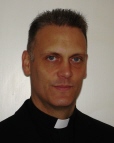
Short sermon preached at 8am Eucharist at St Alphege, Solihull on 14th February 2010.
The sermon was also preached at St Michael’s, Oak Cottage, Solihull at 4pm that day.
Sunday next before Lent
Readings 1 Kings 8: 22-23 & 41-43 Galatians 1: 1-12 Luke 7: 1b-10
(RCL alternative to the normal CofE readings)
Our first reading today comes from one of the real high points in the history of Israel. King Solomon, the wise and wealthy king, is dedicating the new temple that he has built for God in Jerusalem. No expense has been spared! The temple is huge and richly decorated. The priests have moved the ark of God into the inner sanctuary of the temple, and the glory of God has filled the temple, like a great cloud. And King Solomon is standing before the altar of the Lord in the temple and he makes a great, long prayer dedicating the temple to God, and we read just a short part of that prayer of dedication today.
But the part of the prayer that we read was particularly interesting because it tells us that the temple in Jerusalem was built not just to aid the prayers of the nation of Israel but to aid the prayers of foreigners, as well! And this is very significant. Most of the Old Testament is about God’s covenant with his chosen people Israel. But every now and again, especially at key moments like this one, there are very clear reminders that God’s covenant with Israel is not solely for the benefit of Israel, but ultimately it is for the for benefit of the whole world (e.g. Genesis 12: 2-3, 18: 18, 22: 17-18, 26: 3-5, 28: 13-14 and Isaiah 40: 5, 42: 1-9, 45: 22-25, 49: 5-6, 51: 4-5, 52: 10).
And we see this same thing in the ministry of Jesus. Jesus is born and brought up as a Jew. Simeon in the temple foresaw that the baby Jesus was the “light for revelation to the gentiles” (Luke 2: 32), but much of the time Jesus clearly focused his mission on the people of Israel (e.g. Matt 10: 5-6, 15: 24). But then there are several remarkable moments, like the one in our gospel reading today, when the generosity of Jesus spontaneous pours out over people beyond the Jewish nation.
In our gospel reading we heard that Jesus was profoundly moved by the faith that he found in the centurion. Of course, the centurion was not a Jew, and as an official of the Roman Army he might easily be thought of as an enemy of the Jews, but Jesus did not hesitate to cure the centurion’s servant. He even presented the faith of the centurion as an example to Israel. There was never any suggestion that the centurion should become a Jew.
Those hints in the Old Testament that God will bless all the nations of the earth through Israel do eventually find their fulfilment in Jesus. The religion that Jesus establishes becomes a universal religion. Christianity is for all people. Everyone is called to become part of the church. Rich and poor, young and old, saints and sinners; all called.
But I think it is very helpful for us, in the Church, to reflect on the generosity of Jesus and of his love pouring out upon people beyond the nation of Israel. In the same way we have to pour out love from the Church into the world, even into the non-Christian parts of the world. In our daily lives we probably encounter many people who are nominally Christian, but who seem to have minimal relationship with the church, and may not even be baptised. We probably encounter people from other faiths beyond Christianity, and people who say they have no faith at all, who might even be hostile to faith. These people are to us what the centurion was to Jesus. Like Jesus we need to reach out to them all, to work for their good. We need to help them and serve them in all their good aspirations and to build relationships of trust with them. We need to see God’s good creation in them, and help them to see the good that we share. It’s about a having generous attitude and a willingness to give.
And it seems to me that just as the love of Jesus spilling out beyond Judaism lead to the creation of a new, bigger and broader “People of God”, so too our love spilling out beyond the visible boundaries of the Church will somehow lead to a bigger and fuller salvation. In this way the gospel really becomes “Good News” for all the world, the Church really does become the light for the nations. Amen.
Showing posts with label Solomon. Show all posts
Showing posts with label Solomon. Show all posts
14 February 2010

31 January 2010
Christ and the temple in Jerusalem
Sermon for Coral Evensong at St Alphege Church
6.30pm on Sunday 31st January 2010 – Epiphany 4
(Presentation of Christ in the Temple)
Readings: Psalm 122 Haggai 2: 1-9 John 2: 18-22
Our psalm today, and both of our scripture readings concern Jerusalem and especially the temple in Jerusalem. The temple also features strongly in the Presentation of Christ which we remember today. So I thought it might be useful to use this sermon to reflect on the temple and on its history in particular.
Israel first got seriously involved with Jerusalem round about 1000BC when King David, seemingly against all odds, captured the stronghold of Mount Zion from the Jebusites (2 Samuel 5). David started to build a town there called the City of David, and he established it as the capital city of Israel. God granted David many military successes and his kingdom grew bigger and stronger. The City of David grew down the hill into Jerusalem. There was a particularly significant moment ( 2 Samuel 6) when David brought into Jerusalem the ark of God, which Moses had made during the exodus. This was a moment of great rejoicing because the ark represented the presence of God, and the people were delighted to have God present with them in Jerusalem.
The ark of God lived in a tent in Jerusalem, just as it had done in the wilderness, in time of Moses. But David was keen to build a house for the Lord to live in (2 Samuel 7, Ps 132) but the Lord spoke to David through the prophet Nathan. He said “No, you David are not to build me a house; your son will do that. But rather I the Lord will make you David into a house. I shall raise up from your offspring one who will have an everlasting kingdom, your throne will be established for ever.” Of course we think of these words being fulfilled in the birth of Jesus.
So King David never built the temple in Jerusalem, but his son Solomon did (1 Kings 6). With the wise King Solomon at the helm the kingdom is Israel really flourished. Solomon became extremely wealthily, and he spared no expense in the construction of the temple. Solomon’s temple was huge and incredibly richly decorated. There was another profoundly significant moment (1 Kings 8) when the temple had been completed. Solomon told the priests to move the Ark of God into the temple. The priests moved it, complete with its tent and all its artefacts into the inner sanctuary of the temple. And a cloud filled the temple and the glory of the Lord filled the house, and the priests could not even stand to minister there. Solomon made a long prayer dedicating the temple to the Lord, and the Lord appeared to Solomon saying, “I have consecrated this house that you have built and put my name there forever; my eyes and my heart will be there for all time” (1 Kings 9: 3). So it was that the Lord established the temple of Jerusalem as his resting place for ever (Ps 132: 13-14).
The temple became the central to the Jewish religion. Three or four times each year the Jews would all travel up to Jerusalem to celebrate the big religious festivals. Jerusalem is about 700m above sea level, so you do literally go up to Jerusalem. And this is the experience that Psalm 122 speaks of. There is some religious festival and with great gladness the tribes of Israel all go up to Jerusalem, to the seat of the house of David. And then they enter the temple, the house of the Lord, to witness to their identity as the people of Israel, God’s chosen nation.
King Solomon’s reign was Israel’s golden age as a wealthy and powerful independent state. Towards the end of Solomon’s reign, however, and in the centuries that followed, there were persistent problems with kings and people straying from God. The kingdom became divided, and the northern Kingdom was lost to the Assyrians. However the most terrible shock came 597 BC when the Babylonians conquered Jerusalem. Then, about ten years later, the unthinkable happened. The Babylonians utterly destroyed Jerusalem and the temple with it. They take most of the educated Judeans away into exile, and caused the rest of the people to flee, many of them to Samaria.
The exile was a grim period for the Judeans, but it suddenly ended in about 535 BC when the Persians conquered the Babylonians. The Jews were encouraged to go back to Jerusalem, and little by little they go back, rebuilding first the city walls, then the houses and finally, encouraged by the prophet Haggai, they rebuild the temple itself. Our first reading came from this period in the history of the temple. The rebuilt temple seems to be but a poor shadow of the temple of Solomon, but through Haggai God tells the people not to be discouraged. God will shale the nations so that their treasure will come to the temple and make it rich once more. Its new splendour will be greater than the splendour it had of old.
Over the centuries that followed the Jews continue to invest in the temple. In particular, in the thirty years or so before the birth of Jesus, King Herod the Great greatly increased the size and splendour of the temple. Herod was a puppet king, ruling the Jews under the auspices of the Roman Empire. His collaboration with Rome meant he was always under pressure from the Jews to prove his Jewish credentials, and he sought to do this by investing in the temple. By the time of Jesus the second temple was bigger and grander than ever; the glory of Solomon’s temple really had been surpassed.
This morning in church we celebrated the feast of the Presentation of Christ in the Temple. Malachi’s prophecies about the Lord suddenly coming to his temple came to fulfilment. We heard the words of Simeon, which we always have at evensong in the Nunc Dimittis. Simeon described Jesus as light … and the glory of his people Israel. It seems like a reminder of the glory of God which filled the temple at its dedication by Solomon.
Jesus has an interesting relationship with the temple. As a 12 year old his parents lose him there, but he describes it as his Father’s house. Later in his ministry he spends a lot of time there and often preaches there. He appears to resent paying the temple tax because he knows that as “Son of God” the temple exists for him (Matt 17: 24ff). The passage of scripture that we heard in our second reading today comes just after the moment when Jesus drove the traders out the temple, upsetting the tables of the moneychangers. The Jews question his authority for this, and ask for a sign. Jesus says he will “destroy this temple and in three days raise it up”. This makes no sense to the Jews who know that building the temple is a long slow business, but of course Jesus is speaking of his own body; the crucifixion and resurrection.
This link that Jesus makes between his own body and the temple is profound and mysterious. The Church too is the body of Christ. The Church too passes through death and resurrection cycles. The book of Revelation (21) talks of the wedding feast of the lamb, when the Church comes to dwell in a New Jerusalem. The New Jerusalem is splendid and perfect but it has no temple because “its temple is the Lord God Almighty and the lamb”.
And as for the temple in Jerusalem, well it was destroyed by the Romans in 70AD and has been more or less off limits to the Jews ever since. The temple mound has been completely restored but since the year 691 it has been dominated by Islamic sites such as the Dome of the Rock and the Al-Aqsa Moque.
When we look at Jerusalem today we see an extraordinary complex situation. God’s chosen place is now sacred to Muslims, Christians and Jews. The tensions felt in Jerusalem are profoundly linked to the tensions felt throughout the Middle East about the state of Israel and its security. There is a sense of waiting and of expectation. What on earth will God do next in this place? And it seems to me that the important thing for us to do is to trust God who is the Lord of history. Certainly terrible things can happen and much can be destroyed, but we must never lose trust in God and in his capacity to raise things up anew.
19 October 2008
Dedication Sunday - our church buildings
Sermon preached at 11am Eucharist at St Catherine’s, Catherine-de-Barnes, Solihull
19th October 2008, Dedication Sunday, Year A
(A shortened version of this sermon was preached at the 8am Eucharist at St Alphege, Solihull)
Readings: 1 Kings 8: 22-30 [Hebrews 12: 18-24] Matthew 21: 12-16
Our Old Testament lesson today was part of a prayer made by King Solomon as he dedicated the huge temple that he had built in Jerusalem. This happened perhaps round about 950 years before Christ. Let’s do a quick re-cap on some of the history so we understand what this was all about.
After Moses led the Israelites out of Egypt to freedom in the Promised Land it took the Israelites three hundred years or so to consolidating themselves in the Promised Land. Then King David had many military successes. The nation became more secure and he established a capital for the people of Israel at Jerusalem. King David longed to build a permanent temple for the Lord in Jerusalem, but God told him that this work would be completed by his son Solomon. After David’s death Solomon was king. He was a wise king and became immensely wealthy. These were the real glory days of the Kingdom of Israel. Solomon did indeed build a temple for the Lord. It was a huge project and Solomon spared no expense. A massive and wonderful temple was constructed, and it was decorated with much gold and bronze and many fine things.
When the temple was competed a huge dedication festival was planned (1 Kings 8). [The arc of the covenant, which represented God’s presence with the people of Israel, was brought down from Mount Zion. Inside the arc were the two tablets of the Ten Commandments on which God’s covenant with Israel was based. The arc was placed in the holiest past of the temple and mysteriously a cloud appeared and filled that whole part of the temple so all the priests had to come out to get away from the cloud.] The whole people of Israel were assembled and King Solomon made a great speech explaining all about the temple and why it had been built. And then Solomon had made a great prayer to God reminding God of his promise that his “name shall be there” and asking that God would listen to the prayers of the people who prayed there.
Solomon’s prayer was a very long prayer, but we got the start of it in our Old Testament reading. And in this part of the prayer Solomon says a very interesting thing. He says, “Even heaven … cannot contain you [Oh God], how much less can this house which I have built contain you!” God is everywhere, so it is not really that God is in any way more present in the temple in Jerusalem or in our own church buildings, than he is present anywhere else. Rather the point is that the temple in Jerusalem, and our own church buildings are places dedicated, that is to say they are set aside for God, for the worship of God. [And the fact that they are set aside for God, does limit what else can go on in them. In our gospel reading we heard Jesus casting out the buyers and seller and money changers. Jesus says that the temple should not be a den of robbers but rather should be a place of prayer.] And hopefully, because this space is set aside for God, there will be things here like our stained glass, like our altar, which point us towards the presence of God. Also hopefully here there are less distractions, less other things going on, and so in this space in particular we will be aware of the presence of God.
And in the church we always do what we can to build the presence of God, to become more attentive to the presence of God, to grow in awareness of the presence of God. Above all we do this through our worship. Let’s just pause for a moment to remember the special ways that God is present to us as we worship here in this place.
First of all, as we gather here for worship, we meet in the name of the Father and of the Son and of the Holy Spirit, and Jesus has promised that where two or three gather in his name, there he is in the midst of them (Matt 18: 20). So it is important that we truly gather in the name of Jesus, in his essence, in his reconciling love, and then Jesus will be present in the midst of us, and we will feel our hearts burn within us, like the disciples on the road to Emmaus.
Then perhaps most obviously, we celebrate the Eucharist here. Christ becomes present to us in bread and wine; we share in his body and blood, and he shares his life with us.
Then, in this place, we read the bible. God becomes present to us in his word proclaimed. We try to allow the word of God to enter into, to change our attitudes and behaviours so that Christ is us may grow in us.
And the presence of God is of great value to us. It is a life giving presence that nurtures us and helps us to grow. The presence of God, helps our relationship with God to grow, helping us to understand who we truly are. The presence of God helps us as individuals and all together to become the people God created us to be. Certainly the presence of God can be uncomfortable. It can make us aware of our sins, of those parts of our lives which are not aligned with God’s will. It can make us aware of the hollowness and fragility of large parts of our lives. It can make us aware of our lack of commitment, our failures to put God in the first place in our lives. But as we work through the pain and discomfort of these realisations, the presence of God assures us that we are loved, that we are forgiven, that we are called to life in Christ. By the presence of God we are healed and made whole.
Now the presence of God does not depend on a church building. It depends on God and on us. But as a place set aside for God, with less distractions, the church building can certainly help us to focus and to do all our part. It is certainly a good place to seek the presence of God. So let us give thanks to God for our Church buildings. Let’s seek to dwell always in the transforming presence of God and let’s allow our church buildings to help us.
Subscribe to:
Posts (Atom)