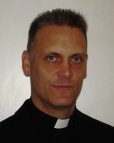
Sermon preached at 8am (shortened), and 10am Eucharists at St Helen’s Church, Solihull
Sunday 28th February 2010 – Lent 2, Year C (RCL rather than CofE gospel)
Readings: Genesis 15: 1-12 & 17-18 Philippians 3: 17 to 4: 1 Luke 9: 28b-36
In our gospel reading today we heard the extraordinary story of the transfiguration. Jesus takes Peter, James and John up a high mountain to pray, and while they are praying Jesus becomes dazzlingly bright and Moses and Elijah appear with him in glory and talk to him. So then there are two groups, each of three people, and it seems that the two groups experience the event in completely different ways. For Jesus, Moses and Elijah this seems to be a very normal experience. They seem to talk away completely unperturbed by the shining glory, or by the fact that two of them have been dead for centuries. But for Peter, James and John the whole experience is extremely weird and disturbing. First they are weighed down by sleep, but not actually asleep. Then Peter says things without knowing what he is saying. Then the cloud comes over them and they are terrified, and they hear the voice of God, and then suddenly everything is normal again.
So why is that for one group of three this all seems very normal, and for the other group of three it is so weird? Well it seems to me that Jesus, Moses and Elijah are all very conscious of their home in heaven. Moses and Elijah were very holy people. They have been dead a long time and must by now be completely accustomed to the heavenly kingdom and totally in tune with its ways. And Jesus of course is the Son of God, the one who came down from heaven to take on human form. Jesus has been completely at home in heaven ever since he helped in its creation!
But this is not true of Peter, James and John. They are born and brought up on earth. They might catch glimpses of the life of heaven through their scriptures or their worship or more recently through their relationship with Jesus. But despite these glimpses it is still a big shock for them to be exposed to the glory of heaven.
And so there is the life of earth with all its problems and limitations and frustrations, which we know about, and there is the life of heaven with its glory and light and perfection. And this reminds us of something that St Paul said in our epistle reading today. Paul was talking about those who live as enemies of the cross of Christ. He says their end is destruction because, “…their minds are set on earthly things. But our citizenship is in heaven…”
And this is the great challenge. How do we live as citizens of heaven? How do we keep our minds set on heaven and not simply on earthly things? How do we use our lives to make sure that we grow into good citizens of heaven? This is a challenge because we all know that so much of our time and effort and energy every day is all tied up with very earthly outcomes.
[Let’s think about a typical day. Well in our house the alarm goes off at 6.45am and the first earthly outcome which has to be achieved is getting out of bed. Well that isn’t always easy! Then there is laying the table, making the tea, shower, shave, sorting out all the children’s issues “Can you sign my homework diary”, “I can’t find my music book”. Then, typically at about ten to eight Elaine and the children go off to their respective schools in the car and the house falls quiet. Quiet often I then manage to settle down and do some very simple spiritual reading, which does remind me that my citizenship is in heaven. But I don’t always manage that by any means! Often I have my own daily panics to sot out, the magazine article that must be in that morning, the phone call which has to be made early, or whatever…so quite often it is 8.30pm or even later before I settle down and start to say my prayers. And that is the situation for me, a priest, a full time professional religious person! How much more difficult is it for most of us whose professional lives do not encourage us to remember our heavenly home, and perhaps even discourage us from focusing on it through competitive pressures, through various stresses, perhaps even through greed, conflict or vice?]
Well I think there are three things we can do that are important here. First, we have to practice living out the laws and values of heaven in our very earthly lives. We have to do things for love of God and for love of other people. I try to get out of bed well, as an act of love for God. I try to love the family by laying the table and addressing the needs of the children. I try to love my wife by making the cup of tea. This is the great wisdom of St Teresa of Lisieux; do the simple things in life well, as love for God and love for others. [[And it doesn’t really matter if our efforts seem pathetically ineffective in terms of building the kingdom of God. Remember that when Jesus came to earth to build the kingdom of God, he got crucified. When I was working I used to find that my efforts to love others were often misunderstood; people sometimes interpreted them as weakness or tried to take advantage. I certainly never succeeded much in building the kingdom of heaven at my place of work, but through this process I believe God was able to build something of the kingdom in me.]]
Second important thing. We need a regular pattern of prayer and worship to remind us that we are citizens of heaven and to keep us grounded in the reality of God. When I look back at my life, the times when I have made progress son my spiritual journey have all been times when I have managed to sustain a regular pattern of prayer or spiritual reading, meditation and reflection. And this is so hard, in our busy lives, to make time for God. But really we have to get our priorities right. I expect many of us set aside two minutes a day, twice a day, to clean our teeth and keep them healthy because we know that we need them for seventy, eighty years. How much more time should we devote to keeping our soul healthy, which we need for eternity? Lent is a real opportunity to build up this discipline in prayer and worship.
Third important thing. We can’t do this on our own. We need the love and support and prayers and help of others. The life of heaven is all about our relationships with God and neighbour. They have to become relationships of sharing in which we give and receive. Sometimes we are too selfish to give. Sometimes we are too proud to receive, not humble enough to admit our needs and to accept the love and prayers of others. But without this sharing we don’t build communion among ourselves. We need to practice receiving, so as to receive eternal life from Jesus. So we need to share our faith, and house groups and Lent groups are an outstanding opportunity for this.
So three important things; to practice living out the values of heaven in our lives, to ground ourselves properly in prayer and worship, and to do these things together with others not on our own. These are three top tips for becoming citizens of heaven. My we all become good sharers in the eternal life of heaven. Amen.
28 February 2010

14 February 2010
The light for the nations
Short sermon preached at 8am Eucharist at St Alphege, Solihull on 14th February 2010.
The sermon was also preached at St Michael’s, Oak Cottage, Solihull at 4pm that day.
Sunday next before Lent
Readings 1 Kings 8: 22-23 & 41-43 Galatians 1: 1-12 Luke 7: 1b-10
(RCL alternative to the normal CofE readings)
Our first reading today comes from one of the real high points in the history of Israel. King Solomon, the wise and wealthy king, is dedicating the new temple that he has built for God in Jerusalem. No expense has been spared! The temple is huge and richly decorated. The priests have moved the ark of God into the inner sanctuary of the temple, and the glory of God has filled the temple, like a great cloud. And King Solomon is standing before the altar of the Lord in the temple and he makes a great, long prayer dedicating the temple to God, and we read just a short part of that prayer of dedication today.
But the part of the prayer that we read was particularly interesting because it tells us that the temple in Jerusalem was built not just to aid the prayers of the nation of Israel but to aid the prayers of foreigners, as well! And this is very significant. Most of the Old Testament is about God’s covenant with his chosen people Israel. But every now and again, especially at key moments like this one, there are very clear reminders that God’s covenant with Israel is not solely for the benefit of Israel, but ultimately it is for the for benefit of the whole world (e.g. Genesis 12: 2-3, 18: 18, 22: 17-18, 26: 3-5, 28: 13-14 and Isaiah 40: 5, 42: 1-9, 45: 22-25, 49: 5-6, 51: 4-5, 52: 10).
And we see this same thing in the ministry of Jesus. Jesus is born and brought up as a Jew. Simeon in the temple foresaw that the baby Jesus was the “light for revelation to the gentiles” (Luke 2: 32), but much of the time Jesus clearly focused his mission on the people of Israel (e.g. Matt 10: 5-6, 15: 24). But then there are several remarkable moments, like the one in our gospel reading today, when the generosity of Jesus spontaneous pours out over people beyond the Jewish nation.
In our gospel reading we heard that Jesus was profoundly moved by the faith that he found in the centurion. Of course, the centurion was not a Jew, and as an official of the Roman Army he might easily be thought of as an enemy of the Jews, but Jesus did not hesitate to cure the centurion’s servant. He even presented the faith of the centurion as an example to Israel. There was never any suggestion that the centurion should become a Jew.
Those hints in the Old Testament that God will bless all the nations of the earth through Israel do eventually find their fulfilment in Jesus. The religion that Jesus establishes becomes a universal religion. Christianity is for all people. Everyone is called to become part of the church. Rich and poor, young and old, saints and sinners; all called.
But I think it is very helpful for us, in the Church, to reflect on the generosity of Jesus and of his love pouring out upon people beyond the nation of Israel. In the same way we have to pour out love from the Church into the world, even into the non-Christian parts of the world. In our daily lives we probably encounter many people who are nominally Christian, but who seem to have minimal relationship with the church, and may not even be baptised. We probably encounter people from other faiths beyond Christianity, and people who say they have no faith at all, who might even be hostile to faith. These people are to us what the centurion was to Jesus. Like Jesus we need to reach out to them all, to work for their good. We need to help them and serve them in all their good aspirations and to build relationships of trust with them. We need to see God’s good creation in them, and help them to see the good that we share. It’s about a having generous attitude and a willingness to give.
And it seems to me that just as the love of Jesus spilling out beyond Judaism lead to the creation of a new, bigger and broader “People of God”, so too our love spilling out beyond the visible boundaries of the Church will somehow lead to a bigger and fuller salvation. In this way the gospel really becomes “Good News” for all the world, the Church really does become the light for the nations. Amen.
The sermon was also preached at St Michael’s, Oak Cottage, Solihull at 4pm that day.
Sunday next before Lent
Readings 1 Kings 8: 22-23 & 41-43 Galatians 1: 1-12 Luke 7: 1b-10
(RCL alternative to the normal CofE readings)
Our first reading today comes from one of the real high points in the history of Israel. King Solomon, the wise and wealthy king, is dedicating the new temple that he has built for God in Jerusalem. No expense has been spared! The temple is huge and richly decorated. The priests have moved the ark of God into the inner sanctuary of the temple, and the glory of God has filled the temple, like a great cloud. And King Solomon is standing before the altar of the Lord in the temple and he makes a great, long prayer dedicating the temple to God, and we read just a short part of that prayer of dedication today.
But the part of the prayer that we read was particularly interesting because it tells us that the temple in Jerusalem was built not just to aid the prayers of the nation of Israel but to aid the prayers of foreigners, as well! And this is very significant. Most of the Old Testament is about God’s covenant with his chosen people Israel. But every now and again, especially at key moments like this one, there are very clear reminders that God’s covenant with Israel is not solely for the benefit of Israel, but ultimately it is for the for benefit of the whole world (e.g. Genesis 12: 2-3, 18: 18, 22: 17-18, 26: 3-5, 28: 13-14 and Isaiah 40: 5, 42: 1-9, 45: 22-25, 49: 5-6, 51: 4-5, 52: 10).
And we see this same thing in the ministry of Jesus. Jesus is born and brought up as a Jew. Simeon in the temple foresaw that the baby Jesus was the “light for revelation to the gentiles” (Luke 2: 32), but much of the time Jesus clearly focused his mission on the people of Israel (e.g. Matt 10: 5-6, 15: 24). But then there are several remarkable moments, like the one in our gospel reading today, when the generosity of Jesus spontaneous pours out over people beyond the Jewish nation.
In our gospel reading we heard that Jesus was profoundly moved by the faith that he found in the centurion. Of course, the centurion was not a Jew, and as an official of the Roman Army he might easily be thought of as an enemy of the Jews, but Jesus did not hesitate to cure the centurion’s servant. He even presented the faith of the centurion as an example to Israel. There was never any suggestion that the centurion should become a Jew.
Those hints in the Old Testament that God will bless all the nations of the earth through Israel do eventually find their fulfilment in Jesus. The religion that Jesus establishes becomes a universal religion. Christianity is for all people. Everyone is called to become part of the church. Rich and poor, young and old, saints and sinners; all called.
But I think it is very helpful for us, in the Church, to reflect on the generosity of Jesus and of his love pouring out upon people beyond the nation of Israel. In the same way we have to pour out love from the Church into the world, even into the non-Christian parts of the world. In our daily lives we probably encounter many people who are nominally Christian, but who seem to have minimal relationship with the church, and may not even be baptised. We probably encounter people from other faiths beyond Christianity, and people who say they have no faith at all, who might even be hostile to faith. These people are to us what the centurion was to Jesus. Like Jesus we need to reach out to them all, to work for their good. We need to help them and serve them in all their good aspirations and to build relationships of trust with them. We need to see God’s good creation in them, and help them to see the good that we share. It’s about a having generous attitude and a willingness to give.
And it seems to me that just as the love of Jesus spilling out beyond Judaism lead to the creation of a new, bigger and broader “People of God”, so too our love spilling out beyond the visible boundaries of the Church will somehow lead to a bigger and fuller salvation. In this way the gospel really becomes “Good News” for all the world, the Church really does become the light for the nations. Amen.
07 February 2010
Living out the Word of God
Short sermon preached at the 8am Eucharist at St Helen’s Church, Solihull
Sunday Second before Lent, RCL readings:
Isaiah 55: 10-13 1 Corinthians 15: 51-58 Luke 6: 39-49
Our readings today include two important similes help us to understand the Word of God and the effects that it has.
First of all we had the beautiful image from Isaiah of God’s Word being like the rain. In the water cycle the rain falls from the sky and eventually it returns to the sky, by evaporation. But this does not happen without the rain watering the earth, so that plants sprout and our food grows. God says that in the same way his Word (and we think of God’s word as God’s message, especially in the coming of Jesus) goes out from God and returns to God, but this does not happen without the Word accomplishing the purposes of God and succeeding in the thing for which God sent him. And just as the rain gives life to plants and makes them grow, so Jesus brings life, eternal life to us, and makes it grow within us. Thanks be to God!
Then in our gospel reading Jesus emphasises the importance of living in accordance with his teaching, his word. He complains that we cry to him “Lord, Lord” but don’t do the things he tells us. He tells us the parable of the house built on rock and the house built on sand to show how his teaching provides a firm foundation for our lives. It is the solid rock on which we can build. Looking from the outside, focusing on the external appearances only, they probably does not seem to be much difference between the house built on rock and the one built on sand. But when the flood rises and the river bursts against them then the crisis separates what is enduring and true from what is transitory and passing.
So the words of Jesus are the secure foundations for our lives and the word of God is like the rain that allows plants to grow. So we must nurture ourselves on the word of God and allow eternal life to grow within us. It is not enough just listen to the word of God, or just read the bible, we have to put the teaching of Jesus into practice in our everyday lives. Now sometimes we struggle to link the teaching of Jesus with our everyday lives. After all Jesus did not leave clear instructions about how often we should vacuum the carpet or the best route for getting to the office in the morning, but Jesus did teach us to love. He taught us to love everyone, even the very least in society, not excluding anyone (Matt 25: 40). He taught us to love even our enemies (Matt 5: 44). He taught us to be the first to love, not waiting for the others to love us, but rather taking the initiative in love (Matt 5:46). And I think when people think about love they sometimes think about pink fluffy bunnies or a liberal sprinkling of rose petals. But these are not helpful images in helping us understand what love is all about. A better image is Jesus on the cross, dying because he has given everything for his brothers and sisters. Another image is the good shepherd, searching after the lost sheep. Another image is the father running to meet the prodigal son and forgiving him. Another image is Gandhi, seeking the good of the British, whilst insisting on Indian independence. Love is about seeking the good of the other, it is about wanting to share the life of heaven with the other person. It is about giving time, attention and resources to help the other. It is about nurture, and patience and gentleness, all the things described in 1 Corinthians 13.
So as we try to put the word of God into practice in our everyday lives, the key opportunities occur every time we encounter another person; every time someone is standing or sitting near us. What is our attitude to that person? Do we ignore them or resent them or experience them as a threat? Do we want their good, seek to help them, serve them, listen to them? It’s a real challenge, but practicing love helps us to grow in love. This is how we grow into eternal life, like plants watered by the rain. This is how we build our lives on firm foundations; foundations that will withstand even the great crisis of death. Let’s pray for the grace to practice and grow in love. Amen.
Sunday Second before Lent, RCL readings:
Isaiah 55: 10-13 1 Corinthians 15: 51-58 Luke 6: 39-49
Our readings today include two important similes help us to understand the Word of God and the effects that it has.
First of all we had the beautiful image from Isaiah of God’s Word being like the rain. In the water cycle the rain falls from the sky and eventually it returns to the sky, by evaporation. But this does not happen without the rain watering the earth, so that plants sprout and our food grows. God says that in the same way his Word (and we think of God’s word as God’s message, especially in the coming of Jesus) goes out from God and returns to God, but this does not happen without the Word accomplishing the purposes of God and succeeding in the thing for which God sent him. And just as the rain gives life to plants and makes them grow, so Jesus brings life, eternal life to us, and makes it grow within us. Thanks be to God!
Then in our gospel reading Jesus emphasises the importance of living in accordance with his teaching, his word. He complains that we cry to him “Lord, Lord” but don’t do the things he tells us. He tells us the parable of the house built on rock and the house built on sand to show how his teaching provides a firm foundation for our lives. It is the solid rock on which we can build. Looking from the outside, focusing on the external appearances only, they probably does not seem to be much difference between the house built on rock and the one built on sand. But when the flood rises and the river bursts against them then the crisis separates what is enduring and true from what is transitory and passing.
So the words of Jesus are the secure foundations for our lives and the word of God is like the rain that allows plants to grow. So we must nurture ourselves on the word of God and allow eternal life to grow within us. It is not enough just listen to the word of God, or just read the bible, we have to put the teaching of Jesus into practice in our everyday lives. Now sometimes we struggle to link the teaching of Jesus with our everyday lives. After all Jesus did not leave clear instructions about how often we should vacuum the carpet or the best route for getting to the office in the morning, but Jesus did teach us to love. He taught us to love everyone, even the very least in society, not excluding anyone (Matt 25: 40). He taught us to love even our enemies (Matt 5: 44). He taught us to be the first to love, not waiting for the others to love us, but rather taking the initiative in love (Matt 5:46). And I think when people think about love they sometimes think about pink fluffy bunnies or a liberal sprinkling of rose petals. But these are not helpful images in helping us understand what love is all about. A better image is Jesus on the cross, dying because he has given everything for his brothers and sisters. Another image is the good shepherd, searching after the lost sheep. Another image is the father running to meet the prodigal son and forgiving him. Another image is Gandhi, seeking the good of the British, whilst insisting on Indian independence. Love is about seeking the good of the other, it is about wanting to share the life of heaven with the other person. It is about giving time, attention and resources to help the other. It is about nurture, and patience and gentleness, all the things described in 1 Corinthians 13.
So as we try to put the word of God into practice in our everyday lives, the key opportunities occur every time we encounter another person; every time someone is standing or sitting near us. What is our attitude to that person? Do we ignore them or resent them or experience them as a threat? Do we want their good, seek to help them, serve them, listen to them? It’s a real challenge, but practicing love helps us to grow in love. This is how we grow into eternal life, like plants watered by the rain. This is how we build our lives on firm foundations; foundations that will withstand even the great crisis of death. Let’s pray for the grace to practice and grow in love. Amen.
31 January 2010
Christ and the temple in Jerusalem
Sermon for Coral Evensong at St Alphege Church
6.30pm on Sunday 31st January 2010 – Epiphany 4
(Presentation of Christ in the Temple)
Readings: Psalm 122 Haggai 2: 1-9 John 2: 18-22
Our psalm today, and both of our scripture readings concern Jerusalem and especially the temple in Jerusalem. The temple also features strongly in the Presentation of Christ which we remember today. So I thought it might be useful to use this sermon to reflect on the temple and on its history in particular.
Israel first got seriously involved with Jerusalem round about 1000BC when King David, seemingly against all odds, captured the stronghold of Mount Zion from the Jebusites (2 Samuel 5). David started to build a town there called the City of David, and he established it as the capital city of Israel. God granted David many military successes and his kingdom grew bigger and stronger. The City of David grew down the hill into Jerusalem. There was a particularly significant moment ( 2 Samuel 6) when David brought into Jerusalem the ark of God, which Moses had made during the exodus. This was a moment of great rejoicing because the ark represented the presence of God, and the people were delighted to have God present with them in Jerusalem.
The ark of God lived in a tent in Jerusalem, just as it had done in the wilderness, in time of Moses. But David was keen to build a house for the Lord to live in (2 Samuel 7, Ps 132) but the Lord spoke to David through the prophet Nathan. He said “No, you David are not to build me a house; your son will do that. But rather I the Lord will make you David into a house. I shall raise up from your offspring one who will have an everlasting kingdom, your throne will be established for ever.” Of course we think of these words being fulfilled in the birth of Jesus.
So King David never built the temple in Jerusalem, but his son Solomon did (1 Kings 6). With the wise King Solomon at the helm the kingdom is Israel really flourished. Solomon became extremely wealthily, and he spared no expense in the construction of the temple. Solomon’s temple was huge and incredibly richly decorated. There was another profoundly significant moment (1 Kings 8) when the temple had been completed. Solomon told the priests to move the Ark of God into the temple. The priests moved it, complete with its tent and all its artefacts into the inner sanctuary of the temple. And a cloud filled the temple and the glory of the Lord filled the house, and the priests could not even stand to minister there. Solomon made a long prayer dedicating the temple to the Lord, and the Lord appeared to Solomon saying, “I have consecrated this house that you have built and put my name there forever; my eyes and my heart will be there for all time” (1 Kings 9: 3). So it was that the Lord established the temple of Jerusalem as his resting place for ever (Ps 132: 13-14).
The temple became the central to the Jewish religion. Three or four times each year the Jews would all travel up to Jerusalem to celebrate the big religious festivals. Jerusalem is about 700m above sea level, so you do literally go up to Jerusalem. And this is the experience that Psalm 122 speaks of. There is some religious festival and with great gladness the tribes of Israel all go up to Jerusalem, to the seat of the house of David. And then they enter the temple, the house of the Lord, to witness to their identity as the people of Israel, God’s chosen nation.
King Solomon’s reign was Israel’s golden age as a wealthy and powerful independent state. Towards the end of Solomon’s reign, however, and in the centuries that followed, there were persistent problems with kings and people straying from God. The kingdom became divided, and the northern Kingdom was lost to the Assyrians. However the most terrible shock came 597 BC when the Babylonians conquered Jerusalem. Then, about ten years later, the unthinkable happened. The Babylonians utterly destroyed Jerusalem and the temple with it. They take most of the educated Judeans away into exile, and caused the rest of the people to flee, many of them to Samaria.
The exile was a grim period for the Judeans, but it suddenly ended in about 535 BC when the Persians conquered the Babylonians. The Jews were encouraged to go back to Jerusalem, and little by little they go back, rebuilding first the city walls, then the houses and finally, encouraged by the prophet Haggai, they rebuild the temple itself. Our first reading came from this period in the history of the temple. The rebuilt temple seems to be but a poor shadow of the temple of Solomon, but through Haggai God tells the people not to be discouraged. God will shale the nations so that their treasure will come to the temple and make it rich once more. Its new splendour will be greater than the splendour it had of old.
Over the centuries that followed the Jews continue to invest in the temple. In particular, in the thirty years or so before the birth of Jesus, King Herod the Great greatly increased the size and splendour of the temple. Herod was a puppet king, ruling the Jews under the auspices of the Roman Empire. His collaboration with Rome meant he was always under pressure from the Jews to prove his Jewish credentials, and he sought to do this by investing in the temple. By the time of Jesus the second temple was bigger and grander than ever; the glory of Solomon’s temple really had been surpassed.
This morning in church we celebrated the feast of the Presentation of Christ in the Temple. Malachi’s prophecies about the Lord suddenly coming to his temple came to fulfilment. We heard the words of Simeon, which we always have at evensong in the Nunc Dimittis. Simeon described Jesus as light … and the glory of his people Israel. It seems like a reminder of the glory of God which filled the temple at its dedication by Solomon.
Jesus has an interesting relationship with the temple. As a 12 year old his parents lose him there, but he describes it as his Father’s house. Later in his ministry he spends a lot of time there and often preaches there. He appears to resent paying the temple tax because he knows that as “Son of God” the temple exists for him (Matt 17: 24ff). The passage of scripture that we heard in our second reading today comes just after the moment when Jesus drove the traders out the temple, upsetting the tables of the moneychangers. The Jews question his authority for this, and ask for a sign. Jesus says he will “destroy this temple and in three days raise it up”. This makes no sense to the Jews who know that building the temple is a long slow business, but of course Jesus is speaking of his own body; the crucifixion and resurrection.
This link that Jesus makes between his own body and the temple is profound and mysterious. The Church too is the body of Christ. The Church too passes through death and resurrection cycles. The book of Revelation (21) talks of the wedding feast of the lamb, when the Church comes to dwell in a New Jerusalem. The New Jerusalem is splendid and perfect but it has no temple because “its temple is the Lord God Almighty and the lamb”.
And as for the temple in Jerusalem, well it was destroyed by the Romans in 70AD and has been more or less off limits to the Jews ever since. The temple mound has been completely restored but since the year 691 it has been dominated by Islamic sites such as the Dome of the Rock and the Al-Aqsa Moque.
When we look at Jerusalem today we see an extraordinary complex situation. God’s chosen place is now sacred to Muslims, Christians and Jews. The tensions felt in Jerusalem are profoundly linked to the tensions felt throughout the Middle East about the state of Israel and its security. There is a sense of waiting and of expectation. What on earth will God do next in this place? And it seems to me that the important thing for us to do is to trust God who is the Lord of history. Certainly terrible things can happen and much can be destroyed, but we must never lose trust in God and in his capacity to raise things up anew.
6.30pm on Sunday 31st January 2010 – Epiphany 4
(Presentation of Christ in the Temple)
Readings: Psalm 122 Haggai 2: 1-9 John 2: 18-22
Our psalm today, and both of our scripture readings concern Jerusalem and especially the temple in Jerusalem. The temple also features strongly in the Presentation of Christ which we remember today. So I thought it might be useful to use this sermon to reflect on the temple and on its history in particular.
Israel first got seriously involved with Jerusalem round about 1000BC when King David, seemingly against all odds, captured the stronghold of Mount Zion from the Jebusites (2 Samuel 5). David started to build a town there called the City of David, and he established it as the capital city of Israel. God granted David many military successes and his kingdom grew bigger and stronger. The City of David grew down the hill into Jerusalem. There was a particularly significant moment ( 2 Samuel 6) when David brought into Jerusalem the ark of God, which Moses had made during the exodus. This was a moment of great rejoicing because the ark represented the presence of God, and the people were delighted to have God present with them in Jerusalem.
The ark of God lived in a tent in Jerusalem, just as it had done in the wilderness, in time of Moses. But David was keen to build a house for the Lord to live in (2 Samuel 7, Ps 132) but the Lord spoke to David through the prophet Nathan. He said “No, you David are not to build me a house; your son will do that. But rather I the Lord will make you David into a house. I shall raise up from your offspring one who will have an everlasting kingdom, your throne will be established for ever.” Of course we think of these words being fulfilled in the birth of Jesus.
So King David never built the temple in Jerusalem, but his son Solomon did (1 Kings 6). With the wise King Solomon at the helm the kingdom is Israel really flourished. Solomon became extremely wealthily, and he spared no expense in the construction of the temple. Solomon’s temple was huge and incredibly richly decorated. There was another profoundly significant moment (1 Kings 8) when the temple had been completed. Solomon told the priests to move the Ark of God into the temple. The priests moved it, complete with its tent and all its artefacts into the inner sanctuary of the temple. And a cloud filled the temple and the glory of the Lord filled the house, and the priests could not even stand to minister there. Solomon made a long prayer dedicating the temple to the Lord, and the Lord appeared to Solomon saying, “I have consecrated this house that you have built and put my name there forever; my eyes and my heart will be there for all time” (1 Kings 9: 3). So it was that the Lord established the temple of Jerusalem as his resting place for ever (Ps 132: 13-14).
The temple became the central to the Jewish religion. Three or four times each year the Jews would all travel up to Jerusalem to celebrate the big religious festivals. Jerusalem is about 700m above sea level, so you do literally go up to Jerusalem. And this is the experience that Psalm 122 speaks of. There is some religious festival and with great gladness the tribes of Israel all go up to Jerusalem, to the seat of the house of David. And then they enter the temple, the house of the Lord, to witness to their identity as the people of Israel, God’s chosen nation.
King Solomon’s reign was Israel’s golden age as a wealthy and powerful independent state. Towards the end of Solomon’s reign, however, and in the centuries that followed, there were persistent problems with kings and people straying from God. The kingdom became divided, and the northern Kingdom was lost to the Assyrians. However the most terrible shock came 597 BC when the Babylonians conquered Jerusalem. Then, about ten years later, the unthinkable happened. The Babylonians utterly destroyed Jerusalem and the temple with it. They take most of the educated Judeans away into exile, and caused the rest of the people to flee, many of them to Samaria.
The exile was a grim period for the Judeans, but it suddenly ended in about 535 BC when the Persians conquered the Babylonians. The Jews were encouraged to go back to Jerusalem, and little by little they go back, rebuilding first the city walls, then the houses and finally, encouraged by the prophet Haggai, they rebuild the temple itself. Our first reading came from this period in the history of the temple. The rebuilt temple seems to be but a poor shadow of the temple of Solomon, but through Haggai God tells the people not to be discouraged. God will shale the nations so that their treasure will come to the temple and make it rich once more. Its new splendour will be greater than the splendour it had of old.
Over the centuries that followed the Jews continue to invest in the temple. In particular, in the thirty years or so before the birth of Jesus, King Herod the Great greatly increased the size and splendour of the temple. Herod was a puppet king, ruling the Jews under the auspices of the Roman Empire. His collaboration with Rome meant he was always under pressure from the Jews to prove his Jewish credentials, and he sought to do this by investing in the temple. By the time of Jesus the second temple was bigger and grander than ever; the glory of Solomon’s temple really had been surpassed.
This morning in church we celebrated the feast of the Presentation of Christ in the Temple. Malachi’s prophecies about the Lord suddenly coming to his temple came to fulfilment. We heard the words of Simeon, which we always have at evensong in the Nunc Dimittis. Simeon described Jesus as light … and the glory of his people Israel. It seems like a reminder of the glory of God which filled the temple at its dedication by Solomon.
Jesus has an interesting relationship with the temple. As a 12 year old his parents lose him there, but he describes it as his Father’s house. Later in his ministry he spends a lot of time there and often preaches there. He appears to resent paying the temple tax because he knows that as “Son of God” the temple exists for him (Matt 17: 24ff). The passage of scripture that we heard in our second reading today comes just after the moment when Jesus drove the traders out the temple, upsetting the tables of the moneychangers. The Jews question his authority for this, and ask for a sign. Jesus says he will “destroy this temple and in three days raise it up”. This makes no sense to the Jews who know that building the temple is a long slow business, but of course Jesus is speaking of his own body; the crucifixion and resurrection.
This link that Jesus makes between his own body and the temple is profound and mysterious. The Church too is the body of Christ. The Church too passes through death and resurrection cycles. The book of Revelation (21) talks of the wedding feast of the lamb, when the Church comes to dwell in a New Jerusalem. The New Jerusalem is splendid and perfect but it has no temple because “its temple is the Lord God Almighty and the lamb”.
And as for the temple in Jerusalem, well it was destroyed by the Romans in 70AD and has been more or less off limits to the Jews ever since. The temple mound has been completely restored but since the year 691 it has been dominated by Islamic sites such as the Dome of the Rock and the Al-Aqsa Moque.
When we look at Jerusalem today we see an extraordinary complex situation. God’s chosen place is now sacred to Muslims, Christians and Jews. The tensions felt in Jerusalem are profoundly linked to the tensions felt throughout the Middle East about the state of Israel and its security. There is a sense of waiting and of expectation. What on earth will God do next in this place? And it seems to me that the important thing for us to do is to trust God who is the Lord of history. Certainly terrible things can happen and much can be destroyed, but we must never lose trust in God and in his capacity to raise things up anew.
24 January 2010
Jesus announces a social revolution
Short sermon preached at 8am Eucharist at St Helen’s Church, Solihull
Sunday 24th January 2010, Epiphany 3
Readings: Nehemiah 8: 2-3,5-6,8-10 1Corinthians 12: 12-31a Luke 4: 14-21
The story we heard in our gospel reading today comes right from the very start of Jesus’ public ministry. It is the first public teaching of Jesus recorded in Luke’s gospel. And Jesus uses this occasion to announce his manifesto, to declare publicly what he is all about, what he is going to do. He says he has come, “…to declare good news to the poor…to proclaim release to the captives…recovery of sight to the blind…to let the oppressed go free…” Jesus is reading from Isaiah 61, but it is interesting that Jesus chooses to define his ministry in this way. We might perhaps expect him to say he has come to reconcile humanity to God, or to teach us to walk the road to heaven, or to bring about the kingdom of God. But no, Jesus chooses to emphasise the social revolution which is implicit in the gospel message. The gospel is good news for the poor, the captives, the blind and the oppressed.
But it is not immediately clear how this social revolution comes about. How is the gospel good news for the poor, how are the captives released? Well one suggestion has been “Liberation Theology”. This was an attempt to import some socialist and communist ideas into the gospel so as to bring about this revolution. The trouble was Liberation Theology was not always true to the whole gospel, which also urges us to respect legitimate worldly authority and demands that we love the rich as well as the poor. Liberation Theology has now mainly passed away.
It seems to me that a much more realistic, more demanding and ultimately more complete model for the Christian social revolution arises from the teaching that we heard from St Paul in our epistle reading today. The Church is the body of Christ. We are all members of this same body. When one is honoured, all are honoured. When one is hurt, all are hurt. All have different roles and purposes in the service of the whole body. Some might be thought of as higher or greater, so lower and less respectable, but we cloth with greater honour the less honourable members and afford greater respect to the less respectable. It makes no sense for the ear to try to be an eye or to worry that it is less than the eye, or for the head to reject the feet. As part of this body the poor are uplifted, the captives freed, the blind receive their sight. The churches social revolution is realised when we fully live out this reality of all being part of the body of Christ.
So it is a question of living this better, in a more complete way, and this is the road to fulfilment both for individuals and communities. So I would like to offer a few tips on living better as one body; the body of Christ.
First of all, we need to be mindful that the human body is conscious that it is one body because there is sharing and circulation. Blood flows round to all the cells, bringing oxygen and removing waste. Nerves transmit commands around the whole body and ensure that the whole body is aware of what is being sensed in one part. Well we too as church need sharing and circulation. News, good and bad, must be shared and rejoiced in or wept over together. Hopes and fears, needs and resources must all be shared and owned by all. Sharing is a key skill. It is through sharing that Christ gives to us his eternal life.
Secondly, to bring about this sharing we need to grow in the virtues. We need to be generous in giving to others. We need to be humble and simple enough to receive from others. Certainly we need patience because sharing never works out quite as we first hope. And the way to grow in the virtues is to practise, especially to practice sharing effectively.
Thirdly we need love. Immediately after this teaching Paul spends the whole of 1 Corinthians 13 talking about love. Love is patient, love is kind… the famous passage that is often read at weddings. And just as a couple need love if they are to be one family, so the church needs love if it is to be the body of Christ and to share effectively.
So these are my tips for realising the Church as the body of Christ, and realising the social revolution of the gospel. We need lots of sharing and circulation. We need to grow in the virtues. Above all we need to grow in Love. Amen.
Sunday 24th January 2010, Epiphany 3
Readings: Nehemiah 8: 2-3,5-6,8-10 1Corinthians 12: 12-31a Luke 4: 14-21
The story we heard in our gospel reading today comes right from the very start of Jesus’ public ministry. It is the first public teaching of Jesus recorded in Luke’s gospel. And Jesus uses this occasion to announce his manifesto, to declare publicly what he is all about, what he is going to do. He says he has come, “…to declare good news to the poor…to proclaim release to the captives…recovery of sight to the blind…to let the oppressed go free…” Jesus is reading from Isaiah 61, but it is interesting that Jesus chooses to define his ministry in this way. We might perhaps expect him to say he has come to reconcile humanity to God, or to teach us to walk the road to heaven, or to bring about the kingdom of God. But no, Jesus chooses to emphasise the social revolution which is implicit in the gospel message. The gospel is good news for the poor, the captives, the blind and the oppressed.
But it is not immediately clear how this social revolution comes about. How is the gospel good news for the poor, how are the captives released? Well one suggestion has been “Liberation Theology”. This was an attempt to import some socialist and communist ideas into the gospel so as to bring about this revolution. The trouble was Liberation Theology was not always true to the whole gospel, which also urges us to respect legitimate worldly authority and demands that we love the rich as well as the poor. Liberation Theology has now mainly passed away.
It seems to me that a much more realistic, more demanding and ultimately more complete model for the Christian social revolution arises from the teaching that we heard from St Paul in our epistle reading today. The Church is the body of Christ. We are all members of this same body. When one is honoured, all are honoured. When one is hurt, all are hurt. All have different roles and purposes in the service of the whole body. Some might be thought of as higher or greater, so lower and less respectable, but we cloth with greater honour the less honourable members and afford greater respect to the less respectable. It makes no sense for the ear to try to be an eye or to worry that it is less than the eye, or for the head to reject the feet. As part of this body the poor are uplifted, the captives freed, the blind receive their sight. The churches social revolution is realised when we fully live out this reality of all being part of the body of Christ.
So it is a question of living this better, in a more complete way, and this is the road to fulfilment both for individuals and communities. So I would like to offer a few tips on living better as one body; the body of Christ.
First of all, we need to be mindful that the human body is conscious that it is one body because there is sharing and circulation. Blood flows round to all the cells, bringing oxygen and removing waste. Nerves transmit commands around the whole body and ensure that the whole body is aware of what is being sensed in one part. Well we too as church need sharing and circulation. News, good and bad, must be shared and rejoiced in or wept over together. Hopes and fears, needs and resources must all be shared and owned by all. Sharing is a key skill. It is through sharing that Christ gives to us his eternal life.
Secondly, to bring about this sharing we need to grow in the virtues. We need to be generous in giving to others. We need to be humble and simple enough to receive from others. Certainly we need patience because sharing never works out quite as we first hope. And the way to grow in the virtues is to practise, especially to practice sharing effectively.
Thirdly we need love. Immediately after this teaching Paul spends the whole of 1 Corinthians 13 talking about love. Love is patient, love is kind… the famous passage that is often read at weddings. And just as a couple need love if they are to be one family, so the church needs love if it is to be the body of Christ and to share effectively.
So these are my tips for realising the Church as the body of Christ, and realising the social revolution of the gospel. We need lots of sharing and circulation. We need to grow in the virtues. Above all we need to grow in Love. Amen.
17 January 2010
Longing for the wedding feast
Short sermon preached at 8am Eucharist at St Alphege Church, Solihull
Sunday 17th January 2009, Epiphany 2
Readings: Isaiah 62: 1-5 [1 Corinthians 12: 1-11] John 2: 1-11
Our readings today have a theme of celebration. They are about weddings and rejoicing. They speak of great joys to be shared, and of a party.
In our reading from Isaiah God speaks to his chosen people and tells them that God will rejoice over his people a bridegroom rejoices over his bride. God will deliver his chosen people from their desolation and forsakenness and make them to be a crown of beauty, a royal diadem in the hand of God. This Isaiah reading has the same theme as the last part of the book of Revelation where it talks about the wedding feast of the lamb. The Church is portrayed as the bride of Christ, the New Jerusalem, purified and made new and to be joined to the lamb, to Christ, forever. As Christians we are called to this great and wonderful destiny, the greatest of all celebrations.
Although promised, the celebration is not yet. And similarly in the gospel reading we have a wedding feast, a celebration which is struggling to happen because the wine has run out. The lack of wine is being felt, and there is a desire, a longing for more wine so the celebration can continue. And in our human lives we are so often aware of things that are lacking and inadequate. If we think about Haiti we become painfully aware of the instability and fragility of our earthly lives. We are aware of the great sufferings, and the inadequacy of any human response. And I think, to some extent at least, we all long for and thirst for the great banquet in heaven. We want to live in the New Heaven and New Earth that God is to create, free from the suffering and pain of the old world. We want to see fulfilled the wholeness, the harmony, the blessed rest of the long promised kingdom of God. And this desire is a very good thing because our desire for these things helps us to walk towards them, it help us to play our part in their realisation. Jesus says, “Blessed are those who hunger and thirst for righteousness, for they will be filled.” (Matt 5: 6).
But the gospel story is also very good because it shows how these desires are brought to fulfilment. They come to fulfilment when they are brought to Jesus. And Mary is the agent here. She brings the need, the thirst, the longing to Jesus. She also tells the servants “do whatever he tells you”. And this is the pattern for us too. We bring to Jesus our thirsts, our longings, and the needs of the world, and then we seek to do whatever Jesus tells us. Two things are required. Trust in Jesus, that he will resolve problems that are brought to him, and obedience to Jesus, such that we play our all part in the resolution.
Now an interesting aspect of this story that the need, the desire, for more wine is not presented directly to Jesus by those organising the feast; it is presented by Mary. In prayer we can, and should, approach God directly and ask him for the things we need. However we also can, and should also, approach him indirectly, through the prayers of other people, our friends, our families, the saints. And in my experience this approach through other people is often works better than the direct approach. In this approach the desire, the need, has to be owned by other people before it is presented to God. In this way the request depends on the charity of others, so it comes to God purified of some of the selfish and individualistic intentions that might accompany a direct prayer. And the granting of the prayer becomes a gift that not only helps the individual with the particular need, but also strengthens community through the sharing of needs and desires and prayers. It promotes a spirituality in which we think about others and help others, because only through others are we helped. It reminds us of the importance of praying for others people, because that is how we are prayed for. It reminds us of the importance of empathising with others people, so we know their needs and know what to pray for. It encourages us to use our time, our talents and our gifts in the service of others in the church community, because this is how we ourselves are served. And all this builds true communion; true sharing of the gifts God give us, above all in the gift of eternal life. Amen.
Sunday 17th January 2009, Epiphany 2
Readings: Isaiah 62: 1-5 [1 Corinthians 12: 1-11] John 2: 1-11
Our readings today have a theme of celebration. They are about weddings and rejoicing. They speak of great joys to be shared, and of a party.
In our reading from Isaiah God speaks to his chosen people and tells them that God will rejoice over his people a bridegroom rejoices over his bride. God will deliver his chosen people from their desolation and forsakenness and make them to be a crown of beauty, a royal diadem in the hand of God. This Isaiah reading has the same theme as the last part of the book of Revelation where it talks about the wedding feast of the lamb. The Church is portrayed as the bride of Christ, the New Jerusalem, purified and made new and to be joined to the lamb, to Christ, forever. As Christians we are called to this great and wonderful destiny, the greatest of all celebrations.
Although promised, the celebration is not yet. And similarly in the gospel reading we have a wedding feast, a celebration which is struggling to happen because the wine has run out. The lack of wine is being felt, and there is a desire, a longing for more wine so the celebration can continue. And in our human lives we are so often aware of things that are lacking and inadequate. If we think about Haiti we become painfully aware of the instability and fragility of our earthly lives. We are aware of the great sufferings, and the inadequacy of any human response. And I think, to some extent at least, we all long for and thirst for the great banquet in heaven. We want to live in the New Heaven and New Earth that God is to create, free from the suffering and pain of the old world. We want to see fulfilled the wholeness, the harmony, the blessed rest of the long promised kingdom of God. And this desire is a very good thing because our desire for these things helps us to walk towards them, it help us to play our part in their realisation. Jesus says, “Blessed are those who hunger and thirst for righteousness, for they will be filled.” (Matt 5: 6).
But the gospel story is also very good because it shows how these desires are brought to fulfilment. They come to fulfilment when they are brought to Jesus. And Mary is the agent here. She brings the need, the thirst, the longing to Jesus. She also tells the servants “do whatever he tells you”. And this is the pattern for us too. We bring to Jesus our thirsts, our longings, and the needs of the world, and then we seek to do whatever Jesus tells us. Two things are required. Trust in Jesus, that he will resolve problems that are brought to him, and obedience to Jesus, such that we play our all part in the resolution.
Now an interesting aspect of this story that the need, the desire, for more wine is not presented directly to Jesus by those organising the feast; it is presented by Mary. In prayer we can, and should, approach God directly and ask him for the things we need. However we also can, and should also, approach him indirectly, through the prayers of other people, our friends, our families, the saints. And in my experience this approach through other people is often works better than the direct approach. In this approach the desire, the need, has to be owned by other people before it is presented to God. In this way the request depends on the charity of others, so it comes to God purified of some of the selfish and individualistic intentions that might accompany a direct prayer. And the granting of the prayer becomes a gift that not only helps the individual with the particular need, but also strengthens community through the sharing of needs and desires and prayers. It promotes a spirituality in which we think about others and help others, because only through others are we helped. It reminds us of the importance of praying for others people, because that is how we are prayed for. It reminds us of the importance of empathising with others people, so we know their needs and know what to pray for. It encourages us to use our time, our talents and our gifts in the service of others in the church community, because this is how we ourselves are served. And all this builds true communion; true sharing of the gifts God give us, above all in the gift of eternal life. Amen.
10 January 2010
Baptism and the healing cycle
Sermon for wholeness and healing service at St Helen’s Church
6.30pm - Sunday 10th January 2010 – Baptism of Christ
Rdngs: Isaiah 55: 1-11, Romans 6: 1-11, Mark 1: 4-11, Dismissal Gospel Luke 5: 12-14
At the age of 21, in my last year as an undergraduate, I had a crisis. I didn’t realise it was a crisis at the time; I just thought I was ill. I had a problem with itchy skin. If I got embarrassed, or laughed, or put under pressure or just spent too long in a hot room then my skin would start to itch. It would itch all over. There would be nothing that you could see but for me it was completely unbearable. All I could do was go outside in the cold and take my coat off. My skin would cool down and I would be fine…until I the next time. This started as a minor irritation in about November time, but by Christmas it was a major problem. In fact I really struggled to do my Christmas shopping. I find shopping pretty stressful at the best of times, and perhaps because of that I found I was especially likely to start itching in the shops, which were also very warm. I found that I could not stay in the shops long enough to get to the front of the queue to pay for the things I wanted to buy. It was very frustrating and difficult.
Anyway, I went to the doctors. The first doctor I went to realised that something psychosomatic was going on and suggested that I do some yoga. I was reluctant to do this; I was very suspicious of yoga. The second doctor I went to gave me an assortment of pills and creams and lotions. I discovered that with antihistamine tablets I could control the itching, such that I still knew when it was happening, but it was not painful and I could just about get by in my day to day life. However I knew that this was not the same as being healthy, and I did want to get better so I started looking around for ways to get better. I started going to yoga classes.
In about February a Catholic friend of mine, who with hindsight obviously had a gift for dealing with young men, started to take an interest my difficulties. He wanted me to go a see a Catholic counselling woman at the school he worked in. I was reluctant to go. I was a bit suspicious of Catholicism and profoundly suspicious of counselling. However, this man Tony, said one or two things and asked me one or two questions that made me realise that he understood far more about what was wrong with me that I did. I realised that I had to trust him and go and meet this counselling woman. Tony said to me, “Right now you are in crisis, and things are very rough for you, but one day you will look back at this and think it was the best thing that every happened to you!” Of course he was absolutely right, but I hesitated to believe it at the time.
Anyway, once I started seeing the counselling lady, she started asking me questions and very quickly she started to draw to my attention all kinds of contradictions and inconsistencies in my attitudes to life. Slowly I learned to trust her. I started to make new choices which reflected my own choices rather than what I had been taught to think of as “good”. I started to dress more expressively, to spend more money, to drink more beer, to be more independent of my parents and in many ways to behave more like a normal student. Really it was about growing up and having the courage to make my own choices. Also, through the yoga, I became more aware of my inner feelings and needs and became more able to address them. It was a very difficult process, and some of my experiments turned out to be very unhelpful, but slowly I did begin to improve. After my final exams in June I was able to rest more and this really helped. By September I had stopped itching. A year later I was well enough to get a job. A year after that I met Elaine, and a year after that we got married. I carried on seeing, Sr Clare, the counselling woman on and off for many years. I was in my late thirties before I really felt I had full recovered.
As I look back on that experience now I think of it in a way very different from how I thought about it at the time. At the time I just thought I was ill, which was true. Then later I started to think of it as a psychological crisis to do with growing up, which was also true. However more recently as I look back I start to notice the spiritual aspects of the experience. A huge part of it was about being ready to let go of attitudes and beliefs that had stood me in good stead as I grew up. For example, I had to let go of my prejudices about yoga and Catholics and counselling. I had to let go of my rather cerebral Christian faith beliefs and more ridged religious practices. I had to let go of any sense that I was a “good” Christian, or better than other people, or that I could do things in my own strength or that I could be independent, or that I could serve others without being served myself. This letting go was an experience of loss. In some ways it was like dying lots of small deaths. Then there was another part of the experience which was all to do with acceptance. I had to accept my human limitations. I had to accept my inner needs. I had to accept the inner pain that I carried and I was carrying a lot. I had to accept my need for love and my dependence on other people. I had to accept that I was a sinner in need of God’s mercy. And this process of acceptance was profoundly linked to healing, and it took a long time.
And then there was the surprise of new life and new hope which I had not been expecting. I discovered that I had a Christian faith that was deeper and more profound and more real than my earlier more cerebral faith had been. I discovered that through my prayers and my sufferings I could grow in faith and contribute to the life of the Church, even if I was not well enough to do very much. I discovered that God really did love me, and that I was much more loveable than I could ever have imagined. I discovered that I was much closer to other people, in their joys and sorrows, in their hopes and fears than I would ever have considered possible. I found healing and renewal and the ability to build a new life.
But the interesting thing is that this experience of losing and dying, leading to acceptance and healing, leading to new life and new possibilities is very like the experience of Baptism that our reading today have meditated upon.
Our OT reading was written for the Jews in the sixth century BC, at a real low point in their history. They had been conquered by the Babylonians and taken away into exile. Many of them had been killed in battle. They had lost the Promised Land, they had lost Jerusalem. The temple had been destroyed. They had lost their livelihoods and their freedom. Everything spoke of death and loss. Yet into this bitter, bitter suffering the second Isaiah proclaims a message of hope and new life. “You that have no money, come buy and eat, buy wine and milk without money and without price,” “Return to the Lord, that he may have mercy…to our God for he will abundantly pardon”.
Then we heard St Paul teaching that we must die to sin. We were baptised with Christ, baptised into his death. Our old self was crucified with Christ so that the body of sin might be destroyed and we might longer be enslaved to sin. But, having been united to Christ in his death, so we will be united with him in a resurrection like his. We are called to walk in newness of life. We are dead to sin, but alive to God in Christ Jesus.
And then we heard Marks account of the baptism of Christ. There is a losing; the Son of God submits to a moral man for baptism. There is a going down into the water, there is a moment under the water, a moment of being overwhelmed, a moment like death. Then there is a coming up out of the water, new life, an anointing with the Spirit and affirmation from the voice of the Father himself. This is indeed new life, with new possibilities.
So I hope that as we think about sickness and illness and wholeness and healing, so we will experience something of this Baptism cycle, this death of the old and the rising up of something new. I hope we shall have the courage to let go, to lose, to go through the process like death. I hope that we shall have the grace of acceptance, accepting the truth, accepting the pain, accepting reality of the situation. Then, from God, not from us, I hope we will find new things start to emerge; new life, new possibilities, new hope, new way of serving others.
And I hope that if we can practice this through the crisis of illness, so it will stand us in good stead when we come to the great crisis of death. May we accept the loss our mortal bodies and our earthly life, but may we come to rejoice in the resurrection life of Christ, the eternal life, the life free from sin and death. Amen.
6.30pm - Sunday 10th January 2010 – Baptism of Christ
Rdngs: Isaiah 55: 1-11, Romans 6: 1-11, Mark 1: 4-11, Dismissal Gospel Luke 5: 12-14
At the age of 21, in my last year as an undergraduate, I had a crisis. I didn’t realise it was a crisis at the time; I just thought I was ill. I had a problem with itchy skin. If I got embarrassed, or laughed, or put under pressure or just spent too long in a hot room then my skin would start to itch. It would itch all over. There would be nothing that you could see but for me it was completely unbearable. All I could do was go outside in the cold and take my coat off. My skin would cool down and I would be fine…until I the next time. This started as a minor irritation in about November time, but by Christmas it was a major problem. In fact I really struggled to do my Christmas shopping. I find shopping pretty stressful at the best of times, and perhaps because of that I found I was especially likely to start itching in the shops, which were also very warm. I found that I could not stay in the shops long enough to get to the front of the queue to pay for the things I wanted to buy. It was very frustrating and difficult.
Anyway, I went to the doctors. The first doctor I went to realised that something psychosomatic was going on and suggested that I do some yoga. I was reluctant to do this; I was very suspicious of yoga. The second doctor I went to gave me an assortment of pills and creams and lotions. I discovered that with antihistamine tablets I could control the itching, such that I still knew when it was happening, but it was not painful and I could just about get by in my day to day life. However I knew that this was not the same as being healthy, and I did want to get better so I started looking around for ways to get better. I started going to yoga classes.
In about February a Catholic friend of mine, who with hindsight obviously had a gift for dealing with young men, started to take an interest my difficulties. He wanted me to go a see a Catholic counselling woman at the school he worked in. I was reluctant to go. I was a bit suspicious of Catholicism and profoundly suspicious of counselling. However, this man Tony, said one or two things and asked me one or two questions that made me realise that he understood far more about what was wrong with me that I did. I realised that I had to trust him and go and meet this counselling woman. Tony said to me, “Right now you are in crisis, and things are very rough for you, but one day you will look back at this and think it was the best thing that every happened to you!” Of course he was absolutely right, but I hesitated to believe it at the time.
Anyway, once I started seeing the counselling lady, she started asking me questions and very quickly she started to draw to my attention all kinds of contradictions and inconsistencies in my attitudes to life. Slowly I learned to trust her. I started to make new choices which reflected my own choices rather than what I had been taught to think of as “good”. I started to dress more expressively, to spend more money, to drink more beer, to be more independent of my parents and in many ways to behave more like a normal student. Really it was about growing up and having the courage to make my own choices. Also, through the yoga, I became more aware of my inner feelings and needs and became more able to address them. It was a very difficult process, and some of my experiments turned out to be very unhelpful, but slowly I did begin to improve. After my final exams in June I was able to rest more and this really helped. By September I had stopped itching. A year later I was well enough to get a job. A year after that I met Elaine, and a year after that we got married. I carried on seeing, Sr Clare, the counselling woman on and off for many years. I was in my late thirties before I really felt I had full recovered.
As I look back on that experience now I think of it in a way very different from how I thought about it at the time. At the time I just thought I was ill, which was true. Then later I started to think of it as a psychological crisis to do with growing up, which was also true. However more recently as I look back I start to notice the spiritual aspects of the experience. A huge part of it was about being ready to let go of attitudes and beliefs that had stood me in good stead as I grew up. For example, I had to let go of my prejudices about yoga and Catholics and counselling. I had to let go of my rather cerebral Christian faith beliefs and more ridged religious practices. I had to let go of any sense that I was a “good” Christian, or better than other people, or that I could do things in my own strength or that I could be independent, or that I could serve others without being served myself. This letting go was an experience of loss. In some ways it was like dying lots of small deaths. Then there was another part of the experience which was all to do with acceptance. I had to accept my human limitations. I had to accept my inner needs. I had to accept the inner pain that I carried and I was carrying a lot. I had to accept my need for love and my dependence on other people. I had to accept that I was a sinner in need of God’s mercy. And this process of acceptance was profoundly linked to healing, and it took a long time.
And then there was the surprise of new life and new hope which I had not been expecting. I discovered that I had a Christian faith that was deeper and more profound and more real than my earlier more cerebral faith had been. I discovered that through my prayers and my sufferings I could grow in faith and contribute to the life of the Church, even if I was not well enough to do very much. I discovered that God really did love me, and that I was much more loveable than I could ever have imagined. I discovered that I was much closer to other people, in their joys and sorrows, in their hopes and fears than I would ever have considered possible. I found healing and renewal and the ability to build a new life.
But the interesting thing is that this experience of losing and dying, leading to acceptance and healing, leading to new life and new possibilities is very like the experience of Baptism that our reading today have meditated upon.
Our OT reading was written for the Jews in the sixth century BC, at a real low point in their history. They had been conquered by the Babylonians and taken away into exile. Many of them had been killed in battle. They had lost the Promised Land, they had lost Jerusalem. The temple had been destroyed. They had lost their livelihoods and their freedom. Everything spoke of death and loss. Yet into this bitter, bitter suffering the second Isaiah proclaims a message of hope and new life. “You that have no money, come buy and eat, buy wine and milk without money and without price,” “Return to the Lord, that he may have mercy…to our God for he will abundantly pardon”.
Then we heard St Paul teaching that we must die to sin. We were baptised with Christ, baptised into his death. Our old self was crucified with Christ so that the body of sin might be destroyed and we might longer be enslaved to sin. But, having been united to Christ in his death, so we will be united with him in a resurrection like his. We are called to walk in newness of life. We are dead to sin, but alive to God in Christ Jesus.
And then we heard Marks account of the baptism of Christ. There is a losing; the Son of God submits to a moral man for baptism. There is a going down into the water, there is a moment under the water, a moment of being overwhelmed, a moment like death. Then there is a coming up out of the water, new life, an anointing with the Spirit and affirmation from the voice of the Father himself. This is indeed new life, with new possibilities.
So I hope that as we think about sickness and illness and wholeness and healing, so we will experience something of this Baptism cycle, this death of the old and the rising up of something new. I hope we shall have the courage to let go, to lose, to go through the process like death. I hope that we shall have the grace of acceptance, accepting the truth, accepting the pain, accepting reality of the situation. Then, from God, not from us, I hope we will find new things start to emerge; new life, new possibilities, new hope, new way of serving others.
And I hope that if we can practice this through the crisis of illness, so it will stand us in good stead when we come to the great crisis of death. May we accept the loss our mortal bodies and our earthly life, but may we come to rejoice in the resurrection life of Christ, the eternal life, the life free from sin and death. Amen.
Spirit driven lives
Short sermon preached at 8am Eucharist at St Helen’s Church, Solihull
Sunday 10th January 2010 – Baptism of Christ – Year C
Readings: Isaiah 43: 1-7 Acts 8: 14-17 Luke 3: 15-17 & 21-22
In the Epiphany season we think about Jesus being “manifest” or “revealed”. Last week we focused on the baby Jesus being revealed to the whole wide world, symbolised by the wise men from far away in the East. Today we think of the revelation that occurred at the baptism of Jesus, which we heard about in our gospel reading. Specifically we think of the Holy Spirit descending onto Jesus and the voice from heaven, “You are my Son, the beloved, with you I am well pleased.
All four gospels tell the story of this event. Many of the details are different between the four accounts, but one thing they all agree on is that the Holy Spirit, like a dove, descended upon Jesus. And this is very significant because it reveals Jesus to be God’s anointed one, the Messiah, the saviour of Israel, the one promised from of old by the prophets.
In John’s gospel the story is told by John the Baptist. The descent of the Holy Spirit is the specific sign that John has been told to look for, and from this John knows that Jesus is the Son of God. John says, “I came baptizing with water for this reason, that he might be revealed to Israel” (John 1: 31). The great revelation that we think of this week is Jesus being revealed to the Jews as the Messiah. So today I would like to spend a little time reflecting on the role of the Holy Spirit, and its links to the revelation of Jesus as Christ, which is so important to our mission.
In Luke’s gospel especially, the Holy Spirit seems to be involved in just about all the important happenings. Mary is overshadowed by the Holy Spirit when she conceives Jesus. Elizabeth and Zachariah are filled with the Holy Spirit when they make their big speeches. Jesus’ public ministry seems to be completely driven by the Spirit.
In Christianity we seek to become Christ like, to have Christ grow within us. So like Jesus we too need to be filled with the Holy Spirit and live Spirit driven lives. In John’s gospel we are told that we must be born anew of the Spirit (John 3) and we link this with our own Baptism. Just as Jesus’ received a particular anointing with the Spirit at his Baptism, which gave purpose and direction to his ministry, so we have received great gifts of the Spirit through our Baptism and Confirmation. And to make the most of these gifts we need to be true to our baptismal promises. We need to renounce evil and follow Christ. Following Christ means following his commandments, especially his commandment to love one another. So in day to day life, seeking to love other people is often the best practical route to life in the Spirit.
But there is also a prayerful side to it. We can and should seek to pray with the Spirit, who is far better at prayer than we are. St Paul says, “And the Spirit helps us in our weakness; for we do not know how to pray as we ought, but that very Spirit intercedes with sighs too deep for words.” (Romans 8: 26) Jesus also tells us to worship in spirit and in truth (John 4:23). So as we pray and as we worship let’s try to be attentive to the Spirit praying within us, and let’s try to join our prayers to the prayer of the Spirit.
And this is very important, especially as we think about mission and church growth. It was the Holy Spirit who revealed Jesus to be the Messiah at his baptism. So we should hope and expect that if we live Spirit driven lives, then Holy Spirit will reveal to the people around us Christ working in us and in the church. And it is the revelation of Christ which makes all the difference.
Sunday 10th January 2010 – Baptism of Christ – Year C
Readings: Isaiah 43: 1-7 Acts 8: 14-17 Luke 3: 15-17 & 21-22
In the Epiphany season we think about Jesus being “manifest” or “revealed”. Last week we focused on the baby Jesus being revealed to the whole wide world, symbolised by the wise men from far away in the East. Today we think of the revelation that occurred at the baptism of Jesus, which we heard about in our gospel reading. Specifically we think of the Holy Spirit descending onto Jesus and the voice from heaven, “You are my Son, the beloved, with you I am well pleased.
All four gospels tell the story of this event. Many of the details are different between the four accounts, but one thing they all agree on is that the Holy Spirit, like a dove, descended upon Jesus. And this is very significant because it reveals Jesus to be God’s anointed one, the Messiah, the saviour of Israel, the one promised from of old by the prophets.
In John’s gospel the story is told by John the Baptist. The descent of the Holy Spirit is the specific sign that John has been told to look for, and from this John knows that Jesus is the Son of God. John says, “I came baptizing with water for this reason, that he might be revealed to Israel” (John 1: 31). The great revelation that we think of this week is Jesus being revealed to the Jews as the Messiah. So today I would like to spend a little time reflecting on the role of the Holy Spirit, and its links to the revelation of Jesus as Christ, which is so important to our mission.
In Luke’s gospel especially, the Holy Spirit seems to be involved in just about all the important happenings. Mary is overshadowed by the Holy Spirit when she conceives Jesus. Elizabeth and Zachariah are filled with the Holy Spirit when they make their big speeches. Jesus’ public ministry seems to be completely driven by the Spirit.
In Christianity we seek to become Christ like, to have Christ grow within us. So like Jesus we too need to be filled with the Holy Spirit and live Spirit driven lives. In John’s gospel we are told that we must be born anew of the Spirit (John 3) and we link this with our own Baptism. Just as Jesus’ received a particular anointing with the Spirit at his Baptism, which gave purpose and direction to his ministry, so we have received great gifts of the Spirit through our Baptism and Confirmation. And to make the most of these gifts we need to be true to our baptismal promises. We need to renounce evil and follow Christ. Following Christ means following his commandments, especially his commandment to love one another. So in day to day life, seeking to love other people is often the best practical route to life in the Spirit.
But there is also a prayerful side to it. We can and should seek to pray with the Spirit, who is far better at prayer than we are. St Paul says, “And the Spirit helps us in our weakness; for we do not know how to pray as we ought, but that very Spirit intercedes with sighs too deep for words.” (Romans 8: 26) Jesus also tells us to worship in spirit and in truth (John 4:23). So as we pray and as we worship let’s try to be attentive to the Spirit praying within us, and let’s try to join our prayers to the prayer of the Spirit.
And this is very important, especially as we think about mission and church growth. It was the Holy Spirit who revealed Jesus to be the Messiah at his baptism. So we should hope and expect that if we live Spirit driven lives, then Holy Spirit will reveal to the people around us Christ working in us and in the church. And it is the revelation of Christ which makes all the difference.
03 January 2010
Revelation to the Gentiles
Sermon preached at 10am Eucharist at St Helen’s Solihull
Sunday 3rd January 2010 – Epiphany
A shorter version of this sermon was also preached at the 8am.
Readings: Isaiah 60: 1-6 Ephesians 3: 1-12 Matthew 2: 1-12
My son, Thomas, has just turned 17 and we are just getting into all the thrills and spills associated with learning to drive. As much as anything, this reminds me of my own experiences of learning to drive when I was seventeen, which is now 28 years ago.
My first experiences of driving were with my Dad as an instructor on some remote, bleak and lonely roads in the Republic of Ireland. My Dad said that I should learn how to control the car on these isolated roads, and once I had learned control of the car it would be easier for me to make progress on other roads, where it is necessary to interact with other road users.
Well, it was all very easy to say! The truth was that I really struggled to learn how to control the car. The clutch, especially, was a massive problem. I invariably would let the clutch out either too slowly, so that nothing happened, or too fast so that the car would lurch forward in jumps, kangaroo style. It seemed to me to be completely arbitrary. I never really had any idea of what was going to happen as I let the clutch out. It was all rather painful, frustrating and difficult.
Some months later in the UK I had my first proper driving lesson with a proper driving instructor. In the first lesson we only did one thing: learning to use the clutch. The instructor explained to me what a clutch was and how it worked. He set me up on a hill start, holding the vehicle on the clutch, then he taught me to release the pressure very slightly to craw forward, or to increase the pressure very slightly to stop, or to roll back.
Well, this was such a revelation to me! Suddenly, instead of being my worst enemy, the clutch became a tool that I could use! Suddenly I felt that I was controlling the car rather than being intimidated by it. It was a real revelation; a new understanding. It was a transforming moment and a massive step forward in the process of learning to drive.
Well, today we have entered the season of the Epiphany, a season that is all about revelation and new understanding. The word Epiphany means “manifest”. God’s new work in Jesus is being shown to all the world. It is made manifest. Today especially we think about the baby Jesus being shown to the wise men. And the very significant thing about the wise men is that they were not Jews. They were gentiles, or people from “the nations”, as the Jews used to call them. They come from the East, perhaps from Persia, or Iran as we call it today. And they had understood enough from the signs in the heavens to know that something very important was happening, that a king of great significance had been born. And they came looking for him, and with the help of a star he was shown to them; he was made manifest. And they paid homage and gave their famous gifts of Gold and Frankincense and Myrrh.
Now this showing of the baby Jesus to the three kings is symbolic of the showing of Jesus to the whole world. The Jews knew that they were God’s chosen people. They thought their religion was for them much more that it was for other people. But with Jesus there is a new revelation. There is a whole new religion and it is for everybody. It is universal or catholic we say; it means it’s for everyone. We heard St Paul talking about this new revelation in our epistle reading today. He said, “In former generations this mystery was not made known to humankind, as it has now been revealed …the Gentiles have become fellow-heirs, members of the same body and sharers in the promise of Jesus Christ through the gospel.”
And this new revelation in Jesus makes all the difference. Just as my getting to know and understanding of the clutch opened up to me the possibility of driving, so getting to know and love Jesus opens up to us the possibility of drawing closer to God. Drawing closer to God is a little bit like learning to drive. There are things that we need to understand. There are some rules we need to follow. We need lots and lots of practice. Above all we need a good teacher. We need someone to say to us turn left, turn right, speed up now, slow down. The Christian life is a journey towards God, towards heaven, but we need someone who knows the way. Now that Jesus has been revealed to us we have the best possible teacher. Not only does he know the way – but he is the way!
So how do we make the most of this new revelation; this wonderful good news that we have received in Jesus, in having Jesus as our teacher? Well first of all let’s give thanks to God for giving us Jesus and for showing him to us. Let’s give thanks to God for all that we have already understood and all the different ways in which it has helped us.
Then let’s try to be very attentive to Jesus our teacher. Let’s try to live out his commandments in our everyday lives. Let’s pay special attention to the commandment which he calls “new” and his own – “love one another, as I have loved you” (John 13: 34, 15: 12). This is the key to everything. Jesus says, “They who have my commandments and keep them are those who love me…and I will love them and reveal myself to them.” (John 14: 21). Jesus reveals himself to those who love. So there is a self reinforcing circle here; Jesus is revealed to us, so we grow in love, so jesus is revealed to us more… Love is the key to revelation, the key to Epiphany. So let’s love, and in that way Jesus will reveal himself to us. Amen.
Sunday 3rd January 2010 – Epiphany
A shorter version of this sermon was also preached at the 8am.
Readings: Isaiah 60: 1-6 Ephesians 3: 1-12 Matthew 2: 1-12
My son, Thomas, has just turned 17 and we are just getting into all the thrills and spills associated with learning to drive. As much as anything, this reminds me of my own experiences of learning to drive when I was seventeen, which is now 28 years ago.
My first experiences of driving were with my Dad as an instructor on some remote, bleak and lonely roads in the Republic of Ireland. My Dad said that I should learn how to control the car on these isolated roads, and once I had learned control of the car it would be easier for me to make progress on other roads, where it is necessary to interact with other road users.
Well, it was all very easy to say! The truth was that I really struggled to learn how to control the car. The clutch, especially, was a massive problem. I invariably would let the clutch out either too slowly, so that nothing happened, or too fast so that the car would lurch forward in jumps, kangaroo style. It seemed to me to be completely arbitrary. I never really had any idea of what was going to happen as I let the clutch out. It was all rather painful, frustrating and difficult.
Some months later in the UK I had my first proper driving lesson with a proper driving instructor. In the first lesson we only did one thing: learning to use the clutch. The instructor explained to me what a clutch was and how it worked. He set me up on a hill start, holding the vehicle on the clutch, then he taught me to release the pressure very slightly to craw forward, or to increase the pressure very slightly to stop, or to roll back.
Well, this was such a revelation to me! Suddenly, instead of being my worst enemy, the clutch became a tool that I could use! Suddenly I felt that I was controlling the car rather than being intimidated by it. It was a real revelation; a new understanding. It was a transforming moment and a massive step forward in the process of learning to drive.
Well, today we have entered the season of the Epiphany, a season that is all about revelation and new understanding. The word Epiphany means “manifest”. God’s new work in Jesus is being shown to all the world. It is made manifest. Today especially we think about the baby Jesus being shown to the wise men. And the very significant thing about the wise men is that they were not Jews. They were gentiles, or people from “the nations”, as the Jews used to call them. They come from the East, perhaps from Persia, or Iran as we call it today. And they had understood enough from the signs in the heavens to know that something very important was happening, that a king of great significance had been born. And they came looking for him, and with the help of a star he was shown to them; he was made manifest. And they paid homage and gave their famous gifts of Gold and Frankincense and Myrrh.
Now this showing of the baby Jesus to the three kings is symbolic of the showing of Jesus to the whole world. The Jews knew that they were God’s chosen people. They thought their religion was for them much more that it was for other people. But with Jesus there is a new revelation. There is a whole new religion and it is for everybody. It is universal or catholic we say; it means it’s for everyone. We heard St Paul talking about this new revelation in our epistle reading today. He said, “In former generations this mystery was not made known to humankind, as it has now been revealed …the Gentiles have become fellow-heirs, members of the same body and sharers in the promise of Jesus Christ through the gospel.”
And this new revelation in Jesus makes all the difference. Just as my getting to know and understanding of the clutch opened up to me the possibility of driving, so getting to know and love Jesus opens up to us the possibility of drawing closer to God. Drawing closer to God is a little bit like learning to drive. There are things that we need to understand. There are some rules we need to follow. We need lots and lots of practice. Above all we need a good teacher. We need someone to say to us turn left, turn right, speed up now, slow down. The Christian life is a journey towards God, towards heaven, but we need someone who knows the way. Now that Jesus has been revealed to us we have the best possible teacher. Not only does he know the way – but he is the way!
So how do we make the most of this new revelation; this wonderful good news that we have received in Jesus, in having Jesus as our teacher? Well first of all let’s give thanks to God for giving us Jesus and for showing him to us. Let’s give thanks to God for all that we have already understood and all the different ways in which it has helped us.
Then let’s try to be very attentive to Jesus our teacher. Let’s try to live out his commandments in our everyday lives. Let’s pay special attention to the commandment which he calls “new” and his own – “love one another, as I have loved you” (John 13: 34, 15: 12). This is the key to everything. Jesus says, “They who have my commandments and keep them are those who love me…and I will love them and reveal myself to them.” (John 14: 21). Jesus reveals himself to those who love. So there is a self reinforcing circle here; Jesus is revealed to us, so we grow in love, so jesus is revealed to us more… Love is the key to revelation, the key to Epiphany. So let’s love, and in that way Jesus will reveal himself to us. Amen.
27 December 2009
Children
Thought for the parish pew slip – Sunday 27th December 2009
Readings: 1 Samuel 1: 20-22 & 24-end 1 John 3: 1-2 & 21-end Luke 2: 41-end
Our readings today offer stories in sharp contrast with our present day attitudes which encourage us to be possessive and protective of our children.
As we read of the extraordinary generosity of Hannah in giving her only child to the Lord we must remember the great struggle that Hannah endured before Samuel was conceived (see 1 Samuel 1: 1-19). We must also remember the great fruit that came from this gift. Samuel grew up to become the last of the Judges of Israel and the man who anointed David as king.
John reminds us that we are children of God. We are much more truly God’s children than anyone else’s (see also Matt 23:9). We must behave as good brothers and sisters to one another, loving each other as the Lord commanded.
Our gospel reading records a moment of great drama for Mary and Joseph when they think they have lost the child Jesus. In fact Jesus is in the temple. He does not feel lost at all; he is in his Father’s house.
Readings: 1 Samuel 1: 20-22 & 24-end 1 John 3: 1-2 & 21-end Luke 2: 41-end
Our readings today offer stories in sharp contrast with our present day attitudes which encourage us to be possessive and protective of our children.
As we read of the extraordinary generosity of Hannah in giving her only child to the Lord we must remember the great struggle that Hannah endured before Samuel was conceived (see 1 Samuel 1: 1-19). We must also remember the great fruit that came from this gift. Samuel grew up to become the last of the Judges of Israel and the man who anointed David as king.
John reminds us that we are children of God. We are much more truly God’s children than anyone else’s (see also Matt 23:9). We must behave as good brothers and sisters to one another, loving each other as the Lord commanded.
Our gospel reading records a moment of great drama for Mary and Joseph when they think they have lost the child Jesus. In fact Jesus is in the temple. He does not feel lost at all; he is in his Father’s house.
24 December 2009
Being a gift for others
Article for the Faith Matters column in Solihull News – Christmas Edition 24/12/09
Christmas - Being a gift for others
When I was little I used to get very excited about Christmas presents. Unwrapping new toys and games was a big part of what Christmas was all about. Now I am older, I still enjoy Christmas gifts, but I am more aware of the real gift that lies at the heart of the celebration. This is God’s gift to us of his only Son, Jesus, who we remember arriving among us at Christmas time.
Jesus was a real gift to people. He healed people. He taught people. He accepted the consequences of people’s sin to the point of dying for them. He is the gift that God gave so that we might have eternal life (c.f. John 3: 16).
This Christmas we too can try to be gifts for other people. We may not have the power or wisdom of Jesus, but we can find practical ways to serve other people, loving them as Jesus loves them. We can do all our share in helping to prepare Christmas meals, and washing up afterwards. We can share the presents we receive. We can show honour and respect to the relatives who we meet at Christmas time. We can be ready to welcome people who we don’t know so well.
If we can live our lives as a gift for other people, then we are being like Jesus. Our behaviour starts to make Jesus more present in the world, as Mary did 2000 years ago. This is the way to really enter into the Christmas story. This is the way to bring peace and goodwill on earth.
May all the joy of Christmas be yours! Fr Gerard
Christmas - Being a gift for others
When I was little I used to get very excited about Christmas presents. Unwrapping new toys and games was a big part of what Christmas was all about. Now I am older, I still enjoy Christmas gifts, but I am more aware of the real gift that lies at the heart of the celebration. This is God’s gift to us of his only Son, Jesus, who we remember arriving among us at Christmas time.
Jesus was a real gift to people. He healed people. He taught people. He accepted the consequences of people’s sin to the point of dying for them. He is the gift that God gave so that we might have eternal life (c.f. John 3: 16).
This Christmas we too can try to be gifts for other people. We may not have the power or wisdom of Jesus, but we can find practical ways to serve other people, loving them as Jesus loves them. We can do all our share in helping to prepare Christmas meals, and washing up afterwards. We can share the presents we receive. We can show honour and respect to the relatives who we meet at Christmas time. We can be ready to welcome people who we don’t know so well.
If we can live our lives as a gift for other people, then we are being like Jesus. Our behaviour starts to make Jesus more present in the world, as Mary did 2000 years ago. This is the way to really enter into the Christmas story. This is the way to bring peace and goodwill on earth.
May all the joy of Christmas be yours! Fr Gerard
20 December 2009
Magnificat
Sermon preached at St Alphege, Solihull at the 9.15am Eucharist on Sunday 20th December 2009 – Advent 4 Year C. A shorter version was also preached at St Catherine's, Catherine-de-Barnes at 11am.
Readings Micah 5: 2-5a Hebrews 10: 5-10 Luke 1:39-56
If you are one of those people who simply can’t stand looking at other people’s holiday photos, then now is the moment to bury your head in your hands. As you probably know I was went on a pilgrimage to the Holy Land in November and I came back with 208 photos. Well, before you all run for the doors, I am not going to show all 208 to you now. I am going to show you three! So that should be pretty painless.
Here’s the first one. This is the Church of the Visitation at Ein Karem, on the western outskirts of Jerusalem. It is the site traditionally associated with Mary’s visit to Elizabeth that we heard about in our gospel reading today. Now you can’t really see it from the photo, but the site is about three quarters of the way up a steep mountain side. It seems that Zachariah and Elizabeth had two houses. One here, high in the hills, for the summer, and another one lower down in the valley for the winter. The church on the lower site is associated with the birth of John the Baptist, this church higher up is associated with the Visitation. There is also a tradition that when King Herod sent his soldiers to murder all the baby boys under two years old, that Elizabeth hid the baby John the Baptist here. The rocky hillside somehow swallowed them up and concealed them from the soldiers.
Now we have to recognise that there is a great deal of uncertainty associated with all these traditions. Many of the stories come from an ancient book called the Protevangelium of St James. The Church has never regarded this book as authoritative, and which has never been counted as one of the books of the bible. Also the archaeology is uncertain. Unquestionably, the remains of ancient churches have found on these sites, but the tradition of Christian worship here has been broken for many centuries, on three different occasions; first by the Romans, then by the Persians and then by the Ottoman Empire.
But despite the uncertainties, I found that this place did draw me into the mysteries of the Visitation. In particular I found the artwork inspiring. There was this picture in the roof vaults of a lower chapel. Look how the two women are being filled with the Holy Spirit. Also notice how the ground on which they are standing is bursting with grass and trees, while in other places it looks arid and dry.
Then there is this sculpture. Mary is on the left, in the first months of pregnancy, and Elizabeth on the right, in the last. It could all be very awkward. Elizabeth was really far too old to be pregnant, and Mary really too young. Then there is the problem that Mary is not married, and the worry of what Joseph will say when he finds out that his betrothed is pregnant. Yet despite these difficulties there seems to be a real closeness between the two women.
Our gospel reading tells us what happens when Mary arrives at Elizabeth’s house. First of all, when Elizabeth hears Mary’s greeting the child in her womb, John the Baptist, leaps for joy. Elizabeth makes a big speech, declaring Mary blessed, and recognising that the child Mary carries is the Lord. She says that Mary is blessed because she believed that what the Lord had promise her would come to pass.
Then Mary makes this extraordinary speech, which we call the Magnificat. We repete it everyday in this church at evening prayer. It starts “My soul magnifies the Lord, and my spirit rejoices in God my saviour.” If you look at the photo again, you will see on the wall behind the sculpture lots of plaques with writing on them. Each of the plaques has the words of the Magnificat in a different language. There are dozens of plaques in the courtyard and it is quite fun to look around them all until you find the English one. When our group arrived in the courtyard an American group were also there. They found the English plaque before we did, and one of them read it out very loudly in a powerful American ascent, “MY SOUL MAGNIFIES THE LORD…”
I couldn’t help but be struck by the contrast between the way the Magnificat was being read, and what its words seem to mean. The words of the Magnificat speak of the faithfulness of God, his patience and his mercy. They speak of the lowliness of Mary and of her blessedness. Perhaps it is uncharitable to say it, but the booming voice seemed to speak of earthly power and self-sufficiency. And nowhere was the contrast stronger than where the Magnificat says of the Lord,
He has brought down the powerful from their thrones
and lifted up the lowly;
he has filled the hungry with good things
and sent rich away empty.
And these words are such a challenge to us in the western world. We might not have the wealth of the Americans, but we do share in a prosperity which is unprecedented in history and which appears unsustainable. The words remind us that there is a complete social transformation implicit in the gospel message. We are seeking to build a world in which we administer our wealth with generosity for the good of all; we exercise our power and influence for the common good. It’s a world in which the sharing of problems and opportunities becomes so well done that it become impossible to distinguish the rich from the poor.
So how do we play our part in this social transformation? How do we build the Kingdom of Heaven? Well, first of all, let’s remember that it is God’s work not ours, so our first contribution is to do what God wants from us, nothing more and nothing less. And very often this will be very simple things; listening to the person next to us, sharing some gift, being ready to lose our own aspirations for the sake of the others. We can treat our daily lives as a training ground in which we can grow in patience and generosity and in trust in God. Certainly there will be problems and failures but if we keep on training we build up treasure in heaven. Sooner or later this has to flow over from heaven to earth and transform everything. Let’s be like Mary, blessed because we believe that what the Lord has promised will come to pass. And let’s play all our part so that it comes to pass sooner rather than later! Amen.
Readings Micah 5: 2-5a Hebrews 10: 5-10 Luke 1:39-56
If you are one of those people who simply can’t stand looking at other people’s holiday photos, then now is the moment to bury your head in your hands. As you probably know I was went on a pilgrimage to the Holy Land in November and I came back with 208 photos. Well, before you all run for the doors, I am not going to show all 208 to you now. I am going to show you three! So that should be pretty painless.
Here’s the first one. This is the Church of the Visitation at Ein Karem, on the western outskirts of Jerusalem. It is the site traditionally associated with Mary’s visit to Elizabeth that we heard about in our gospel reading today. Now you can’t really see it from the photo, but the site is about three quarters of the way up a steep mountain side. It seems that Zachariah and Elizabeth had two houses. One here, high in the hills, for the summer, and another one lower down in the valley for the winter. The church on the lower site is associated with the birth of John the Baptist, this church higher up is associated with the Visitation. There is also a tradition that when King Herod sent his soldiers to murder all the baby boys under two years old, that Elizabeth hid the baby John the Baptist here. The rocky hillside somehow swallowed them up and concealed them from the soldiers.
Now we have to recognise that there is a great deal of uncertainty associated with all these traditions. Many of the stories come from an ancient book called the Protevangelium of St James. The Church has never regarded this book as authoritative, and which has never been counted as one of the books of the bible. Also the archaeology is uncertain. Unquestionably, the remains of ancient churches have found on these sites, but the tradition of Christian worship here has been broken for many centuries, on three different occasions; first by the Romans, then by the Persians and then by the Ottoman Empire.
But despite the uncertainties, I found that this place did draw me into the mysteries of the Visitation. In particular I found the artwork inspiring. There was this picture in the roof vaults of a lower chapel. Look how the two women are being filled with the Holy Spirit. Also notice how the ground on which they are standing is bursting with grass and trees, while in other places it looks arid and dry.
Then there is this sculpture. Mary is on the left, in the first months of pregnancy, and Elizabeth on the right, in the last. It could all be very awkward. Elizabeth was really far too old to be pregnant, and Mary really too young. Then there is the problem that Mary is not married, and the worry of what Joseph will say when he finds out that his betrothed is pregnant. Yet despite these difficulties there seems to be a real closeness between the two women.
Our gospel reading tells us what happens when Mary arrives at Elizabeth’s house. First of all, when Elizabeth hears Mary’s greeting the child in her womb, John the Baptist, leaps for joy. Elizabeth makes a big speech, declaring Mary blessed, and recognising that the child Mary carries is the Lord. She says that Mary is blessed because she believed that what the Lord had promise her would come to pass.
Then Mary makes this extraordinary speech, which we call the Magnificat. We repete it everyday in this church at evening prayer. It starts “My soul magnifies the Lord, and my spirit rejoices in God my saviour.” If you look at the photo again, you will see on the wall behind the sculpture lots of plaques with writing on them. Each of the plaques has the words of the Magnificat in a different language. There are dozens of plaques in the courtyard and it is quite fun to look around them all until you find the English one. When our group arrived in the courtyard an American group were also there. They found the English plaque before we did, and one of them read it out very loudly in a powerful American ascent, “MY SOUL MAGNIFIES THE LORD…”
I couldn’t help but be struck by the contrast between the way the Magnificat was being read, and what its words seem to mean. The words of the Magnificat speak of the faithfulness of God, his patience and his mercy. They speak of the lowliness of Mary and of her blessedness. Perhaps it is uncharitable to say it, but the booming voice seemed to speak of earthly power and self-sufficiency. And nowhere was the contrast stronger than where the Magnificat says of the Lord,
He has brought down the powerful from their thrones
and lifted up the lowly;
he has filled the hungry with good things
and sent rich away empty.
And these words are such a challenge to us in the western world. We might not have the wealth of the Americans, but we do share in a prosperity which is unprecedented in history and which appears unsustainable. The words remind us that there is a complete social transformation implicit in the gospel message. We are seeking to build a world in which we administer our wealth with generosity for the good of all; we exercise our power and influence for the common good. It’s a world in which the sharing of problems and opportunities becomes so well done that it become impossible to distinguish the rich from the poor.
So how do we play our part in this social transformation? How do we build the Kingdom of Heaven? Well, first of all, let’s remember that it is God’s work not ours, so our first contribution is to do what God wants from us, nothing more and nothing less. And very often this will be very simple things; listening to the person next to us, sharing some gift, being ready to lose our own aspirations for the sake of the others. We can treat our daily lives as a training ground in which we can grow in patience and generosity and in trust in God. Certainly there will be problems and failures but if we keep on training we build up treasure in heaven. Sooner or later this has to flow over from heaven to earth and transform everything. Let’s be like Mary, blessed because we believe that what the Lord has promised will come to pass. And let’s play all our part so that it comes to pass sooner rather than later! Amen.
13 December 2009
This is the record of John
Sermon preached at Choral Evensong at St Alphege, Solihull on Sunday 13th December – Advent 3
Readings: Isaiah 35: 1-10 Matthew 11: 2-11
Choir Anthem: This is the Record of John by Orlando Gibbons
Before I arrived at St Alphege Church, three and half years ago, I had had very little exposure to serious church music. Well, over the last three and half years, I have had quite a lot of exposure and I am very grateful for it, and I have enjoyed it far more than I expected. And now that I have been here some time I have started to notice how certain pieces of music come round and different times of the year the Churches calendar and I start to look out for them and to enjoy them all the more.
Our anthem today is just one such example. This is the record of John by Orlando Gibbons. I find it a particularly distinctive anthem because of the very demanding countertenor solo, and we are very fortunate to be able to sing it. The composer is Orlando Gibbons, who lived from 1583-1625 and was one of the outstanding Anglican musicians of his period. Apparently his is particular known as a master of counterpoint, which is where more than one tune is being sung simultaneously by different parts. Nigel was explaining to me earlier that This is the record of John is written for five parts. There are places they are all singing different tunes, and then there are sudden contrasts when all the voices come together, as though to emphasise certain lines.
This is the record of John is a perfect anthem for the third Sunday in Advent when we think particularly about the John the Baptist and the preparations her urged for the coming of Jesus. Gibbon chose English over Latin and the words come from King James’ Authorised Version of the bible, John chapter 1, verses 19-23. These words come up in the gospel reading for Advent 3 in year B of the Revised Common Lectionary. John explains to the priests and Levites that he is not the Christ, nor even a prophet. When John is pressed to explain who he is he says, “I am the voice of one crying in the wilderness, Make straight the way of the Lord.” Here John the Baptist is quoting from the book of Isaiah, chapter 40. In Advent we always read a great deal from the prophet Isaiah. At present the OT readings set for Morning Prayer and Evening Prayer are both ploughing their way through different sections of the prophet Isaiah. At Morning Prayer in Advent we say a canticle every day based on the words that we have already heard in this service from Isaiah 35.
The reason that we read so much Isaiah in Advent is that the book of Isaiah, especially that part of it which the scholars attribute to second Isaiah, is full of promises about the coming Messiah; God’s anointed one. Second Isaiah was writing in the sixth century BC when the Jews were in exile in Babylon. They were in a very bad way, utterly oppressed, unable to help themselves and a long way from their home in Jerusalem and the Promised Land. Into this experience of desolation God speaks a message of hope. God pours out this message through the prophet Second Isaiah, but he also pours it out through other prophets like Ezekiel and Daniel. Even the prophet Jeremiah, who is all doom and gloom in the build up to the exile, starts to preach a message of consolation and hope once the worst has occurred.
When we read these prophets from the exile period, and their great message of hope, it always a little bit difficult to pin down exactly what the hope is. There is lots of promises about joy and celebration. There is a great deal about the restoration of the Jews in Jerusalem. There are lots of promises about the strengthening of the weak, the healing of the deaf the blind and the lame, the uplifting of the oppressed. The Isaiah 35 that we read today also talks of environmental miracles; the wilderness blossoming with flowers, dry deserts being filled with water so that they can grow with beautiful trees and gardens that we might normally associate with Lebanon or Carmel. Although the hopes are not always clear, it is clear that many of them revolve around this Messiah, the anointed one of God.
It is also very difficult, reading these prophets’ messages of hope during the exile, to pin down exactly when these hopes and blessings might be realised, when they might come about. Some of hopes were spectacularly realised in 539 BC when Cyrus, the king of the Medes and Persians mounted a surprise attack on Babylon. He conquered the Babylonians and promptly announces that he wants the Jews to go back to Jerusalem. This was undoubtedly an extraordinary moment, but other promises remained unfilled and the Messiah figure was still awaited.
Then, eventually, John the Baptist bursts onto the scene, preparing the way of the Lord. His ministry is a great success, with many people coming for baptism and great expectations about the Messiah. When Jesus comes to him for baptism and John recognises him as the Lamb of God, the Son of God, the one on whom the spirit of God descended (John 1: 29-36) and from this point Jesus’ ministry grows, and John’s starts to shrink. Eventually John is put in prison, and it would seem that while in prison he starts to have doubts about whether Jesus really was the Messiah. In the reading we heard today John sends his disciples to Jesus to check if he is the Messiah. Jesus doesn’t give a simple “Yes” answer, but he does point to the evidence. The after John’s disciples are gone, we hear Jesus’ testimony about who John is. Jesus describes him as the greatest of all born of women. Meanwhile John is languishing in jail, full of doubts, and is eventually beheaded. The price of being a top-dog in the kingdom of heaven is very high.
As we leave here, let’s take with us those words of John’s which we heard in the Anthem, “Make straight the way of the Lord”. Jesus is coming. We need to get ready. We need to make straight his way, so that we can enter into our hearts. Are there crooked aspects of our lives that we need to straighten out? Are their relationships where healing and reconciliation is needed? Are there hurts or disappointments that we need deliverance from, which we need to move beyond? Advent is the time for this. Advent is the time to humbly lay these things before God, to offer the pain to God, to seek his healing. We can do this in prayer. Often it becomes more real if we talk about it with someone we trust. We can do this before a priest in confession; I’m going to confession next week. Above all we need to do it before God so that we can be filled with the promise Advent and of all God’s good gifts to us in the coming of Jesus.
Readings: Isaiah 35: 1-10 Matthew 11: 2-11
Choir Anthem: This is the Record of John by Orlando Gibbons
Before I arrived at St Alphege Church, three and half years ago, I had had very little exposure to serious church music. Well, over the last three and half years, I have had quite a lot of exposure and I am very grateful for it, and I have enjoyed it far more than I expected. And now that I have been here some time I have started to notice how certain pieces of music come round and different times of the year the Churches calendar and I start to look out for them and to enjoy them all the more.
Our anthem today is just one such example. This is the record of John by Orlando Gibbons. I find it a particularly distinctive anthem because of the very demanding countertenor solo, and we are very fortunate to be able to sing it. The composer is Orlando Gibbons, who lived from 1583-1625 and was one of the outstanding Anglican musicians of his period. Apparently his is particular known as a master of counterpoint, which is where more than one tune is being sung simultaneously by different parts. Nigel was explaining to me earlier that This is the record of John is written for five parts. There are places they are all singing different tunes, and then there are sudden contrasts when all the voices come together, as though to emphasise certain lines.
This is the record of John is a perfect anthem for the third Sunday in Advent when we think particularly about the John the Baptist and the preparations her urged for the coming of Jesus. Gibbon chose English over Latin and the words come from King James’ Authorised Version of the bible, John chapter 1, verses 19-23. These words come up in the gospel reading for Advent 3 in year B of the Revised Common Lectionary. John explains to the priests and Levites that he is not the Christ, nor even a prophet. When John is pressed to explain who he is he says, “I am the voice of one crying in the wilderness, Make straight the way of the Lord.” Here John the Baptist is quoting from the book of Isaiah, chapter 40. In Advent we always read a great deal from the prophet Isaiah. At present the OT readings set for Morning Prayer and Evening Prayer are both ploughing their way through different sections of the prophet Isaiah. At Morning Prayer in Advent we say a canticle every day based on the words that we have already heard in this service from Isaiah 35.
The reason that we read so much Isaiah in Advent is that the book of Isaiah, especially that part of it which the scholars attribute to second Isaiah, is full of promises about the coming Messiah; God’s anointed one. Second Isaiah was writing in the sixth century BC when the Jews were in exile in Babylon. They were in a very bad way, utterly oppressed, unable to help themselves and a long way from their home in Jerusalem and the Promised Land. Into this experience of desolation God speaks a message of hope. God pours out this message through the prophet Second Isaiah, but he also pours it out through other prophets like Ezekiel and Daniel. Even the prophet Jeremiah, who is all doom and gloom in the build up to the exile, starts to preach a message of consolation and hope once the worst has occurred.
When we read these prophets from the exile period, and their great message of hope, it always a little bit difficult to pin down exactly what the hope is. There is lots of promises about joy and celebration. There is a great deal about the restoration of the Jews in Jerusalem. There are lots of promises about the strengthening of the weak, the healing of the deaf the blind and the lame, the uplifting of the oppressed. The Isaiah 35 that we read today also talks of environmental miracles; the wilderness blossoming with flowers, dry deserts being filled with water so that they can grow with beautiful trees and gardens that we might normally associate with Lebanon or Carmel. Although the hopes are not always clear, it is clear that many of them revolve around this Messiah, the anointed one of God.
It is also very difficult, reading these prophets’ messages of hope during the exile, to pin down exactly when these hopes and blessings might be realised, when they might come about. Some of hopes were spectacularly realised in 539 BC when Cyrus, the king of the Medes and Persians mounted a surprise attack on Babylon. He conquered the Babylonians and promptly announces that he wants the Jews to go back to Jerusalem. This was undoubtedly an extraordinary moment, but other promises remained unfilled and the Messiah figure was still awaited.
Then, eventually, John the Baptist bursts onto the scene, preparing the way of the Lord. His ministry is a great success, with many people coming for baptism and great expectations about the Messiah. When Jesus comes to him for baptism and John recognises him as the Lamb of God, the Son of God, the one on whom the spirit of God descended (John 1: 29-36) and from this point Jesus’ ministry grows, and John’s starts to shrink. Eventually John is put in prison, and it would seem that while in prison he starts to have doubts about whether Jesus really was the Messiah. In the reading we heard today John sends his disciples to Jesus to check if he is the Messiah. Jesus doesn’t give a simple “Yes” answer, but he does point to the evidence. The after John’s disciples are gone, we hear Jesus’ testimony about who John is. Jesus describes him as the greatest of all born of women. Meanwhile John is languishing in jail, full of doubts, and is eventually beheaded. The price of being a top-dog in the kingdom of heaven is very high.
As we leave here, let’s take with us those words of John’s which we heard in the Anthem, “Make straight the way of the Lord”. Jesus is coming. We need to get ready. We need to make straight his way, so that we can enter into our hearts. Are there crooked aspects of our lives that we need to straighten out? Are their relationships where healing and reconciliation is needed? Are there hurts or disappointments that we need deliverance from, which we need to move beyond? Advent is the time for this. Advent is the time to humbly lay these things before God, to offer the pain to God, to seek his healing. We can do this in prayer. Often it becomes more real if we talk about it with someone we trust. We can do this before a priest in confession; I’m going to confession next week. Above all we need to do it before God so that we can be filled with the promise Advent and of all God’s good gifts to us in the coming of Jesus.
29 November 2009
Preparing for the coming of Jesus
Sermon preach at 9.15am and 11am Eucharists at St Alphege Church on Sunday 29th November 2009 – Advent Sunday, Year C.
Readings: Jeremiah 33: 14-16 I Thessalonians 3: 9-13 Luke 21: 25-36
In the summer we had a family holiday in the south of France. During the long drive back in the car we listened to an audio book. It was William Golding’s Lord of the Flies, read by William Golding himself. Our children have been studying the book in their English lessons at school. Perhaps you are familiar with the story. A group of English school boys get stranded on a tropical island. Away from civilisation they start to form their own society. Like all societies, it has its strengths and its weaknesses, its good points and its bad points. But as the story develops, the forces of evil seem to grow in strength and everything that we might think of as civilisation starts to fall apart. Democracy gives way to dictatorship, hope gives way to superstition and fear, murders are committed and respectable boys from English public schools start to behave like the worst kind of primitive savages.
The storyline suggests that it is only the pressures and benefits of civilisation itself that causes people to behave in a civilised way. It suggests that without civilisation human beings should be expected to degenerate into an animal like depravity. The story therefore presents a somewhat pessimistic assessment of the human condition.
But one has to ask the question, “Well how did civilisation come about in the first place?” At some point in history there must have been a group of people who had the opposite experience from the boys on the island, an experience in which goodness triumphed and civilisation flourished. Without such an experience there could never have been any civilisation in the first place. I asked this question recently, the last time the book was discussed around our dinner table. The answer that came back was that somehow it is precisely the triumph of evil which allows goodness to be born and to grow. This answer suggests that, had Golding’s book continued with the boys still stranded on the island, then, after the most dreadful murders had been committed, evil would have done its worst and good would have had to prevail. Civilisation would have been reborn.
I thought this was a very interesting suggestion, and there are many parallels with Christian theology. In particular it is the great triumph of evil in the crucifixion of Christ, which reveals the resurrection life and which leads to the descent of the Holy Spirit, the birth of the church, and the beginnings of the Christian society.
Or again, we might think of the many terrible martyrdoms that the church suffered at the hands of the Roman Empire in the Coliseum and the Roman Circus. Especially we might think of the thousands who died in the persecution under the emperor Diocletian starting in 303 AD. Did this mass martyrdom not somehow lead to the conversion of the emperor Constantine and the official Christianisation of the Roman Empire, starting from 313 AD?
It is indeed an intriguing thought. Evil must sometimes do its worst, and must appear to triumph, before goodness can be revealed and can flourish. In Advent we reflect on the coming of Jesus. We remember his first coming, as a baby in Bethlehem. But especially in the first half of Advent we focus on the long prophesied second coming of Jesus. And the scriptures suggest to us that the second coming of Christ will contain something of this theme of good being revealed by the apparent triumph and of everything bad. For example, the Gospel reading from Luke which we heard this morning talks of the second coming of Christ. It describes a time of great distress on earth with great confusion among the nations. It talks of people fainting from fear and of a terrible foreboding about what is coming upon the earth. But in the midst of this most terrible moment Luke tells us that people will see the Son of Man coming in a cloud, with power and great glory and with redemption for all who have put their trust in Christ.
And there are many other scripture readings like this one (e.g. Matt 24: 9-14, 2 Peter: 3, Rev 13 and 20: 7-10) which suggest that the second coming of Christ will follow a most terrible and evil time, during which many people will be led astray.
So, what are we to make of all this?
Well first of all it is important not to be discouraged when we hear bad news. Watching the TV and reading the newspapers can be very disheartening. But our Christian hope remains solid, even in the face of bad news, or fearful events or terrible evil. In fact these things can be the very means whereby Christian hope is revealed.
And then I think we must take very seriously the advice that we read from St Paul in 1 Thessalonians this morning. Paul is expecting the second coming of Jesus imminently, and he is very concerned that people should prepare for this well. He says, “May the Lord make you increase and abound in love for one another and for all” (1 Thess 3: 12). He goes on to talk about holiness, and being blameless before God, but it seems that these things come from love. When we set out to do things for love of God, and love of the people around us then we are ordering our lives in accordance with the commands of Jesus, we are living the life of his kingdom and we are preparing ourselves to be good citizens of his kingdom. It is love that continues to have value when we die or when the world comes to an end (1 Cor 13: 13).
So let’s live the season of Advent well, by asking God to help us to increase and abound in love for one another, and for all. This means seeking the good of the other; trying to focus on how we serve others. Ultimately this leads to holiness, and being blameless before Christ. There is no better way of preparing for the coming of Jesus. Amen.
Readings: Jeremiah 33: 14-16 I Thessalonians 3: 9-13 Luke 21: 25-36
In the summer we had a family holiday in the south of France. During the long drive back in the car we listened to an audio book. It was William Golding’s Lord of the Flies, read by William Golding himself. Our children have been studying the book in their English lessons at school. Perhaps you are familiar with the story. A group of English school boys get stranded on a tropical island. Away from civilisation they start to form their own society. Like all societies, it has its strengths and its weaknesses, its good points and its bad points. But as the story develops, the forces of evil seem to grow in strength and everything that we might think of as civilisation starts to fall apart. Democracy gives way to dictatorship, hope gives way to superstition and fear, murders are committed and respectable boys from English public schools start to behave like the worst kind of primitive savages.
The storyline suggests that it is only the pressures and benefits of civilisation itself that causes people to behave in a civilised way. It suggests that without civilisation human beings should be expected to degenerate into an animal like depravity. The story therefore presents a somewhat pessimistic assessment of the human condition.
But one has to ask the question, “Well how did civilisation come about in the first place?” At some point in history there must have been a group of people who had the opposite experience from the boys on the island, an experience in which goodness triumphed and civilisation flourished. Without such an experience there could never have been any civilisation in the first place. I asked this question recently, the last time the book was discussed around our dinner table. The answer that came back was that somehow it is precisely the triumph of evil which allows goodness to be born and to grow. This answer suggests that, had Golding’s book continued with the boys still stranded on the island, then, after the most dreadful murders had been committed, evil would have done its worst and good would have had to prevail. Civilisation would have been reborn.
I thought this was a very interesting suggestion, and there are many parallels with Christian theology. In particular it is the great triumph of evil in the crucifixion of Christ, which reveals the resurrection life and which leads to the descent of the Holy Spirit, the birth of the church, and the beginnings of the Christian society.
Or again, we might think of the many terrible martyrdoms that the church suffered at the hands of the Roman Empire in the Coliseum and the Roman Circus. Especially we might think of the thousands who died in the persecution under the emperor Diocletian starting in 303 AD. Did this mass martyrdom not somehow lead to the conversion of the emperor Constantine and the official Christianisation of the Roman Empire, starting from 313 AD?
It is indeed an intriguing thought. Evil must sometimes do its worst, and must appear to triumph, before goodness can be revealed and can flourish. In Advent we reflect on the coming of Jesus. We remember his first coming, as a baby in Bethlehem. But especially in the first half of Advent we focus on the long prophesied second coming of Jesus. And the scriptures suggest to us that the second coming of Christ will contain something of this theme of good being revealed by the apparent triumph and of everything bad. For example, the Gospel reading from Luke which we heard this morning talks of the second coming of Christ. It describes a time of great distress on earth with great confusion among the nations. It talks of people fainting from fear and of a terrible foreboding about what is coming upon the earth. But in the midst of this most terrible moment Luke tells us that people will see the Son of Man coming in a cloud, with power and great glory and with redemption for all who have put their trust in Christ.
And there are many other scripture readings like this one (e.g. Matt 24: 9-14, 2 Peter: 3, Rev 13 and 20: 7-10) which suggest that the second coming of Christ will follow a most terrible and evil time, during which many people will be led astray.
So, what are we to make of all this?
Well first of all it is important not to be discouraged when we hear bad news. Watching the TV and reading the newspapers can be very disheartening. But our Christian hope remains solid, even in the face of bad news, or fearful events or terrible evil. In fact these things can be the very means whereby Christian hope is revealed.
And then I think we must take very seriously the advice that we read from St Paul in 1 Thessalonians this morning. Paul is expecting the second coming of Jesus imminently, and he is very concerned that people should prepare for this well. He says, “May the Lord make you increase and abound in love for one another and for all” (1 Thess 3: 12). He goes on to talk about holiness, and being blameless before God, but it seems that these things come from love. When we set out to do things for love of God, and love of the people around us then we are ordering our lives in accordance with the commands of Jesus, we are living the life of his kingdom and we are preparing ourselves to be good citizens of his kingdom. It is love that continues to have value when we die or when the world comes to an end (1 Cor 13: 13).
So let’s live the season of Advent well, by asking God to help us to increase and abound in love for one another, and for all. This means seeking the good of the other; trying to focus on how we serve others. Ultimately this leads to holiness, and being blameless before Christ. There is no better way of preparing for the coming of Jesus. Amen.
22 November 2009
Christ the King
Thought for the parish pew slip – 22/11/09 – Christ the King
Readings: Daniel 7: 9-10 & 13-14 Revelation 1: 4b-8 John 18: 33- 37
At the feast of Christ the King we celebrate our confidence that one day Christ will come to rule as king, with great power, glory and splendour.
Our Old Testament reading describes part of a vision of Daniel in which he sees God the father giving kingship to Jesus. Daniel experienced this vision in the 6th century BC during the Jewish exile in Babylon; a real low point in Jewish history.
The book of Revelation describes St John’s visions of the end times. These have many parallels with the visions that Daniel had had six centuries earlier. Like Daniel, John sees a king of kings, coming on the clouds with great glory and dominion.
Our gospel reading is part of the trial of Jesus in front of Pilate, the Roman governor. Pilate is struggling to understand the kingship of Jesus. Later (John 18: 19-22) Pilate has an inscription displayed on Jesus’ cross. It says, “Jesus of Nazareth, the King of the Jews”. The chief priests object to this, but Pilate refuses to change it.
Readings: Daniel 7: 9-10 & 13-14 Revelation 1: 4b-8 John 18: 33- 37
At the feast of Christ the King we celebrate our confidence that one day Christ will come to rule as king, with great power, glory and splendour.
Our Old Testament reading describes part of a vision of Daniel in which he sees God the father giving kingship to Jesus. Daniel experienced this vision in the 6th century BC during the Jewish exile in Babylon; a real low point in Jewish history.
The book of Revelation describes St John’s visions of the end times. These have many parallels with the visions that Daniel had had six centuries earlier. Like Daniel, John sees a king of kings, coming on the clouds with great glory and dominion.
Our gospel reading is part of the trial of Jesus in front of Pilate, the Roman governor. Pilate is struggling to understand the kingship of Jesus. Later (John 18: 19-22) Pilate has an inscription displayed on Jesus’ cross. It says, “Jesus of Nazareth, the King of the Jews”. The chief priests object to this, but Pilate refuses to change it.
15 November 2009
End-of-the-world events
Sermon preached at St Alphege, Solihull, at the 8am Eucharist
Sunday 15th November 2009, 2nd Sunday before Advent, Year B
Readings: Daniel 12: 1-3 [Hebrews 10: 11-14 &19-25] Mark 13: 1-8
Last Wednesday I was standing on the Mount of Olives, looking across the Kidron Valley at the Temple Mount. I was in a garden called “Dominus Flevit” or “The Lord wept”. There is a church there in the shape of a teardrop. According to tradition, this is the site described in Luke 19 (v41-44) where Jesus wept over Jerusalem. It may well be that this is the same site, recalled in our gospel reading today, where Peter, Andrew James and John privately ask Jesus when the temple will be destroyed.
Jesus answers that the signs of the approaching destruction will be false Messiahs, wars, earthquakes and famines. He describes these as the beginnings of the birth pangs. The trouble is that false Messiahs, wars, earthquakes and famines seem to be characteristic of every age so they are not as the clear cut indicators that the disciples might have been hoping for. As it turned out, the temple was destroyed in 70AD by the Romans. There is no doubt that it was a terrible event for the Jewish nation, well worthy of Jesus’ tears. The temple has never been rebuilt. The temple mount is now dominated by Islamic buildings; the al-Aqsa Mosque and the Dome of the Rock.
The destruction of the temple felt like an end-of-the-world event for God’s chosen people, the Jews. But in the scriptures it is hard to distinguish prophesies about this event from prophesies about the second coming of Christ, which is also seen as a time of great anguish, and an end-of-the-world style event. Our reading from Daniel 12 would appear to be about the second coming of Christ because it mentions the resurrection of the dead in a way comparable with Revelation chapter 20.
At this time of year, when one church year is ending, and another beginning, our scripture readings encourage us to reflect on the second coming of Christ and on the end times. Next week, the last in the Churches year, we celebrate the feast of Christ the King expressing our confidence that ultimately good must triumph over evil, and Christ must rule over all things.
This confidence that good must ultimately overcome evil – where does it come from? How can we be so sure about it? It comes from the death and resurrection of Christ. Evil can do its worst, it can crucify the one who created all of us, but the resurrection reveals Jesus as the resurrection and the life, the source of eternal life which he wants to share with all people.
We can be sure that just as God’s own temple was torn apart in AD 70, so our own lives, sooner or later, in small ways and big, are torn apart. It can happen through the loss of a job, or through problems in a marriage or through other sufferings small and large. In these moments it is important to remember Jesus on the cross. We need to grow in love for Jesus as he suffers on the cross. Through our own sufferings we can be united to Christ in his death. And this unity with Christ in death leads to a unity with him in resurrection, in new life. And the more we experience this, the more confidence we place in it. We can become sure that good, ultimately must overcome evil. Amen.
Sunday 15th November 2009, 2nd Sunday before Advent, Year B
Readings: Daniel 12: 1-3 [Hebrews 10: 11-14 &19-25] Mark 13: 1-8
Last Wednesday I was standing on the Mount of Olives, looking across the Kidron Valley at the Temple Mount. I was in a garden called “Dominus Flevit” or “The Lord wept”. There is a church there in the shape of a teardrop. According to tradition, this is the site described in Luke 19 (v41-44) where Jesus wept over Jerusalem. It may well be that this is the same site, recalled in our gospel reading today, where Peter, Andrew James and John privately ask Jesus when the temple will be destroyed.
Jesus answers that the signs of the approaching destruction will be false Messiahs, wars, earthquakes and famines. He describes these as the beginnings of the birth pangs. The trouble is that false Messiahs, wars, earthquakes and famines seem to be characteristic of every age so they are not as the clear cut indicators that the disciples might have been hoping for. As it turned out, the temple was destroyed in 70AD by the Romans. There is no doubt that it was a terrible event for the Jewish nation, well worthy of Jesus’ tears. The temple has never been rebuilt. The temple mount is now dominated by Islamic buildings; the al-Aqsa Mosque and the Dome of the Rock.
The destruction of the temple felt like an end-of-the-world event for God’s chosen people, the Jews. But in the scriptures it is hard to distinguish prophesies about this event from prophesies about the second coming of Christ, which is also seen as a time of great anguish, and an end-of-the-world style event. Our reading from Daniel 12 would appear to be about the second coming of Christ because it mentions the resurrection of the dead in a way comparable with Revelation chapter 20.
At this time of year, when one church year is ending, and another beginning, our scripture readings encourage us to reflect on the second coming of Christ and on the end times. Next week, the last in the Churches year, we celebrate the feast of Christ the King expressing our confidence that ultimately good must triumph over evil, and Christ must rule over all things.
This confidence that good must ultimately overcome evil – where does it come from? How can we be so sure about it? It comes from the death and resurrection of Christ. Evil can do its worst, it can crucify the one who created all of us, but the resurrection reveals Jesus as the resurrection and the life, the source of eternal life which he wants to share with all people.
We can be sure that just as God’s own temple was torn apart in AD 70, so our own lives, sooner or later, in small ways and big, are torn apart. It can happen through the loss of a job, or through problems in a marriage or through other sufferings small and large. In these moments it is important to remember Jesus on the cross. We need to grow in love for Jesus as he suffers on the cross. Through our own sufferings we can be united to Christ in his death. And this unity with Christ in death leads to a unity with him in resurrection, in new life. And the more we experience this, the more confidence we place in it. We can become sure that good, ultimately must overcome evil. Amen.
01 November 2009
All saints day
Informal sermon preached at St Alphege 9.15 Eucharist
Sunday 1st November 2009 – All Saints Day – Year B
(A more traditional version of this sermon was also preached at the 11am Eucharist.)
Readings: Wisdom 3: 1-9 Rev 21: 1-6 John 11: 32-44
[AV - Camera]
So it’s All Saints Day; the day when we remind ourselves about all the saints in heaven, both those who are famous and have their own special days in the churches calendar, and especially those who are not so famous, those whose holiness is known to God alone.
And what is a Saint? Well a saint is a person who is holy. A saint is a person who has drawn very close to God, who is illuminated by the holiness of God. A saint is someone who is completely filled with the love of God, who moves in complete harmony with God. A saint is someone who has at last become precisely what God created them to be. God’s creation in them has been realised in all its fullness.
[AV - Picture of saints in heaven]
And here we have a picture of the saints in heaven. In the centre you can see Jesus on the cross, above him God the Father, and above him the Holy Spirit in the form of a dove. And around the three persons of God we have countless saints, all looking to Christ and all moving in perfect harmony with God.
And the good news is that we are all saints. In the New Testament, all the baptised people are commonly called saints. And we have been baptised. We are a new creation (2 Cor 5: 17), we are members of Christ’s body (1 Cor 6: 15), children of God, and co-heirs of God with Christ (Roman 8: 16-17). By our baptism we become part of God’s chosen people, part of his royal priesthood, and holy nation (1 Peter 2: 9). And all this because we have believed and been baptised (Mark 16: 16). So there is a sense in which we are all saints, already!
[AV - Camera]
Well you are probably sat there looking at the person next to you and thinking, “Well she’s not a saint. I know that for sure. If my wife was a saint she would be far better at cooking!”
And this is where we get to the bad news. Although all of us in the church are saints, we are also all sinners. We all have this part of us that rebels against God’s love; that says, “No, I want to do it my way.” And this sin affects us in many ways. First of all it clouds our vision. It makes us look at things selfishly and not as God sees them. There is a sense in which your wife really is a saint, but in your sinfulness you don’t see it. You are too busy thinking about your stomach! But then our sinfulness also leads us into bad attitudes and bad behaviours. We treat other people as enemies or threats and not as children of God. And as we all know, it gets worse.
So we are all saints, and we are all sinners. Well we probably knew that already, because we know that everyone has their good points and their bad points. But the very important point that we must not overlook is that the saint within us has an eternal and blessed future with God in heaven, and with the saints, whereas the sinner within us has no future. He can only shrivel up and die. The wages of sin is death (Rom 6: 23). So the skill of life on earth is to always make the saint within us grow, and flourish because the saint is our future. And the sinner we allow to die, because in the end that is all he can do.
And how do we do this? How do we make the saint within us grow? Well we do it by focusing on Christ, who is THE saint, the holy one, the source of our holiness.
Our gospel reading today presented a powerful picture of Christ as the resurrection and the life. Jesus was able to restore the body of Lazarus despite the stench of four days of decay in the tomb. Jesus was able to call Lazarus back from the dead and give him life once more. So it is that Jesus is the source of our resurrection life. He is the one who gives life to the saint within us makes it grow. Our holiness does not come from us, it comes from God. It is the gift of grace. Our part is to want it, to pray for it, and to accept it and co-operate with it. And accepting this grace means accepting the commandments of Jesus, especially the commandments to love other people. If we practise loving then the saint grows within us. The kingdom of God within us might feel like a very small mustard seed, but it has the potential to grow into a great tree (c.f. Matt 13: 31).
And as the saint grows within us, so the sinner within gets marginalised and squeezed out. And this can be painful; it a kind of death. But its worth it because it allows the saint to grow.
[AV - Picture of saints in heaven]
Let’s go back to that picture of the saints. One of the amazing things is that they are all very different. In Revelation 7 (v 9) we are told that they come from every tribe and nation, every people and language, and they all have a specific role in heaven. They all have their own distinctive way of ministering to the other saints. And the church on earth is like this too. We are all very different. We do come from many different tribes and peoples, nations and languages. And we all have a distinctive ministry to one another, each of us our own particular way of helping the others.
[AV - Picture of listening]
And today I would like to emphasise one particular ministry that lies beneath all the others; the ministry of listening. It is so important to listen properly to one another, to create the space for the other person to express themselves. Listening is the basis of so many other ministries because only by listening can we understand the needs of the other person, only by being attentive to them can we be sure that our ministry is exercised for their benefit and not out of our own pride. And listening is also very counter cultural. Our culture always emphasises the importance of getting our message across. Listening, in contrast seeks to hear the truth of the other person; not the bluster and self propaganda, but the truth of the person created by God. In October’s parish magazine we advertised a taster evening of training on Christian listening coming up on 17th November. I commend this to you. Look out for more details in the next weeks pewslip.
[AV - Camera]
So, on All Saints day let us rejoice with the saints in heaven. Let’s praise God for our baptism which like a small mustard seed means that we too can grow up to become great saints. And let’s focus on Christ. Even if our lives are sinful and putrid, like a body four days in the grave, Christ can show us the way and make it happen, so that we grow up to discover our own small place in heaven, along side all the other saints. Amen.
Sunday 1st November 2009 – All Saints Day – Year B
(A more traditional version of this sermon was also preached at the 11am Eucharist.)
Readings: Wisdom 3: 1-9 Rev 21: 1-6 John 11: 32-44
[AV - Camera]
So it’s All Saints Day; the day when we remind ourselves about all the saints in heaven, both those who are famous and have their own special days in the churches calendar, and especially those who are not so famous, those whose holiness is known to God alone.
And what is a Saint? Well a saint is a person who is holy. A saint is a person who has drawn very close to God, who is illuminated by the holiness of God. A saint is someone who is completely filled with the love of God, who moves in complete harmony with God. A saint is someone who has at last become precisely what God created them to be. God’s creation in them has been realised in all its fullness.
[AV - Picture of saints in heaven]
And here we have a picture of the saints in heaven. In the centre you can see Jesus on the cross, above him God the Father, and above him the Holy Spirit in the form of a dove. And around the three persons of God we have countless saints, all looking to Christ and all moving in perfect harmony with God.
And the good news is that we are all saints. In the New Testament, all the baptised people are commonly called saints. And we have been baptised. We are a new creation (2 Cor 5: 17), we are members of Christ’s body (1 Cor 6: 15), children of God, and co-heirs of God with Christ (Roman 8: 16-17). By our baptism we become part of God’s chosen people, part of his royal priesthood, and holy nation (1 Peter 2: 9). And all this because we have believed and been baptised (Mark 16: 16). So there is a sense in which we are all saints, already!
[AV - Camera]
Well you are probably sat there looking at the person next to you and thinking, “Well she’s not a saint. I know that for sure. If my wife was a saint she would be far better at cooking!”
And this is where we get to the bad news. Although all of us in the church are saints, we are also all sinners. We all have this part of us that rebels against God’s love; that says, “No, I want to do it my way.” And this sin affects us in many ways. First of all it clouds our vision. It makes us look at things selfishly and not as God sees them. There is a sense in which your wife really is a saint, but in your sinfulness you don’t see it. You are too busy thinking about your stomach! But then our sinfulness also leads us into bad attitudes and bad behaviours. We treat other people as enemies or threats and not as children of God. And as we all know, it gets worse.
So we are all saints, and we are all sinners. Well we probably knew that already, because we know that everyone has their good points and their bad points. But the very important point that we must not overlook is that the saint within us has an eternal and blessed future with God in heaven, and with the saints, whereas the sinner within us has no future. He can only shrivel up and die. The wages of sin is death (Rom 6: 23). So the skill of life on earth is to always make the saint within us grow, and flourish because the saint is our future. And the sinner we allow to die, because in the end that is all he can do.
And how do we do this? How do we make the saint within us grow? Well we do it by focusing on Christ, who is THE saint, the holy one, the source of our holiness.
Our gospel reading today presented a powerful picture of Christ as the resurrection and the life. Jesus was able to restore the body of Lazarus despite the stench of four days of decay in the tomb. Jesus was able to call Lazarus back from the dead and give him life once more. So it is that Jesus is the source of our resurrection life. He is the one who gives life to the saint within us makes it grow. Our holiness does not come from us, it comes from God. It is the gift of grace. Our part is to want it, to pray for it, and to accept it and co-operate with it. And accepting this grace means accepting the commandments of Jesus, especially the commandments to love other people. If we practise loving then the saint grows within us. The kingdom of God within us might feel like a very small mustard seed, but it has the potential to grow into a great tree (c.f. Matt 13: 31).
And as the saint grows within us, so the sinner within gets marginalised and squeezed out. And this can be painful; it a kind of death. But its worth it because it allows the saint to grow.
[AV - Picture of saints in heaven]
Let’s go back to that picture of the saints. One of the amazing things is that they are all very different. In Revelation 7 (v 9) we are told that they come from every tribe and nation, every people and language, and they all have a specific role in heaven. They all have their own distinctive way of ministering to the other saints. And the church on earth is like this too. We are all very different. We do come from many different tribes and peoples, nations and languages. And we all have a distinctive ministry to one another, each of us our own particular way of helping the others.
[AV - Picture of listening]
And today I would like to emphasise one particular ministry that lies beneath all the others; the ministry of listening. It is so important to listen properly to one another, to create the space for the other person to express themselves. Listening is the basis of so many other ministries because only by listening can we understand the needs of the other person, only by being attentive to them can we be sure that our ministry is exercised for their benefit and not out of our own pride. And listening is also very counter cultural. Our culture always emphasises the importance of getting our message across. Listening, in contrast seeks to hear the truth of the other person; not the bluster and self propaganda, but the truth of the person created by God. In October’s parish magazine we advertised a taster evening of training on Christian listening coming up on 17th November. I commend this to you. Look out for more details in the next weeks pewslip.
[AV - Camera]
So, on All Saints day let us rejoice with the saints in heaven. Let’s praise God for our baptism which like a small mustard seed means that we too can grow up to become great saints. And let’s focus on Christ. Even if our lives are sinful and putrid, like a body four days in the grave, Christ can show us the way and make it happen, so that we grow up to discover our own small place in heaven, along side all the other saints. Amen.
18 October 2009
Living stones
Sermon preached at 11am Eucharist at St Alphege Church, Solihull
Sunday 18th October 2009 – Dedication Festival – Guardians Sunday
Readings: Genesis 28: 11-18 1 Peter 2: 1-10 John 10: 22-29
Today is Dedication Sunday, when we give thanks to God for our church buildings, and pray that we might use them ever better, so as to take forward God’s kingdom. We are of course especially fortunate here at St Alphege in that we have a particularly beautiful and ancient church building. Let’s briefly remind ourselves about its history.
There has been a church building on this site since about 1190, when the village of Solihull first started to develop. In 1242 Solihull received a royal charter for an annual three day fair, around St Alphege Day. The village grew and needed a bigger church. The first part to be redeveloped was the channel and side chapels from about 1277. Later the nave was pulled down and rebuilt on a larger scale. We can still see the outline of the old nave on the side of the tower. The side aisles were added and the spire. The only part of the original church to have survived is the stonework in the tower. The main structures of the church have changed little since the sixteenth century, although the spire famously fell down and was rebuilt in the eighteenth century and some major structural strengthening took place in the 1940s and 50s.
So as we worship in this church building we follow in a tradition that has continued on this site for about 800 years. The church building provides us with an extraordinary link back through the ages to all those worshippers of old; the people who laid the foundations for the Solihull of today. Many of those people are buried in the church yard. Some of them are commemorated on the walls. There is a sense in which the church, the people of God, is united through time by this church building.
This is a wonderful heritage, that serves our Christian development today, and into the future. We are very fortunate at St Alphege that we have a special organisation dedicated to preserve and take forward that heritage. The Guardians of St. Alphege Church, Solihull was established in 1981. It is a registered charity with the object of raising funds to assist with the maintenance and preservation of the fabric of the church,
for the benefit of all the inhabitants of the Metropolitan Borough of Solihull and to stimulate interest in the beauty, history and character of St Alphege Church as one of the oldest and finest medieval buildings in the Borough. We are very grateful for their work and for the funds that they make available for the church building. You may remember that in 2007 a significant repair was required at the top of the spire, and for several months the spire had a “flying scaffold” over the top of it. All this, some £35,000, was paid for by the Guardians, and it is an extraordinary gift.
Now I would like to go back to our epistle reading, in which St Peter makes comparisons between the way that God builds up the Church, the people of God, and the way a builder might build a church building. This is a powerful way of thinking about the Church, and similar thinking is expressed by St Paul in Ephesians 2 and by St John in Revelation 21. Peter says, “like living stones, let yourselves be built into a spiritual house, to be a holy priesthood, to offer spiritual sacrifices acceptable to God through Jesus Christ.” In this comparison we can think of Christ as the chief corner stone from which the whole building is laid out. We can think of the apostles as the foundations. And we are the living stones from which the building is built.
So let’s think of ourselves as “living stones”, all of which make a distinctive contribution to the whole church. Take a look around this church building and look at the stones from which it is made. Some are big and some are small. Some are set high up in the structure, some are low down. Some are highly visible and seen by everyone. Some are hidden away in obscure corners and tend to go unnoticed. Some stones are internal to the wall and can never be seen by anyone. Some stones are highly carved and have been cut into very precise shapes, either for decoration, or to fit precisely alongside other stones.
God calls us to be living stones. What kind of stone are you called to be? Are you big or small? Are you called to be high up in the wall or tower, as though to give glory to God. Or are you called to be lower down, supporting many other stones above you? Are you very visible, or is you contribution to be made in a more low profile way. Are you highly carved? Does it sometime feel as though God is painfully chilling away at you to get you into the precise shape that he wants? And what about the other stones around you? How are you connected to them? What are the relationships that bind you into the life of the church? Those relationships can be a bit like the mortar that binds stones together. Is the mortar strong? Does it need re-pointing? What is the specific contribution that your stone is to make to the life of the church? How does it relate to the contribution of the stones around you?
I said that this is a powerful way of thinking about the church, and so it is, but I think we need some words of caution. This way of thinking about the life of the church emphasises the solidity and institutional aspects of church life. And whilst the church certainly has a solid and institutional aspect we must not lose sight of the fact that the church is a living, breathing, moving, evolving organism as well. We are called to be living stones, not dead weights! Like blood that circulates round the body, so news and joys and sorrows, hopes and sufferings must circulate around the church. We must not depend too much on our structures. Remember that over time most of this church building has been pulled down and rebuilt. So it is that God sometimes pulls down and rebuilds his church.
So let’s try to be the living stones that God wants us to be, whether big or small, visible or invisible. Let’s seek our fulfilment not within ourselves but in our service to the living stones around us, and to the whole Church. And as God builds us into a spiritual house let us be conscious of the very high calling that God gives us. We are called to be a chosen race, a royal priesthood, a holy nation. And let’s live out this vocation for our own benefit, for the benefit of the whole Church and for the benefit of all of humanity.
Sunday 18th October 2009 – Dedication Festival – Guardians Sunday
Readings: Genesis 28: 11-18 1 Peter 2: 1-10 John 10: 22-29
Today is Dedication Sunday, when we give thanks to God for our church buildings, and pray that we might use them ever better, so as to take forward God’s kingdom. We are of course especially fortunate here at St Alphege in that we have a particularly beautiful and ancient church building. Let’s briefly remind ourselves about its history.
There has been a church building on this site since about 1190, when the village of Solihull first started to develop. In 1242 Solihull received a royal charter for an annual three day fair, around St Alphege Day. The village grew and needed a bigger church. The first part to be redeveloped was the channel and side chapels from about 1277. Later the nave was pulled down and rebuilt on a larger scale. We can still see the outline of the old nave on the side of the tower. The side aisles were added and the spire. The only part of the original church to have survived is the stonework in the tower. The main structures of the church have changed little since the sixteenth century, although the spire famously fell down and was rebuilt in the eighteenth century and some major structural strengthening took place in the 1940s and 50s.
So as we worship in this church building we follow in a tradition that has continued on this site for about 800 years. The church building provides us with an extraordinary link back through the ages to all those worshippers of old; the people who laid the foundations for the Solihull of today. Many of those people are buried in the church yard. Some of them are commemorated on the walls. There is a sense in which the church, the people of God, is united through time by this church building.
This is a wonderful heritage, that serves our Christian development today, and into the future. We are very fortunate at St Alphege that we have a special organisation dedicated to preserve and take forward that heritage. The Guardians of St. Alphege Church, Solihull was established in 1981. It is a registered charity with the object of raising funds to assist with the maintenance and preservation of the fabric of the church,
for the benefit of all the inhabitants of the Metropolitan Borough of Solihull and to stimulate interest in the beauty, history and character of St Alphege Church as one of the oldest and finest medieval buildings in the Borough. We are very grateful for their work and for the funds that they make available for the church building. You may remember that in 2007 a significant repair was required at the top of the spire, and for several months the spire had a “flying scaffold” over the top of it. All this, some £35,000, was paid for by the Guardians, and it is an extraordinary gift.
Now I would like to go back to our epistle reading, in which St Peter makes comparisons between the way that God builds up the Church, the people of God, and the way a builder might build a church building. This is a powerful way of thinking about the Church, and similar thinking is expressed by St Paul in Ephesians 2 and by St John in Revelation 21. Peter says, “like living stones, let yourselves be built into a spiritual house, to be a holy priesthood, to offer spiritual sacrifices acceptable to God through Jesus Christ.” In this comparison we can think of Christ as the chief corner stone from which the whole building is laid out. We can think of the apostles as the foundations. And we are the living stones from which the building is built.
So let’s think of ourselves as “living stones”, all of which make a distinctive contribution to the whole church. Take a look around this church building and look at the stones from which it is made. Some are big and some are small. Some are set high up in the structure, some are low down. Some are highly visible and seen by everyone. Some are hidden away in obscure corners and tend to go unnoticed. Some stones are internal to the wall and can never be seen by anyone. Some stones are highly carved and have been cut into very precise shapes, either for decoration, or to fit precisely alongside other stones.
God calls us to be living stones. What kind of stone are you called to be? Are you big or small? Are you called to be high up in the wall or tower, as though to give glory to God. Or are you called to be lower down, supporting many other stones above you? Are you very visible, or is you contribution to be made in a more low profile way. Are you highly carved? Does it sometime feel as though God is painfully chilling away at you to get you into the precise shape that he wants? And what about the other stones around you? How are you connected to them? What are the relationships that bind you into the life of the church? Those relationships can be a bit like the mortar that binds stones together. Is the mortar strong? Does it need re-pointing? What is the specific contribution that your stone is to make to the life of the church? How does it relate to the contribution of the stones around you?
I said that this is a powerful way of thinking about the church, and so it is, but I think we need some words of caution. This way of thinking about the life of the church emphasises the solidity and institutional aspects of church life. And whilst the church certainly has a solid and institutional aspect we must not lose sight of the fact that the church is a living, breathing, moving, evolving organism as well. We are called to be living stones, not dead weights! Like blood that circulates round the body, so news and joys and sorrows, hopes and sufferings must circulate around the church. We must not depend too much on our structures. Remember that over time most of this church building has been pulled down and rebuilt. So it is that God sometimes pulls down and rebuilds his church.
So let’s try to be the living stones that God wants us to be, whether big or small, visible or invisible. Let’s seek our fulfilment not within ourselves but in our service to the living stones around us, and to the whole Church. And as God builds us into a spiritual house let us be conscious of the very high calling that God gives us. We are called to be a chosen race, a royal priesthood, a holy nation. And let’s live out this vocation for our own benefit, for the benefit of the whole Church and for the benefit of all of humanity.
Dedication Sunday
Thought for the parish pewslip - Sunday 18th October 2009 - Dedication Sunday
Readings: Genesis 28: 11-18 1 Peter 2:1-10 John 10: 22-29
On Dedication Sunday we give thanks to God for our church buildings.
In our reading from Genesis, Jacob has a dream and says, “How awesome is this place. This is none other than the house of God, and this is the gate of heaven.” This is how we want our church buildings to be.
In our epistle reading Peter makes a comparison between building up the Church (by which he means the holy nation, God’s own people) and the building up of a house. God is the builder. Each of us is a “living stone”. Christ is the chief corner stone, and the apostles are the foundations (see also Rev 21: 14 and Eph 2: 20). We have to allow God to cut us into shape, and to set us in our destined positions, alongside all the other stones, for the benefit of the whole building.
In our gospel reading the feast of the Dedication and the splendour of the temple buildings remind the Jews of the greatness of their calling and their need for a Messiah, an anointed, one to raise them up. Jesus was the Messiah, but his salvation was more personal, secure and more all encompassing than they could understand.
Readings: Genesis 28: 11-18 1 Peter 2:1-10 John 10: 22-29
On Dedication Sunday we give thanks to God for our church buildings.
In our reading from Genesis, Jacob has a dream and says, “How awesome is this place. This is none other than the house of God, and this is the gate of heaven.” This is how we want our church buildings to be.
In our epistle reading Peter makes a comparison between building up the Church (by which he means the holy nation, God’s own people) and the building up of a house. God is the builder. Each of us is a “living stone”. Christ is the chief corner stone, and the apostles are the foundations (see also Rev 21: 14 and Eph 2: 20). We have to allow God to cut us into shape, and to set us in our destined positions, alongside all the other stones, for the benefit of the whole building.
In our gospel reading the feast of the Dedication and the splendour of the temple buildings remind the Jews of the greatness of their calling and their need for a Messiah, an anointed, one to raise them up. Jesus was the Messiah, but his salvation was more personal, secure and more all encompassing than they could understand.
11 October 2009
Living simply
Informal Sermon preached at St Alphege, Solihull for the all-age Eucharist.
Sunday 11th October 2009 – Year B - Harvest Thanksgiving
Readings: [Joel 2: 21-27] 1 Timothy 6: 6-10 Matthew 6: 25-33
[AV - Camera on speaker]
Today we celebrate our harvest thanksgiving; it’s a day of thanksgiving to God for his all gifts to us, and especially for his gift of food. Over the spring and summer farmers grow all kinds of foods in the fields. Now all the food has been collected in, the harvest is completed, and we come to give thanks to God for all the food that has grown and we give thanks for the food we shall eat over this coming year.
But thinking about the harvest and our food also makes us think about God’s other great gifts to us; about the land, the sunshine and the weather, all the things that people make and which we buy and sell, all the good things that we have and that we enjoy.
And if you are sitting in the first three rows you might like to have a look under your seat cushions and see if you can find examples of some of the many good things that we have and enjoy, that come to us through God’s creation. If you find one, perhaps you could bring it forward to now.
[Children look under seats, find eight posters and bring them forward. Each poster has a picture illustrating a word]
So what have we got? For the sake of the AV operator I want to read these out in a particular order. We have got:
Mobile phones [AV - Display mobile phones]
Food [AV - Display food]
Holidays [AV - Display holidays]
Clothes [AV - Display clothes]
Houses [AV - Display shelter]
Water [AV - Display water]
Beauty products [AV - Display beauty products]
Car [AV - Display car]
[The children hold these up for all to see.]
[AV - display eight words with small pictures.]
Lots and lots of wonderful things. We are very fortunate to have all these things.
Now let me ask you [talking to children in the front pews], which of these would make the best birthday present. If you could ask for any one of these for you birthday, which would it be?
[Discussion with children, probable outcome mobile phone or car]
[AV - if possible display the relevant picture]
Well that good, and I am sure that we would all like …. for a birthday present.
But now let’s turn things around a bit, and think about these eight things in a different way. Let’s suppose that you could only have half them. Let’s suppose that half of them we can keep, and half of them we have to lose, and live without. Which four would you keep and which four would you manage without?
[More discussion with children. Hopefully we agree to keep House, Water, Food, Clothes.]
[AV - display slide with “Food, Clothes, Houses, Water”]
So what’s a bit interesting here, is when we select one as a birthday present its [mobile phone], but when we have to select four to live with and four to live without, we choose to manage without a [mobile phone]. So when we are forced to choose, it is the simple things that matter; water, food, clothes and a place to live.
Now it is a very good thing that we have chosen the simple things, because the sad truth is that in the western world, we take much more than our fair share of the good gifts of the earth. And because we take more than our fair share, other people have less; sometimes they don’t even have the simple things that they need. So, for example, if we think about the amount of oil and gas that we burn, in Europe and in the USA we burn far more than our fair share. This slide shows how the average carbon emissions of your average American and European burn, compared to average carbon emissions in China, India and Africa. [AV - Display “contract and converge” slide from 2012].
This slide shows how much we should each be burning, so as to give us a good chance of avoiding serious climate change.
[AV - Display “contract and converge” slide from 2025]
Look how much smaller the American and European need to be! We really need to cut down massively on the oil and gas that we burn, for the sake of the climate. This means that we need to get better at living simple lives, less dependent on cars and holidays.
[AV - Camera on speaker]
Now we all know this isn’t easy. We all know that we like our cars and our holidays. There is a very real sense in which we need our cars and our holidays, so how can we change? How can we move towards simpler living? Well, I think we need to take very seriously the words that Jesus said in our gospel reading today. We have to “strive first for the kingdom of God and his righteousness, and all these things will be given to you as well.” So let’s try, moment by moment, to live as God wants us to live. Let’s try to love other people as God loves them. If we can do this then God will give us the things we need, and we do certainly need a solution on climate change. If we follow God then in small steps and in large, he will lead us towards lifestyles that are simpler and more fulfilling. We will get better at enjoying the simple things in life like our clothes and houses, our water and our food. We will want to give thanks to God for these things more and more. Our harvest thanksgivings will become ever more meaningful.
Sunday 11th October 2009 – Year B - Harvest Thanksgiving
Readings: [Joel 2: 21-27] 1 Timothy 6: 6-10 Matthew 6: 25-33
[AV - Camera on speaker]
Today we celebrate our harvest thanksgiving; it’s a day of thanksgiving to God for his all gifts to us, and especially for his gift of food. Over the spring and summer farmers grow all kinds of foods in the fields. Now all the food has been collected in, the harvest is completed, and we come to give thanks to God for all the food that has grown and we give thanks for the food we shall eat over this coming year.
But thinking about the harvest and our food also makes us think about God’s other great gifts to us; about the land, the sunshine and the weather, all the things that people make and which we buy and sell, all the good things that we have and that we enjoy.
And if you are sitting in the first three rows you might like to have a look under your seat cushions and see if you can find examples of some of the many good things that we have and enjoy, that come to us through God’s creation. If you find one, perhaps you could bring it forward to now.
[Children look under seats, find eight posters and bring them forward. Each poster has a picture illustrating a word]
So what have we got? For the sake of the AV operator I want to read these out in a particular order. We have got:
Mobile phones [AV - Display mobile phones]
Food [AV - Display food]
Holidays [AV - Display holidays]
Clothes [AV - Display clothes]
Houses [AV - Display shelter]
Water [AV - Display water]
Beauty products [AV - Display beauty products]
Car [AV - Display car]
[The children hold these up for all to see.]
[AV - display eight words with small pictures.]
Lots and lots of wonderful things. We are very fortunate to have all these things.
Now let me ask you [talking to children in the front pews], which of these would make the best birthday present. If you could ask for any one of these for you birthday, which would it be?
[Discussion with children, probable outcome mobile phone or car]
[AV - if possible display the relevant picture]
Well that good, and I am sure that we would all like …. for a birthday present.
But now let’s turn things around a bit, and think about these eight things in a different way. Let’s suppose that you could only have half them. Let’s suppose that half of them we can keep, and half of them we have to lose, and live without. Which four would you keep and which four would you manage without?
[More discussion with children. Hopefully we agree to keep House, Water, Food, Clothes.]
[AV - display slide with “Food, Clothes, Houses, Water”]
So what’s a bit interesting here, is when we select one as a birthday present its [mobile phone], but when we have to select four to live with and four to live without, we choose to manage without a [mobile phone]. So when we are forced to choose, it is the simple things that matter; water, food, clothes and a place to live.
Now it is a very good thing that we have chosen the simple things, because the sad truth is that in the western world, we take much more than our fair share of the good gifts of the earth. And because we take more than our fair share, other people have less; sometimes they don’t even have the simple things that they need. So, for example, if we think about the amount of oil and gas that we burn, in Europe and in the USA we burn far more than our fair share. This slide shows how the average carbon emissions of your average American and European burn, compared to average carbon emissions in China, India and Africa. [AV - Display “contract and converge” slide from 2012].
This slide shows how much we should each be burning, so as to give us a good chance of avoiding serious climate change.
[AV - Display “contract and converge” slide from 2025]
Look how much smaller the American and European need to be! We really need to cut down massively on the oil and gas that we burn, for the sake of the climate. This means that we need to get better at living simple lives, less dependent on cars and holidays.
[AV - Camera on speaker]
Now we all know this isn’t easy. We all know that we like our cars and our holidays. There is a very real sense in which we need our cars and our holidays, so how can we change? How can we move towards simpler living? Well, I think we need to take very seriously the words that Jesus said in our gospel reading today. We have to “strive first for the kingdom of God and his righteousness, and all these things will be given to you as well.” So let’s try, moment by moment, to live as God wants us to live. Let’s try to love other people as God loves them. If we can do this then God will give us the things we need, and we do certainly need a solution on climate change. If we follow God then in small steps and in large, he will lead us towards lifestyles that are simpler and more fulfilling. We will get better at enjoying the simple things in life like our clothes and houses, our water and our food. We will want to give thanks to God for these things more and more. Our harvest thanksgivings will become ever more meaningful.
Subscribe to:
Posts (Atom)