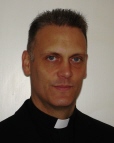
Sermon preached at 3pm Evensong for the Patronal Festival at St Michael’s Baddesley Clinton. (Partly based on sermon from 28/09/2008.)
Sunday 26th September 2010, Michaelmas
Readings: Daniel 10: 4-end Rev 5
Today is our Patronal Festival. We are celebrating St Michael, to whom this church is dedicated. St Michael’s day is 29th September, and in the CofE we tend to call it St Michael and all angles. And this is because, rather un-typically for a saint, Michael is angel.
“And what are angels?” you might well ask. Well angels are spiritual beings which do not have bodies. They are creatures, that is to say they were created by God (Col 1: 16), but they seem to have been well established by the time that Adam and Eve were in the Garden of Eden (Gen 3:1, 24). As spiritual beings, angels have their own personalities and their own free will. Some angels have chosen (as we are all free to choose) to rebel against God and to try to go their own way. These we call demons and we think of the Devil, the prince of all demons, who we read about being cast out of heaven by St Michael in our second reading today (see also 2 Peter 2: 4, Jude 6). When we use the word “angel” we are generally not thinking of demons, but rather we mean spiritual beings that are good. That is spiritual being who choose to use their free will in harmony with the will of God. They choose to do God’s work. In fact, according to St Augustine, the word “angel”, which means “messenger”, is more of a job title than a description of a particular kind of being. Psalm 103 (v20) tells us that angels are “might ones who do his bidding, obedient to his spoken word”. So angels are powerful, spiritual beings who are the messengers of God and who do God’s will.
Now if angels are spiritual beings, who can’t been seen or touched in the visible world in which we live, how do we know anything about them? Well, in the history of religious experience they have been extremely important, and this is recorded in many places in our scriptures. For example, Psalm 34 (v7) tells us that “the angel of the Lord encamps around those who fear him, and delivers them” and psalm 97 (9-16) tells us that God will deliver those who love him, sending angels to guard them and bear them up. And so we can believe that we each have a guardian angel walking always beside us and protecting us. Certainly Jesus is thinking this when he talks about children. He says, “take care that you do not despise one of these little ones; for I tell you, in heaven their angels continually see the face of my father” (Matt 18:10). And with angels always so close to us and looking after us it is perhaps not so surprising that we do sometimes meet people who have had some experience of the presence of angels, or of angels protecting them in moments of crisis.
There are hundreds of references to angels in our scriptures. They are spread throughout the bible from Genesis, the very first book, to Revelation, the last book. We find them especially at critical moments in our salvation history; when Abraham is about sacrifice his son Isaac, when Moses is called by God to set the Israelites free, when the Blessed Virgin Mary is told she is to expect the child Jesus, at the resurrection of Christ. The other place that they appear a lot in scripture in where there are visions of heaven. Our readings from Daniel and Revelation today both described visions of heaven where angels were seen.
It is interesting to note that it is not just the Christian scriptures that talk about angels. The Jews and the Muslims, who also worship the God of Abraham, also have a great deal about angels in their scriptures. Michael and Gabriel are mentioned in the Muslims holy book, the Koran. The Jewish Talmud has extraordinary details about many angels including Michael, Gabriel and Raphael. It describes many different ranks of angels, and the many different heights of heaven.
There might be lots of reference to angels in the bible, but only three angels are ever named. These are Michael, Gabriel and Raphael. Michael is the leader of the armies of God, as we heard in our reading from Revelation. Gabriel is the angel who tells Zachariah that he is to father John the Baptist, and tells the Blessed Virgin Mary that she is to mother Jesus. Raphael appears in the apocryphal book of Tobit. He heals Tobit’s eyes so that he can see again.
But what about Michael? What is his specific role? Well Michael seems to have a specific role as an Archangel, and as one who confronts the spiritual forces of evil. We heard about that in our reading from Daniel, as he fought against the prince of Persia. This is the only place where Michael appears in the Old Testament. It is a difficult passage for bible translators, apparently written in poor Hebrew and with inconsistencies between the various ancient sources. We might wonder who the man in white linen is. Biblical commentators are reluctant to provide a clear answer. There are parts of the description, like the golden belt, that make him sound like Jesus or at least a “Son of Man”, from Revelation 1: 13-15. Other things make him sound like God’s messenger, the angel Gabrielle. And it seems that some of these prices, like the prince of Persia, are evil angels to struggle against, but it all remains very mysterious.
Our second reading, Revelation 5 was more generally about heaven. Every now and again the scriptures give us a glimpse of the majesty, splendour and awe of heaven. This happens many times in the scriptures, especially in books like Ezekiel, Daniel and Revelation, and they are always full of angels. I particularly like the passage in Isaiah when Isaiah describes his vision of the throne of God (Isaiah 6: 1-5), with seraphs singing, “Holy, holy, holy is the Lord of Hosts”. And we must not forget the moment when Jesus is born and a multitude of the heavenly host appeared before the shepherds singing, “Glory to God in the highest” (Luke 2: 13-14).
And these glimpses of heaven are very valuable to us, because, remarkably, we are called to share in this life of heaven. God wants each one of us to be part of it all. In Luke chapter 20 (v35-36) Jesus is talking about resurrection and marriage. He says, “But those who are considered worthy of taking part in that age and in the resurrection from the dead will neither marry nor be given in marriage, and they can no longer die; for they are like the angels. They are God's children, since they are children of the resurrection”. We are called to share in this life of heaven and in the holiness of God (Heb 3: 1, 12: 10) like the angels. We know that all this is only fully realised after the resurrection of the dead. We know that we have a long journey to walk before we get there, because we know that we are far from being angels at the moment. But despite this, there is a sense in which it is true already. If we are in Christ then we are already part of this new creation (2 Cor 5:17).
So angels like Michael are good role models for us. Their obedience to God’s will, and co-operation with purposes show us the way to heaven. So, let’s thank God for our patron Michael, and let’s seek in this place to follow his example, and so to walk the journey to heaven.
26 September 2010

Reversal of fortunes
Sermon preached at 11am Coral Mattins at St Mary the Virgin, Lapworth. A shortened version was preached at the 8.30 Said Eucharist.
Sunday 26th September 2010, Trinity 17, Proper 21 – Year C
Readings: Amos 6: 1a, 4-7 Luke 16: 19-31
I don’t know if you ever saw the TV game show, wheel of fortune? In it a great big wheel was spun and would come to rest on a certain number of points, and contestants would need to solve word puzzles to win the points, and eventually prizes. There was certainly skill involved, but a great deal also rested on the spinning of the wheel and how fortunate or unfortunate contestants were. And fortunes could change very dramatically and suddenly. A contestant could lose everything if the wheel came to rest on “Bankrupt”.
Well the idea of a wheel of fortune can be traced back to Roman times or before. Under the Roman version, somewhere in the heavens, the Goddess Fortuna spins her wheel, and as it goes round so the earthly fortunes of human beings are raised up or fall away. Individuals and nations grow in prosperity and power, or fall down, as Fortuna spins her wheel. People on earth might think that their success or failure is down to their good or bad behaviour, down to their skill or lack of it in handling of situations, and this might even be true superficially, but at the deepest level everything is driven by Fortuna and her wheel.
The wheel of fortune is particularly well known in mediaeval art and literature. Dante and Chaucer both write about it. By this time the idea has been somewhat Christianised. Fortuna is not so much a Goddess, but rather and angelic power who fulfils God’s will, rising up the material fortunes of some, bringing about the downfall of others. If we look at history, it is extraordinary how many things work together to bring about the raising up of empires and nations, and their subsequent falling away. We might think of the ancient Egyptian civilisations, which gave way to the Greeks and then to the Romans. We might think of the British Empire, which rose up so powerfully in the 19th century, and fell away so dramatically during the 20th. We might think of American power and influence which has been overwhelming since the Second World War, but which now seems undermined by debt and individualism, whilst the Chinese seem to be in the ascendancy. Or we might think of individuals, some seem to accumulate extraordinary wealth, and some seem to lose it. The fortunes of someone like Michael Jackson seemed to surge forwards and upwards like a boat inevitably raised up on a rising tide, but then later they fall away just as surely as a moored boat sinks down on a falling tide.
So why is it that the idea of a wheel of fortune was so attractive to the artists and writers of medieval times, who were so often very profoundly Christian. Well perhaps part of the reason is scripture readings like those that we heard today. Amos was active as a prophet in 8th Century BC. At that time the 12 tribes of Jacob were divided such that 10 of them formed the northern kingdom of Israel around Samaria and two of them (Judah and Benjamin) formed the Southern Kingdom of Judah, around Jerusalem. Amos was addressing himself to the Northern Kingdom. His massage was that the nation should reform itself and prioritise justice for the poor above wealth and affluence. He said that if Israel did not do this, then disaster would strike. Israel would be defeated by the Assyrians and taken off into exile. And this is exactly what came to pass a few years after the death of Amos. The Assyrians conquered Israel in 722BC, sending all the top people in society into an exile from which there was no return.
Amos’s message in our reading today was basically, “Alas for those who are rich and comfortable; they shall be the first to be taken into exile.” There is a powerful theme of reversal of fortune. Those who are fortunate now will become slaves in a foreign land.
And that reversal of fortunes theme is also strongly present in our reading from Luke. Lazarus who suffers terrible poverty and poor health on earth, finds comfort in heaven in the bosom of Abraham. By contrast the rich man who had an extravagant lifestyle on earth finds himself tormented in Hades when he dies. When he asks Abraham for mercy, Abraham explains the reversal of fortunes to him.
Luke, it seems, especially rejoices in the reversal of fortunes theme. Like the other gospel writers he talks about the last being first and the first last. But in a month’s time we shall read Luke’s own distinctive versions of the beatitudes. Like Matthew he records “blessed are the poor, the hungry and those who weep”, but unlike Matthew he also records, “woe to you who are rich, or full now or laughing”.
Now for those of us who live in a pretty well-to-do corner of a very well-to-do nation this reversal of fortunes theme makes rather uncomfortable reading. Because we comfortable now, does that mean that we are destined to be uncomfortable in the future? Well, we cannot know, but if God’s providence does work anything like a wheel of fortune then we certainly can’t rule that out.
Now I mentioned God’s providence. What do I mean by that? I mean the way that God orders all the affairs of creation to bring about his purposes. God is all powerful, so we know that everything that happens, be it good or bad, must be either willed or allowed by God. And God wills or allows these things to happen out of love for us, for our good, to help us to walk the journey to heaven. Now someone might say, “How could a loving God allow my granny to die such a terrible death?” Well this is a great mystery, but by faith we believe that God either willed this or allowed it for his reasons, which we might not understand, but they are reasons of love. They are reasons that work for the good of the granny and for the good of others. They are reasons that help them put aside earthly things and reach for the kingdom of heaven.
So God’s providence can feel a bit like a wheel of fortune. Sometimes it can feel great, and good things happen to us for no apparent reason. Sometimes it can be really tough, terrible things happen and there seems to be no reason why. So how should we respond to this? Well the important thing is to trust always in the providence of God; to trust that God is working his purposes out, and to trust that he is doing that for our good, and for the good of all people. Often we cannot see why, or how, but we must learn always to trust in God through good things and bad. And people who are very spiritually mature learn to thank God for all things, the good and the bad, because they see in all things the opportunity to grow closer to God, to grow in holiness, to reach fulfilment.
So I commend this way of thinking to you. When things go well and life is great don’t praise yourself for your own achievements or merit, but rather give thanks to God and praise him for his goodness. Similarly when things go badly and you suffer and struggle don’t necessarily assume that you have done something wrong or made mistakes. Rather trust God and try to work with him. Try to see things as God sees them, and learn the lessons he teaches, because all things work for good for those who love God. (c.f. Rom 8: 28). Amen
19 September 2010
The Church and wider society
Sermon preached at the 11am Parish Eucharist at St Mary the Virgin, Lapworth on Sunday 19th September 2010. Other versions of this sermon were preached at the 8.30am Said Eucharist and at St Michael’s Baddesley Clinton’s for the 9.45am Service of Holy Communion.
Context: Visit of Pope Benedict XVI to Britain 16th-19th September 2010
Readings: 1 Tim 2: 1-7 Luke 16: 1-13
Our scripture readings today are about living out our Christianity within wider society. In 1 Timothy Paul tells us to make prayers and supplications for all people, not just for Christians. He asks us to pray especially for rulers and those in high position in society. He asks us to live our Christian lives in a quiet and peaceable way, with dignity. He emphasizes that God wills salvation for all people, and that the ransom that Christ paid on the cross was for all people. These are pointers towards the way in which church should fit in with the wider society around it.
Then the parable that Jesus tells is about our economic relationships with one another. It is a parable that biblical scholars often struggle with. It can be helpful to think of the rich man as a shrewd and exacting, absentee landlord, rather than thinking of him as God. Luke himself offers three different interpretations at the end of the parable. It is all to do with how we handle money and wealth, and our economic relationships with the people around us.
In this country, for well over 1000 years, Christianity has been the religion of almost everybody. Our culture and language have been profoundly influenced by Christian values which are foundational to political and legal system. But since the 1960s there has been a change. Immigration has introduced significant religious minorities, especially Muslims, Sikhs and Hindus, and this has disturbed the Christian consensus. And then there has also been a drift towards secularization, such that in the 2001 census about 20% of the population preferred to describe themselves as Atheists or Agnostics rather than as belonging to a major world religion. And this secularization has also affected many of the 72% of the population who chose to describe themselves as Christian. Most of the population still think of themselves as Christian, but most of them seldom come to church and all too easily they pick up behaviours and attitudes which are much more influenced by secular experience than by the teaching and example of Christ.
So as practising, worshiping Christians in this country we find ourselves in a minority position in society. And this feels like a new and frightening experience. There can even be is a temptation to panic! But actually this is not a new experience at all. In the first three hundred years of the churches life, Christians were always a religious minority, sometimes tolerated, sometimes persecuted by the wider society and the Roman empire. Because of this experience, there is a great deal of wisdom in the New Testament and in the writings of the early church to help us to understand and cope with this situation of being a Christian minority.
And I think more than anything else, this is what the Pope has been talking about during his current visit to Britain. I have learned than it is very important with religious leader to read the actual text of their speeches rather than the bits that the media pick out. The media prioritise the items that might boost audience figures or newspaper sales. Consequently they focus on anything controversial, and on anything to do with sex, and this means that we get a very distorted view of our religious leaders if we only follow what is reported in the papers or on TV. Because of this I spent a lot of time yesterday looking at the full text of the speeches made by the Pope, and I have to say I found it very interesting, especially on this point about how Christians and wider society should relate to each other. So what has the Pope been talking about?
Well first thing that is very striking, is the very wide variety of people who the Pope has been talking to. There have of course been speeches and sermons aimed directly at the Catholic faithful, as we would expect, but there have also been speeches aimed specifically at children, young people, non-Catholic Christians, the Archbishop of Canterbury, people from other religions, the Welsh, politicians and leaders of civic society and one speech directly addressed to Her Majesty the Queen.
And what comes over, first and foremost, is a deep love and appreciation of British culture and the things that Britain has contributed to the world stage, to the whole family of humanity. The British heroes mentioned include St Edward the Confessor, St Margaret Queen of Scotland, the venerable Bede, St Thomas More, William Wilberforce, David Livingstone, Florence Nightingale and John Henry Newman, a Birmingham man who appears to be a personal hero of the Pope’s. The British Parliamentary and legal system, so influential throughout the world was also singled out for praise.
Another thing that comes over is the Pope’s appreciation of the Christian heritage in English culture. He often refers to the buildings in which he speaks and points out how profoundly Christian they are in their origins. For example he spoke about the Holy Rood (Crucifix) of Holyrood Palace and the angels on the Ceiling of Westminster Hall. He points out just how deeply and profoundly our society has been affected by Christianity. He urges us not to forget that, and not to marginalise the voice of the church.
The pope talks about the role of the church in a multi-faith society. He emphasises that it is not the role of the church to set political policies. He accepts that it is not even for the church, alone, to set down the moral framework that should underpin a sound political system. Rather he urges people to recognise that the church has a very important contribution to make to a wider discussion of the common moral framework. He emphasises that democracy must be underpinned by moral principles that are more solid and enduring than social consensus or public opinion. He sees the churches role as a participant in this dialogue about moral foundations, helping to purify and refine such principles. He emphasises the importance of political processes working for a common good. He emphasises the importance of a continuing dialogue between different kinds of people, for the common good.
The Pope also appeals for a proper respect for the moral consciences of individuals and of organised religion. Basic freedoms such as the right to follow your religion and to assemble for worship are very important. He advocate respect and openness between people of different religions. Dialogue is all important, from the simple dialogue of living side by side to the more complex discussions on principles. Without these freedom, respect and norms, religion cannot play its proper role in the public square, and he sees the contribution that religion has to make as vital.
Anyway, I have found it all very encouraging. I hope that the Pope’s visit will refresh and enliven Christianity in this country, and will help it contribute constructively to the life of the whole nation. Amen.
12 September 2010
Repentance - the findamental choices
Sermon preached at 11am Coral Mattins at St Mary’s Lapworth on Sunday 12th September 2010. Other versions of this sermon were preach at the 8.30am Said Eucharist and at 3pm Evensong at St Michael’s Baddesley Clinton.
Readings: Ps 51: 1-10 Exodus 32: 7-14 Luke 15: 1-10
When I was in South Africa in 2006 I came across a Christian Pastor who had a particular reputation. He had been a “real lad” with a history of intimidation and violence and with links to prostitution and gambling. Then it seems that he had an extraordinary conversion experience, a moment of total repentance and turning to God. Overnight he gave up his old way of life and started living a new and more Christian lifestyle. He set up a non-denominational church and started preaching and teaching very effectively to people who were far from God. His congregation grew and his church and ministry were respected by the local Anglicans, who I was visiting.
Now probably none of us have had such a dramatic experience of repentance and conversion as that South African pastor. His is rather an extreme case of the big turn around which is required when we turn to Christ. This sort of turn around happens when people start to face up to the really big questions in life. Are we for God or against him? Are we doing our best to face God, work with him and trust him with our lives, or are we seeking to run away from him, to hide from him and ignore him? It is a bit like a tree. Is it turning its leaves towards the sun, absorbing its energy, growing and thriving, or is it hiding itself from the sun, withering and dying? Repentance here is about our fundamental choices. Are we for God or against him? Are we choosing for ourselves eternal life, or eternal death; heaven or hell?
This is the repentance that Jesus talks of in the two parables that we heard in our New Testament reading. And such repentance leads to great rejoicing in heaven because something that has been lost, is found and restored to its proper destiny.
Now I am confident that most, if not all, of us who are in church this morning have made this fundamental choice and are basically seeking to orient ourselves towards God and to fulfil his plan for us. People who are in rebellion against God usually don’t come to church, they try to avoid the things of God. Sadly our present society makes it very easy to do just that; there are very few earthly reasons or social pressures that make us come to church if we don’t want to.
But just because we in church and are basically orientated towards God, does not mean that the business of repentance and conversion is over for us. We are all of us troubled by sin, our own sin and the sin of the people around us. There is a continuous process of renewing our repentance, being forgiven of our sin and entrusting ourselves to the mercy of God. This is a lifetime’s work as Christ grows within us and as the things that Christ does not want for us fall away.
But the stories of restoration that we heard about in our scripture readings were not so much about this on-going process of repentance and renewal. Rather they were about the fundamental first choices. Are we for God or against him? And it is this more fundamental repentance that I would like to focus on today.
Sooner or later everybody has to face up to this fundamental choice. Jesus says, “He who is not with me is against me” (Matt 12: 30) and “whoever is not against you is for you” (Luke 9: 50). The thing that really forces this choice is the presence of God. The presence of God cannot be ignored, you have to go with it or run from it. Now we live is strange times, where God seems surprisingly absent from the day to day experiences of many people. Many people seem to find it easy to ignore or postpone this great fundamental choice. However I am quite sure that this is only a temporary phase in history and sooner or later we all have to face this choice. At very least, when we die we have to decide if we walking towards heaven or hell.
Now what should our attitude be towards people who appear to be in rebellion against God? I am sure that we all know people among our families and friends who appear to be in conflict with God, or working against God. Do we sit back and say, “Well that’s their choice, it’s up to them?” or do we try to bring them round to God? Well I think it is very subtle; in certain ways I think it is a bit of both.
There is a very profound sense in which this really is the choice of other people, not our choice. We have to have a deep respect for the freedom that God has granted to other people. We cannot, in all love, try to manipulate or coerce people towards God; rather we must encourage them and allow them to choose. And this can be painful, truly accepting their freedom, even when they appear to be make choices that are so destructive. It can be truly costly. But that pain is real and has to be acknowledged.
But then also there is a very deep sense in which we cannot just sit back. Moses did not sit back and say to God, “OK, gone on destroy the people of Isreal and start again.” Rather he pleaded for them to God. The shepherd did not sit back and say, “If the lost sheep wants to be found, it will come back to me.” No, he went out and searched high and low until he had found it. Likewise the woman did not think of the lost coin, “Oh, it will turn up!” rather she lit the lamp and swept the house until she found it. In fact what is very striking about all these three stories about the restoration into fellowship with God, is that in all three cases the people restored to God seem to have a very passive role. The activity is all done by others.
So there is no doubt that we are called to actively work for the good of those who appear to be in rebellion against God. I am aware of three ways in particular of doing this.
Firstly, very importantly we must pray for them. The story about Moses shows how important this is. In some ways it feels like the only real contribution we can make.
Secondly we must continue in loving them. This does not mean saying they are right when they are wrong, or good when they are bad. However it does mean keeping the avenues of communication open. It means respecting them fully as children created by God. It means wanting their good, and having an attitude of service to bring that good about.
Thirdly we can living our own lives, in full harmony with God an example to show what is possible and how these things work. If people can look at our lives and see how obedience to God brings good outcomes, fulfilment and happiness, then we give witness to the advantages of God.
So, with regard to people who seem far from God, I would like to commend these three approaches to you; pray for them, love them and live good lives which can be an example to them. In this way we do all our part to bring them back to God. Amen.
09 September 2010
Nunc Dimittis
Homily preached at the funeral of Major General George Lewis.
2.30pm on Thursday 9th September 2010, at St Mary’s Lapworth, followed by burial in the churchyard at St Michael’s Baddesley Clinton.
Reading: Luke 2: 27-33
The scripture reading that the family have chosen for this funeral comes from the story of the presentation of the Jesus is the temple. The baby Jesus, 40 days old, is brought to the temple by his parents. In the temple there is the holy man, Simeon, who has be promised by God that he will not see death before he has been The Lord’s Messiah. When Simon sees the baby Jesus he takes him in his arms and says the hymn of praise to God which we call the Nunc Dimittis, “Lord, now lettest thou thy servant depart in peace…”. This canticle, the Nunc Dimittis, we use at Evening Prayer and funerals. Those opening words, “Lord, now lettest thou thy servant depart in peace” as especially appropriate for funerals.
But re-reading these words in the context of this particular funeral I was very struck by the word Servant. “Lord lettest now thy servant depart in peace”. I only met George once, but I was struck by his attitude of service. He unquestionably held high office, both in the Army and in industry, but it seemed to me that he believed that the high office had to be held and administered as a service to God and to other people; above all as a service to the nation. This is what gave the roles value and made them important and relevant.
Now sadly servant leadership seems somewhat out fashion in our nation at present. People nowadays seem to seek high office to secure high pay, or personal power and influence. It is my hope that we will look to people like George to remember the importance of leadership as a service to God and to others.
The other thing that is striking when you read the Nunc Dimittis in the context of a funeral is that Simeon describes the baby Jesus as “The light to lighten the gentiles”. Jesus is the light for everybody, for all the nations. George’s coffin stands before the Pascal Candle, which is the symbol of Christ’s risen life in the church. And that light of the risen life of Christ is what we are all about in a Christian funeral. We are reminded that Christ conquered death. He has an eternal life that is stronger than death, and which renews everything. Jesus wants to share this new resurrection life with each of us, we are all called to share in it. And this is what gives us hope.
But how do we do that in practice? How do we come to share with Christ in that resurrection life? Well, in my opinion, anything that we do to build shared life with Christ makes a contribution here, and is important. Above all our baptism is important. We are baptised into the death and resurrection of Christ. We seek to be joined with Christ through the experience of earthly death, and by this we can also hope to be joined with him in the experience of resurrection life. Receiving Holy Communion is important; Christ shares his own body and blood, his very life, with us. Living according to God’s word is important. Jesus says that those who hear and keep the word of God are his mother and brother and sisters, they are his family, the people with whom he shares his life.
So as we say good-buy to George, let’s give thanks for his witness of servant leadership and life lived in accordance with the purposes of God. Let’s give thanks for the example that Graham spoke about earlier. And let’s also give thanks for Christ who always wants to share life with us. And like George, let’s seek to build a shared life with Christ, because the life that Christ shares is stronger than death. Amen.
06 September 2010
Prayers for Patronal Festival at St Mary's
The following prayers were written for the Patronal Festival at St Mary the Virgin, Lapworth celebrated on 5th September 2010. (Birthday of Blessed Virgin Mary, transferred from 8th September.) The prayers were used at an 11am "Family Eucharist" service, and were read by teenagers.
Heavenly Father,
We thank you for this church of St Mary’s.
We thank you for Mary our Patron.
We pray for the grace to live like Mary;
always trusting in the word of God
and living our lives according to the word of God.
Lord in your mercy
here our prayer.
Heavenly Father,
We pray for the world that you created.
We thank you for the beauty of nature
and for all the joys of life.
We pray for people who suffer at this time.
We remember especially people affected by floods in Pakistan.
May they be saved from their problems
and know your love and care.
Lord in your mercy
here our prayer.
Heavenly Father,
We pray for this parish of Lapworth.
We thank you for its beauty, prosperity and its peace.
We pray for those in particular need of our prayers,
especially….
May they trust always in your love,
and my they know your wholeness and healing.
Lord in your mercy
hear our prayer
Heavenly Father,
We pray for those who have gone before us
on the pathway to heaven.
We pray for....
who have died recently.
We pray for all who mourn their loss on earth.
We thank you for the fellowship we share with the church in heaven
with Mary and all the angels and saints.
May death be for us all a gateway to this most blessed life.
Merciful Father
Accept these prayers…
Heavenly Father,
We thank you for this church of St Mary’s.
We thank you for Mary our Patron.
We pray for the grace to live like Mary;
always trusting in the word of God
and living our lives according to the word of God.
Lord in your mercy
here our prayer.
Heavenly Father,
We pray for the world that you created.
We thank you for the beauty of nature
and for all the joys of life.
We pray for people who suffer at this time.
We remember especially people affected by floods in Pakistan.
May they be saved from their problems
and know your love and care.
Lord in your mercy
here our prayer.
Heavenly Father,
We pray for this parish of Lapworth.
We thank you for its beauty, prosperity and its peace.
We pray for those in particular need of our prayers,
especially….
May they trust always in your love,
and my they know your wholeness and healing.
Lord in your mercy
hear our prayer
Heavenly Father,
We pray for those who have gone before us
on the pathway to heaven.
We pray for....
who have died recently.
We pray for all who mourn their loss on earth.
We thank you for the fellowship we share with the church in heaven
with Mary and all the angels and saints.
May death be for us all a gateway to this most blessed life.
Merciful Father
Accept these prayers…
05 September 2010
"hating" for God
Sermon preached at St Michael’s Baddesley Clinton for 9.45am Holy Communion (Book of Common Prayer) on Sunday 5th September 2010.
Trinity 14, Proper 18, Year C
Readings: Philemon 1-21 Luke 14: 25-33
Outline Notes Only
Gospel reading needs some explanation
- Jesus always says love others, but here he says “hate”
Similar sayings of Jesus:
Luke 9: 57-62 - what Jesus says to people who want to follow him.
let me first go and bury my father - let the dead bury their own dead
let me say good-buy to family – no one put hands to the plough and turns back is fit
Luke 9: 23-26
followers must take up your cross – he who wants to save his life will lose it
Matt 10: 34-39
I have come not to bring peace but the sword
So what is Jesus saying…
Cost of following Jesus is total, - required to “give up all your processions”
Man who builds the tower
The king who sizes up his army.
Processions seems to include family bonds – must come second to the bond with Christ
Examples – Mary, St Frances, experience
Priorities – God first, family bonds second
Even those who are called by God to exercise earthly power often have to have an experience of letting those things go, in order to put God first. Experience of losing.
Philemon as an example, lost his slave, but later returned to him, differently
Wisdom of losing life in order to find it.
Summary – let’s get our priorities right, God in the first place, all else second.
Let’s be ready to lose things for the sake of God, confident that God has other gifts to give us, higher, purified and more refined.
Above all let’s trust God, who created us and gave us all that we have. He has our good at heart and other good things that he wants to give us.
Amen
31 August 2010
Humilty - the antidote to pride
Sermon preached at 11am Parish Eucharist at St Mary’s Lapworth on Sunday 29th August 2010. Other versions of this sermon were preached at the 8.30am Said Eucharist and at St Michael’s Baddesley Clinton, 9.45am.
Trinity 13, Proper 17, Year C.
Readings: Hebrews 13: 1-8 & 15-16 Luke 14: 1 & 7-14
In the early 1950s the Ford Motor Company was brimming with confidence and flush with cash, following the success of the Ford Thunderbird. The management set about developing a whole new car with a whole new network of marketing dealerships. They hired all the best people to work on the design. They created a huge and elaborate marketing campaign. They named the car “Edsel” after the son the company’s founder and they invested millions in the launch. But after all the hype had died down, it became clear that American public didn’t really like the Edsel, and would not buy it. The car was a terrible commercial failure and was withdrawn in its third year. The company lost millions of pounds on the project. The name Edsel became associated with failures in marketing, and a famous “how not to do it” case study for MBA (Master of Business Studies) students. The old maxim, “Pride comes before a fall” comes to mind.
And in more recent times there has been another extraordinary example of “Pride comes before a fall” in the business world. In 2007 big banking appeared to a business of extraordinary power and wealth, and the banks were ever bigger and braver in what they took on. Yet by October 2008 many of the world’s biggest banks appeared insolvent, and there is no doubt that without a massive government intervention, most if not all of them would have failed.
The parable that Jesus told in our gospel reading today also has a “pride comes before a fall element”. At that time the custom at wedding banquets was to have the places graded from the places of highest honour, up high and near the host and bride and groom, down to the places of least honour, lower down and further away. Jesus pointed out that choosing to sit in a seat of high honour was inviting a fall. Someone more honourable that you might arrive later, and you would have to give up your seat. And because all the seats were no occupied you would find yourself moving to the lowest seat, while everyone is watching. Instead Jesus recommends a more humble strategy; choose for yourself the lowest seat so that the host might call you up higher.
Well we live in a much less hierarchical society today, but issues about the highest places have not gone away. We hear of film studios in terrible fights with film stars about the order in which names appear in the credits. I regret to say that I have heard even of clergy processions, where none of the clergy are willing to lead the procession out, because by tradition it is always the most senior clergy who occupy the back of the procession.
It is people’s pride that causes difficulty in these situations. Pride is the vice of self-importance; thinking of ourselves as above other people or above God. We often associate it with arrogance and self-sufficiency. Of course the word pride can denote good things. We encourage people to take pride in their work, in their appearance, their neighbourhood, in their nation. These attitudes are important and contribute to our self esteem. They show that we value the good gifts that God has given us, and want to fully play our part in realising their full potential. Pride only kicks in as a problem when we start to value to ourselves higher than other people, or our own nation more than other nations.
The antidote to pride is the virtue of humility. Virtues are attitudes and habits that are good. Vices are attitudes and habits that are bad. We all need to practice good attitudes and behaviours so that they become habitual, they become virtues. Virtues grow by practice, and by the grace of God, which we should ask for. So humility is a virtue, but what is humility all about?
Well I think that humility is ultimately about being completely and utterly realistic about who we are, and who other people are. It is not humble for a student who has just got a string of A stars at GCSE to say, “Oh I’m not that clever really.”; that’s just unrealistic. It is humble for that student to thank God that they have been blessed with certain talents, to recognise the support they have received from their school and from their family, and recognising that these good gifts are given by God not just for our good, but for the good of others too. Being humble means seeing ourselves as God sees us and of course, God sees us through the eyes of love; God loves us immensely. We must remember that we were created and are sustained by God, we owe everything to him. God sent is own son to die for us and to redeem us. For God we are most definitely “worth it”! And of course God also sees our many frailties and sins and vices, but God sees beyond them, knowing that when we turn to him he forgives us, and heals us and make us whole. So seeing ourselves as God sees us, and loving ourselves as God loves us, means having a very high opinion of ourselves, but it also means having a very high opinion about other people, because we know that God loves them, just as he loves us.
Now prayer is very good discipline for growing in humility. When we pray we place ourselves before God and hold ourselves in our relationship with God, and this really does help us to know who we are and to have the right attitudes. First of all pray is a humbling experience because it is difficult, and we don’t really know what we are doing. As St Paul says (Romans 8: 26) we do not know how to pray as we should, but we depend on the Holy Spirit to pray for us.
And then the things that we do in prayer help us with humility. We say prayers of adoration, praising God for his greatness. This reminds us how very great God is and what a very small cog we are in the mighty universe of God’s creation. In our prayers we make prayers of confession. We hold before God our sins and failures, and this is necessarily very humbling. It reminds us that we are completely dependent on the mercy of God. Also in our prayers we give thanks to God for the good things he gives us. This too reminds us that all the good things we have are gifts from God and not products of our own hard work or cleverness. In prayer we also learn to thank God for the difficult things that come our way, the things we would not choose for ourselves, but by thanking God for them we come to see them as part of God’s love for us, part of his plan for our lives.
So today I would like to commend to you humility as a virtue, a good habit and attitude; humility as the utterly and totally realistic assessment of ourselves, as we are seen by God. I would also like to commend to you prayer, as a way of growing in humility. Amen.
22 August 2010
Deliverance on the Sabbeth
Sermon preached at 11am Coral Mattins at St Mary the Virgin, Lapworth on Sunday 22nd August 2010. The sermon was also preached at the 8.30am Eucharist (shortened) and at 3pm evensong at St Michael’s Baddesley Clinton.
Trinity 12, Proper 16, Year C
Readings: Ps 103: 1-8 Is 58: 9b-14 Luke 13: 10-17
Our family have just come back from a holiday on the west coast of France, and very nice it was too; a real opportunity to rest and relax and catch up with ourselves. And the holiday was particularly welcome because it came at the end of a very intense six month period which has involved a house move and a very steep learning curve on being responsible for two parishes. So it was very lovely to go away with the family and to enjoy the food and the wine and countryside and sunshine and the beaches. It was also lovely to catch up properly with the Dawson family, who we traditionally go on holiday with.
And one of the things that I love about holiday is having the time and energy to get involved in things that I normally would not get involved in at all. For example, at one point we found that all the adults joined in one of the children’s games, a game called “guard”, which is a rather sophisticated version of hide and seek. In the car we listened to an audio book called “the book thief”. One of the Dawson teenagers was reading Dante’s Divine Comedy (in English!), and I became very interested in this. And I found these new experiences very refreshing, renewing and enlivening. It reminded me of the importance of rest in our daily lives and especially of the importance of the Sabbath, the day of rest. And we got two rather contrasting takes on the Sabbath in our scripture readings today.
The Jewish-Christian tradition tells us that from the very creation of the world, God set aside one day of the week to be holy, and to be a day of rest. In the Genesis account of creation God made the world in six days, and on the seventh day he rested. In the Ten Commandments he similarly asked his people to observe the seventh day, Saturday, as the Sabbath Day, a day of rest, holy to the Lord. It was a day especially when the Jewish people were asked to remember the Passover, when Moses lead them out of Egypt, through the Red Sea and delivered them from Pharaoh’s army. The keeping of the Sabbath on a Saturday was always an important part of the covenant, the deal between God and his people, and of the Jewish Law, but in the sixth century BC, when the Jewish nation was in exile in Babylon is became a crucially important part of the Jewish identity. Observing the Sabbath became and important part of what it meant to be a Jew. The reading that we heard today from Isaiah was probably written just after this period, as the nation was seeking to re-establish itself in Jerusalem following release from exile. In the reading it is clear that keeping of the Sabbath is central to the covenant. Through Isaiah, God gives various teachings on how the Sabbath should be observed. As is typical of Isaiah, the great wisdom of these commands from God are presented in a most beautiful and poetic way. The two final verses of this passage are worthy of much reflection and meditation in their own right. I have been reading these teachings of v13 in different translations of the bible, and it is quite striking how different the different translations are. Brief translations of the Hebrew seem to struggle to pin down what God is saying here. The gist of it seems to be that the Sabbath a day when you should:
- not pursue your own pleasure, but rather the pleasure of God
- not pursue your own interests, but rather the interests of God
- not pursue you won affairs, but rather the business of God
- not focus on human words and tittle-tattle, but rather on the word of God
And this is surely very good guidance, not just for the Jewish observance of the Sabbath on a Saturday, but also the Christian observance our holy day on a Sunday.
By the time of Jesus, observance of the Sabbath had become very central to Jewish identity. It had become bound up with lot of very detailed rules and regulations about what Jews could and could not do on the Sabbath, how far they could walk, what tasks were allowed and what were forbidden. The notion of a day for God’s purposes rather than human purposes had become somewhat obscured by all these rules, and Jesus kicked out against them. The story we heard today is one of three stories in Luke’s gospel where Jesus performed healing miracles on the Sabbath (also 6: 6-11 and 14: 1-6). On all three occasions this was controversial; healing was a task not allowed on the Sabbath. And what does Jesus say? How does he justify himself? Well in today’s story he says, “It is legitimate on the Sabbath to take an ox or an ass to water, how much more appropriate is it to deliver a woman from the power of Satan?” It seems that the Sabbath is a particularly appropriate day for good to triumph over evil, for healing to triumph over decay, for life to triumph over death.
And perhaps this is why, in the life of the early church, Sunday, rather than Saturday came to be observed as the holy day of God. Sunday is the day of our Lord’s resurrection. It is the day when Jesus conquered death and hell. It is the first day of the week, which is the start of creation, but it is also the eighth day, the beginning of a new creation, of the restoration and renewal that comes about through Christ’s death and resurrection, through Christianity and the Church. So it is very appropriate that in the Church we observe Sunday as God’s holy day. Sunday is a particularly appropriate day for Christians to celebrate the Eucharist, in which we remember the great Passover of Jesus in his death and resurrection, just as the Jews remember the Passover of their deliverance on a Saturday. It is a good day to live out the teachings of Isaiah:
- not pursue your own pleasure, but rather the pleasure of God
- not pursue your own interests, but rather the interests of God
- not pursue you won affairs, but rather the business of God
- not focus on human words or title-tattle, but rather on the word of God
And perhaps this pricks our conscience a bit? Perhaps we are guilty of treating Sunday like any other day? Perhaps on Sundays we should be doing less, resting more, worshiping more and devoting our attention more to our families and close friends. Well probably this is true, but we must not be too hard on ourselves as individuals because it is the whole of society that is called to live the Sabbath, not just the churchy few. When the 10 commandments were given it was made very clear that the Sabbath meant rest for work for all, including children, servants, animals and even foreigners living among the Israelites. This means we also have to try and help all of society to live the Sabbath well and to enjoy a day of rest. Now in this country we know that with Sunday trading and the like, the tide has rather flowed against this in recent years, but if we all play our own part, faithfully in front of God, who knows, perhaps the tide will change again, perhaps sooner than we think. Amen, let it be.
01 August 2010
Being Rich towards God
Sermon preached at St Michael’s, Baddesley Clinton at 9.45am Holy Communion (BCP).
Sunday 1st August 2010 – Trinity 9 – Proper 13
Adapted versions of this sermon were preached at St Mary's, Lapworth at 8.30am and 11am.
Readings: Col 3: 1-11 Luke 12: 13-21
If we wanted to retell the parable of today’s gospel in a more contemporary setting and with a sharper cutting edge we might say something like this.
There was once a man who owned a business in the city. And the business did well and generated plenty of cash. And the man said to himself, “What should I do, I have got more money than I can spend,” then he said, “I’ll do this, I’ll sell my house in the city and buy a bigger one just outside the city. I’ll store up my money in my house, because house prices always rise, and quite soon I shall be able to retire. I’ll be able to relax, eat drink and take lots of holidays. But they day before he retired God said to him, “You fool! This very night you life is being demanded of you, and all this wealth you have accumulated, what good will that do you?
We are all familiar with that great tragedy of people who die either just before or just after they retire. We often think, they have worked so hard, and really deserve a good retirement, and yet it seems that God has other plans for them. And I have to say that very often this particular tragedy does seem to affect people with a particular role in serving the community; clergy. school teachers, politicians. But hopefully, if they have served the community well, if they have managed to focus their lives on the benefit of others, then they will be well prepared for the kingdom of heaven, well prepared to serve and be served in the heavenly realm. And if this is the case, who are we to think that an earthly retirement might be better for them than the heavenly blessings.
But what about the man in our story, who has not thought about serving other people? In fact the story does not even mention a wife and family so it does seem that he thinks only of himself, of his own wealth, or his own desire to relax, eat drink and be merry as the parable says. Well God’s words to him are, “You fool!” – “You have invested all your energy in earthly wealth, and tonight I am transferring you to the heavenly realm where you have invested nothing.” – “You fool”.
The man in our story is a bit like the arrogant management consultant who transferred all his personal wealth into Railtrack shares, just before they spectacularly lost all their value in 2001. He put all his eggs in one basket, and the basket collapsed. The man in our story put all his resources into earthly wealth and then died. But, as Jesus said, “a man’s life does not consist of the abundance of his processions.” Jesus ends the parable by saying, “so it is for those who store up treasure for themselves but are not rich towards God.” Elsewhere in the gospels Jesus says, “Do not store up for yourselves treasures on earth, where moth and rust consume and where thieves break in and steel, but store up for yourselves treasurers in heaven where neither moth nor rust consumes and where thieves do not break in and steel, for where your treasure is, there your heart will be also.” (Matt 6: 19-21).
We got exactly the same message from St Paul in our epistle reading today, “…seek the things that are above…set your mind on the things that are above, not on the things of that are on earth…”
So how do we, “seek the things that are above?” How do we make sure that we are rich towards God? How do we build up treasure in heaven? How do we invest in our eternal future, remembering that our 70 or 80 years on earth is quite short compared to the eternity for which we are created? How do we invest in assets that will pass the ultimate “stress test” of death?
Well, paradoxically, we do it by thinking not of ourselves, but of others. We do it by following the two great commandments: love of God and love of neighbour. We try to live each moment, each day, attentive to what God wants from us in the moment and that day. And typically, what God wants from us, becomes clear from the people around us. He wants us to be attentive to them, to help them, to serve them, to take them forward on their journey towards God. It is as though the wealth that we create in other people is the wealth that endures to eternity. The dynamic of heavenly wealth is a dynamic of giving, not a dynamic of accumulating.
So what about our worldly wealth? How should we think about that? Well first of all, let’s give thanks to God for it, because any wealth that we have has come to us through God’s good gift. We may have worked hard for it, but without the grace of God we would have nothing. Secondly, let’s remember that we can’t take it with us. When we die we lose it all, so the protection and security that it affords us is limited; we must enter the kingdom of heaven without it. So this means that we should use our wealth wisely and prudently, while we are on earth, in order to build up treasurers in heaven. We should be generous in giving and investing; generous, not reckless. We should seek to use our giving and investing to build relationships of trust. We want to build up other people, build up other organisations in a sustainable way. Now it has to be said that in the current environment this is very hard. Even the banks appear hardly worthy of our trust. But let’s hold the resources that we have before God, and pray for the grace to use them well. Let’s be good stewards of the gifts that God has given us, seeking to invest in others wherever we can; build relationships, build trust, find prudent ways of giving, live for God, live for others. These are the ways to build up treasure in heaven. Amen.
25 July 2010
St James the Great
Sermon preached at 11am Mattins at St Mary’s, Lapworth on Sunday 25th July 2010
Festival of St James the Great
Readings: Ps 126 Jeremiah 45: 1-5 Acts: 11: 27 – 12: 2 (Matthew 20: 20-28)
So today we celebrate the festival of St James the Great. It is only one year in seven on average that 25th July falls on a Sunday, so today is a good opportunity to reflect on St James and to get to know him a bit better.
First of all, let’s get straight who we are talking about. We are talking about James, as in James and John, the sons of Zebedee. James and John were among the first disciples to be called by Jesus. I am sure you remember the story. They were sitting in their father’s fishing boat mending their nets when Jesus came and said: “Follow me”. And they left their father in the boat with the hired men and followed Jesus. At the same time Jesus also called Simon and Andrew and said that they would become fishers of men. And in fact Peter, James and John became like Jesus’ inner cabinet. They were the ones he took with him up Mount Tabor for the Transfiguration. They were the ones who went into the room with him when he brought the young girl back from the dead. They were the ones who he took to one side with him as he prayed in the garden of Gethsemane. And perhaps it is because of this very privileged position that James, son of Zebedee, held that he is often called James the Great.
Because we have to acknowledge that there were a lot of other Jameses around in the New Testament. There is James, Son of Alphaeus, who was also one of the 12. There is James, called Brother of the Lord, James the younger and James, writer of the New Testament book. It’s not completely clear to the scholars if those James are all the same person, or two people or three or perhaps even four different people. But anyway we are not talking about them, we are talking about James, brother of John, son of Zebedee, one of the Lord’s three closest companions.
I have already mentioned some of the New Testament stories about James but I have not mentioned the most famous story. This is the story where the mother of James and John asks Jesus if her two sons, James and John might sit at his right and his left in his glory. Jesus says, “You don’t know what you are asking. Can you drink the cup that I will drink, or be baptised with my baptism?” “We can” they boldly responded. “Very well,” said Jesus, “The cup that I drink, you shall drink, and my baptism will be your baptism, but to sit at my right and my left is not mine to grant, it is for those to whom it has already been given.”
It was perhaps rather brave or perhaps foolhardy to say to Jesus, “Yes, we can drink your cup, yes, we can be baptised with your baptism.” By his “cup” Jesus probably meant his passion and death, as he did in Gethsemane when he prayed “Father, take this cup away from me! Yet not my will but your will be done.” After James and John had been so enthusiastic about Jesus’ cup, a martyrdom always seemed possible. As we heard in our reading from Acts, James was indeed martyred, probably about 44AD, by the sword. There is a tradition that he was beheaded by King Herod in person.
But the interchange with Jesus was very important because it lead to Jesus’ explanation of what leadership must be like in the church. Jesus explained that in worldly circles masters lord it over their servants, but it must not be like this in the church. Whoever wishes to be great among you must be your servant and whoever wishes to be first among you must be your slave, for the Son of Man came to serve, not to be served and to give his life as a ransom for many.
And this model of servant leadership has been crucial in the church and in Christian society ever since. Of course we often fail to live up to it, and certainly our leadership in our society today seems to be completely tied up with money and power and have very little to do with service. However there have been powerful moments of witness.
For example, in the sixth century there was an uncomfortable power struggle between the Patriarch of Constantinople (traditionally seen as the second most important bishop in the church) and the Bishop of Rome, traditionally seen as the first. The Patriach gave himself a new title: Ecumenical Patriarch – Patriarch of the whole church. Pope Gregory the Great was under pressure to respond, and he adopted the title Servant of the Servants of God. What is more, is he managed to live his papacy in that reality. A crucially important point was made.
So what does servant leadership mean? It doesn’t usually mean that we expect our archbishops and popes to do the washing up and to wait at table. It is very symbolically important when they do these things, but if they were to do them all the time then they would not be doing their jobs. What we do hope for and expect, and what we should certainly try to live out when we are in positions of leadership ourselves, is that the office is to be used and powers exercised for the benefit of all the people, not for the benefit of the leader in question. The bishop must act for the benefit of all the people of the diocese. The headmaster must work for the benefit of all the people in the school; the Chief Executive for the benefit of the whole company. And, just as a waiter must be attentive to the needs of the person he serves, and a good waiter will even anticipate these needs, so a good leader must be attentive to the needs of those that are led.
Personally I think we need to have a special sensitivity to St James and to servant leadership in this church. We know that before the reformation there was an altar in the south aisle dedicated to St James. So the saint was important in this place, but the link has been lost. And in fact the situation is even more dramatic at Baddesley Clinton. That whole church was originally dedicate to St James, but at some time that was changed to St Michael. So once again an important link to the saint has somehow been lost. Now I am not suggesting that we should rush to reinstall an altar to St James, but I do think we need to recognise and honour aspects of this saint, with whom we have had these links. So servant leadership would be one aspect of that, which of course applies especially to Rectors, wardens and PCC members. Another aspect is being willing, perhaps even in a foolhardy way, to drink the cup that Jesus drinks and to share his baptism. Most of us are not called to full martyrdom, but a willingness to share sufferings with Jesus is important, as we were discussing last week. And a third aspect would be to be a good disciple of Jesus, responding to his “follow me” and seeking to be especially close to him as James was. I think if we can live well these three aspects we will honour St James well, and altars that we have lost, or dedications we have changed will matter far less. Amen.
Prayer for St James' Day
Almighty God, remember your church, built on the foundation of the apostles and prophets, with Christ Jesus himself as the chief cornerstone. We pray for all bishops and all leaders in your church. By their example may we follow close to Jesus. May we continue always in the apostles' teaching and in the fellowship, in the breaking of bread and in prayer. We make our prayer through the same Christ Jesus our Lord. Amen.
18 July 2010
Jesus our Friend
Sermon preached at St Mary the Virgin, Lapworth at 11am Parish Eucharist
Sunday 18th July 2010 – Trinity 7, Proper 11
Other versions of this sermon were preached at St Mary’s 8.30am Eucharist and at the 9.45am Eucharist at St Michael’s Baddesley Clinton.
Readings: Col 1: 15-28 Luke 10: 38-42
In our gospel reading today we hear about Jesus staying with his friends Martha and Mary. Martha and Mary, together with their brother Lazarus get mentioned several times in the gospels. They lived at Bethany, which is just outside Jerusalem. It seems that they were very particular friends to Jesus and Jesus visited them a lot. Especially Jesus was there during the week leading up to his passion. That week Jesus would spend the daytime in the temple preaching to the crowds. Nobody could try to arrest him while there were crowds of people were listening to him. But at night Jesus would retreat to the safety of Bethany, well away from the chief priests and religious authorities.
And when we look at our gospel story, we do get the impression that Martha and Mary were very comfortable around Jesus. We are told that Mary sat at the Lord’s feet and listened to what he was saying. Sitting at the teacher’s feet and listening; this is the typical behaviour of a “disciple” in the first century. It is not how a woman would normally behave, or how a host would normally behave. It seems that Mary was very comfortable around Jesus and felt able to behave very freely. Martha, whose behaviour was much more conventional, also felt comfortable enough around Jesus to raise a rather awkward point with him: “Lord, do you not care that my sister has left me to do all the work by myself.” And Jesus’ response is full of love for both Martha and Mary. He acknowledges that Martha is worried and distracted by many things, when only one thing is needed. But he also commends Mary for choosing the better part and affirms that she should be allowed to keep it.
Let’s think about our friends for a moment. Who are our friends? What is it about those particular people that make them our friends? Well I think different people might have different answers, but I think friends are people who you are really comfortable spending time with. Probably they are people who you already know very well, and you don’t have to take a lot of trouble getting to know them. Probably they are people who you can say things to, without fearing that they might judge you, or misunderstand you, or get upset or angry.
And of course we are all invited to have Jesus as a friend. Jesus, the friend of tax collectors and sinners can be our friend too. Jesus is someone who walks alongside us through thick and thin, someone to show us the way, someone with whom we share the joys and sorrows of this earthly life, someone in whom we can confide our deepest hopes and our fears. Jesus is the ultimate friend, ever present, ever faithful, ever true. Jesus our friend shares with us encouragement, understanding and joy. He is with us always, until the end of the age (Matt 28: 20)
But what do we need to do, to develop our friendship with Jesus? Well, in John 15 Jesus speaks about the new commandment which he gives his followers, to love one another, and then he says, “You are my friends if you do what I command you” (John 15: 14). So loving one another is certainly important if we want to be a friend of Jesus. Similarly in Matt 25 Jesus says, “What ever you do to the least, you do to me.” So being good to other people is the key to being good to Jesus. But it seems to me that prayer is also terribly important here. Just as we must talk to our friends, if they are really to be friends, so we must prayer to Jesus if we want to know his friendship and rejoice in it. And through these prayers we can stay in the company of Jesus all day. We might pray, “Lord, help me through this situation, which is a bit awkward,” or “Lord, give me grace to deal with this person, who can be so difficult,” or “Lord, help me to do this task well, for you, even though it’s so boring.”
Sharing our day with Jesus can certain help us to become more aware of our friendship with Jesus, but it seems to me that there is one thing, above all others, that really makes friendships grow, and that is sufferings shared. The people with whom we have shared difficult situations, people who have supported us in our troubles, or who we have supported. These tend to be our best friends. Remember the friends you were thinking of earlier. My guess is that, with many of them, there will have been some suffering shared, or a falling out and later reconciliation. Experiences like these give confidence that your relationship can withstand future difficulties. Often, it is the sharing of sufferings that really draws people together.
And the same is true in our experience with Jesus. From Colossians today we heard St Paul say that he rejoices in his sufferings because he sees them as his contribution, added to Christ’s great contribution, for the sake of the church. Sharing sufferings with Jesus really draws us close to Jesus. And of course the passion and death of Jesus brought about reconciliation and renewal and new resurrection life. So too, when we share our sufferings with the sufferings of Jesus they too can start to have these effects, for us and for the people around us.
And we have a particular opportunity to do this today in the Eucharist. Jesus said of the Eucharist, “Do this in remembrance of me” (e.g. 1 Cor 11: 24-25) and that act of remembrance makes present in our consciousness today the passion and death of Jesus which happened 2000 years ago. So as we come to receive communion today, let’s bring to Jesus our sufferings, small all large, caused by us or by others, and let’s share our sufferings with the suffering of Jesus in the passion. This will draw us closer to Jesus and draw our sufferings closer to his love which heals and reconciles and renews.
And so may we always be good friends with Jesus, the ultimate friend. Amen.
11 July 2010
The commandments of God
Sermon preached at 11am Mattins at St Mary the Virgin, Lapworth
Sunday 11th July 2010 – Trinity 6, Proper 10 Year C
Other versions of this sermon were preached at St Mary’s at 8.30am Eucharist and at St Michael’s Baddesley Clinton at 3pm Evensong.
Readings: Deuteronomy 30: 9-14 Luke 10: 25-37
Recently my wife bought a new mobile phone. She had been without a phone for a couple of days, so when it arrived she was very excited to see it. It arrived at a very busy moment, but Elaine was very keen to get it going, so we rushed rather to assemble it. In the rush we gave only the scantiest attention to the manufacturing instructions, and misunderstood the one thing that we did read. This meant that we put the SIM card in upside down, and in so doing managed to damage it. The result was a further two days with no phone, while we got hold of a new SIM card from the service provider.
The incident reminded me that it is important to use equipment in line with the way it has been designed. Seeking to use it in other ways results in poor performance and could even result in accident or injury. I was reminded of one of my friend at school who was trying to lever the top of a can of paint, using not a screwdriver, but a chisel! The result was quite a nasty injury.
And of course we human beings have been made and designed for a particular purpose, a particular destiny. And it is a very high purpose and destiny, higher than we can possibly imagine. We are made in the image of God, to share in the eternal life that God himself lives out in within the Trinity. This is a great and wonderful thing. I am not sure whether we will ever comprehend how wonderful it is.
But to realise this purpose, this destiny, we have to live our lives in accordance with the maker’s instructions. We have to live according to the purposes for which we were designed. And this is all about following the commandments of God; walking in God’s ways; living according to God’s word; following God’s will for our lives. The importance of this can hardly be overstated, but it was really powerfully stressed in our Old Testament lesson today. Moses was speaking to the Israelites as they come to the end of their forty years in the wilderness and as they are about to enter the Promised Land; the land flowing with milk and honey. Actually Moses makes a great long speech; we only caught a very small part of it in our Old Testament lesson, but the deal is this, the covenant is this. God says to the Israelites, “Be my people, obey my laws, keep my commandments and I will make you prosper in the Promised Land. But you have a clear choice. If you don’t obey my laws and follow in my ways you will not last long in the Promised Land.” So it is obey God and prosper, or ignore God and perish.
And the importance of obeying God and keeping his commandments comes up time and time again in scripture. Jesus says, “If you love me you will keep my commandments.” (John 14: 15) and he says, “If you wish to enter into life, keep the commandments” (Matt 19: 17) and he says, “Not everyone who says to me ‘Lord, Lord’, will enter the kingdom of heaven, but only one who does the will of my Father in heaven.” (Matt 7: 21).
And what are the commandments of God? Well we heard the summary of all the commandments in New Testament lesson today; “Love God and love your neighbour” and then, in the story of the good Samaritan, we heard a beautiful illustration of what it means to love our neighbour; how it means helping them in practical ways, and looking out for their good.
So to realise God’s great plan for us, to fulfil all the good things that God wants for us, we need to follow God’s will for our lives, we need to live by the commandments of God and by the teaching of Jesus. And these commandments and teachings are all about love. The commandments are about educating us in what love means or requires of us in different situations.
And I want to put in an aside about “obedience”. In our contemporary western society the word “obedience” is often presented with rather negative connotations, as though it is about allowing ourselves to be dominated by other people, or about being fitted as a round peg into a square hole, or about failing to be true to our innermost instincts and desires. Well we need to re-educate ourselves to remember that obedience to God is always a thoroughly good thing; it is the good thing. It is precisely the way that we walk the walk towards heaven. It is the way we realise God’s creation in us. It’s the way that we allow God to form us and develop us so that we become what he has created us to be. So obedience to God is always a good thing, and obedience to God often (not always, but often!) requires obedience to other human being or human institutions; to a spouse, to a boss, to the law of the land, to a bishop or priest even. It is often through these people that we understand what God wants from us. And let’s remember that obedience to God is always about love, not wishing washing feelings, but the profound and mysterious love of God, which always seeks the good of the other.
I want to finish by re-reading the Collect for today, the sixth Sunday after Trinity because it does seem to summarise so much of this, so beautifully:
O God, who hast prepared for them that love thee
such good things as pass man’s understanding:
Pour into our hearts such love toward thee
that we, loving thee above all things,
may obtain thy promises,
which exceed all that we can desire;
through Jesus Christ our Lord. Amen (Book of Common Prayer)
04 July 2010
Ministries and Grace
Sermon preached at 9.45 am at St Michael’s, Baddesley Clinton
Sunday 4th July 2010, Trinity V, Proper 9 – Year C
Other versions of this sermon were preached at 8.30am and 11am at St Mary's Lapworth.
Readings: (Gal 6: 7-16) Luke 10: 1-11 & 16-20
My daughter, Caroline, has just returned from a school trip to Snowdonia. It was a week of outdoor pursuits, including gorge walking and climbing Snowdon. In preparation for the trip both our family and the school worked quite hard to ensure that Caroline had all the appropriate kit. As she set off on the trip, with her hiking boots and carefully packed backpack we were confident that she had the things she needed for the different outdoor activities. And just to confirm that all the preparations had paid off, she sent us a text message from the top of Snowdon.
But what a contrast there is between our attitude in kitting Caroline out, the attitude that Jesus had when sending out disciples ahead of him to prepare the ground in the towns and villages that Jesus himself expected to visit. Far from kitting the disciples out, Jesus seems to tell them not to take things with them. Jesus tells them to “carry no purse, no bag, no sandals.” If we had read Matthew’s account (Matt 10) we would also have heard Jesus tells the disciples to take no money (not even coppers), no spare tunic and no staff.
Why would Jesus give such instructions? Surely it would be better if the disciples were properly kitted out for their missionary journey?
Well we can only speculate. It seems to me that Jesus wanted to make sure that the disciples were trusting completely in God, rather than trusting in their own skills, talents and resources. This attitude of complete trust and dependence on God is very healthy especially for people who are engaged in God’s work. If you have no resources of your own, but depend completely on what God gives you, then you have no choice but to stay focused on doing God’s work.
And it worked! The seventy returned with joy saying, “Lord, in your name even the demons submit to us.” Clearly the seventy had worked many miracles of healing. Jesus said, “See, I have given you authority to tread on snakes and scorpions and over all the power of the enemy, and nothing will hurt you.” So it seems that the disciples extraordinary trust in God, going out on their mission with no more than the clothes they were wearing, resulted in extraordinary graces and powers to work great miracles. And this was a cause of great rejoicing. But notice the comment of Jesus: “do not rejoice at this…but that your names are written in heaven.” The significant thing is not that the disciples have extraordinary powers, like comic book superheroes, but rather that this is evidence that they share in the life of heaven, the eternal life in the presence of God.
And this pattern of extraordinary dependence on God, and extraordinary earthly powers is by no means unique to this story about the 70 disciples. At the very end of Mark’s gospel (Mark 16: 17) Jesus says, “These are the signs that will be associated with believers; in my name they will cast out devils, they will have the gift of tongues, they will pick up snakes in their hands, and be unharmed should they drink deadly poison; they will lay their hands on the sick who will recover.” And in the Acts of the Apostles there are lots of stories of the disciples performing healing miracles and of Paul, being unharmed by the bite of a deadly snake.
And in the history of the Church, this story has many resonances. St Francis was deeply struck by precisely this very story, which we heard from the gospel today. He felt called by God to live it out for himself in a very literal way. Francis went on to live in radical poverty, in complete dependence on God and on the gifts of other people. And as we know Francis developed an extraordinary ministry and demonstrated all kinds of miraculous powers, including healing and exorcism.
But what about us? We are ordinary Christians of the 21st century; ordinary believers. Are we too called to this life of radical dependence on God; this life where we go about with no more than the clothes we wear? Are we, too, to receive powers to heal diseases and tread on scorpions and snakes? Well some of us are called by God in a radical way, for example by giving up everything, and going to live in a monasteries or a convent. But probably, for most of us, God does not call most of us to a ministry like that. For most of us our ministries will be much smaller and simpler things; caring for our families, talking to our neighbours, visiting or offering a lift to an elderly person. We might also be called to specific ministries to help in the church, perhaps through a role on the PCC. Or perhaps we are called to a ministries to the wider community. Sometimes we are called to support particular communities groups, or to serve on their committees and help them to play their part in serving the whole community.
The important thing is to be very attentive to what God wants from us; by what ministry he wants us to serve other people. God always supplies the grace needed for the ministries to which he calls us. If the ministries are small then perhaps the grace need not be so big, but if we live our ministries well then perhaps God will call us to bigger things, and give us bigger graces. But we must be attentive to what God wants from us, because it all starts with what God calls us to do.
But we must not deceive ourselves into thinking that we can escape from our radical dependence on God. We all need to build and develop out trust in God, who created us and loves us. Sooner or later any earthly thing that we put our trust in must fail us. Eventually we must all face death. In death we lose all our earthly processions, even our clothes, even our body. In death our utter dependence on God is revealed. Let us pray that by that time we will have learnt to trust completely in God, and let us pray that, like the 70 disciples, we may rejoice to discover that our names are written in heaven. Amen.
27 June 2010
Following Jesus to become like Jesus
Sermon preached at St Mary’s Lapworth at 11am Mattins
Sunday 27th June 2010 – Trinity 4, Proper 8, Year C
Readings: PS 77: 11-end 2 Kings 2: 1-2 & 6-14 Luke 9: 51-end
In our gospel reading we heard about people following Jesus. Some of them said to Jesus, “I will follow you” and to some of them Jesus said “Follow me”. And the people who follow Jesus were called disciples, and the business of following Jesus we call discipleship.
Sometimes we make the mistake of thinking that there were just 12 disciples of Jesus. Actually there were lots of disciples, and also lots of women, who followed Jesus. But there were 12 disciples who (Mk 3: 14) Jesus designed apostles and who would often call aside and speak only to them. But there were clearly lots of people who Jesus seemed to trust with his message. In Luke 10 he sends 72 people in pairs on ahead of him to the towns which he planned to visit. At the end of John chapter 6 we read that many of Jesus’ disciples were put off by Jesus’ teaching “I am the bread of life” and started to go away. Jesus asked the 12 if they were going to leave too, but Peter said, “Lord, to whom can we go. You have the words of eternal life.”
So Jesus had many disciples, and different ways he also calls each one of us to be disciples, that is followers of Jesus. And I think we have to grow in appreciation and respect for all the different ways in which Jesus calls different people. Some are called to follow him very directly and personally, through a life of intense prayer. Some are called to follow him primarily through practical service to family and friends and to the church. Some are called to follow him through painful or tragic situations. Some people seem called to follow Jesus indirectly, through relationship with people who are closer. And at different times in our lives all of these different experiences can come to the fore ofr each one of us. So the key thing for each one of us is to follow Jesus in the specific way that he asks us to follow him in each present moment of our life. We follow him by seeking to do the will of God, and following the commandments and teaching of Jesus (which are about loving God and our neighbours) in the way that Jesus asks of us right now.
And why do we want to follow Jesus? Because Jesus leads us in the way that leads to eternal life. Those words of Peter really do sum it up, “Lord, to whom can we go? You have the words of Eternal life.” (John 6: 68). Jesus is the way, the truth and the life. (John 14: 6). Jesus is life, the eternal life, and he wants to share that life with us. But, as well as truth, Jesus is also the way to that life, the route we must walk to find the life. It is walking that way, the way of Jesus, moment by moment, day by day, that slowly draws us closer to Jesus the truth and the life. And this happens because as we walk the journey Jesus grows within us. We become like little Jesuses. We become like the one who we follow.
There was a lovely example of this in our Old Testament lesson. Elisha was the servant to Elijah. He was a true disciple of Elijah. He followed Elijah, leaned from him and ultimately became like him. It seems that when Elijah went up to heaven Elisha inherited his spirit. Certainly he was able to perform the miracle of parting the waters of the river, just as Elijah had done. Certainly he went on to become a great prophet in his own right. Well we too when we follow Jesus, start to become like Jesus. Jesus said, “A disciple is not above the teacher, but everyone who is fully qualified will be like the teacher. (Luke 6: 40). So we seek to become like Jesus our teacher. And I think it is rather shocking how completely like Jesus we ultimately become. Jesus, when is putting James and John straight for wanting the best seats in heaven, still confirms to them that, “You will drink the cup I drink and be baptized with the baptism I am baptized with.” We follow Jesus even through these difficult things and certainly we ultimately share in Jesus’ glory (e.g. 2 Thess 2: 14).
Jesus is very clear about the cost of discipleship. Ultimately it costs us everything, nothing can be held back. In our gospel reading today Jesus seems deliberately provocative and uncompromising in his call. To one man who wants to follow him, he says “Foxes have holes and the birds of the air have nests, but the Son of Man has nowhere to lay his head.” Jesus emphasizes that the journey he calls us to takes us away from home. For some people that can mean literally leaving home to travel, but for all of us it means leaving the comforts of our old ways of thinking and being, and walking always towards our home in heaven. The New Testament tends of think of us as strangers and pilgrims on earth, walking towards our real home in heaven. (e.g. 1 Peter 1: 17, Heb 11: 13 ff). Then there are two other people who want to follow Jesus, but they want to go back and say good-buy to their old lives first, which seems after all a simple matter of politeness, but for Jesus it is not radical enough. He wants to see a bold, decisive and immediate choice to follow Jesus.
And if Jesus seems to be unreasonably demanding here, let’s remember other assurances that he gives about discipleship. He also describes his yoke as easy and his burden light. In the long term I am sure that this is true. Avoiding the call of Jesus might seem easier in the short term, but the lives that we develop independent of God never really work and eventually they can only fall apart. In the long term it is much easier to build our lives in conformance with God, because these lives have an eternal future.
So, as we spend some moments reflecting on our discipleship, let’s try to be radical in our choice of Jesus. Let’s try to follow what Jesus wants from us moment by moment, day by day. Let’s joyfully follow Jesus the teacher, and by the grace of God, let’s become small Jesuses active in our world today. In this way we can be sure that we are using our lives well, both in this world, and by journeying towards Eternal life. Amen
20 June 2010
Putting on Christ, like a garment
Sermon preached at St Mary’s, Lapworth at 11am Eucharist
Sunday 20th June 2010 – Trinity III, proper 7
Readings: Gal 3: 23-29 Luke 826-39
Recently my daughter Caroline was in a dance show, so I went along to watch her dance. The show was based on a book called “Peter Pan in Scarlet” which has been written in 2006 as an official sequel to the story of Peter Pan, the little boy who has adventures in Neverland, and who never grows up.
Now the story of Peter Pan ends when Peter Pan’s arch enemy, the evil pirate Captain Hook is defeated by Peter and falls into the jaws of a crocodile. Peter Pan in Scarlet is all about Peter Pan, who carries on living in Neverland, wearing the scarlet robe that was formerly worn by Captain Hook. And as the story develops Peter Pan slowly takes on more and more of Captain Hook’s personality. He becomes angry and selfish and difficult. His gang of friends, “The Lost Boys” find him harder and harder to live with. Peter begins to dream the dreams of Captain Hook and to take on his desires, and all this because he is wearing Captain Hooks cloak. Peter Pan’s situation gets worse and worse until he realises the problems the cloak is causing him. He casts off the cloak, and from that point, although Peter has become very ill, everything starts to get better. The premise is that somehow, by wearing someone’s clothes you slowly become that person.
So in what way is that true? Last night we had a very enjoyable curry night to raise money for the charity “Warwick in India”. I wore the Indian clothes that I bought eight years ago in New Delhi. Did wearing Indian clothes make me more Indian? Well I don’t know? I certainly felt more Indian. And certainly, if I was more Indian, I would wear Indian Clothes more.
Well this all seems like the realms of fairytales. But in our epistle reading today Paul said, “As many of you as were baptised into Christ have clothed yourself with Christ”. And Paul is forever using this idea of putting on things which are good, like we might put on clothing, in order to make ourselves good. When we get up on a morning we have to choose the clothes to put on. In the same way we can start each day by choosing our attitudes and behaviours for the day. In different parts of the New testament Paul tells us to put on the armour of light (Rom 13: 12), the Lord Jesus Christ (Rom 13: 14), the imperishable, immortal body (1 Cor 15: 53), the whole armour of God (Eph 6:11, see also 1 Thes 5: 7) and the new self, the new man ( Eph 4: 24 Col 3: 10). It seems that Paul is always urging us to put on good things, holy things, good behaviours as we would put on clothes. These things might be external to us, they might come from God rather than from our own nature, but they have a positive effect on us, slowly changing us into something better. And Paul often talks about Christians as being changed and transformed. He says that we are transformed into the likeness of Christ (2 Cor 3: 18). Eventually, wearing these good things like clothes, they make us Christ like. Paul says, “it is no longer I who live, but it is Christ who lives in me” (Gal 2: 20).
Equally Paul is always telling us to put aside bad things; to lay aside the works of darkness (Rom 13: 12). This is important because the opposite can also happen. If, when we get up in the morning, we choose to put on evil things and bad behaviours then evil grows within us. In our gospel reading we heard of a man processed by many demons. He was in a most terrible state, completely under the control of his demons, but Jesus still managed to heal him.
In the church we are all Saints and we are all Sinners. We all have Christ within us, especially since our baptism, but we also all have a tendency to sin, to rebel against God. Paul is urging us always to cloth ourselves in the Saint. Always live by the Saint, adopt the attitudes of the saint, the behaviours of the Saint, to think of the good of others, like the Saint. And this is important, because the Saint who grows within us has a future that is eternal and blessed. It can only get better. When we choose to live in the Sinner then we are building for ourselves a future that is in opposition to God. This might seem easy in the short term, but in the end it can only perish and decay and die.
And of course it is not just in the morning that we have to choose to live by the Saint. We have to do it in each present moment of our lives. It is the behaviours and attitudes that we are choosing right now in the present moment that have an effect; not our good aspirations for tomorrow. When I was training for Advanced Driving Test I often found that I had my hands in the wrong position on the steering wheel. As soon as I noticed, I would put my hands back in the right position and carry on. And sometimes this was really hard, I just felt that I could not be bothered. But the more I did it, the more natural it became to me and now I find it easy, instinctive even. Well in the same way I try to train myself always to put on the Lord Jesus Christ and to live each moment in the Saint. And over time that too becomes for natural and instinctive.
But what about the times when we just can’t do it? What about the times when, like the demoniac we are dominated by unruly forces within us and we can only choose behaviours which are bad and destructive. Or perhaps the problem is with the people around us, or the society we live in, and we find ourselves constrained towards violence and injustice. Well, in my opinion, this happens all the time and the key thing is to continue to live in the Saint, even when the Sinner is in control. Jesus, in his passion and death, seemed to be overpowered by the forces of evil. It seemed that they had overcome him completely and killed him. But Jesus’ cry went up to heaven. God revealed the Resurrection; new life for Jesus and defeat for evil. So, where the Sinner is in control in our lives, living in the Saint means sharing with Jesus in the experience of passion and death. It is painful and humbling, but where our cry rises to heaven united with the cry of Jesus, there God breaks the power of evil and gives new life.
So let’s be clothed in Christ. Let’s choose always the attitudes and behaviours of the Saint. And let’s practice this in each present moment of our lives, because practice makes perfect!
13 June 2010
The Golden Thread
Sermon preached at St Mary the Virgin, Lapworth at 11am Mattins
Sunday 13th June 2010 – Trinity II, Proper 6, Year C
Readings: Ps 32, 2 Samuel: 11: 26- 12: 10, 13-15, Luke 7: 36 – 8: 3
Flower festival in Church.
Our readings give us two stories of sin and repentance.
In our Old Testament lesson we heard the middle part of the story of David and Bathsheba, the beautiful wife of Uriah the Hittite. And it is a pretty salacious story, well worth reading in full starting from 2 Samuel chapter 11. Basically David commits adultery with Bethsheba, gets her pregnant and then goes to great lengths to try and cover this up. The cover up fails, so David assigns Bathsheba’s husband Uriah to what amounts to a suicide mission in one of Israel’s battles. Uriah is killed and David takes Bethsheba as a wife and she bares him a son. The prophet Nathan confronts David with his sin. David repents, the Lord forgives, but nevertheless says that David’s new son will die on account of David’s misdeeds. The son becomes ill, so David enters into an intense period of fasting and pleading with God. After seven days the child dies. David gives up his fast and carries on with his life, restored in his relationship with God.
Then in our gospel reading we heard about the sinful woman who washes the feet of Jesus with her tears, dries them with her hair and anoints them with expensive ointment. The text suggests that this woman may have been Mary Magdalene, but it is far from clear and biblical scholars spend a lot of time debating whether or not it was her. But the point is that Jesus says she loves him a lot because she has been forgiven a lot, and her tells her to go in peace. Elsewhere Jesus says that, just as the doctor comes for the benefit of those who are sick, not those who are well, so he, Jesus, comes for the sinners more than for the righteous people. These words of Jesus are very reassuring to us as we become aware of all our own sins and inadequacies.
So what do we mean by sin? Well sin is rebellion against God. Sin is turning away from God, refusing his love, and setting our own agenda and priorities independent of God. And sin causes damage. God created us in love, and sets before us a journey towards fullness of life in heaven. He wants to bring his creation in us to fulfilment, he wants our good, he wants to share the life of heaven with us. When we rebel against God and go our own way, we put all these good things in jeopardy. Like David and like Mary Magdalene we have to repent and return to the Lord, and seek to walk the path that he sets before us. We have to give up on our own ideas and do the things God wants of us.
And just as we might use a sat-nav to guide us on a journey here on earth, so we should listen to that still, small voice of our conscience to guide us on our spiritual journey towards heaven. Sin is like making a mistake on the journey, doing something different from what the sat-nav says. Sometimes we might make a mistake and perhaps it is not very serious. The sat-nav immediately re-computes the journey and takes us via a slightly different route. We might loose a little time and energy, but the consequence is small. Sometimes we can make a serious mistake and find ourselves heading in altogether the wrong direction. The sat-nav probably blares out at us, “turn around as soon as possible, turn around as soon as possible.” In the same way our conscience tells us when we are going against God. It calls us to repent, turn around and accept God’s love, to trust in him and his plan for our lives. But however badly we go wrong, the sat-nav can always recomputed our route and find a way to take us to our destination. In the same way our conscience can always lead us back towards the destination that God has planned for us.
And we must not underestimate the depth of God’s mercy. Sometimes we are aware that we have made so many mistakes. Our journey has been endlessly disrupted by failures and wrong turns. We look back over our lives and it is like looking at the underside of a tapestry riddled with lose ends and knots and with no clear pattern. But just occasionally God allows us to catch a glimpse of the front side of the tapestry, the side that is visible from heaven. Suddenly we can see a clear pattern. Suddenly we realise that despite all our stumbling and failings, a beautiful tapestry has been created. And as we look back at this tapestry that our lives have woven we see that it is consistently held together and made good by the love of God, by his mercy, by his perseverance, by his willingness to suffer for us in Jesus. God is the ultimate master craftsman. His love is like a mysterious golden thread running through every part of the tapestry, making everything good. Even our mistakes have somehow been woven into the design by this mysterious golden thread.
Now I think that this is most beautifully illustrated in the flowers of this flower festival. The theme is Deus Caritas Est; God is Love. And each of the 34 arrangements illustrates some different aspect of God’s love, from the most spiritual (the fruits of the spirit) to the most practical (documents and treasurers in the antique chest). And if you look carefully you will see winding its way through the whole collection a golden thread. Often the golden thread is very fine, and hardly visible, sometimes it is thicker and clearer. But it is always there, always strong enough, and it binds the whole collection together in a beautiful harmony, like the heavenward side of the tapestry of our lives.
So do have a look at the flowers before you leave church today. See if you can see the golden tread that runs through all the arrangements. And as you look think about the love of God as it runs through our lives. And let’s try always to live our lives in harmony with God’s love, co-operating with all that he does in our lives and working with him to weave the most beautiful tapestry for our own good and the good of those around us. Amen.
Subscribe to:
Posts (Atom)