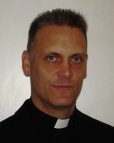
Sermon preached at St Mary the Virgin, Lapworth at 11am Parish Eucharist
Sunday 18th July 2010 – Trinity 7, Proper 11
Other versions of this sermon were preached at St Mary’s 8.30am Eucharist and at the 9.45am Eucharist at St Michael’s Baddesley Clinton.
Readings: Col 1: 15-28 Luke 10: 38-42
In our gospel reading today we hear about Jesus staying with his friends Martha and Mary. Martha and Mary, together with their brother Lazarus get mentioned several times in the gospels. They lived at Bethany, which is just outside Jerusalem. It seems that they were very particular friends to Jesus and Jesus visited them a lot. Especially Jesus was there during the week leading up to his passion. That week Jesus would spend the daytime in the temple preaching to the crowds. Nobody could try to arrest him while there were crowds of people were listening to him. But at night Jesus would retreat to the safety of Bethany, well away from the chief priests and religious authorities.
And when we look at our gospel story, we do get the impression that Martha and Mary were very comfortable around Jesus. We are told that Mary sat at the Lord’s feet and listened to what he was saying. Sitting at the teacher’s feet and listening; this is the typical behaviour of a “disciple” in the first century. It is not how a woman would normally behave, or how a host would normally behave. It seems that Mary was very comfortable around Jesus and felt able to behave very freely. Martha, whose behaviour was much more conventional, also felt comfortable enough around Jesus to raise a rather awkward point with him: “Lord, do you not care that my sister has left me to do all the work by myself.” And Jesus’ response is full of love for both Martha and Mary. He acknowledges that Martha is worried and distracted by many things, when only one thing is needed. But he also commends Mary for choosing the better part and affirms that she should be allowed to keep it.
Let’s think about our friends for a moment. Who are our friends? What is it about those particular people that make them our friends? Well I think different people might have different answers, but I think friends are people who you are really comfortable spending time with. Probably they are people who you already know very well, and you don’t have to take a lot of trouble getting to know them. Probably they are people who you can say things to, without fearing that they might judge you, or misunderstand you, or get upset or angry.
And of course we are all invited to have Jesus as a friend. Jesus, the friend of tax collectors and sinners can be our friend too. Jesus is someone who walks alongside us through thick and thin, someone to show us the way, someone with whom we share the joys and sorrows of this earthly life, someone in whom we can confide our deepest hopes and our fears. Jesus is the ultimate friend, ever present, ever faithful, ever true. Jesus our friend shares with us encouragement, understanding and joy. He is with us always, until the end of the age (Matt 28: 20)
But what do we need to do, to develop our friendship with Jesus? Well, in John 15 Jesus speaks about the new commandment which he gives his followers, to love one another, and then he says, “You are my friends if you do what I command you” (John 15: 14). So loving one another is certainly important if we want to be a friend of Jesus. Similarly in Matt 25 Jesus says, “What ever you do to the least, you do to me.” So being good to other people is the key to being good to Jesus. But it seems to me that prayer is also terribly important here. Just as we must talk to our friends, if they are really to be friends, so we must prayer to Jesus if we want to know his friendship and rejoice in it. And through these prayers we can stay in the company of Jesus all day. We might pray, “Lord, help me through this situation, which is a bit awkward,” or “Lord, give me grace to deal with this person, who can be so difficult,” or “Lord, help me to do this task well, for you, even though it’s so boring.”
Sharing our day with Jesus can certain help us to become more aware of our friendship with Jesus, but it seems to me that there is one thing, above all others, that really makes friendships grow, and that is sufferings shared. The people with whom we have shared difficult situations, people who have supported us in our troubles, or who we have supported. These tend to be our best friends. Remember the friends you were thinking of earlier. My guess is that, with many of them, there will have been some suffering shared, or a falling out and later reconciliation. Experiences like these give confidence that your relationship can withstand future difficulties. Often, it is the sharing of sufferings that really draws people together.
And the same is true in our experience with Jesus. From Colossians today we heard St Paul say that he rejoices in his sufferings because he sees them as his contribution, added to Christ’s great contribution, for the sake of the church. Sharing sufferings with Jesus really draws us close to Jesus. And of course the passion and death of Jesus brought about reconciliation and renewal and new resurrection life. So too, when we share our sufferings with the sufferings of Jesus they too can start to have these effects, for us and for the people around us.
And we have a particular opportunity to do this today in the Eucharist. Jesus said of the Eucharist, “Do this in remembrance of me” (e.g. 1 Cor 11: 24-25) and that act of remembrance makes present in our consciousness today the passion and death of Jesus which happened 2000 years ago. So as we come to receive communion today, let’s bring to Jesus our sufferings, small all large, caused by us or by others, and let’s share our sufferings with the suffering of Jesus in the passion. This will draw us closer to Jesus and draw our sufferings closer to his love which heals and reconciles and renews.
And so may we always be good friends with Jesus, the ultimate friend. Amen.
18 July 2010

11 July 2010
The commandments of God
Sermon preached at 11am Mattins at St Mary the Virgin, Lapworth
Sunday 11th July 2010 – Trinity 6, Proper 10 Year C
Other versions of this sermon were preached at St Mary’s at 8.30am Eucharist and at St Michael’s Baddesley Clinton at 3pm Evensong.
Readings: Deuteronomy 30: 9-14 Luke 10: 25-37
Recently my wife bought a new mobile phone. She had been without a phone for a couple of days, so when it arrived she was very excited to see it. It arrived at a very busy moment, but Elaine was very keen to get it going, so we rushed rather to assemble it. In the rush we gave only the scantiest attention to the manufacturing instructions, and misunderstood the one thing that we did read. This meant that we put the SIM card in upside down, and in so doing managed to damage it. The result was a further two days with no phone, while we got hold of a new SIM card from the service provider.
The incident reminded me that it is important to use equipment in line with the way it has been designed. Seeking to use it in other ways results in poor performance and could even result in accident or injury. I was reminded of one of my friend at school who was trying to lever the top of a can of paint, using not a screwdriver, but a chisel! The result was quite a nasty injury.
And of course we human beings have been made and designed for a particular purpose, a particular destiny. And it is a very high purpose and destiny, higher than we can possibly imagine. We are made in the image of God, to share in the eternal life that God himself lives out in within the Trinity. This is a great and wonderful thing. I am not sure whether we will ever comprehend how wonderful it is.
But to realise this purpose, this destiny, we have to live our lives in accordance with the maker’s instructions. We have to live according to the purposes for which we were designed. And this is all about following the commandments of God; walking in God’s ways; living according to God’s word; following God’s will for our lives. The importance of this can hardly be overstated, but it was really powerfully stressed in our Old Testament lesson today. Moses was speaking to the Israelites as they come to the end of their forty years in the wilderness and as they are about to enter the Promised Land; the land flowing with milk and honey. Actually Moses makes a great long speech; we only caught a very small part of it in our Old Testament lesson, but the deal is this, the covenant is this. God says to the Israelites, “Be my people, obey my laws, keep my commandments and I will make you prosper in the Promised Land. But you have a clear choice. If you don’t obey my laws and follow in my ways you will not last long in the Promised Land.” So it is obey God and prosper, or ignore God and perish.
And the importance of obeying God and keeping his commandments comes up time and time again in scripture. Jesus says, “If you love me you will keep my commandments.” (John 14: 15) and he says, “If you wish to enter into life, keep the commandments” (Matt 19: 17) and he says, “Not everyone who says to me ‘Lord, Lord’, will enter the kingdom of heaven, but only one who does the will of my Father in heaven.” (Matt 7: 21).
And what are the commandments of God? Well we heard the summary of all the commandments in New Testament lesson today; “Love God and love your neighbour” and then, in the story of the good Samaritan, we heard a beautiful illustration of what it means to love our neighbour; how it means helping them in practical ways, and looking out for their good.
So to realise God’s great plan for us, to fulfil all the good things that God wants for us, we need to follow God’s will for our lives, we need to live by the commandments of God and by the teaching of Jesus. And these commandments and teachings are all about love. The commandments are about educating us in what love means or requires of us in different situations.
And I want to put in an aside about “obedience”. In our contemporary western society the word “obedience” is often presented with rather negative connotations, as though it is about allowing ourselves to be dominated by other people, or about being fitted as a round peg into a square hole, or about failing to be true to our innermost instincts and desires. Well we need to re-educate ourselves to remember that obedience to God is always a thoroughly good thing; it is the good thing. It is precisely the way that we walk the walk towards heaven. It is the way we realise God’s creation in us. It’s the way that we allow God to form us and develop us so that we become what he has created us to be. So obedience to God is always a good thing, and obedience to God often (not always, but often!) requires obedience to other human being or human institutions; to a spouse, to a boss, to the law of the land, to a bishop or priest even. It is often through these people that we understand what God wants from us. And let’s remember that obedience to God is always about love, not wishing washing feelings, but the profound and mysterious love of God, which always seeks the good of the other.
I want to finish by re-reading the Collect for today, the sixth Sunday after Trinity because it does seem to summarise so much of this, so beautifully:
O God, who hast prepared for them that love thee
such good things as pass man’s understanding:
Pour into our hearts such love toward thee
that we, loving thee above all things,
may obtain thy promises,
which exceed all that we can desire;
through Jesus Christ our Lord. Amen (Book of Common Prayer)
Sunday 11th July 2010 – Trinity 6, Proper 10 Year C
Other versions of this sermon were preached at St Mary’s at 8.30am Eucharist and at St Michael’s Baddesley Clinton at 3pm Evensong.
Readings: Deuteronomy 30: 9-14 Luke 10: 25-37
Recently my wife bought a new mobile phone. She had been without a phone for a couple of days, so when it arrived she was very excited to see it. It arrived at a very busy moment, but Elaine was very keen to get it going, so we rushed rather to assemble it. In the rush we gave only the scantiest attention to the manufacturing instructions, and misunderstood the one thing that we did read. This meant that we put the SIM card in upside down, and in so doing managed to damage it. The result was a further two days with no phone, while we got hold of a new SIM card from the service provider.
The incident reminded me that it is important to use equipment in line with the way it has been designed. Seeking to use it in other ways results in poor performance and could even result in accident or injury. I was reminded of one of my friend at school who was trying to lever the top of a can of paint, using not a screwdriver, but a chisel! The result was quite a nasty injury.
And of course we human beings have been made and designed for a particular purpose, a particular destiny. And it is a very high purpose and destiny, higher than we can possibly imagine. We are made in the image of God, to share in the eternal life that God himself lives out in within the Trinity. This is a great and wonderful thing. I am not sure whether we will ever comprehend how wonderful it is.
But to realise this purpose, this destiny, we have to live our lives in accordance with the maker’s instructions. We have to live according to the purposes for which we were designed. And this is all about following the commandments of God; walking in God’s ways; living according to God’s word; following God’s will for our lives. The importance of this can hardly be overstated, but it was really powerfully stressed in our Old Testament lesson today. Moses was speaking to the Israelites as they come to the end of their forty years in the wilderness and as they are about to enter the Promised Land; the land flowing with milk and honey. Actually Moses makes a great long speech; we only caught a very small part of it in our Old Testament lesson, but the deal is this, the covenant is this. God says to the Israelites, “Be my people, obey my laws, keep my commandments and I will make you prosper in the Promised Land. But you have a clear choice. If you don’t obey my laws and follow in my ways you will not last long in the Promised Land.” So it is obey God and prosper, or ignore God and perish.
And the importance of obeying God and keeping his commandments comes up time and time again in scripture. Jesus says, “If you love me you will keep my commandments.” (John 14: 15) and he says, “If you wish to enter into life, keep the commandments” (Matt 19: 17) and he says, “Not everyone who says to me ‘Lord, Lord’, will enter the kingdom of heaven, but only one who does the will of my Father in heaven.” (Matt 7: 21).
And what are the commandments of God? Well we heard the summary of all the commandments in New Testament lesson today; “Love God and love your neighbour” and then, in the story of the good Samaritan, we heard a beautiful illustration of what it means to love our neighbour; how it means helping them in practical ways, and looking out for their good.
So to realise God’s great plan for us, to fulfil all the good things that God wants for us, we need to follow God’s will for our lives, we need to live by the commandments of God and by the teaching of Jesus. And these commandments and teachings are all about love. The commandments are about educating us in what love means or requires of us in different situations.
And I want to put in an aside about “obedience”. In our contemporary western society the word “obedience” is often presented with rather negative connotations, as though it is about allowing ourselves to be dominated by other people, or about being fitted as a round peg into a square hole, or about failing to be true to our innermost instincts and desires. Well we need to re-educate ourselves to remember that obedience to God is always a thoroughly good thing; it is the good thing. It is precisely the way that we walk the walk towards heaven. It is the way we realise God’s creation in us. It’s the way that we allow God to form us and develop us so that we become what he has created us to be. So obedience to God is always a good thing, and obedience to God often (not always, but often!) requires obedience to other human being or human institutions; to a spouse, to a boss, to the law of the land, to a bishop or priest even. It is often through these people that we understand what God wants from us. And let’s remember that obedience to God is always about love, not wishing washing feelings, but the profound and mysterious love of God, which always seeks the good of the other.
I want to finish by re-reading the Collect for today, the sixth Sunday after Trinity because it does seem to summarise so much of this, so beautifully:
O God, who hast prepared for them that love thee
such good things as pass man’s understanding:
Pour into our hearts such love toward thee
that we, loving thee above all things,
may obtain thy promises,
which exceed all that we can desire;
through Jesus Christ our Lord. Amen (Book of Common Prayer)
04 July 2010
Ministries and Grace
Sermon preached at 9.45 am at St Michael’s, Baddesley Clinton
Sunday 4th July 2010, Trinity V, Proper 9 – Year C
Other versions of this sermon were preached at 8.30am and 11am at St Mary's Lapworth.
Readings: (Gal 6: 7-16) Luke 10: 1-11 & 16-20
My daughter, Caroline, has just returned from a school trip to Snowdonia. It was a week of outdoor pursuits, including gorge walking and climbing Snowdon. In preparation for the trip both our family and the school worked quite hard to ensure that Caroline had all the appropriate kit. As she set off on the trip, with her hiking boots and carefully packed backpack we were confident that she had the things she needed for the different outdoor activities. And just to confirm that all the preparations had paid off, she sent us a text message from the top of Snowdon.
But what a contrast there is between our attitude in kitting Caroline out, the attitude that Jesus had when sending out disciples ahead of him to prepare the ground in the towns and villages that Jesus himself expected to visit. Far from kitting the disciples out, Jesus seems to tell them not to take things with them. Jesus tells them to “carry no purse, no bag, no sandals.” If we had read Matthew’s account (Matt 10) we would also have heard Jesus tells the disciples to take no money (not even coppers), no spare tunic and no staff.
Why would Jesus give such instructions? Surely it would be better if the disciples were properly kitted out for their missionary journey?
Well we can only speculate. It seems to me that Jesus wanted to make sure that the disciples were trusting completely in God, rather than trusting in their own skills, talents and resources. This attitude of complete trust and dependence on God is very healthy especially for people who are engaged in God’s work. If you have no resources of your own, but depend completely on what God gives you, then you have no choice but to stay focused on doing God’s work.
And it worked! The seventy returned with joy saying, “Lord, in your name even the demons submit to us.” Clearly the seventy had worked many miracles of healing. Jesus said, “See, I have given you authority to tread on snakes and scorpions and over all the power of the enemy, and nothing will hurt you.” So it seems that the disciples extraordinary trust in God, going out on their mission with no more than the clothes they were wearing, resulted in extraordinary graces and powers to work great miracles. And this was a cause of great rejoicing. But notice the comment of Jesus: “do not rejoice at this…but that your names are written in heaven.” The significant thing is not that the disciples have extraordinary powers, like comic book superheroes, but rather that this is evidence that they share in the life of heaven, the eternal life in the presence of God.
And this pattern of extraordinary dependence on God, and extraordinary earthly powers is by no means unique to this story about the 70 disciples. At the very end of Mark’s gospel (Mark 16: 17) Jesus says, “These are the signs that will be associated with believers; in my name they will cast out devils, they will have the gift of tongues, they will pick up snakes in their hands, and be unharmed should they drink deadly poison; they will lay their hands on the sick who will recover.” And in the Acts of the Apostles there are lots of stories of the disciples performing healing miracles and of Paul, being unharmed by the bite of a deadly snake.
And in the history of the Church, this story has many resonances. St Francis was deeply struck by precisely this very story, which we heard from the gospel today. He felt called by God to live it out for himself in a very literal way. Francis went on to live in radical poverty, in complete dependence on God and on the gifts of other people. And as we know Francis developed an extraordinary ministry and demonstrated all kinds of miraculous powers, including healing and exorcism.
But what about us? We are ordinary Christians of the 21st century; ordinary believers. Are we too called to this life of radical dependence on God; this life where we go about with no more than the clothes we wear? Are we, too, to receive powers to heal diseases and tread on scorpions and snakes? Well some of us are called by God in a radical way, for example by giving up everything, and going to live in a monasteries or a convent. But probably, for most of us, God does not call most of us to a ministry like that. For most of us our ministries will be much smaller and simpler things; caring for our families, talking to our neighbours, visiting or offering a lift to an elderly person. We might also be called to specific ministries to help in the church, perhaps through a role on the PCC. Or perhaps we are called to a ministries to the wider community. Sometimes we are called to support particular communities groups, or to serve on their committees and help them to play their part in serving the whole community.
The important thing is to be very attentive to what God wants from us; by what ministry he wants us to serve other people. God always supplies the grace needed for the ministries to which he calls us. If the ministries are small then perhaps the grace need not be so big, but if we live our ministries well then perhaps God will call us to bigger things, and give us bigger graces. But we must be attentive to what God wants from us, because it all starts with what God calls us to do.
But we must not deceive ourselves into thinking that we can escape from our radical dependence on God. We all need to build and develop out trust in God, who created us and loves us. Sooner or later any earthly thing that we put our trust in must fail us. Eventually we must all face death. In death we lose all our earthly processions, even our clothes, even our body. In death our utter dependence on God is revealed. Let us pray that by that time we will have learnt to trust completely in God, and let us pray that, like the 70 disciples, we may rejoice to discover that our names are written in heaven. Amen.
Sunday 4th July 2010, Trinity V, Proper 9 – Year C
Other versions of this sermon were preached at 8.30am and 11am at St Mary's Lapworth.
Readings: (Gal 6: 7-16) Luke 10: 1-11 & 16-20
My daughter, Caroline, has just returned from a school trip to Snowdonia. It was a week of outdoor pursuits, including gorge walking and climbing Snowdon. In preparation for the trip both our family and the school worked quite hard to ensure that Caroline had all the appropriate kit. As she set off on the trip, with her hiking boots and carefully packed backpack we were confident that she had the things she needed for the different outdoor activities. And just to confirm that all the preparations had paid off, she sent us a text message from the top of Snowdon.
But what a contrast there is between our attitude in kitting Caroline out, the attitude that Jesus had when sending out disciples ahead of him to prepare the ground in the towns and villages that Jesus himself expected to visit. Far from kitting the disciples out, Jesus seems to tell them not to take things with them. Jesus tells them to “carry no purse, no bag, no sandals.” If we had read Matthew’s account (Matt 10) we would also have heard Jesus tells the disciples to take no money (not even coppers), no spare tunic and no staff.
Why would Jesus give such instructions? Surely it would be better if the disciples were properly kitted out for their missionary journey?
Well we can only speculate. It seems to me that Jesus wanted to make sure that the disciples were trusting completely in God, rather than trusting in their own skills, talents and resources. This attitude of complete trust and dependence on God is very healthy especially for people who are engaged in God’s work. If you have no resources of your own, but depend completely on what God gives you, then you have no choice but to stay focused on doing God’s work.
And it worked! The seventy returned with joy saying, “Lord, in your name even the demons submit to us.” Clearly the seventy had worked many miracles of healing. Jesus said, “See, I have given you authority to tread on snakes and scorpions and over all the power of the enemy, and nothing will hurt you.” So it seems that the disciples extraordinary trust in God, going out on their mission with no more than the clothes they were wearing, resulted in extraordinary graces and powers to work great miracles. And this was a cause of great rejoicing. But notice the comment of Jesus: “do not rejoice at this…but that your names are written in heaven.” The significant thing is not that the disciples have extraordinary powers, like comic book superheroes, but rather that this is evidence that they share in the life of heaven, the eternal life in the presence of God.
And this pattern of extraordinary dependence on God, and extraordinary earthly powers is by no means unique to this story about the 70 disciples. At the very end of Mark’s gospel (Mark 16: 17) Jesus says, “These are the signs that will be associated with believers; in my name they will cast out devils, they will have the gift of tongues, they will pick up snakes in their hands, and be unharmed should they drink deadly poison; they will lay their hands on the sick who will recover.” And in the Acts of the Apostles there are lots of stories of the disciples performing healing miracles and of Paul, being unharmed by the bite of a deadly snake.
And in the history of the Church, this story has many resonances. St Francis was deeply struck by precisely this very story, which we heard from the gospel today. He felt called by God to live it out for himself in a very literal way. Francis went on to live in radical poverty, in complete dependence on God and on the gifts of other people. And as we know Francis developed an extraordinary ministry and demonstrated all kinds of miraculous powers, including healing and exorcism.
But what about us? We are ordinary Christians of the 21st century; ordinary believers. Are we too called to this life of radical dependence on God; this life where we go about with no more than the clothes we wear? Are we, too, to receive powers to heal diseases and tread on scorpions and snakes? Well some of us are called by God in a radical way, for example by giving up everything, and going to live in a monasteries or a convent. But probably, for most of us, God does not call most of us to a ministry like that. For most of us our ministries will be much smaller and simpler things; caring for our families, talking to our neighbours, visiting or offering a lift to an elderly person. We might also be called to specific ministries to help in the church, perhaps through a role on the PCC. Or perhaps we are called to a ministries to the wider community. Sometimes we are called to support particular communities groups, or to serve on their committees and help them to play their part in serving the whole community.
The important thing is to be very attentive to what God wants from us; by what ministry he wants us to serve other people. God always supplies the grace needed for the ministries to which he calls us. If the ministries are small then perhaps the grace need not be so big, but if we live our ministries well then perhaps God will call us to bigger things, and give us bigger graces. But we must be attentive to what God wants from us, because it all starts with what God calls us to do.
But we must not deceive ourselves into thinking that we can escape from our radical dependence on God. We all need to build and develop out trust in God, who created us and loves us. Sooner or later any earthly thing that we put our trust in must fail us. Eventually we must all face death. In death we lose all our earthly processions, even our clothes, even our body. In death our utter dependence on God is revealed. Let us pray that by that time we will have learnt to trust completely in God, and let us pray that, like the 70 disciples, we may rejoice to discover that our names are written in heaven. Amen.
27 June 2010
Following Jesus to become like Jesus
Sermon preached at St Mary’s Lapworth at 11am Mattins
Sunday 27th June 2010 – Trinity 4, Proper 8, Year C
Readings: PS 77: 11-end 2 Kings 2: 1-2 & 6-14 Luke 9: 51-end
In our gospel reading we heard about people following Jesus. Some of them said to Jesus, “I will follow you” and to some of them Jesus said “Follow me”. And the people who follow Jesus were called disciples, and the business of following Jesus we call discipleship.
Sometimes we make the mistake of thinking that there were just 12 disciples of Jesus. Actually there were lots of disciples, and also lots of women, who followed Jesus. But there were 12 disciples who (Mk 3: 14) Jesus designed apostles and who would often call aside and speak only to them. But there were clearly lots of people who Jesus seemed to trust with his message. In Luke 10 he sends 72 people in pairs on ahead of him to the towns which he planned to visit. At the end of John chapter 6 we read that many of Jesus’ disciples were put off by Jesus’ teaching “I am the bread of life” and started to go away. Jesus asked the 12 if they were going to leave too, but Peter said, “Lord, to whom can we go. You have the words of eternal life.”
So Jesus had many disciples, and different ways he also calls each one of us to be disciples, that is followers of Jesus. And I think we have to grow in appreciation and respect for all the different ways in which Jesus calls different people. Some are called to follow him very directly and personally, through a life of intense prayer. Some are called to follow him primarily through practical service to family and friends and to the church. Some are called to follow him through painful or tragic situations. Some people seem called to follow Jesus indirectly, through relationship with people who are closer. And at different times in our lives all of these different experiences can come to the fore ofr each one of us. So the key thing for each one of us is to follow Jesus in the specific way that he asks us to follow him in each present moment of our life. We follow him by seeking to do the will of God, and following the commandments and teaching of Jesus (which are about loving God and our neighbours) in the way that Jesus asks of us right now.
And why do we want to follow Jesus? Because Jesus leads us in the way that leads to eternal life. Those words of Peter really do sum it up, “Lord, to whom can we go? You have the words of Eternal life.” (John 6: 68). Jesus is the way, the truth and the life. (John 14: 6). Jesus is life, the eternal life, and he wants to share that life with us. But, as well as truth, Jesus is also the way to that life, the route we must walk to find the life. It is walking that way, the way of Jesus, moment by moment, day by day, that slowly draws us closer to Jesus the truth and the life. And this happens because as we walk the journey Jesus grows within us. We become like little Jesuses. We become like the one who we follow.
There was a lovely example of this in our Old Testament lesson. Elisha was the servant to Elijah. He was a true disciple of Elijah. He followed Elijah, leaned from him and ultimately became like him. It seems that when Elijah went up to heaven Elisha inherited his spirit. Certainly he was able to perform the miracle of parting the waters of the river, just as Elijah had done. Certainly he went on to become a great prophet in his own right. Well we too when we follow Jesus, start to become like Jesus. Jesus said, “A disciple is not above the teacher, but everyone who is fully qualified will be like the teacher. (Luke 6: 40). So we seek to become like Jesus our teacher. And I think it is rather shocking how completely like Jesus we ultimately become. Jesus, when is putting James and John straight for wanting the best seats in heaven, still confirms to them that, “You will drink the cup I drink and be baptized with the baptism I am baptized with.” We follow Jesus even through these difficult things and certainly we ultimately share in Jesus’ glory (e.g. 2 Thess 2: 14).
Jesus is very clear about the cost of discipleship. Ultimately it costs us everything, nothing can be held back. In our gospel reading today Jesus seems deliberately provocative and uncompromising in his call. To one man who wants to follow him, he says “Foxes have holes and the birds of the air have nests, but the Son of Man has nowhere to lay his head.” Jesus emphasizes that the journey he calls us to takes us away from home. For some people that can mean literally leaving home to travel, but for all of us it means leaving the comforts of our old ways of thinking and being, and walking always towards our home in heaven. The New Testament tends of think of us as strangers and pilgrims on earth, walking towards our real home in heaven. (e.g. 1 Peter 1: 17, Heb 11: 13 ff). Then there are two other people who want to follow Jesus, but they want to go back and say good-buy to their old lives first, which seems after all a simple matter of politeness, but for Jesus it is not radical enough. He wants to see a bold, decisive and immediate choice to follow Jesus.
And if Jesus seems to be unreasonably demanding here, let’s remember other assurances that he gives about discipleship. He also describes his yoke as easy and his burden light. In the long term I am sure that this is true. Avoiding the call of Jesus might seem easier in the short term, but the lives that we develop independent of God never really work and eventually they can only fall apart. In the long term it is much easier to build our lives in conformance with God, because these lives have an eternal future.
So, as we spend some moments reflecting on our discipleship, let’s try to be radical in our choice of Jesus. Let’s try to follow what Jesus wants from us moment by moment, day by day. Let’s joyfully follow Jesus the teacher, and by the grace of God, let’s become small Jesuses active in our world today. In this way we can be sure that we are using our lives well, both in this world, and by journeying towards Eternal life. Amen
Sunday 27th June 2010 – Trinity 4, Proper 8, Year C
Readings: PS 77: 11-end 2 Kings 2: 1-2 & 6-14 Luke 9: 51-end
In our gospel reading we heard about people following Jesus. Some of them said to Jesus, “I will follow you” and to some of them Jesus said “Follow me”. And the people who follow Jesus were called disciples, and the business of following Jesus we call discipleship.
Sometimes we make the mistake of thinking that there were just 12 disciples of Jesus. Actually there were lots of disciples, and also lots of women, who followed Jesus. But there were 12 disciples who (Mk 3: 14) Jesus designed apostles and who would often call aside and speak only to them. But there were clearly lots of people who Jesus seemed to trust with his message. In Luke 10 he sends 72 people in pairs on ahead of him to the towns which he planned to visit. At the end of John chapter 6 we read that many of Jesus’ disciples were put off by Jesus’ teaching “I am the bread of life” and started to go away. Jesus asked the 12 if they were going to leave too, but Peter said, “Lord, to whom can we go. You have the words of eternal life.”
So Jesus had many disciples, and different ways he also calls each one of us to be disciples, that is followers of Jesus. And I think we have to grow in appreciation and respect for all the different ways in which Jesus calls different people. Some are called to follow him very directly and personally, through a life of intense prayer. Some are called to follow him primarily through practical service to family and friends and to the church. Some are called to follow him through painful or tragic situations. Some people seem called to follow Jesus indirectly, through relationship with people who are closer. And at different times in our lives all of these different experiences can come to the fore ofr each one of us. So the key thing for each one of us is to follow Jesus in the specific way that he asks us to follow him in each present moment of our life. We follow him by seeking to do the will of God, and following the commandments and teaching of Jesus (which are about loving God and our neighbours) in the way that Jesus asks of us right now.
And why do we want to follow Jesus? Because Jesus leads us in the way that leads to eternal life. Those words of Peter really do sum it up, “Lord, to whom can we go? You have the words of Eternal life.” (John 6: 68). Jesus is the way, the truth and the life. (John 14: 6). Jesus is life, the eternal life, and he wants to share that life with us. But, as well as truth, Jesus is also the way to that life, the route we must walk to find the life. It is walking that way, the way of Jesus, moment by moment, day by day, that slowly draws us closer to Jesus the truth and the life. And this happens because as we walk the journey Jesus grows within us. We become like little Jesuses. We become like the one who we follow.
There was a lovely example of this in our Old Testament lesson. Elisha was the servant to Elijah. He was a true disciple of Elijah. He followed Elijah, leaned from him and ultimately became like him. It seems that when Elijah went up to heaven Elisha inherited his spirit. Certainly he was able to perform the miracle of parting the waters of the river, just as Elijah had done. Certainly he went on to become a great prophet in his own right. Well we too when we follow Jesus, start to become like Jesus. Jesus said, “A disciple is not above the teacher, but everyone who is fully qualified will be like the teacher. (Luke 6: 40). So we seek to become like Jesus our teacher. And I think it is rather shocking how completely like Jesus we ultimately become. Jesus, when is putting James and John straight for wanting the best seats in heaven, still confirms to them that, “You will drink the cup I drink and be baptized with the baptism I am baptized with.” We follow Jesus even through these difficult things and certainly we ultimately share in Jesus’ glory (e.g. 2 Thess 2: 14).
Jesus is very clear about the cost of discipleship. Ultimately it costs us everything, nothing can be held back. In our gospel reading today Jesus seems deliberately provocative and uncompromising in his call. To one man who wants to follow him, he says “Foxes have holes and the birds of the air have nests, but the Son of Man has nowhere to lay his head.” Jesus emphasizes that the journey he calls us to takes us away from home. For some people that can mean literally leaving home to travel, but for all of us it means leaving the comforts of our old ways of thinking and being, and walking always towards our home in heaven. The New Testament tends of think of us as strangers and pilgrims on earth, walking towards our real home in heaven. (e.g. 1 Peter 1: 17, Heb 11: 13 ff). Then there are two other people who want to follow Jesus, but they want to go back and say good-buy to their old lives first, which seems after all a simple matter of politeness, but for Jesus it is not radical enough. He wants to see a bold, decisive and immediate choice to follow Jesus.
And if Jesus seems to be unreasonably demanding here, let’s remember other assurances that he gives about discipleship. He also describes his yoke as easy and his burden light. In the long term I am sure that this is true. Avoiding the call of Jesus might seem easier in the short term, but the lives that we develop independent of God never really work and eventually they can only fall apart. In the long term it is much easier to build our lives in conformance with God, because these lives have an eternal future.
So, as we spend some moments reflecting on our discipleship, let’s try to be radical in our choice of Jesus. Let’s try to follow what Jesus wants from us moment by moment, day by day. Let’s joyfully follow Jesus the teacher, and by the grace of God, let’s become small Jesuses active in our world today. In this way we can be sure that we are using our lives well, both in this world, and by journeying towards Eternal life. Amen
20 June 2010
Putting on Christ, like a garment
Sermon preached at St Mary’s, Lapworth at 11am Eucharist
Sunday 20th June 2010 – Trinity III, proper 7
Readings: Gal 3: 23-29 Luke 826-39
Recently my daughter Caroline was in a dance show, so I went along to watch her dance. The show was based on a book called “Peter Pan in Scarlet” which has been written in 2006 as an official sequel to the story of Peter Pan, the little boy who has adventures in Neverland, and who never grows up.
Now the story of Peter Pan ends when Peter Pan’s arch enemy, the evil pirate Captain Hook is defeated by Peter and falls into the jaws of a crocodile. Peter Pan in Scarlet is all about Peter Pan, who carries on living in Neverland, wearing the scarlet robe that was formerly worn by Captain Hook. And as the story develops Peter Pan slowly takes on more and more of Captain Hook’s personality. He becomes angry and selfish and difficult. His gang of friends, “The Lost Boys” find him harder and harder to live with. Peter begins to dream the dreams of Captain Hook and to take on his desires, and all this because he is wearing Captain Hooks cloak. Peter Pan’s situation gets worse and worse until he realises the problems the cloak is causing him. He casts off the cloak, and from that point, although Peter has become very ill, everything starts to get better. The premise is that somehow, by wearing someone’s clothes you slowly become that person.
So in what way is that true? Last night we had a very enjoyable curry night to raise money for the charity “Warwick in India”. I wore the Indian clothes that I bought eight years ago in New Delhi. Did wearing Indian clothes make me more Indian? Well I don’t know? I certainly felt more Indian. And certainly, if I was more Indian, I would wear Indian Clothes more.
Well this all seems like the realms of fairytales. But in our epistle reading today Paul said, “As many of you as were baptised into Christ have clothed yourself with Christ”. And Paul is forever using this idea of putting on things which are good, like we might put on clothing, in order to make ourselves good. When we get up on a morning we have to choose the clothes to put on. In the same way we can start each day by choosing our attitudes and behaviours for the day. In different parts of the New testament Paul tells us to put on the armour of light (Rom 13: 12), the Lord Jesus Christ (Rom 13: 14), the imperishable, immortal body (1 Cor 15: 53), the whole armour of God (Eph 6:11, see also 1 Thes 5: 7) and the new self, the new man ( Eph 4: 24 Col 3: 10). It seems that Paul is always urging us to put on good things, holy things, good behaviours as we would put on clothes. These things might be external to us, they might come from God rather than from our own nature, but they have a positive effect on us, slowly changing us into something better. And Paul often talks about Christians as being changed and transformed. He says that we are transformed into the likeness of Christ (2 Cor 3: 18). Eventually, wearing these good things like clothes, they make us Christ like. Paul says, “it is no longer I who live, but it is Christ who lives in me” (Gal 2: 20).
Equally Paul is always telling us to put aside bad things; to lay aside the works of darkness (Rom 13: 12). This is important because the opposite can also happen. If, when we get up in the morning, we choose to put on evil things and bad behaviours then evil grows within us. In our gospel reading we heard of a man processed by many demons. He was in a most terrible state, completely under the control of his demons, but Jesus still managed to heal him.
In the church we are all Saints and we are all Sinners. We all have Christ within us, especially since our baptism, but we also all have a tendency to sin, to rebel against God. Paul is urging us always to cloth ourselves in the Saint. Always live by the Saint, adopt the attitudes of the saint, the behaviours of the Saint, to think of the good of others, like the Saint. And this is important, because the Saint who grows within us has a future that is eternal and blessed. It can only get better. When we choose to live in the Sinner then we are building for ourselves a future that is in opposition to God. This might seem easy in the short term, but in the end it can only perish and decay and die.
And of course it is not just in the morning that we have to choose to live by the Saint. We have to do it in each present moment of our lives. It is the behaviours and attitudes that we are choosing right now in the present moment that have an effect; not our good aspirations for tomorrow. When I was training for Advanced Driving Test I often found that I had my hands in the wrong position on the steering wheel. As soon as I noticed, I would put my hands back in the right position and carry on. And sometimes this was really hard, I just felt that I could not be bothered. But the more I did it, the more natural it became to me and now I find it easy, instinctive even. Well in the same way I try to train myself always to put on the Lord Jesus Christ and to live each moment in the Saint. And over time that too becomes for natural and instinctive.
But what about the times when we just can’t do it? What about the times when, like the demoniac we are dominated by unruly forces within us and we can only choose behaviours which are bad and destructive. Or perhaps the problem is with the people around us, or the society we live in, and we find ourselves constrained towards violence and injustice. Well, in my opinion, this happens all the time and the key thing is to continue to live in the Saint, even when the Sinner is in control. Jesus, in his passion and death, seemed to be overpowered by the forces of evil. It seemed that they had overcome him completely and killed him. But Jesus’ cry went up to heaven. God revealed the Resurrection; new life for Jesus and defeat for evil. So, where the Sinner is in control in our lives, living in the Saint means sharing with Jesus in the experience of passion and death. It is painful and humbling, but where our cry rises to heaven united with the cry of Jesus, there God breaks the power of evil and gives new life.
So let’s be clothed in Christ. Let’s choose always the attitudes and behaviours of the Saint. And let’s practice this in each present moment of our lives, because practice makes perfect!
Sunday 20th June 2010 – Trinity III, proper 7
Readings: Gal 3: 23-29 Luke 826-39
Recently my daughter Caroline was in a dance show, so I went along to watch her dance. The show was based on a book called “Peter Pan in Scarlet” which has been written in 2006 as an official sequel to the story of Peter Pan, the little boy who has adventures in Neverland, and who never grows up.
Now the story of Peter Pan ends when Peter Pan’s arch enemy, the evil pirate Captain Hook is defeated by Peter and falls into the jaws of a crocodile. Peter Pan in Scarlet is all about Peter Pan, who carries on living in Neverland, wearing the scarlet robe that was formerly worn by Captain Hook. And as the story develops Peter Pan slowly takes on more and more of Captain Hook’s personality. He becomes angry and selfish and difficult. His gang of friends, “The Lost Boys” find him harder and harder to live with. Peter begins to dream the dreams of Captain Hook and to take on his desires, and all this because he is wearing Captain Hooks cloak. Peter Pan’s situation gets worse and worse until he realises the problems the cloak is causing him. He casts off the cloak, and from that point, although Peter has become very ill, everything starts to get better. The premise is that somehow, by wearing someone’s clothes you slowly become that person.
So in what way is that true? Last night we had a very enjoyable curry night to raise money for the charity “Warwick in India”. I wore the Indian clothes that I bought eight years ago in New Delhi. Did wearing Indian clothes make me more Indian? Well I don’t know? I certainly felt more Indian. And certainly, if I was more Indian, I would wear Indian Clothes more.
Well this all seems like the realms of fairytales. But in our epistle reading today Paul said, “As many of you as were baptised into Christ have clothed yourself with Christ”. And Paul is forever using this idea of putting on things which are good, like we might put on clothing, in order to make ourselves good. When we get up on a morning we have to choose the clothes to put on. In the same way we can start each day by choosing our attitudes and behaviours for the day. In different parts of the New testament Paul tells us to put on the armour of light (Rom 13: 12), the Lord Jesus Christ (Rom 13: 14), the imperishable, immortal body (1 Cor 15: 53), the whole armour of God (Eph 6:11, see also 1 Thes 5: 7) and the new self, the new man ( Eph 4: 24 Col 3: 10). It seems that Paul is always urging us to put on good things, holy things, good behaviours as we would put on clothes. These things might be external to us, they might come from God rather than from our own nature, but they have a positive effect on us, slowly changing us into something better. And Paul often talks about Christians as being changed and transformed. He says that we are transformed into the likeness of Christ (2 Cor 3: 18). Eventually, wearing these good things like clothes, they make us Christ like. Paul says, “it is no longer I who live, but it is Christ who lives in me” (Gal 2: 20).
Equally Paul is always telling us to put aside bad things; to lay aside the works of darkness (Rom 13: 12). This is important because the opposite can also happen. If, when we get up in the morning, we choose to put on evil things and bad behaviours then evil grows within us. In our gospel reading we heard of a man processed by many demons. He was in a most terrible state, completely under the control of his demons, but Jesus still managed to heal him.
In the church we are all Saints and we are all Sinners. We all have Christ within us, especially since our baptism, but we also all have a tendency to sin, to rebel against God. Paul is urging us always to cloth ourselves in the Saint. Always live by the Saint, adopt the attitudes of the saint, the behaviours of the Saint, to think of the good of others, like the Saint. And this is important, because the Saint who grows within us has a future that is eternal and blessed. It can only get better. When we choose to live in the Sinner then we are building for ourselves a future that is in opposition to God. This might seem easy in the short term, but in the end it can only perish and decay and die.
And of course it is not just in the morning that we have to choose to live by the Saint. We have to do it in each present moment of our lives. It is the behaviours and attitudes that we are choosing right now in the present moment that have an effect; not our good aspirations for tomorrow. When I was training for Advanced Driving Test I often found that I had my hands in the wrong position on the steering wheel. As soon as I noticed, I would put my hands back in the right position and carry on. And sometimes this was really hard, I just felt that I could not be bothered. But the more I did it, the more natural it became to me and now I find it easy, instinctive even. Well in the same way I try to train myself always to put on the Lord Jesus Christ and to live each moment in the Saint. And over time that too becomes for natural and instinctive.
But what about the times when we just can’t do it? What about the times when, like the demoniac we are dominated by unruly forces within us and we can only choose behaviours which are bad and destructive. Or perhaps the problem is with the people around us, or the society we live in, and we find ourselves constrained towards violence and injustice. Well, in my opinion, this happens all the time and the key thing is to continue to live in the Saint, even when the Sinner is in control. Jesus, in his passion and death, seemed to be overpowered by the forces of evil. It seemed that they had overcome him completely and killed him. But Jesus’ cry went up to heaven. God revealed the Resurrection; new life for Jesus and defeat for evil. So, where the Sinner is in control in our lives, living in the Saint means sharing with Jesus in the experience of passion and death. It is painful and humbling, but where our cry rises to heaven united with the cry of Jesus, there God breaks the power of evil and gives new life.
So let’s be clothed in Christ. Let’s choose always the attitudes and behaviours of the Saint. And let’s practice this in each present moment of our lives, because practice makes perfect!
13 June 2010
The Golden Thread
Sermon preached at St Mary the Virgin, Lapworth at 11am Mattins
Sunday 13th June 2010 – Trinity II, Proper 6, Year C
Readings: Ps 32, 2 Samuel: 11: 26- 12: 10, 13-15, Luke 7: 36 – 8: 3
Flower festival in Church.
Our readings give us two stories of sin and repentance.
In our Old Testament lesson we heard the middle part of the story of David and Bathsheba, the beautiful wife of Uriah the Hittite. And it is a pretty salacious story, well worth reading in full starting from 2 Samuel chapter 11. Basically David commits adultery with Bethsheba, gets her pregnant and then goes to great lengths to try and cover this up. The cover up fails, so David assigns Bathsheba’s husband Uriah to what amounts to a suicide mission in one of Israel’s battles. Uriah is killed and David takes Bethsheba as a wife and she bares him a son. The prophet Nathan confronts David with his sin. David repents, the Lord forgives, but nevertheless says that David’s new son will die on account of David’s misdeeds. The son becomes ill, so David enters into an intense period of fasting and pleading with God. After seven days the child dies. David gives up his fast and carries on with his life, restored in his relationship with God.
Then in our gospel reading we heard about the sinful woman who washes the feet of Jesus with her tears, dries them with her hair and anoints them with expensive ointment. The text suggests that this woman may have been Mary Magdalene, but it is far from clear and biblical scholars spend a lot of time debating whether or not it was her. But the point is that Jesus says she loves him a lot because she has been forgiven a lot, and her tells her to go in peace. Elsewhere Jesus says that, just as the doctor comes for the benefit of those who are sick, not those who are well, so he, Jesus, comes for the sinners more than for the righteous people. These words of Jesus are very reassuring to us as we become aware of all our own sins and inadequacies.
So what do we mean by sin? Well sin is rebellion against God. Sin is turning away from God, refusing his love, and setting our own agenda and priorities independent of God. And sin causes damage. God created us in love, and sets before us a journey towards fullness of life in heaven. He wants to bring his creation in us to fulfilment, he wants our good, he wants to share the life of heaven with us. When we rebel against God and go our own way, we put all these good things in jeopardy. Like David and like Mary Magdalene we have to repent and return to the Lord, and seek to walk the path that he sets before us. We have to give up on our own ideas and do the things God wants of us.
And just as we might use a sat-nav to guide us on a journey here on earth, so we should listen to that still, small voice of our conscience to guide us on our spiritual journey towards heaven. Sin is like making a mistake on the journey, doing something different from what the sat-nav says. Sometimes we might make a mistake and perhaps it is not very serious. The sat-nav immediately re-computes the journey and takes us via a slightly different route. We might loose a little time and energy, but the consequence is small. Sometimes we can make a serious mistake and find ourselves heading in altogether the wrong direction. The sat-nav probably blares out at us, “turn around as soon as possible, turn around as soon as possible.” In the same way our conscience tells us when we are going against God. It calls us to repent, turn around and accept God’s love, to trust in him and his plan for our lives. But however badly we go wrong, the sat-nav can always recomputed our route and find a way to take us to our destination. In the same way our conscience can always lead us back towards the destination that God has planned for us.
And we must not underestimate the depth of God’s mercy. Sometimes we are aware that we have made so many mistakes. Our journey has been endlessly disrupted by failures and wrong turns. We look back over our lives and it is like looking at the underside of a tapestry riddled with lose ends and knots and with no clear pattern. But just occasionally God allows us to catch a glimpse of the front side of the tapestry, the side that is visible from heaven. Suddenly we can see a clear pattern. Suddenly we realise that despite all our stumbling and failings, a beautiful tapestry has been created. And as we look back at this tapestry that our lives have woven we see that it is consistently held together and made good by the love of God, by his mercy, by his perseverance, by his willingness to suffer for us in Jesus. God is the ultimate master craftsman. His love is like a mysterious golden thread running through every part of the tapestry, making everything good. Even our mistakes have somehow been woven into the design by this mysterious golden thread.
Now I think that this is most beautifully illustrated in the flowers of this flower festival. The theme is Deus Caritas Est; God is Love. And each of the 34 arrangements illustrates some different aspect of God’s love, from the most spiritual (the fruits of the spirit) to the most practical (documents and treasurers in the antique chest). And if you look carefully you will see winding its way through the whole collection a golden thread. Often the golden thread is very fine, and hardly visible, sometimes it is thicker and clearer. But it is always there, always strong enough, and it binds the whole collection together in a beautiful harmony, like the heavenward side of the tapestry of our lives.
So do have a look at the flowers before you leave church today. See if you can see the golden tread that runs through all the arrangements. And as you look think about the love of God as it runs through our lives. And let’s try always to live our lives in harmony with God’s love, co-operating with all that he does in our lives and working with him to weave the most beautiful tapestry for our own good and the good of those around us. Amen.
Sunday 13th June 2010 – Trinity II, Proper 6, Year C
Readings: Ps 32, 2 Samuel: 11: 26- 12: 10, 13-15, Luke 7: 36 – 8: 3
Flower festival in Church.
Our readings give us two stories of sin and repentance.
In our Old Testament lesson we heard the middle part of the story of David and Bathsheba, the beautiful wife of Uriah the Hittite. And it is a pretty salacious story, well worth reading in full starting from 2 Samuel chapter 11. Basically David commits adultery with Bethsheba, gets her pregnant and then goes to great lengths to try and cover this up. The cover up fails, so David assigns Bathsheba’s husband Uriah to what amounts to a suicide mission in one of Israel’s battles. Uriah is killed and David takes Bethsheba as a wife and she bares him a son. The prophet Nathan confronts David with his sin. David repents, the Lord forgives, but nevertheless says that David’s new son will die on account of David’s misdeeds. The son becomes ill, so David enters into an intense period of fasting and pleading with God. After seven days the child dies. David gives up his fast and carries on with his life, restored in his relationship with God.
Then in our gospel reading we heard about the sinful woman who washes the feet of Jesus with her tears, dries them with her hair and anoints them with expensive ointment. The text suggests that this woman may have been Mary Magdalene, but it is far from clear and biblical scholars spend a lot of time debating whether or not it was her. But the point is that Jesus says she loves him a lot because she has been forgiven a lot, and her tells her to go in peace. Elsewhere Jesus says that, just as the doctor comes for the benefit of those who are sick, not those who are well, so he, Jesus, comes for the sinners more than for the righteous people. These words of Jesus are very reassuring to us as we become aware of all our own sins and inadequacies.
So what do we mean by sin? Well sin is rebellion against God. Sin is turning away from God, refusing his love, and setting our own agenda and priorities independent of God. And sin causes damage. God created us in love, and sets before us a journey towards fullness of life in heaven. He wants to bring his creation in us to fulfilment, he wants our good, he wants to share the life of heaven with us. When we rebel against God and go our own way, we put all these good things in jeopardy. Like David and like Mary Magdalene we have to repent and return to the Lord, and seek to walk the path that he sets before us. We have to give up on our own ideas and do the things God wants of us.
And just as we might use a sat-nav to guide us on a journey here on earth, so we should listen to that still, small voice of our conscience to guide us on our spiritual journey towards heaven. Sin is like making a mistake on the journey, doing something different from what the sat-nav says. Sometimes we might make a mistake and perhaps it is not very serious. The sat-nav immediately re-computes the journey and takes us via a slightly different route. We might loose a little time and energy, but the consequence is small. Sometimes we can make a serious mistake and find ourselves heading in altogether the wrong direction. The sat-nav probably blares out at us, “turn around as soon as possible, turn around as soon as possible.” In the same way our conscience tells us when we are going against God. It calls us to repent, turn around and accept God’s love, to trust in him and his plan for our lives. But however badly we go wrong, the sat-nav can always recomputed our route and find a way to take us to our destination. In the same way our conscience can always lead us back towards the destination that God has planned for us.
And we must not underestimate the depth of God’s mercy. Sometimes we are aware that we have made so many mistakes. Our journey has been endlessly disrupted by failures and wrong turns. We look back over our lives and it is like looking at the underside of a tapestry riddled with lose ends and knots and with no clear pattern. But just occasionally God allows us to catch a glimpse of the front side of the tapestry, the side that is visible from heaven. Suddenly we can see a clear pattern. Suddenly we realise that despite all our stumbling and failings, a beautiful tapestry has been created. And as we look back at this tapestry that our lives have woven we see that it is consistently held together and made good by the love of God, by his mercy, by his perseverance, by his willingness to suffer for us in Jesus. God is the ultimate master craftsman. His love is like a mysterious golden thread running through every part of the tapestry, making everything good. Even our mistakes have somehow been woven into the design by this mysterious golden thread.
Now I think that this is most beautifully illustrated in the flowers of this flower festival. The theme is Deus Caritas Est; God is Love. And each of the 34 arrangements illustrates some different aspect of God’s love, from the most spiritual (the fruits of the spirit) to the most practical (documents and treasurers in the antique chest). And if you look carefully you will see winding its way through the whole collection a golden thread. Often the golden thread is very fine, and hardly visible, sometimes it is thicker and clearer. But it is always there, always strong enough, and it binds the whole collection together in a beautiful harmony, like the heavenward side of the tapestry of our lives.
So do have a look at the flowers before you leave church today. See if you can see the golden tread that runs through all the arrangements. And as you look think about the love of God as it runs through our lives. And let’s try always to live our lives in harmony with God’s love, co-operating with all that he does in our lives and working with him to weave the most beautiful tapestry for our own good and the good of those around us. Amen.
06 June 2010
Widow of Nain
Sermon preached for 9.45 Holy Communion (BCP) at St Michael’s Baddesley Clinton
Sunday 6th June 2010, Trinity 1 (Proper 5) Year C
Readings: Gal 1: 11-24 Luke 7: 11-17
Bullet Points Only
Some particular features of this miracle (the widow of Nain)
- nobody asked Jesus to do it, it is complete gift done from his own initiative
o God’s free gift
- But what made Jesus do it
o considerable number of people with the widow
o the cry to heaven goes up
o people are drawn in by love, to love more
o examples I have experienced
- Jesus’ motivation is compassion
o contrast many of Jesus’ miracles are in response to faith
o seem to be aimed at building up faith (although he asks for secrecy)
o in fact this miracle seems to have the effect of building faith
- What is overcome is death – biggest obstacle
o but the son will die again
The miracle looks back – parallels to Elijah and the widow’s only son (1 Kings 17: 23)
- gave him to his mother
- a great prophet has arisen
Miracle looks forward– build up to the question from the followers of John the Baptist
“Are you the one who is to come”
- Miracles show power of Jesus over nature – sickness, death and devils
o these things are ultimately overcome by Jesus
- miracles are pointers to the kingdom of God
- point to the new heaven and the new earth of Rev 21
o no longer any crying or sadness or pain or death
How do we respond
- allow our faith to grow
- solidarity with those who suffer – in prayer and support
- trust Jesus, the one more powerful than death
Sunday 6th June 2010, Trinity 1 (Proper 5) Year C
Readings: Gal 1: 11-24 Luke 7: 11-17
Bullet Points Only
Some particular features of this miracle (the widow of Nain)
- nobody asked Jesus to do it, it is complete gift done from his own initiative
o God’s free gift
- But what made Jesus do it
o considerable number of people with the widow
o the cry to heaven goes up
o people are drawn in by love, to love more
o examples I have experienced
- Jesus’ motivation is compassion
o contrast many of Jesus’ miracles are in response to faith
o seem to be aimed at building up faith (although he asks for secrecy)
o in fact this miracle seems to have the effect of building faith
- What is overcome is death – biggest obstacle
o but the son will die again
The miracle looks back – parallels to Elijah and the widow’s only son (1 Kings 17: 23)
- gave him to his mother
- a great prophet has arisen
Miracle looks forward– build up to the question from the followers of John the Baptist
“Are you the one who is to come”
- Miracles show power of Jesus over nature – sickness, death and devils
o these things are ultimately overcome by Jesus
- miracles are pointers to the kingdom of God
- point to the new heaven and the new earth of Rev 21
o no longer any crying or sadness or pain or death
How do we respond
- allow our faith to grow
- solidarity with those who suffer – in prayer and support
- trust Jesus, the one more powerful than death
30 May 2010
Sharing in the glory of God
Sermon preached at St Michael’s Baddesley Clinton at 9.45 Holy Communion on Sunday 30th May 2010 - Trinity Sunday – Year C
A shorter version of this sermon was preached at St Mary’s Lapworth at 8.30am.
Joke for Trinity Sunday – The angel Gabriel asks God, “This creation idea…are you really sure about it?” God replied, “Well I’m kind of in three minds about it.” I liked that one which comes from the Revd Kate Stow, curate at St James the Great in Shirley.
Of course on Trinity Sunday we reflect on the great mystery of one God in three persons, Father Son and Holy Spirit. In theology we think of these three persons as being of the same substance or essence. Every time we say the creed we are reminded of Jesus “Being of one substance with the Father”. We also think of these three people being so perfect and complete in their unity that we can only talk of their being one God.
And this is a deep mystery. We should not worry if, as mere human beings, we struggle to understand the inner workings of the life of God. Do we understand the inner workings of our computer or microwave oven? Probably not, but this does not stop them from being useful and important to us. Well we are certainly not going to understand the inner workings of God, but oh he certainly is important to us.
But our gospel reading does provide some indications about how this perfect unity of three divine persons comes about. It seems that everything they have and think is shared. Jesus says of the Holy Spirit, “He will not speak on his own, but he will speak whatever he hears….he will take what is mine and declare it to you…all that the Father has is mine…” So the things that the Spirit declares to us are they from the Father or from the Son or from the Holy Spirit? Well we can’t really answer that question because it seems that they are shared. They are held in common. They are forever being given back and forth between the three persons of the Trinity.
We human beings find sharing things very difficult, but sharing is an extremely important discipline for us to practice. Until recently my two daughters shared a bedroom. They had to have rules about who went to bed when, and who was responsible for different parts of the floor space, and when musical instruments could be practised. But then there had to be flexibility because having a friend round or working on some project might need a change in the rules. There has to be trust. Both must feel that their priorities are being taken seriously by the other. It requires generosity, to take on board the needs and desires of the other; to be ready to let go of our own ideas for the sake of the other.
Certainly we see this generosity is God. Jesus seems to do everything for the father. He accepts the Father’s will even in Gethsemane, where it so obviously costs him everything. Yet the Father also gives everything to Jesus. “All authority in heaven and earth has been given to me” Jesus declares in Matt 28: 18. This continual giving of one to the other and back again is an important characteristic of the unity of God. It means that everything is shared.
Then when I read today’s scripture readings I was very struck by St Paul’s words, “We boast in our hope of sharing in the glory of God”. So this sharing within the life of the Trinity is not just about God, it is also about human beings; us!” We hope to share in the glory of God! This could easily seem to be an outrageous claim; as preposterous as it is presumptuous. Who can share in the glory of God, but God alone? And yet the New Testament is quite clear that God wants to share his glory, his unity, his life of mutual self giving with us. Two Sundays ago our gospel was from John 17, and Jesus prayed to the Father for all his followers saying, “…the glory you have given me I have given them, so that they may be one and we are one.” So we are called to share in the glory of God, and to share in the unity of God. And actually this is not a presumption hope because it comes at a cost. What Paul actually says is, “We boast in our hope of sharing in the glory of God. And not only that, but we also boast in our sufferings…” because suffering leads to endurance, character and hope. Elsewhere the New Testament is very clear that this full sharing includes both sufferings and glory (e.g. Romans 8: 17, 1 Peter 5: 1)
So let’s learn to trust in the great destiny to which God calls us. Let’s prepare ourselves to share in the glory of God, to share in the mysterious unity of the Trinity. Let’s practice sharing with our brothers and sisters because this is an excellent preparation. When sufferings come, let’s seek to live them as a sharing in the sufferings of Jesus. Let’s pray that God will help us to grow in generosity, so that we can draw closer to this life of God. Amen.
A shorter version of this sermon was preached at St Mary’s Lapworth at 8.30am.
Joke for Trinity Sunday – The angel Gabriel asks God, “This creation idea…are you really sure about it?” God replied, “Well I’m kind of in three minds about it.” I liked that one which comes from the Revd Kate Stow, curate at St James the Great in Shirley.
Of course on Trinity Sunday we reflect on the great mystery of one God in three persons, Father Son and Holy Spirit. In theology we think of these three persons as being of the same substance or essence. Every time we say the creed we are reminded of Jesus “Being of one substance with the Father”. We also think of these three people being so perfect and complete in their unity that we can only talk of their being one God.
And this is a deep mystery. We should not worry if, as mere human beings, we struggle to understand the inner workings of the life of God. Do we understand the inner workings of our computer or microwave oven? Probably not, but this does not stop them from being useful and important to us. Well we are certainly not going to understand the inner workings of God, but oh he certainly is important to us.
But our gospel reading does provide some indications about how this perfect unity of three divine persons comes about. It seems that everything they have and think is shared. Jesus says of the Holy Spirit, “He will not speak on his own, but he will speak whatever he hears….he will take what is mine and declare it to you…all that the Father has is mine…” So the things that the Spirit declares to us are they from the Father or from the Son or from the Holy Spirit? Well we can’t really answer that question because it seems that they are shared. They are held in common. They are forever being given back and forth between the three persons of the Trinity.
We human beings find sharing things very difficult, but sharing is an extremely important discipline for us to practice. Until recently my two daughters shared a bedroom. They had to have rules about who went to bed when, and who was responsible for different parts of the floor space, and when musical instruments could be practised. But then there had to be flexibility because having a friend round or working on some project might need a change in the rules. There has to be trust. Both must feel that their priorities are being taken seriously by the other. It requires generosity, to take on board the needs and desires of the other; to be ready to let go of our own ideas for the sake of the other.
Certainly we see this generosity is God. Jesus seems to do everything for the father. He accepts the Father’s will even in Gethsemane, where it so obviously costs him everything. Yet the Father also gives everything to Jesus. “All authority in heaven and earth has been given to me” Jesus declares in Matt 28: 18. This continual giving of one to the other and back again is an important characteristic of the unity of God. It means that everything is shared.
Then when I read today’s scripture readings I was very struck by St Paul’s words, “We boast in our hope of sharing in the glory of God”. So this sharing within the life of the Trinity is not just about God, it is also about human beings; us!” We hope to share in the glory of God! This could easily seem to be an outrageous claim; as preposterous as it is presumptuous. Who can share in the glory of God, but God alone? And yet the New Testament is quite clear that God wants to share his glory, his unity, his life of mutual self giving with us. Two Sundays ago our gospel was from John 17, and Jesus prayed to the Father for all his followers saying, “…the glory you have given me I have given them, so that they may be one and we are one.” So we are called to share in the glory of God, and to share in the unity of God. And actually this is not a presumption hope because it comes at a cost. What Paul actually says is, “We boast in our hope of sharing in the glory of God. And not only that, but we also boast in our sufferings…” because suffering leads to endurance, character and hope. Elsewhere the New Testament is very clear that this full sharing includes both sufferings and glory (e.g. Romans 8: 17, 1 Peter 5: 1)
So let’s learn to trust in the great destiny to which God calls us. Let’s prepare ourselves to share in the glory of God, to share in the mysterious unity of the Trinity. Let’s practice sharing with our brothers and sisters because this is an excellent preparation. When sufferings come, let’s seek to live them as a sharing in the sufferings of Jesus. Let’s pray that God will help us to grow in generosity, so that we can draw closer to this life of God. Amen.
23 May 2010
Pentecost and the Tower of Babel
Sermon preached on Sunday 23rd April 2010 at 11am at St Mary’s Lapworth. Other versions of this sermon were preached at 8.30am at St Mary’s, 3pm at St Michael’s Baddesley Clinton and at 6.30pm at Solihull School Chapel.
Pentecost – Year C
Readings: Ps 104: 24-end Genesis 11: 1-9 Acts 2: 1-21
Our two scripture readings today are a kind of mirror image of each other. The story of the Tower of Babel is a story about sin, which leads to the scattering of peoples, their disempowerment and confusion in their language. The story of Pentecost is a story about co-operation with the plan of God, which leads to the gathering and unifying of peoples, the breakdown of language barriers and great power at work amongst the disciples.
So let’s think about the Tower of Babel. The people, who were all of one people with one language said, “Come, let us build ourselves a city, and a tower with its top in the heavens, and lets us make a name for ourselves, otherwise we shall be scattered abroad upon the face of the whole earth.”
And so what it about this that was so sinful? What was it that God found so objectionable? Well above, the sin was pride. Rather than acknowledge their dependence on God, the people wanted to see themselves as self sufficient and to set their own agenda independent of God. They wanted to build a great tower to rise to the heavens and so to place themselves above God. They wanted to make a name for themselves, to be famous, to place themselves above other people who would look up to them and praise them. But pride is in fact a terrible trap. No one can be self sufficient but God alone. If God hides his face people are troubled. If God takes away their breath, then they die. No one can take forward plans and agendas independent of God. The plans and agendas that succeed, that deliver benefits in the longer term, are plans and agendas that are blessed by God, that come about through co-operation with God and by obedience to God’s will. And its seems to me that these people of Babel knew that their plans were ill-founded, were not based on God’s will. Deep down they knew this, and because of it they suffered from fear. They feared that they might be scattered abroad on the face of the whole earth. Fear is not a good thing. We are called not to fear, but rather to trust in the God who is love. “True love casts out fear” as St John teaches (1 John 4: 18). And it is interesting how God responded to the pride and self sufficiency of the people of Babel. The Lord did the very thing that they feared. He scattered them abroad over the whole earth. And he did this by confusing their language so that they could not understand one another. He split them into different peoples and nations and he took away all their power. They never finish building their city.
And it is very interesting to read the story of the Tower of Babel alongside the story of Pentecost, because Pentecost is the mirror image of the story; the very opposite thing happens. The disciples gather in the upper room, as Jesus commanded them, so they are acting in obedience to God. They have just passed through the experience of the death and resurrection of Jesus. They have learnt that they can trust Jesus, even when he seems utterly helpless, dying on a cross. The disciples have been witnesses to the resurrection, and know that it is God who is the giver of life. They know that with God not even death is to be feared. And so God pours out his Holy Spirit among them, and they have this extraordinary experience with a violent rush of wind and divided tongues of fire resting on each one of them. And whereas at Babel people’s languages were confused and they were scattered abroad into different peoples and nations, so with the gift of the Holy Spirit, disperse peoples were gathered into one. There was a remarkable gift of language such that everyone understood the disciples in their native tongue, whatever their background. If we had read to the end of chapter 2 we would have heard that all the disciples in Jerusalem were gathered together and had all things in common, like one family. We would also have read of the great power received by the disciples and of the great wonders and signs were worked by the apostles (Act 2: 43-45). Later St. Paul would declare that in Christianity, “There is no longer Jew or Greek, there is no longer slave or free, there is no longer male and female; for all of you are one in Christ Jesus” (Gal 3: 28). Just as sin dispersed people and divided them at Babel, so at Pentecost the Holy Spirit united people and brought them together.
And so what about us? What does this mean for us now? Well clearly we need to free ourselves from the behaviours and attitudes of Babel, and model ourselves on the disciples at Pentecost. So first of all we need to guard against pride. We should not seek to put ourselves above God or above other people. Instead we must see ourselves and other people as different parts of God’s one creation, called to live in harmony with one another, as many sons and daughters of one heavenly Father.
Then we must not try to be self-sufficient, in a way that seeks independence from God. Rather we must know our need of God, and of his Holy Spirit. We should put our hope in God, and in Jesus who conquered death. Nowadays, as at Babel, it is all too easy to place our hopes in human achievements. There has been much human progress; scientific, technological or economic. These things can certainly be good; medical progress for example has brought us great benefits. But these things cannot save us. They cannot prevent death, or unify us, or heal the problems of the world. These bigger goals depend on the action of God. And if scientific or technological progress is pursued outside of God’s plan then God might once again choose to scatter and divide and to deprive these things of all their power.
But rather we are called to maintain the attitudes and behaviours of Pentecost, so that God will pour out his Spirit upon us. Perhaps we might even experience the rushing wind or tongues of fire, but if even if we don’t we can certainly experience the great power of God’s Spirit, his healing, reconciling and unifying force, his gifts of understanding, and being understood. And as our Psalm suggested, where God sends forth his spirit we can witness his creative powers because new things are brought into being and as the face of the earth is renewed. I hope that this is what things will be like here in this place! Amen.
Pentecost – Year C
Readings: Ps 104: 24-end Genesis 11: 1-9 Acts 2: 1-21
Our two scripture readings today are a kind of mirror image of each other. The story of the Tower of Babel is a story about sin, which leads to the scattering of peoples, their disempowerment and confusion in their language. The story of Pentecost is a story about co-operation with the plan of God, which leads to the gathering and unifying of peoples, the breakdown of language barriers and great power at work amongst the disciples.
So let’s think about the Tower of Babel. The people, who were all of one people with one language said, “Come, let us build ourselves a city, and a tower with its top in the heavens, and lets us make a name for ourselves, otherwise we shall be scattered abroad upon the face of the whole earth.”
And so what it about this that was so sinful? What was it that God found so objectionable? Well above, the sin was pride. Rather than acknowledge their dependence on God, the people wanted to see themselves as self sufficient and to set their own agenda independent of God. They wanted to build a great tower to rise to the heavens and so to place themselves above God. They wanted to make a name for themselves, to be famous, to place themselves above other people who would look up to them and praise them. But pride is in fact a terrible trap. No one can be self sufficient but God alone. If God hides his face people are troubled. If God takes away their breath, then they die. No one can take forward plans and agendas independent of God. The plans and agendas that succeed, that deliver benefits in the longer term, are plans and agendas that are blessed by God, that come about through co-operation with God and by obedience to God’s will. And its seems to me that these people of Babel knew that their plans were ill-founded, were not based on God’s will. Deep down they knew this, and because of it they suffered from fear. They feared that they might be scattered abroad on the face of the whole earth. Fear is not a good thing. We are called not to fear, but rather to trust in the God who is love. “True love casts out fear” as St John teaches (1 John 4: 18). And it is interesting how God responded to the pride and self sufficiency of the people of Babel. The Lord did the very thing that they feared. He scattered them abroad over the whole earth. And he did this by confusing their language so that they could not understand one another. He split them into different peoples and nations and he took away all their power. They never finish building their city.
And it is very interesting to read the story of the Tower of Babel alongside the story of Pentecost, because Pentecost is the mirror image of the story; the very opposite thing happens. The disciples gather in the upper room, as Jesus commanded them, so they are acting in obedience to God. They have just passed through the experience of the death and resurrection of Jesus. They have learnt that they can trust Jesus, even when he seems utterly helpless, dying on a cross. The disciples have been witnesses to the resurrection, and know that it is God who is the giver of life. They know that with God not even death is to be feared. And so God pours out his Holy Spirit among them, and they have this extraordinary experience with a violent rush of wind and divided tongues of fire resting on each one of them. And whereas at Babel people’s languages were confused and they were scattered abroad into different peoples and nations, so with the gift of the Holy Spirit, disperse peoples were gathered into one. There was a remarkable gift of language such that everyone understood the disciples in their native tongue, whatever their background. If we had read to the end of chapter 2 we would have heard that all the disciples in Jerusalem were gathered together and had all things in common, like one family. We would also have read of the great power received by the disciples and of the great wonders and signs were worked by the apostles (Act 2: 43-45). Later St. Paul would declare that in Christianity, “There is no longer Jew or Greek, there is no longer slave or free, there is no longer male and female; for all of you are one in Christ Jesus” (Gal 3: 28). Just as sin dispersed people and divided them at Babel, so at Pentecost the Holy Spirit united people and brought them together.
And so what about us? What does this mean for us now? Well clearly we need to free ourselves from the behaviours and attitudes of Babel, and model ourselves on the disciples at Pentecost. So first of all we need to guard against pride. We should not seek to put ourselves above God or above other people. Instead we must see ourselves and other people as different parts of God’s one creation, called to live in harmony with one another, as many sons and daughters of one heavenly Father.
Then we must not try to be self-sufficient, in a way that seeks independence from God. Rather we must know our need of God, and of his Holy Spirit. We should put our hope in God, and in Jesus who conquered death. Nowadays, as at Babel, it is all too easy to place our hopes in human achievements. There has been much human progress; scientific, technological or economic. These things can certainly be good; medical progress for example has brought us great benefits. But these things cannot save us. They cannot prevent death, or unify us, or heal the problems of the world. These bigger goals depend on the action of God. And if scientific or technological progress is pursued outside of God’s plan then God might once again choose to scatter and divide and to deprive these things of all their power.
But rather we are called to maintain the attitudes and behaviours of Pentecost, so that God will pour out his Spirit upon us. Perhaps we might even experience the rushing wind or tongues of fire, but if even if we don’t we can certainly experience the great power of God’s Spirit, his healing, reconciling and unifying force, his gifts of understanding, and being understood. And as our Psalm suggested, where God sends forth his spirit we can witness his creative powers because new things are brought into being and as the face of the earth is renewed. I hope that this is what things will be like here in this place! Amen.
16 May 2010
Living for unity
Sermon preached at 11am at St Mary the Virgin, Lapworth
Sunday 16th May 2010, 7th Sunday of Easter - Year C
Adapted versions of this sermon were also preached at 8.30am and also at St Michael’s, Baddesley Clinton at 9.45am.
Readings: Acts 16: 16-34 John 17: 20-end
Last Thursday was the feast of the Ascension and we celebrated that in church. The Ascension is when we remember Jesus finally leaving the earth, 40 days after his resurrection, and going to heaven to sit at God’s right hand. It is a time when we think of Jesus on the throne of heaven in all his glory. We think of his final triumph through all his trials and difficulties. We remember the words of the psalmist “The Lord said to my Lord, “Sit at my right hand, until I make your enemies your footstool” (Ps 110).
And the theme of the Ascension is still with us in our service this morning. There are several references to the Ascension in our hymns today. See if you can spot them! But also there things about our gospel reading, which are relevant to the Ascension. As we think about Jesus leaving this earth, so we find the need to focus on the last things that Jesus said to us before he left. And this is why our gospel reading is significant. It is sometimes described as Jesus’ “last will and testament” or his “priestly prayer”. It is the last words that Jesus says in John’s gospel before his arrest, his passion and death.
Actually these words are part of a prayer to God. And it can be hard to understand. God the Son is praying to God the Father. God is praying for God. We humans shouldn’t be too surprised if we struggle to understand it all! But it is very interesting what Jesus prays for. One of the things he prays is “Father, I desire that those also, whom you have given me, may be with me where I am, to see my glory…” So Jesus recognises that he is returning to the glories of heaven, and wants to share those glories with us. And this is part of our Christian hope. Our life is a journey towards this great destination that Jesus wants for us, to see his glory, share his life in heaven. And we know that the journey might be long and difficult and we need to grow and develop in love, and we might need to be purified in all kinds of painful ways, but ultimately we are called to this great destiny in heaven with Christ in glory.
But the main thing that Jesus prays for is unity. First of all he prays for his disciples. Then for all those who will believe in Jesus because of witness of the disciples. So that is you and me. It is the whole church. And his pray is, “that they all may be one” and he repeats this several times in different ways. “That they all may be one.” Jesus is praying for unity among his followers. He is praying for unity in the Church.
Now we all know that unity can be very difficult. Church Unity can be especially difficult to achieve. Since the eleventh century the Church has suffered a big division between the east and the west. Since the sixteen century there has been a division between Protestants and Anglicans and the Catholics. But then it always seems that there is scope for new divisions, even within our own denomination, the Anglican Communion and the Church of England. We only have to think of questions to do with women bishops, women priests, and homosexuality to know that there are a huge range of things that can easily divide us. And if we think of our local church communities there is always scope for division. Perhaps this congregation may have be spared much division, but my former parish in Solihull suffered terrible conflicts and divisions over women priests in the mid-1990s. And then even in the smallest unit of the church our families, our marriages, there is scope for division. We all know how easily problems can occur and how difficult it is to live in unity.
And yet Jesus prays for unity, not just in marriages, or in local church communities, but for the unity of the whole church. Well this might seem completely impossible; a total pipe dream. And I think for human beings alone unity is impossible. But it is not impossible for God, and it is what God wants. Unity for human beings is achieved as a gift from God.
So how do we receive this gift? How do we put ourselves in the right position to be blessed in this way? Well I think we get some clues from the rest of Jesus’ prayer. Jesus prays, “…may they all be one. As you Father are in me, and I am in you…” So this being united is about being “in” the other. This means positioning ourselves in the other person, mindful of their needs, their priorities, their legitimate aspirations. It means empathising with them and making their hopes our own. We try to serve the good that we see in the other person, doing our best to recognise them as God created them to be, with all their good qualities, and also do our best to ignore the things we don’t like, or that are bad about them. And this approach needs to be mutual. Jesus is in the Father, but the Father is also in Jesus. This two way giving certainly contributes to unity. In two weeks time it will be Trinity Sunday and we will be thinking about the perfect unity of the Father, the Son and the Holy Spirit and this complete giving of each to the other is important to that unity.
But Jesus’ prayer continues further. “As you, Father, are in me and I am in you, may they also be in us”. “May they also be in us.” So we are called to be in God, to share in that self giving of the Father to the Son and the Son to the Father. But we need to be “in” God. We need to be attentive to God, through prayer, to listen to him and also to act according to what he wants from us. We have to be obedient to God’s will, to the path that he sets before us, so that we can walk forward and develop in line with his creation in us. To do this maybe we have to let go of some of our own devises and desires. Perhaps he have to lose some of our own ideas in order to be in God. But this being in God is part of the experience of unity.
Now when we dwell together in unity it is a very refreshing and renewing experience. The Psalmist says, “How good and pleasant it is when kindred live together in unity. It is like precious oil on the head, running down upon the beard…” (Ps 133). I believe that this experience of unity on earth is a preparation for heaven. It is a preparation for that glory that Jesus wants to share with us in heaven, a foretaste of heaven. So let’s seek to live “in” the other, and “in” God to experience unity and to prepare ourselves for heaven. Amen.
Sunday 16th May 2010, 7th Sunday of Easter - Year C
Adapted versions of this sermon were also preached at 8.30am and also at St Michael’s, Baddesley Clinton at 9.45am.
Readings: Acts 16: 16-34 John 17: 20-end
Last Thursday was the feast of the Ascension and we celebrated that in church. The Ascension is when we remember Jesus finally leaving the earth, 40 days after his resurrection, and going to heaven to sit at God’s right hand. It is a time when we think of Jesus on the throne of heaven in all his glory. We think of his final triumph through all his trials and difficulties. We remember the words of the psalmist “The Lord said to my Lord, “Sit at my right hand, until I make your enemies your footstool” (Ps 110).
And the theme of the Ascension is still with us in our service this morning. There are several references to the Ascension in our hymns today. See if you can spot them! But also there things about our gospel reading, which are relevant to the Ascension. As we think about Jesus leaving this earth, so we find the need to focus on the last things that Jesus said to us before he left. And this is why our gospel reading is significant. It is sometimes described as Jesus’ “last will and testament” or his “priestly prayer”. It is the last words that Jesus says in John’s gospel before his arrest, his passion and death.
Actually these words are part of a prayer to God. And it can be hard to understand. God the Son is praying to God the Father. God is praying for God. We humans shouldn’t be too surprised if we struggle to understand it all! But it is very interesting what Jesus prays for. One of the things he prays is “Father, I desire that those also, whom you have given me, may be with me where I am, to see my glory…” So Jesus recognises that he is returning to the glories of heaven, and wants to share those glories with us. And this is part of our Christian hope. Our life is a journey towards this great destination that Jesus wants for us, to see his glory, share his life in heaven. And we know that the journey might be long and difficult and we need to grow and develop in love, and we might need to be purified in all kinds of painful ways, but ultimately we are called to this great destiny in heaven with Christ in glory.
But the main thing that Jesus prays for is unity. First of all he prays for his disciples. Then for all those who will believe in Jesus because of witness of the disciples. So that is you and me. It is the whole church. And his pray is, “that they all may be one” and he repeats this several times in different ways. “That they all may be one.” Jesus is praying for unity among his followers. He is praying for unity in the Church.
Now we all know that unity can be very difficult. Church Unity can be especially difficult to achieve. Since the eleventh century the Church has suffered a big division between the east and the west. Since the sixteen century there has been a division between Protestants and Anglicans and the Catholics. But then it always seems that there is scope for new divisions, even within our own denomination, the Anglican Communion and the Church of England. We only have to think of questions to do with women bishops, women priests, and homosexuality to know that there are a huge range of things that can easily divide us. And if we think of our local church communities there is always scope for division. Perhaps this congregation may have be spared much division, but my former parish in Solihull suffered terrible conflicts and divisions over women priests in the mid-1990s. And then even in the smallest unit of the church our families, our marriages, there is scope for division. We all know how easily problems can occur and how difficult it is to live in unity.
And yet Jesus prays for unity, not just in marriages, or in local church communities, but for the unity of the whole church. Well this might seem completely impossible; a total pipe dream. And I think for human beings alone unity is impossible. But it is not impossible for God, and it is what God wants. Unity for human beings is achieved as a gift from God.
So how do we receive this gift? How do we put ourselves in the right position to be blessed in this way? Well I think we get some clues from the rest of Jesus’ prayer. Jesus prays, “…may they all be one. As you Father are in me, and I am in you…” So this being united is about being “in” the other. This means positioning ourselves in the other person, mindful of their needs, their priorities, their legitimate aspirations. It means empathising with them and making their hopes our own. We try to serve the good that we see in the other person, doing our best to recognise them as God created them to be, with all their good qualities, and also do our best to ignore the things we don’t like, or that are bad about them. And this approach needs to be mutual. Jesus is in the Father, but the Father is also in Jesus. This two way giving certainly contributes to unity. In two weeks time it will be Trinity Sunday and we will be thinking about the perfect unity of the Father, the Son and the Holy Spirit and this complete giving of each to the other is important to that unity.
But Jesus’ prayer continues further. “As you, Father, are in me and I am in you, may they also be in us”. “May they also be in us.” So we are called to be in God, to share in that self giving of the Father to the Son and the Son to the Father. But we need to be “in” God. We need to be attentive to God, through prayer, to listen to him and also to act according to what he wants from us. We have to be obedient to God’s will, to the path that he sets before us, so that we can walk forward and develop in line with his creation in us. To do this maybe we have to let go of some of our own devises and desires. Perhaps he have to lose some of our own ideas in order to be in God. But this being in God is part of the experience of unity.
Now when we dwell together in unity it is a very refreshing and renewing experience. The Psalmist says, “How good and pleasant it is when kindred live together in unity. It is like precious oil on the head, running down upon the beard…” (Ps 133). I believe that this experience of unity on earth is a preparation for heaven. It is a preparation for that glory that Jesus wants to share with us in heaven, a foretaste of heaven. So let’s seek to live “in” the other, and “in” God to experience unity and to prepare ourselves for heaven. Amen.
09 May 2010
Bluebell Service at St Michael's
Sermon preached at the annual “Bluebell Service”, 3pm Evensong at St Michael’s Baddesley Clinton.
Sunday 9th May 2010 – 5th Sunday after Easter
Readings: Psalm 8 Gen 1: 26-31 Phil 4: 4-7
Well obviously I am the new rector and I am very new, and I am still learning what we are about here in the Parish of Baddesley Clinton, and in this church of St Michael’s. And although I recognise that I still have lots to learn about this place it does seem to me that one of the things that we are about is harmony with nature. We have this beautiful church building, in this beautiful setting, surrounded by bluebells. And many people have worked very hard over very many years to maintain all this and to keep that harmonious balance between nature and our human needs for order and purpose.
And sometimes people say, “Yes, but would it not be more beautiful still if humans never got involved and it was just nature.” Well if that was the case then we would have no church building, no grass mowing, no bulb planting. It probably would still be beautiful, but it would not reflect our legitimate human needs. And our bible reading today made it quite clear that in both the Christian and Jewish understanding, human beings are encouraged by God to work with nature to bring about good human outcomes. Human beings are made in the image of God. We reflect God’s own nature and God encourages by God to be master of creation, to work with God on his creation to make it more beautiful and to meet our human needs.
Now the key phrase here is “in harmony with God’s creation”. When we do things in harmony with God and his creation then the outcome is beautiful, and hopefully that is what we see reflected here around us.
But the trouble is we know that human intervention in nature is not always guided by harmony with God. Sometimes it is driven by greed, or arrogance or selfishness and the results are very ugly. And as we meet today we have very aware of a huge oil slick in the Bay of Mexico, arising from human activity and which threatens to do enormous damage to nature. And we all have to be very humble about this, because we know that we all live western lifestyles which are very hard on nature and very demanding on the world’s resources.
When we think about harmony with nature, one of the saints who has most to teach us is St Francis of Assisi. He lived outdoors in extreme poverty. His carbon footprint must have been as low as they come. He celebrated all aspects of nature, writing the great canticle “Brother Sun, Sister Moon”. St Francis emphasised that all created things ultimately want and need to move in harmony with their creator. He is famous for preaching to the birds and to the fish. His followers thought he had completely lost it, but he preached to them nevertheless, and they appeared interested and then dispersed when he had finished. Francis rebuked himself for never having preached to the birds before!
Well, here at Baddesley Clinton I am not preaching to birds or fish, but I am almost preaching to bluebells. The nice thing about preaching to bluebells is that if there is a breeze then they nod gently up and down, as though they agree and appreciate what is being said. Not many congregations do that, or at least not when I am preaching, they don’t! But this not of agreement also reminds me of Mary, the mother of Jesus, who when approached by the Angel Gabriel gave her agreement, “Be it unto me according to thy word.” And the blueness of bluebells is another reminder of Mary, who has to be the ultimate example of co-operating with the creative power of the creator.
So as we go from here, let’s give thanks for the beauty we experience. Let’s seek to build on that beauty by living lives in harmony with the will of the creator. And let’s remember the example that we have in St Francis and also in Mary, and let’s say our yes to God, like a bluebell nodding in the wind.
Sunday 9th May 2010 – 5th Sunday after Easter
Readings: Psalm 8 Gen 1: 26-31 Phil 4: 4-7
Well obviously I am the new rector and I am very new, and I am still learning what we are about here in the Parish of Baddesley Clinton, and in this church of St Michael’s. And although I recognise that I still have lots to learn about this place it does seem to me that one of the things that we are about is harmony with nature. We have this beautiful church building, in this beautiful setting, surrounded by bluebells. And many people have worked very hard over very many years to maintain all this and to keep that harmonious balance between nature and our human needs for order and purpose.
And sometimes people say, “Yes, but would it not be more beautiful still if humans never got involved and it was just nature.” Well if that was the case then we would have no church building, no grass mowing, no bulb planting. It probably would still be beautiful, but it would not reflect our legitimate human needs. And our bible reading today made it quite clear that in both the Christian and Jewish understanding, human beings are encouraged by God to work with nature to bring about good human outcomes. Human beings are made in the image of God. We reflect God’s own nature and God encourages by God to be master of creation, to work with God on his creation to make it more beautiful and to meet our human needs.
Now the key phrase here is “in harmony with God’s creation”. When we do things in harmony with God and his creation then the outcome is beautiful, and hopefully that is what we see reflected here around us.
But the trouble is we know that human intervention in nature is not always guided by harmony with God. Sometimes it is driven by greed, or arrogance or selfishness and the results are very ugly. And as we meet today we have very aware of a huge oil slick in the Bay of Mexico, arising from human activity and which threatens to do enormous damage to nature. And we all have to be very humble about this, because we know that we all live western lifestyles which are very hard on nature and very demanding on the world’s resources.
When we think about harmony with nature, one of the saints who has most to teach us is St Francis of Assisi. He lived outdoors in extreme poverty. His carbon footprint must have been as low as they come. He celebrated all aspects of nature, writing the great canticle “Brother Sun, Sister Moon”. St Francis emphasised that all created things ultimately want and need to move in harmony with their creator. He is famous for preaching to the birds and to the fish. His followers thought he had completely lost it, but he preached to them nevertheless, and they appeared interested and then dispersed when he had finished. Francis rebuked himself for never having preached to the birds before!
Well, here at Baddesley Clinton I am not preaching to birds or fish, but I am almost preaching to bluebells. The nice thing about preaching to bluebells is that if there is a breeze then they nod gently up and down, as though they agree and appreciate what is being said. Not many congregations do that, or at least not when I am preaching, they don’t! But this not of agreement also reminds me of Mary, the mother of Jesus, who when approached by the Angel Gabriel gave her agreement, “Be it unto me according to thy word.” And the blueness of bluebells is another reminder of Mary, who has to be the ultimate example of co-operating with the creative power of the creator.
So as we go from here, let’s give thanks for the beauty we experience. Let’s seek to build on that beauty by living lives in harmony with the will of the creator. And let’s remember the example that we have in St Francis and also in Mary, and let’s say our yes to God, like a bluebell nodding in the wind.
Growing in Faith
Sermon preached at 11am Coral Mattins at St Mary the Virgin, Lapworth.
Sunday 9th May 2010 – Easter 6 Year C
Readings: Psalm 67 Acts 16: 9-15 John 14: 23-29
When I read the scripture readings to prepare for this service, the thing which really struck me was the way that Lydia’s conversion was described in our reading from Acts. It said “The Lord opened her heart to listen eagerly to what was said by Paul”.
What struck me was that it was the Lord who opened her heart.
We might think he was down to Paul. He had a great reputation as a preacher and spokesperson. We might think that with his wise and eloquent words he converted her.
Or we might think it was down to Lydia. Clearly she was extraordinary woman; head of a household and owner business dealing in purple cloth. Perhaps this very able woman was able to discern the wisdom in what Paul said, and to discover its truth?
But no, the scripture does not put Lydia’s conversion down to her own wisdom, nor does it put it down to the skill of Paul as a preacher. Rather the text says, “The Lord opened her heart”. And for me, this was a very powerful reminder that faith, ultimately, is a gift from God. God chooses to give this gift in accordance with his own purposes and that is down to God, not down to human beings. But we also have to remember that God wants to give us this gift of faith. That is why he sent Jesus, and caused the Church to grow. God wants to give us this gift of faith. It is more a question of how we receive it. How do we put ourselves in the right disposition to receive this great gift that God wants to share with us?
So let’s think about our faith? What is our own faith like? Is it big or small, or hidden? Do we sometime worry that it might not be their at all? I think that most of us experience faith as though we are a large plant pot full of mouldy black compost with a little accord hidden somewhere in the middle of it. And most of the time we are very aware of a lot of back and mouldy compost, which we might think of as doubt, and we hardly aware at all of the little acorn, which is, after all, very small. But that is not the whole story, because the acorn has the power to grow. And if it is looked after and watered and put in the sunlight then it will grow. And over time it will grow and grow and grow. And the roots can smash through the pot and grow down into the earth, and the whole thing can grow up into a great big oak tree. And after three hundred years people come along and say, “What a big and beautiful tree”. They don’t even think about the plant pot or the compost anymore. Perhaps some fragments of pot remain buried deep down among the roots somewhere, but they don’t matter anymore. We’re talking about an oak tree, not a plant pot.
So let’s think of ourselves as like the plant pot once again. We should not be too worried if there appears to be awful lot black mouldy compost – doubt – around. Growing up with doubt, in us and around us, is part of the Christian experience. Neither should we be too worried that the acorn – faith - seems very small, and may not even be visible. It may be small, but the important thing is that it is alive and it has the potential to grow.
[Now, an important aside. Although the acorn is small, we must identify ourselves with the acorn, because that is where the life is. The compost is dead and decaying. It is the acorn that has the long term future. So although our faith is small, and maybe hidden, we must live by it and allow it to guide our lives. We have to choose life. We have to live in our new self, not our old self, as St Paul says (Rom 6: 6, Eph 4: 22-24, I Col 3: 9-10). If we don’t choose life (the acorn) but instead choose to live by our doubt (the compost) then we are choosing rottenness and decay. There becomes a chance that the acorn will be overcome and will itself die and itself turn to compost. No, we have to choose life.]
Now in order to grow the acorn is completely dependent on sunlight and water. Without these things it can only die. In the same way our faith is completely dependent on God, on the presence of God in our lives and on our relationship with God. It was God who moved Lydia’s heart to believe. So, if our faith is so dependent on God, what can we do? How can we play our part? Do we just have to sit around and wait for God to act, or is there anything we can do? What is the contribution that we can make?
Well I think our gospel reading is very helpful here. Jesus says, “Those who love me will keep my word, and my father will love them, and will come to them and make our home with them” (John 14: 23). So keeping the word of Jesus is the key way to have God come and dwell with us. Just two verses earlier Jesus said something very similar, “They who have my commandments and keep them are those who love me, and those who love me will be loved by my Father, and I will love them and reveal myself to them.” So once again Jesus emphasises that the important thing that we need to do is to follow the commandments of Jesus, to live by his teaching. And if we do this then God will come to us, and Jesus will reveal himself to us, and in this way our faith can grow. And so what we need to try and so is set up a self-reinforcing cycle of growth for our faith. We follow the commandments of Jesus as best we can and try to live by his teaching, so God comes to us more and Jesus reveals himself to us more, so we understand his ways better follow his teaching with greater consistency and aptitude, so God comes to us even more, and Jesus reveals himself even more, and so we get even better at following his teaching…and so our faith grows and grows and becomes like a great oak tree, something really big and solid that we can depend on and that we see us through times of crisis and difficulty.
So our part is to follow the teaching of Jesus, to keep his word, to live by his commandments. And what is that teaching? What are those commandments? Well Jesus said that the greatest commandment was to love God, and the second commandment was to love our neighbour. Then at the last supper Jesus gave us a New Commandment which he described as his own (John 13: 34, 15: 12) to “love one another as I have loved you.” So following the teaching of Jesus is all about growing in love for others. This is our specific contribution. This is what we must do to make our faith grow. Amen.
Sunday 9th May 2010 – Easter 6 Year C
Readings: Psalm 67 Acts 16: 9-15 John 14: 23-29
When I read the scripture readings to prepare for this service, the thing which really struck me was the way that Lydia’s conversion was described in our reading from Acts. It said “The Lord opened her heart to listen eagerly to what was said by Paul”.
What struck me was that it was the Lord who opened her heart.
We might think he was down to Paul. He had a great reputation as a preacher and spokesperson. We might think that with his wise and eloquent words he converted her.
Or we might think it was down to Lydia. Clearly she was extraordinary woman; head of a household and owner business dealing in purple cloth. Perhaps this very able woman was able to discern the wisdom in what Paul said, and to discover its truth?
But no, the scripture does not put Lydia’s conversion down to her own wisdom, nor does it put it down to the skill of Paul as a preacher. Rather the text says, “The Lord opened her heart”. And for me, this was a very powerful reminder that faith, ultimately, is a gift from God. God chooses to give this gift in accordance with his own purposes and that is down to God, not down to human beings. But we also have to remember that God wants to give us this gift of faith. That is why he sent Jesus, and caused the Church to grow. God wants to give us this gift of faith. It is more a question of how we receive it. How do we put ourselves in the right disposition to receive this great gift that God wants to share with us?
So let’s think about our faith? What is our own faith like? Is it big or small, or hidden? Do we sometime worry that it might not be their at all? I think that most of us experience faith as though we are a large plant pot full of mouldy black compost with a little accord hidden somewhere in the middle of it. And most of the time we are very aware of a lot of back and mouldy compost, which we might think of as doubt, and we hardly aware at all of the little acorn, which is, after all, very small. But that is not the whole story, because the acorn has the power to grow. And if it is looked after and watered and put in the sunlight then it will grow. And over time it will grow and grow and grow. And the roots can smash through the pot and grow down into the earth, and the whole thing can grow up into a great big oak tree. And after three hundred years people come along and say, “What a big and beautiful tree”. They don’t even think about the plant pot or the compost anymore. Perhaps some fragments of pot remain buried deep down among the roots somewhere, but they don’t matter anymore. We’re talking about an oak tree, not a plant pot.
So let’s think of ourselves as like the plant pot once again. We should not be too worried if there appears to be awful lot black mouldy compost – doubt – around. Growing up with doubt, in us and around us, is part of the Christian experience. Neither should we be too worried that the acorn – faith - seems very small, and may not even be visible. It may be small, but the important thing is that it is alive and it has the potential to grow.
[Now, an important aside. Although the acorn is small, we must identify ourselves with the acorn, because that is where the life is. The compost is dead and decaying. It is the acorn that has the long term future. So although our faith is small, and maybe hidden, we must live by it and allow it to guide our lives. We have to choose life. We have to live in our new self, not our old self, as St Paul says (Rom 6: 6, Eph 4: 22-24, I Col 3: 9-10). If we don’t choose life (the acorn) but instead choose to live by our doubt (the compost) then we are choosing rottenness and decay. There becomes a chance that the acorn will be overcome and will itself die and itself turn to compost. No, we have to choose life.]
Now in order to grow the acorn is completely dependent on sunlight and water. Without these things it can only die. In the same way our faith is completely dependent on God, on the presence of God in our lives and on our relationship with God. It was God who moved Lydia’s heart to believe. So, if our faith is so dependent on God, what can we do? How can we play our part? Do we just have to sit around and wait for God to act, or is there anything we can do? What is the contribution that we can make?
Well I think our gospel reading is very helpful here. Jesus says, “Those who love me will keep my word, and my father will love them, and will come to them and make our home with them” (John 14: 23). So keeping the word of Jesus is the key way to have God come and dwell with us. Just two verses earlier Jesus said something very similar, “They who have my commandments and keep them are those who love me, and those who love me will be loved by my Father, and I will love them and reveal myself to them.” So once again Jesus emphasises that the important thing that we need to do is to follow the commandments of Jesus, to live by his teaching. And if we do this then God will come to us, and Jesus will reveal himself to us, and in this way our faith can grow. And so what we need to try and so is set up a self-reinforcing cycle of growth for our faith. We follow the commandments of Jesus as best we can and try to live by his teaching, so God comes to us more and Jesus reveals himself to us more, so we understand his ways better follow his teaching with greater consistency and aptitude, so God comes to us even more, and Jesus reveals himself even more, and so we get even better at following his teaching…and so our faith grows and grows and becomes like a great oak tree, something really big and solid that we can depend on and that we see us through times of crisis and difficulty.
So our part is to follow the teaching of Jesus, to keep his word, to live by his commandments. And what is that teaching? What are those commandments? Well Jesus said that the greatest commandment was to love God, and the second commandment was to love our neighbour. Then at the last supper Jesus gave us a New Commandment which he described as his own (John 13: 34, 15: 12) to “love one another as I have loved you.” So following the teaching of Jesus is all about growing in love for others. This is our specific contribution. This is what we must do to make our faith grow. Amen.
05 May 2010
Material from Institution Services
On 5th May 2010 the Bishop of Birmingham instituted me as Rector of Baddesley Clinton and Lapworth. Here is some material from the two services of institution.
Lapworth - Symbols of Ministry
A bible is presented
Representative: Patrick, receive this bible. Be among us as one who preaches the Word,
All: Together, by God’s grace, may we know God’s Word and live by it
A chalice and paten is presented
Representative: Patrick, receive this chalice and paten. Preside among us at the Eucharist
All: Together, by God’s grace, may we grow in communion with Christ
A candle is presented
Representative: Patrick, receive this candle. Pray for us and for the whole community.
All: Together, by God’s grace, may we grow in prayer and in the knowledge of God
Water is presented
Representative: Patrick, receive this water. Be among us as one who baptises.
All: Together, by God’s grace, may we know the gifts we receive in baptism and bring them to fulfilment.
A white stole and a purple stole are presented
Representative: Patrick, Receive these stoles. Mark with us our weddings and our funerals, our joys and sorrows.
All: Together, by God’s grace, may we walk the journey of life and arrive safely at our heavenly home.
The oil of healing is presented
Representative: Patrick, receive this oil. Be among us as a priest of reconciliation, sharing God’s forgiveness and healing.
All: Together, by God’s grace, may we know our need of God and dwell in Christ’s peace.
A school governors’ manual is presented
Representative: Patrick, receive this school governors’ manual. Nurture our families and young people.
All: Together, by God’s grace, may we be blessed with children at our worship, and welcome them as Jesus did.
A church register is presented
Representative: Patrick, receive this church register. Help us to honour our past and to build our future.
All: Together, by God’s grace, may our community grow in love and reveal God’s plan.
Prayers for the Institution at Baddesley Clinton
Let us pray:
We give thanks before God today for this institution service.
We give thank for the Parish wardens, and for all who have worked for this moment in so many different ways. We thank God for the new relationship established today, between Parish and Rector. We pray for grace to live well in that new relationship so that church and parish may be strengthened.
Lord God, your apostles appointed presbyters in each church, and prayed over them with fasting and entrusted them to the Lord. We entrust to you this new ministry in Baddesley Clinton. May it always be enlightened by your Spirit, and exercised for your Glory. May your people be well served through it and the life of your church taken forward. In Jesus name we pray. Amen.
We pray for this parish church, for all who worship here and for the church community. We pray for those to whom this community ministers, remembering the Parish, the local community, the National Trust House and all its visitors. We remember before God the village of Baddesley Clinton, and all who live there. Especially we remember the church of St Francis in the village and the Poor Clare Sisters.
Heavenly Father, your son Jesus taught us to love one another, as he loved us, giving his life for us. Help us to love each other in the daily life of this parish. Help us each to exercise our different roles for the good of the whole community. May the love we have for each other witness to Jesus who we follow, so that your glory may be revealed. We make our prayer through Christ our Lord. Amen
We give thanks for, and pray for all those who support this parish. We thank God for Mr John Walker, the Patron and we pray for him. We give thanks for Bishop David, praying for him, and for Andrew his chaplain, for their ministry and for the whole diocese. We pray for our Deanery, remembering especially at this time of change our outgoing and incoming Area Deans, both of them David.
Almighty God we praise you for the communion that we share with the church in heaven, with the saints, with St Michael our heavenly Patron and with all the angles. Train us, Lord, in your ways, that our earthly lives may reflect our heavenly calling. And at the last bring us together with your whole Church to the joys of the heavenly banquet, that all creation may give thanks and praise to you, Father, Son and Holy Spirit. Amen.
Prayers for the institution at Lapworth
Let us pray.
We give thanks before God today for our Parish and for this institution service.
We give thank for the churchwardens, and for all who have worked for this moment in so many different ways. We thank God for the new relationship, between Parish and Rector, established today. We pray for grace to live well in that new relationship so that the body of Christ may be built up and so that we may come to the maturity of the full stature of Christ.
Lord Jesus Christ, by the measure of your grace each of us has received gifts, that the church may be equipped for ministry. Look on us today, as a new Rector is instituted. We thank you for the gifts received. May we speak the truth in love. May we grow in every way into you, our head. And may we each use our gifts so that the whole body of the church can be built up in love. In your name we pray. Amen
We pray for this parish church. We give thanks for its beauty and its beautiful location. We pray for all who worship here and for the whole church community. We remember before God those to whom this community ministers, thinking especially of the village of Lapworth, the church school, and the many local clubs and societies. We pray for the Lees chapel and for the Coptic church and for the whole of our community.
Heavenly Father, your son Jesus taught us to love one another, as he loved us, giving his life for us. Help us to love each other in the daily life of this parish. Help us each to use our different gifts for the good of the whole community. May the love we have for each other witness to Jesus who we follow, so that your glory may be revealed. We make our prayer through Christ our Lord. Amen
We give thanks for, and pray for all those who support this parish. We thank God for Merton College Oxford, the Patron. We pray for Fr Simon, the chaplain, and his ministry in that college. We give thanks for Bishop David, praying for him, and for Andrew his chaplain, for their ministry and for the whole diocese. We pray for our Deanery, remembering especially at this time of change our outgoing and incoming Area Deans, both of them David.
Almighty God we praise you for the communion that we share with the church in heaven, with Mary the Virgin, our heavenly Patron and with all the angles and saints. Train us, Lord, in your ways, that our earthly lives may reflect our heavenly calling. And at the last bring us together with your whole Church to the joys of the heavenly banquet, that all creation may give thanks and praise to you, Father, Son and Holy Spirit. Amen.
Lapworth - Symbols of Ministry
A bible is presented
Representative: Patrick, receive this bible. Be among us as one who preaches the Word,
All: Together, by God’s grace, may we know God’s Word and live by it
A chalice and paten is presented
Representative: Patrick, receive this chalice and paten. Preside among us at the Eucharist
All: Together, by God’s grace, may we grow in communion with Christ
A candle is presented
Representative: Patrick, receive this candle. Pray for us and for the whole community.
All: Together, by God’s grace, may we grow in prayer and in the knowledge of God
Water is presented
Representative: Patrick, receive this water. Be among us as one who baptises.
All: Together, by God’s grace, may we know the gifts we receive in baptism and bring them to fulfilment.
A white stole and a purple stole are presented
Representative: Patrick, Receive these stoles. Mark with us our weddings and our funerals, our joys and sorrows.
All: Together, by God’s grace, may we walk the journey of life and arrive safely at our heavenly home.
The oil of healing is presented
Representative: Patrick, receive this oil. Be among us as a priest of reconciliation, sharing God’s forgiveness and healing.
All: Together, by God’s grace, may we know our need of God and dwell in Christ’s peace.
A school governors’ manual is presented
Representative: Patrick, receive this school governors’ manual. Nurture our families and young people.
All: Together, by God’s grace, may we be blessed with children at our worship, and welcome them as Jesus did.
A church register is presented
Representative: Patrick, receive this church register. Help us to honour our past and to build our future.
All: Together, by God’s grace, may our community grow in love and reveal God’s plan.
Prayers for the Institution at Baddesley Clinton
Let us pray:
We give thanks before God today for this institution service.
We give thank for the Parish wardens, and for all who have worked for this moment in so many different ways. We thank God for the new relationship established today, between Parish and Rector. We pray for grace to live well in that new relationship so that church and parish may be strengthened.
Lord God, your apostles appointed presbyters in each church, and prayed over them with fasting and entrusted them to the Lord. We entrust to you this new ministry in Baddesley Clinton. May it always be enlightened by your Spirit, and exercised for your Glory. May your people be well served through it and the life of your church taken forward. In Jesus name we pray. Amen.
We pray for this parish church, for all who worship here and for the church community. We pray for those to whom this community ministers, remembering the Parish, the local community, the National Trust House and all its visitors. We remember before God the village of Baddesley Clinton, and all who live there. Especially we remember the church of St Francis in the village and the Poor Clare Sisters.
Heavenly Father, your son Jesus taught us to love one another, as he loved us, giving his life for us. Help us to love each other in the daily life of this parish. Help us each to exercise our different roles for the good of the whole community. May the love we have for each other witness to Jesus who we follow, so that your glory may be revealed. We make our prayer through Christ our Lord. Amen
We give thanks for, and pray for all those who support this parish. We thank God for Mr John Walker, the Patron and we pray for him. We give thanks for Bishop David, praying for him, and for Andrew his chaplain, for their ministry and for the whole diocese. We pray for our Deanery, remembering especially at this time of change our outgoing and incoming Area Deans, both of them David.
Almighty God we praise you for the communion that we share with the church in heaven, with the saints, with St Michael our heavenly Patron and with all the angles. Train us, Lord, in your ways, that our earthly lives may reflect our heavenly calling. And at the last bring us together with your whole Church to the joys of the heavenly banquet, that all creation may give thanks and praise to you, Father, Son and Holy Spirit. Amen.
Prayers for the institution at Lapworth
Let us pray.
We give thanks before God today for our Parish and for this institution service.
We give thank for the churchwardens, and for all who have worked for this moment in so many different ways. We thank God for the new relationship, between Parish and Rector, established today. We pray for grace to live well in that new relationship so that the body of Christ may be built up and so that we may come to the maturity of the full stature of Christ.
Lord Jesus Christ, by the measure of your grace each of us has received gifts, that the church may be equipped for ministry. Look on us today, as a new Rector is instituted. We thank you for the gifts received. May we speak the truth in love. May we grow in every way into you, our head. And may we each use our gifts so that the whole body of the church can be built up in love. In your name we pray. Amen
We pray for this parish church. We give thanks for its beauty and its beautiful location. We pray for all who worship here and for the whole church community. We remember before God those to whom this community ministers, thinking especially of the village of Lapworth, the church school, and the many local clubs and societies. We pray for the Lees chapel and for the Coptic church and for the whole of our community.
Heavenly Father, your son Jesus taught us to love one another, as he loved us, giving his life for us. Help us to love each other in the daily life of this parish. Help us each to use our different gifts for the good of the whole community. May the love we have for each other witness to Jesus who we follow, so that your glory may be revealed. We make our prayer through Christ our Lord. Amen
We give thanks for, and pray for all those who support this parish. We thank God for Merton College Oxford, the Patron. We pray for Fr Simon, the chaplain, and his ministry in that college. We give thanks for Bishop David, praying for him, and for Andrew his chaplain, for their ministry and for the whole diocese. We pray for our Deanery, remembering especially at this time of change our outgoing and incoming Area Deans, both of them David.
Almighty God we praise you for the communion that we share with the church in heaven, with Mary the Virgin, our heavenly Patron and with all the angles and saints. Train us, Lord, in your ways, that our earthly lives may reflect our heavenly calling. And at the last bring us together with your whole Church to the joys of the heavenly banquet, that all creation may give thanks and praise to you, Father, Son and Holy Spirit. Amen.
05 April 2010
Moving on...
I have a new appointment. I am to be Rector of Baddesley Clinton and Lapworth. These are two small parishes on the South Eastern edge of the Diocese of Birmingham, Church of England. Easter Sunday was my last Sunday in the Parish of Solihull. My family and I are very grateful for the many good wishes and gifts we received and the good send-off. We move house in Easter Week. The Bishop of Birmingham is coming to perform the institution services at Baddesley Clinton and Lapworth on 5th May 2010.
So I don't need to prepare another sermon until the 9th May!
So I don't need to prepare another sermon until the 9th May!
04 April 2010
The Resurrection of Christ - working out the implications
Sermon preached at 11am Eucharist on 4th April 2010 at St Alphege Church, Solihull. A shorter version of this sermon was also preached at the 8am Eucharist.
Easter Day – Year C
Readings: Acts 10: 34-43 1 Corinthians 15: 19-26] Luke 24: 1-12
I was born into a clergy family in Yorkshire. And it was not just my Dad who was a clergyman; my Grandad, Great-grandad and many other family members were also clergy. Perhaps because of this older people in my Dad’s congregation would ask me, “And are you going to follow in your father’s footsteps?” As a little boy I found this a very strange question and I always said “No!”. As I got older I became clearer about this “No”. It seemed to me that our family was so deeply involved in the life of the church that it had lost it perspective on what the church looked liked from the outside. It no longer understood quite why the church was relevant or what it offered to wider society. A more detached perspective was required. I thought my uncle had a good model. He was not ordained and worked in a bank. He was involved in his local parish church and was PCC treasurer. This pattern of involvement in church life as a lay-man seemed good to me. As I married Elaine, and as children came along this was the model we lived to very happily for many years.
Then, although I did not understand it at the time, things started to change in the second half of 1999. The first thing was a new curate at St James in Shirley, where we worshipped. I was very impressed by Peter Babington (now incumbent in Bournville) who was young, in touch, spiritual and had much that was very useful to say to the church. Later however, as I got to know him better, I discovered that he was from an extraordinary clergy family. He was something like the 13 generation in an unbroken line of clergy stretching back to Elizabethan times. I realised that it was possible to come from a strong clergy family and has something relevant to say to the church!
The next thing was a Remembrance Sunday service that both Elaine and I were involved in. After that Elaine asked me when I would be ordained, but I just laughed it off because I felt no sense of called, and without a calling the idea was ridiculous.
The, just before Christmas 1999 I had a dream, which suddenly, for me, was a clear sense of calling. Suddenly it was clear that this was what God wanted from me. The route to heaven that God wanted me to walk, was the route of ordained ministry. This was quite a surprise, but I welcomed it and felt very securely at peace, despite certain negative feelings that I had, for example about the financial implications.
Anyway that sense of call lead to something of a change of direction. It led to a period of discernment with the Church or England which seemed to say “Yes” and then “No” and then “Yes” again. It led to training, to ordination and then to this curacy, for which I am so grateful.
But the reason for telling you this story is to illustrate the point that God’s purposes are worked out of time, and very often we do not see or understand quite what God is doing or why. It takes time for us to understand and take on board what God is up to. The full implications of the work of God take even longer to work out. And I think that this is particularly true of the great and extraordinary work of God that we remember today; the resurrection of Jesus.
I am always struck by the great contrast between the joyful and confident celebration of Easter, which we proclaim in our church liturgies on Easter Morning and the far more delicate and unresolved emotions that we read about in our gospel accounts of the resurrection of Christ. We start our Easter services by saying, “Christ is risen – he is risen indeed! Alleluia.” But in the gospel account that we read from St Luke this morning the women who encountered the empty tomb were described as “perplexed”, “terrified” and “bowed to the ground”. The women’s story was considered an “idle tale” by the apostles. The nearest the women get to a positive affirmation of the resurrection is remembering the words of Jesus, that he would rise again on the third day. The closest that the apostles get is Peter’s amazement at what has happened when he sees the tomb.
In Luke’s account we have to read on to the evening of the first day of the week before there is any clear communal understanding that Jesus is risen. And it is not until Jesus has appeared in the midst of them all and has scolded them for their unbelief, that we arrive at the feeling of joy which is the great mark of Easter. It is clear that our Easter liturgies in church skip rapidly over, what was for the women and for the apostles a rather a difficult day of confusion, realisation and acceptance, before finally developing into a moment of profound joy when they met the risen Christ.
And it seems that it took a long time for the church to work out all the full implications of Jesus’ resurrection. Our reading from Acts shows another great moment of realisation. Peter realises that the salvation that comes from the resurrection of Jesus is not just for the Jews, but for all people who fear God and who do what is right. And even today we might think of the church as continuing to discover, and live out further the full implications of the resurrection of Jesus.
But this process of working out the implications of the resurrection is not just for the whole church. It is also for smaller Christian communities, for parishes, for families and for individual Christians. We, each of us, are engaged on a journey of discovery in which we slowly grow in our understanding and knowledge of God. Gradually we understand the resurrection more, and gradually we base our lives more and more securely upon it.
So what can we do to help ourselves with this process? How can we better understand the implications of the resurrection and come to live them out better in our day to day lives? Well, two thoughts come to mind.
Firstly it seems to me that to properly live out the implications of the resurrection we first need to live well our Good Friday moments. And we get an opportunity to do this in each of the many sufferings, small and large, which cross our path in our day to day life? Every time something hurts us, or disappoints us or leaves us feeling let down. These events give us the opportunity to share sufferings with Christ; to see in our sufferings a connection with the great suffering of Christ of on the cross. And like Christ on the cross we try to continuing to love and forgive through the suffering, and to continue to trust in God. It is by sharing sufferings with Christ that we also come to share in his resurrection life. And this is a journey of discovery does take time and has it confusing and perplexing moments. But the journey leads to the risen Christ, and with him everything becomes clear and real joy is shared.
Then the second thought is that it is presence of the risen Christ that makes the difference. The disciples may have been told that Jesus was risen, but really it only started to make sense once they had met the risen Christ. And we can think of an apostle like Thomas, for who that encounter was delayed, and belief was delayed. So it is crucial that we put ourselves into environments where we encounter the risen Jesus. It is important to gather in church, in the name of Christ, so that Christ will be present among us. It is important to encounter Christ in the word proclaimed, in the scriptures. We need to meet with Christ present in the Eucharist and be nourished by him. In all these ways we encounter Christ and it is Christ who helps us to understand and work out for ourselves the implications of his resurrection.
Easter Day – Year C
Readings: Acts 10: 34-43 1 Corinthians 15: 19-26] Luke 24: 1-12
I was born into a clergy family in Yorkshire. And it was not just my Dad who was a clergyman; my Grandad, Great-grandad and many other family members were also clergy. Perhaps because of this older people in my Dad’s congregation would ask me, “And are you going to follow in your father’s footsteps?” As a little boy I found this a very strange question and I always said “No!”. As I got older I became clearer about this “No”. It seemed to me that our family was so deeply involved in the life of the church that it had lost it perspective on what the church looked liked from the outside. It no longer understood quite why the church was relevant or what it offered to wider society. A more detached perspective was required. I thought my uncle had a good model. He was not ordained and worked in a bank. He was involved in his local parish church and was PCC treasurer. This pattern of involvement in church life as a lay-man seemed good to me. As I married Elaine, and as children came along this was the model we lived to very happily for many years.
Then, although I did not understand it at the time, things started to change in the second half of 1999. The first thing was a new curate at St James in Shirley, where we worshipped. I was very impressed by Peter Babington (now incumbent in Bournville) who was young, in touch, spiritual and had much that was very useful to say to the church. Later however, as I got to know him better, I discovered that he was from an extraordinary clergy family. He was something like the 13 generation in an unbroken line of clergy stretching back to Elizabethan times. I realised that it was possible to come from a strong clergy family and has something relevant to say to the church!
The next thing was a Remembrance Sunday service that both Elaine and I were involved in. After that Elaine asked me when I would be ordained, but I just laughed it off because I felt no sense of called, and without a calling the idea was ridiculous.
The, just before Christmas 1999 I had a dream, which suddenly, for me, was a clear sense of calling. Suddenly it was clear that this was what God wanted from me. The route to heaven that God wanted me to walk, was the route of ordained ministry. This was quite a surprise, but I welcomed it and felt very securely at peace, despite certain negative feelings that I had, for example about the financial implications.
Anyway that sense of call lead to something of a change of direction. It led to a period of discernment with the Church or England which seemed to say “Yes” and then “No” and then “Yes” again. It led to training, to ordination and then to this curacy, for which I am so grateful.
But the reason for telling you this story is to illustrate the point that God’s purposes are worked out of time, and very often we do not see or understand quite what God is doing or why. It takes time for us to understand and take on board what God is up to. The full implications of the work of God take even longer to work out. And I think that this is particularly true of the great and extraordinary work of God that we remember today; the resurrection of Jesus.
I am always struck by the great contrast between the joyful and confident celebration of Easter, which we proclaim in our church liturgies on Easter Morning and the far more delicate and unresolved emotions that we read about in our gospel accounts of the resurrection of Christ. We start our Easter services by saying, “Christ is risen – he is risen indeed! Alleluia.” But in the gospel account that we read from St Luke this morning the women who encountered the empty tomb were described as “perplexed”, “terrified” and “bowed to the ground”. The women’s story was considered an “idle tale” by the apostles. The nearest the women get to a positive affirmation of the resurrection is remembering the words of Jesus, that he would rise again on the third day. The closest that the apostles get is Peter’s amazement at what has happened when he sees the tomb.
In Luke’s account we have to read on to the evening of the first day of the week before there is any clear communal understanding that Jesus is risen. And it is not until Jesus has appeared in the midst of them all and has scolded them for their unbelief, that we arrive at the feeling of joy which is the great mark of Easter. It is clear that our Easter liturgies in church skip rapidly over, what was for the women and for the apostles a rather a difficult day of confusion, realisation and acceptance, before finally developing into a moment of profound joy when they met the risen Christ.
And it seems that it took a long time for the church to work out all the full implications of Jesus’ resurrection. Our reading from Acts shows another great moment of realisation. Peter realises that the salvation that comes from the resurrection of Jesus is not just for the Jews, but for all people who fear God and who do what is right. And even today we might think of the church as continuing to discover, and live out further the full implications of the resurrection of Jesus.
But this process of working out the implications of the resurrection is not just for the whole church. It is also for smaller Christian communities, for parishes, for families and for individual Christians. We, each of us, are engaged on a journey of discovery in which we slowly grow in our understanding and knowledge of God. Gradually we understand the resurrection more, and gradually we base our lives more and more securely upon it.
So what can we do to help ourselves with this process? How can we better understand the implications of the resurrection and come to live them out better in our day to day lives? Well, two thoughts come to mind.
Firstly it seems to me that to properly live out the implications of the resurrection we first need to live well our Good Friday moments. And we get an opportunity to do this in each of the many sufferings, small and large, which cross our path in our day to day life? Every time something hurts us, or disappoints us or leaves us feeling let down. These events give us the opportunity to share sufferings with Christ; to see in our sufferings a connection with the great suffering of Christ of on the cross. And like Christ on the cross we try to continuing to love and forgive through the suffering, and to continue to trust in God. It is by sharing sufferings with Christ that we also come to share in his resurrection life. And this is a journey of discovery does take time and has it confusing and perplexing moments. But the journey leads to the risen Christ, and with him everything becomes clear and real joy is shared.
Then the second thought is that it is presence of the risen Christ that makes the difference. The disciples may have been told that Jesus was risen, but really it only started to make sense once they had met the risen Christ. And we can think of an apostle like Thomas, for who that encounter was delayed, and belief was delayed. So it is crucial that we put ourselves into environments where we encounter the risen Jesus. It is important to gather in church, in the name of Christ, so that Christ will be present among us. It is important to encounter Christ in the word proclaimed, in the scriptures. We need to meet with Christ present in the Eucharist and be nourished by him. In all these ways we encounter Christ and it is Christ who helps us to understand and work out for ourselves the implications of his resurrection.
21 March 2010
Passiontide
Preached at St Helen’s Church, Solihull at 10am Eucharist on Sunday 21st March 2010.
A shorter version of this sermon was also preached at the 8am Eucharist at St Alphege.
Fifth Sunday of Lent – Year C – Passion Sunday
Readings: Isaiah 43: 15-21 Philippians 3: 4b-14 John 12: 1-8
Today we enter Passiontide, and we start our slow build up towards the key days of our Lent and Easter observances. Next Sunday is Palm Sunday, the start of Holy Week. Then later that week we remember the all important days; Maundy Thursday, Good Friday and Easter Day.
Every year in the Church we repeat the great rituals of Holy Week to remind ourselves of the passion, death and resurrection of Jesus. This is the central story of the Christian faith, and this annual remembrance helps us enter into the story ourselves and make it our own. And it is this entering into the story ourselves which I think is the key point. Our Holy Week rituals and liturgies help us to draw close to Jesus in his passion, death and resurrection. We are seeking to participate with Jesus in his experience, so that it becomes part of our lives, part of our own story. And ultimately this changes everything, we are converted, everything is transformed within us.
No we can’t pretend that drawing close to Jesus in his passion and death is an easy or enjoyable thing to do. It might even seem un-natural. It is easy to think, “I don’t want to participate in this story. The passion and death of Jesus is all about violence, pain and death. It is horrible and I don’t want to get involved with it!” We all feel the desire to minimise suffering and avoid death, and there is something very natural and human about that. But this is not what Christianity is about. Christianity is absolutely about the death and resurrection of Christ. We are baptised into Christ’s death and resurrection (Romans 6). At every Eucharist we “proclaim the Lord’s death until he comes.” (1 Corinthians 11: 26). And we do this because of the resurrection. We do it because Christ’s life is stronger than death, Christ’s love overcomes hated, hope in Christ overcomes fear. So in Christianity we are not afraid to engage constructively with suffering, pain and death because we place our hope in the resurrection of Jesus.
Let’s think about what Paul had to say about this in the reading from his letter to the Philippians, which we heard today. Paul has come to value Christ so highly that all the good things he had before (all the things for which many people probably envied him!) no longer count for anything. He says, “I have suffered the loss of all things, and regard them as rubbish, in order that I might gain Christ.” Knowing Christ is like the precious pearl. You know the parable; a man finds a pearl of extraordinary value, and he sells everything he has in order to buy the pearl, because he recognises the unsurpassed value that it has.
Then Paul says, “I want to know Christ and the power of his resurrection and the sharing of his sufferings by becoming like him in his death, if somehow I might attain the resurrection of the dead.” Paul wants to share in the sufferings of Christ because, somehow, it draws him into the resurrection of Christ.
And this is the invitation to us too, to share in the sufferings of Christ so as to share in his resurrection. And how do we do that? Well, I believe we have an opportunity to do that every time a suffering crosses our path. Perhaps someone is rude to us and we feel hurt? Perhaps we are hurt by something we’ve seen on the telly; the victims of an earthquake, or an unjust situation? Perhaps we are mindful of our own sin and inadequacies? Perhaps we have been put in a difficult situation at work? Perhaps we face a major suffering; a serious illness, a bereavement or death? Spiritual experts suggest that when we face a suffering, any kind of suffering, we can pray “Jesus, help me to see you, the crucified Christ, in this small suffering of mine. Help me to love you in your great suffering, through this small suffering of mine.” And by sharing sufferings with the crucified Christ in this way we find, somehow, that the risen Christ shares his resurrection life with us. And this has immense value. This is the precious pearl.
Once again, we can’t pretend that this is easy. It requires a very mature Christian attitude, and the support of other Christians who understand it. But I have to say that, in so far as I have managed to live it, I have found it to be profoundly true and immensely helpful. My moments of suffering and loss have, in the end, been precisely the moments which have led me deeper into Christ. And there has been renewal and new life and a realisation that my Christianity stands on a foundation much deeper and firmer and stronger than I ever imagined. And as I repeat this experience more often, I start to have more and more confidence in it. I start to really trust in it, and I realise that no human problem can really threaten Christianity, because Christ, through his cross has already conquered the world.
So how can we make a start on this experience? How can we get going? Well Passiontide and Holy Week is a real opportunity. Let’s use our church services to draw close to Christ as he passes through his passion and death and onto resurrection life. Also at St Helen’s this year we are setting up a Holy Week Meditation in the St Helen’s chapel, a little like the labyrinth of previous years. Let’s all come and spend time at that mediation, to draw close to Christ in passion, death and resurrection. And then, thirdly, let’s make use of the big and small sufferings of our everyday lives, and find in them as a precious link to the great suffering of Christ on the cross, who we need to love.
And by sharing with Christ in his sufferings, like St Paul, we somehow(!) receive a sharing in his resurrection life. And this is the pearl of great price, so precious that everything else starts to appear worthless.
A shorter version of this sermon was also preached at the 8am Eucharist at St Alphege.
Fifth Sunday of Lent – Year C – Passion Sunday
Readings: Isaiah 43: 15-21 Philippians 3: 4b-14 John 12: 1-8
Today we enter Passiontide, and we start our slow build up towards the key days of our Lent and Easter observances. Next Sunday is Palm Sunday, the start of Holy Week. Then later that week we remember the all important days; Maundy Thursday, Good Friday and Easter Day.
Every year in the Church we repeat the great rituals of Holy Week to remind ourselves of the passion, death and resurrection of Jesus. This is the central story of the Christian faith, and this annual remembrance helps us enter into the story ourselves and make it our own. And it is this entering into the story ourselves which I think is the key point. Our Holy Week rituals and liturgies help us to draw close to Jesus in his passion, death and resurrection. We are seeking to participate with Jesus in his experience, so that it becomes part of our lives, part of our own story. And ultimately this changes everything, we are converted, everything is transformed within us.
No we can’t pretend that drawing close to Jesus in his passion and death is an easy or enjoyable thing to do. It might even seem un-natural. It is easy to think, “I don’t want to participate in this story. The passion and death of Jesus is all about violence, pain and death. It is horrible and I don’t want to get involved with it!” We all feel the desire to minimise suffering and avoid death, and there is something very natural and human about that. But this is not what Christianity is about. Christianity is absolutely about the death and resurrection of Christ. We are baptised into Christ’s death and resurrection (Romans 6). At every Eucharist we “proclaim the Lord’s death until he comes.” (1 Corinthians 11: 26). And we do this because of the resurrection. We do it because Christ’s life is stronger than death, Christ’s love overcomes hated, hope in Christ overcomes fear. So in Christianity we are not afraid to engage constructively with suffering, pain and death because we place our hope in the resurrection of Jesus.
Let’s think about what Paul had to say about this in the reading from his letter to the Philippians, which we heard today. Paul has come to value Christ so highly that all the good things he had before (all the things for which many people probably envied him!) no longer count for anything. He says, “I have suffered the loss of all things, and regard them as rubbish, in order that I might gain Christ.” Knowing Christ is like the precious pearl. You know the parable; a man finds a pearl of extraordinary value, and he sells everything he has in order to buy the pearl, because he recognises the unsurpassed value that it has.
Then Paul says, “I want to know Christ and the power of his resurrection and the sharing of his sufferings by becoming like him in his death, if somehow I might attain the resurrection of the dead.” Paul wants to share in the sufferings of Christ because, somehow, it draws him into the resurrection of Christ.
And this is the invitation to us too, to share in the sufferings of Christ so as to share in his resurrection. And how do we do that? Well, I believe we have an opportunity to do that every time a suffering crosses our path. Perhaps someone is rude to us and we feel hurt? Perhaps we are hurt by something we’ve seen on the telly; the victims of an earthquake, or an unjust situation? Perhaps we are mindful of our own sin and inadequacies? Perhaps we have been put in a difficult situation at work? Perhaps we face a major suffering; a serious illness, a bereavement or death? Spiritual experts suggest that when we face a suffering, any kind of suffering, we can pray “Jesus, help me to see you, the crucified Christ, in this small suffering of mine. Help me to love you in your great suffering, through this small suffering of mine.” And by sharing sufferings with the crucified Christ in this way we find, somehow, that the risen Christ shares his resurrection life with us. And this has immense value. This is the precious pearl.
Once again, we can’t pretend that this is easy. It requires a very mature Christian attitude, and the support of other Christians who understand it. But I have to say that, in so far as I have managed to live it, I have found it to be profoundly true and immensely helpful. My moments of suffering and loss have, in the end, been precisely the moments which have led me deeper into Christ. And there has been renewal and new life and a realisation that my Christianity stands on a foundation much deeper and firmer and stronger than I ever imagined. And as I repeat this experience more often, I start to have more and more confidence in it. I start to really trust in it, and I realise that no human problem can really threaten Christianity, because Christ, through his cross has already conquered the world.
So how can we make a start on this experience? How can we get going? Well Passiontide and Holy Week is a real opportunity. Let’s use our church services to draw close to Christ as he passes through his passion and death and onto resurrection life. Also at St Helen’s this year we are setting up a Holy Week Meditation in the St Helen’s chapel, a little like the labyrinth of previous years. Let’s all come and spend time at that mediation, to draw close to Christ in passion, death and resurrection. And then, thirdly, let’s make use of the big and small sufferings of our everyday lives, and find in them as a precious link to the great suffering of Christ on the cross, who we need to love.
And by sharing with Christ in his sufferings, like St Paul, we somehow(!) receive a sharing in his resurrection life. And this is the pearl of great price, so precious that everything else starts to appear worthless.
07 March 2010
Teaching Sermon - Easter Triduum - Good Friday
Sermon preached at 9.15am and 11am Eucharists in St Alphege Church, Solihull
Third Sunday of Lent – Year C
Teaching Eucharist – The Easter Triduum – Good Friday
This Lent we have a series of teaching Eucharists which aim to help us to grow in our appreciation of the really important liturgies (church services) of Holy Week. Fr Patrick talked about Palm Sunday, and then last week Fr Tim started to talk about the Triduum, the three big services of Maundy Thursday, Good Friday and Easter Eve. He spoke about Maundy Thursday. This week I am talking about Good Friday. But it is important to remember that these three liturgies hang together, like one Triduum liturgy in three separate parts.
And through these liturgies we seek to draw close to Jesus as he walks through the extraordinary events of his passion death and resurrection. The key word here is participation. By talking part in these liturgies we try to share with Jesus in the experience of his passion, death and resurrection. We try to enter into that experience of Jesus so that it becomes part of our lives, part of our own story. And ultimately this changes everything, we are converted, everything is turned round, and we start trying to live our own lives as part of the life of Jesus, as part of the body of Christ, the Church.
Now someone might object; “But I don’t want to participate in this story, especially not on Good Friday. The crucifixion is about violence and pain and death. It is horrible and I don’t want anything to do with it!
Well I think this is a mainstream way of thinking in the society in which we live. Certainly we all feel the desire to minimise and avoid suffering, but this is not Christianity. Christianity is absolutely about the death and resurrection of Christ. We are baptised into Christ’s death and resurrection (Romans 6). At every Eucharist we “proclaim the Lord’s death until he comes.” (1 Corinthians 11: 26). And we do this because of the resurrection. The good news is that Christ life is stronger than death, Christ’s love overcomes hated, hope in Christ overcomes fear. So in the church we are not afraid to engage with suffering and death, because precisely these events of Holy Week that we re-enact in the Triduum. Precisely through this experience, Jesus has shown us how to make suffering and death the gateway to forgiveness, restoration and eternal life.
So through the Good Friday liturgy we are seeking to participate with Christ in his death. And it is devastating! Everything falls apart. Everything is torn away. The liturgy is stark and shocking. The church is stripped bare before it even starts. And then right at the start there is another powerful symbol of devastation. The service starts in complete silence. Let’s watch a clip of that, in silence and then discuss it.
[video clip – 40 seconds]
So what happened there? [Priests prostrate before the altar]
And what does this express? [abasement, dependence on God, shock, our fallenness, devastation]
So the Good Friday liturgy starts in this way and then we have the collect, or opening prayer. And that is the end of the Gathering rite.
And why is the gathering rite so brief and minimalist? [Continuation of yesterday]
After the Gathering Rite we have the ministry of the word. And this is dominated by the reading of the passion from John’s gospel. We always read John’s passion of Good Friday. On Palm Sunday we read one of the passion narratives of Matthew, Mark or Luke in a three year cycle.
And reading the passion narrative is a powerful reminder of the story. And to help us to enter into the story we start standing for the final part, and when we reach the moment of Jesus’ death we all bow or kneel.
In this church we have a homily and the special Good Friday intercessions. Then we come to the veneration of the cross. Now I have another video clip here of the cross arriving and the start of the veneration of the cross, so let’s watch this.
[video clip – 1 minute 20 seconds]
Now first of all I would like to talk about the music. We just heard the choir beginning the singing “The Reproaches”. Now these reproaches are a very ancient Good Friday text. They are words that Jesus could have said from the cross, “My people, my people, what have I done to you? How have I offended you? Answer me?” And Jesus asks this question many times, and he intersperses it with all the good things that Jesus has done for his people, and the evil with which we have repaid him. And of course there is no answer that can be made. It is clear that we are sinners, and our sin has driven Christ to the cross, Christ who has done nothing but good for us. There is no answer that can be made, and the cumulative effect of listening to all these reproaches is, once again, devastating.
Now what about veneration of the cross? What are we doing? Well we all get the opportunity to come forward and stand before the cross. And once again the liturgy is stark and shocking. We place ourselves right in front of the image of the crucified Christ, and there is no escape. There is no proper response that can be made. Many of us choose to bow, or to kiss the cross, or even kiss the feet of the image of Christ on the cross. And why do we do this? Well, through our little carved image of Christ on the cross we seek to honour and adore Christ. And we honour and adore him precisely in the moment of his great sacrifice for us, the sacrifice that takes away our sins and restores us into fellowship with God. This is the moment when Jesus looks least lovable; his is broken and disfigured by our sins. Yet this is the moment when he wins our salvation, this is precisely the moment when we are called to love him most.
So now we come to the final part of the Good Friday liturgy when we receive Holy Communion. We don’t normally celebrate a Eucharist on Good Friday, because a Eucharist is an act of celebration, and Good Friday is the most solemn and sombre of days. However we do receive communion from the reserved sacrament which we laid to rest on the altar of repose on Maundy Thursday. And there is a very solemn ritual that we re-enact here. We take Christ, present in the consecrated bread and wine, up from the garden of repose, which represents the garden of Gethsemane where Jesus went after the last supper, and we carry Him with great reverence up to the high altar, which reminds us of altar in the temple of Jerusalem; the place of sacrifice. And as we make this journey we can think of Jesus being led around after his arrest; first to Annas, then to Caiaphas, then to Pilate then to be flogged, then led out carrying his cross to be crucified at Golgotha. So let’s just watch a short video clip now of that solemn procession.
[video clip – 35 seconds]
And once we have all received communion that is more or less the end of the Good Friday liturgy. There is a brief prayer after communion and a blessing but not proper dismissal. Rather we all slip out in silence and we return for the last part of the Triduum liturgy of Easter Eve.
So that is Good Friday Liturgy. And I want to end by summarising a few of the key points:
• The Good Friday liturgy is the middle part of the Triduum. It depends on Maundy Thursday which comes before it and on Easter Eve, which comes after.
• The Good Friday liturgy is a stark and shocking liturgy. It brings us face to face with the sacrifice of Christ; the consequences of our sin. The prostration of the priests is a symbol of this.
• We read the story of the passion from John’s Gospel
• We venerate the cross, honouring Christ in the moment of his great sacrifice for us
• We receive Holy Communion, once again drawing us close to Christ in his sacrifice.
And we do all this to walk with Christ through his passion and death, knowing that this leads us on to his resurrection and renewal. And we seek to make this pattern of death and resurrection the pattern for our lives, so that everything can speak of resurrection and renewal. Amen.
Third Sunday of Lent – Year C
Teaching Eucharist – The Easter Triduum – Good Friday
This Lent we have a series of teaching Eucharists which aim to help us to grow in our appreciation of the really important liturgies (church services) of Holy Week. Fr Patrick talked about Palm Sunday, and then last week Fr Tim started to talk about the Triduum, the three big services of Maundy Thursday, Good Friday and Easter Eve. He spoke about Maundy Thursday. This week I am talking about Good Friday. But it is important to remember that these three liturgies hang together, like one Triduum liturgy in three separate parts.
And through these liturgies we seek to draw close to Jesus as he walks through the extraordinary events of his passion death and resurrection. The key word here is participation. By talking part in these liturgies we try to share with Jesus in the experience of his passion, death and resurrection. We try to enter into that experience of Jesus so that it becomes part of our lives, part of our own story. And ultimately this changes everything, we are converted, everything is turned round, and we start trying to live our own lives as part of the life of Jesus, as part of the body of Christ, the Church.
Now someone might object; “But I don’t want to participate in this story, especially not on Good Friday. The crucifixion is about violence and pain and death. It is horrible and I don’t want anything to do with it!
Well I think this is a mainstream way of thinking in the society in which we live. Certainly we all feel the desire to minimise and avoid suffering, but this is not Christianity. Christianity is absolutely about the death and resurrection of Christ. We are baptised into Christ’s death and resurrection (Romans 6). At every Eucharist we “proclaim the Lord’s death until he comes.” (1 Corinthians 11: 26). And we do this because of the resurrection. The good news is that Christ life is stronger than death, Christ’s love overcomes hated, hope in Christ overcomes fear. So in the church we are not afraid to engage with suffering and death, because precisely these events of Holy Week that we re-enact in the Triduum. Precisely through this experience, Jesus has shown us how to make suffering and death the gateway to forgiveness, restoration and eternal life.
So through the Good Friday liturgy we are seeking to participate with Christ in his death. And it is devastating! Everything falls apart. Everything is torn away. The liturgy is stark and shocking. The church is stripped bare before it even starts. And then right at the start there is another powerful symbol of devastation. The service starts in complete silence. Let’s watch a clip of that, in silence and then discuss it.
[video clip – 40 seconds]
So what happened there? [Priests prostrate before the altar]
And what does this express? [abasement, dependence on God, shock, our fallenness, devastation]
So the Good Friday liturgy starts in this way and then we have the collect, or opening prayer. And that is the end of the Gathering rite.
And why is the gathering rite so brief and minimalist? [Continuation of yesterday]
After the Gathering Rite we have the ministry of the word. And this is dominated by the reading of the passion from John’s gospel. We always read John’s passion of Good Friday. On Palm Sunday we read one of the passion narratives of Matthew, Mark or Luke in a three year cycle.
And reading the passion narrative is a powerful reminder of the story. And to help us to enter into the story we start standing for the final part, and when we reach the moment of Jesus’ death we all bow or kneel.
In this church we have a homily and the special Good Friday intercessions. Then we come to the veneration of the cross. Now I have another video clip here of the cross arriving and the start of the veneration of the cross, so let’s watch this.
[video clip – 1 minute 20 seconds]
Now first of all I would like to talk about the music. We just heard the choir beginning the singing “The Reproaches”. Now these reproaches are a very ancient Good Friday text. They are words that Jesus could have said from the cross, “My people, my people, what have I done to you? How have I offended you? Answer me?” And Jesus asks this question many times, and he intersperses it with all the good things that Jesus has done for his people, and the evil with which we have repaid him. And of course there is no answer that can be made. It is clear that we are sinners, and our sin has driven Christ to the cross, Christ who has done nothing but good for us. There is no answer that can be made, and the cumulative effect of listening to all these reproaches is, once again, devastating.
Now what about veneration of the cross? What are we doing? Well we all get the opportunity to come forward and stand before the cross. And once again the liturgy is stark and shocking. We place ourselves right in front of the image of the crucified Christ, and there is no escape. There is no proper response that can be made. Many of us choose to bow, or to kiss the cross, or even kiss the feet of the image of Christ on the cross. And why do we do this? Well, through our little carved image of Christ on the cross we seek to honour and adore Christ. And we honour and adore him precisely in the moment of his great sacrifice for us, the sacrifice that takes away our sins and restores us into fellowship with God. This is the moment when Jesus looks least lovable; his is broken and disfigured by our sins. Yet this is the moment when he wins our salvation, this is precisely the moment when we are called to love him most.
So now we come to the final part of the Good Friday liturgy when we receive Holy Communion. We don’t normally celebrate a Eucharist on Good Friday, because a Eucharist is an act of celebration, and Good Friday is the most solemn and sombre of days. However we do receive communion from the reserved sacrament which we laid to rest on the altar of repose on Maundy Thursday. And there is a very solemn ritual that we re-enact here. We take Christ, present in the consecrated bread and wine, up from the garden of repose, which represents the garden of Gethsemane where Jesus went after the last supper, and we carry Him with great reverence up to the high altar, which reminds us of altar in the temple of Jerusalem; the place of sacrifice. And as we make this journey we can think of Jesus being led around after his arrest; first to Annas, then to Caiaphas, then to Pilate then to be flogged, then led out carrying his cross to be crucified at Golgotha. So let’s just watch a short video clip now of that solemn procession.
[video clip – 35 seconds]
And once we have all received communion that is more or less the end of the Good Friday liturgy. There is a brief prayer after communion and a blessing but not proper dismissal. Rather we all slip out in silence and we return for the last part of the Triduum liturgy of Easter Eve.
So that is Good Friday Liturgy. And I want to end by summarising a few of the key points:
• The Good Friday liturgy is the middle part of the Triduum. It depends on Maundy Thursday which comes before it and on Easter Eve, which comes after.
• The Good Friday liturgy is a stark and shocking liturgy. It brings us face to face with the sacrifice of Christ; the consequences of our sin. The prostration of the priests is a symbol of this.
• We read the story of the passion from John’s Gospel
• We venerate the cross, honouring Christ in the moment of his great sacrifice for us
• We receive Holy Communion, once again drawing us close to Christ in his sacrifice.
And we do all this to walk with Christ through his passion and death, knowing that this leads us on to his resurrection and renewal. And we seek to make this pattern of death and resurrection the pattern for our lives, so that everything can speak of resurrection and renewal. Amen.
01 March 2010
Funeral homily - Jesus calms the storm
Scripture Reading - Mark 4: 35-41
On that day, when evening had come, Jesus said to them, ‘Let us go across to the other side.’ And leaving the crowd behind, they took him with them in the boat, just as he was. Other boats were with him. A great gale arose, and the waves beat into the boat, so that the boat was already being swamped. But he was in the stern, asleep on the cushion; and they woke him up and said to him, ‘Teacher, do you not care that we are perishing?’ He woke up and rebuked the wind, and said to the sea, ‘Peace! Be still!’ Then the wind ceased, and there was a dead calm. He said to them, ‘Why are you afraid? Have you still no faith?’ And they were filled with great awe and said to one another, ‘Who then is this, that even the wind and the sea obey him?’
The story that we have just read might have appealed to ??????, with his love of the sea and of boats. And it tells us of a remarkable event, when Jesus and his companions in their boat were threatened by a storm in the Sea of Galilee. Jesus told the wind and the sea to be calm, the storm calmed, the boat was safe and all was well. But the disciples were amazed…”Who then is this, that even the wind and sea obey him?”
For the first century citizens of Palestine, storms at sea were symbolic of all the uncontrollable dark forces that can suddenly take hold of our life, disturb it, damage it or even destroy it. Some of these dark forces come from within us; an illness, an uncontrollable anger or desire. Some of these dark and disturbing forces come from outside us: accidents, aggressive neighbours, foreign armies (nowadays we would say terrorism). So Jesus calming the storm, significant as it was in itself, also had great symbolic importance. It symbolised Jesus’ command over all the dark forces that affect human life.
At funerals we are forced to contemplate the greatest dark force of them all: death. We know that death comes to us all. We might have success in avoiding it or postponing it, but ultimately we must succumb to its dark and mysterious power. And this was true, even of Jesus, who died a most terrible death, nailed to a cross. And for a few long hours it seemed that death had won, that there were dark powers that Jesus could not overcome. But then, on the third day, the resurrection was revealed. It became clear that Jesus had passed through death and was alive once more. What is more his body was renewed; still human and solid and real, and still bearing its wounds and capable of eating, but renewed and rejuvenated and no longer subject to death and decay.
But above all what was revealed was the opportunity for each of us to share with Jesus in this passage through death to eternal life. We, all of us, must pass through death, but we, all of us, are called to pass through it with Jesus, and to inherit eternal life.
And our baptism is important here. When we are baptised we are baptised into Christ’s death and into his resurrection. By staying close to Jesus, and follow in his ways, we can be confident through Jesus we too can overcome the dark power of death and rise to new life with him. Amen.
On that day, when evening had come, Jesus said to them, ‘Let us go across to the other side.’ And leaving the crowd behind, they took him with them in the boat, just as he was. Other boats were with him. A great gale arose, and the waves beat into the boat, so that the boat was already being swamped. But he was in the stern, asleep on the cushion; and they woke him up and said to him, ‘Teacher, do you not care that we are perishing?’ He woke up and rebuked the wind, and said to the sea, ‘Peace! Be still!’ Then the wind ceased, and there was a dead calm. He said to them, ‘Why are you afraid? Have you still no faith?’ And they were filled with great awe and said to one another, ‘Who then is this, that even the wind and the sea obey him?’
The story that we have just read might have appealed to ??????, with his love of the sea and of boats. And it tells us of a remarkable event, when Jesus and his companions in their boat were threatened by a storm in the Sea of Galilee. Jesus told the wind and the sea to be calm, the storm calmed, the boat was safe and all was well. But the disciples were amazed…”Who then is this, that even the wind and sea obey him?”
For the first century citizens of Palestine, storms at sea were symbolic of all the uncontrollable dark forces that can suddenly take hold of our life, disturb it, damage it or even destroy it. Some of these dark forces come from within us; an illness, an uncontrollable anger or desire. Some of these dark and disturbing forces come from outside us: accidents, aggressive neighbours, foreign armies (nowadays we would say terrorism). So Jesus calming the storm, significant as it was in itself, also had great symbolic importance. It symbolised Jesus’ command over all the dark forces that affect human life.
At funerals we are forced to contemplate the greatest dark force of them all: death. We know that death comes to us all. We might have success in avoiding it or postponing it, but ultimately we must succumb to its dark and mysterious power. And this was true, even of Jesus, who died a most terrible death, nailed to a cross. And for a few long hours it seemed that death had won, that there were dark powers that Jesus could not overcome. But then, on the third day, the resurrection was revealed. It became clear that Jesus had passed through death and was alive once more. What is more his body was renewed; still human and solid and real, and still bearing its wounds and capable of eating, but renewed and rejuvenated and no longer subject to death and decay.
But above all what was revealed was the opportunity for each of us to share with Jesus in this passage through death to eternal life. We, all of us, must pass through death, but we, all of us, are called to pass through it with Jesus, and to inherit eternal life.
And our baptism is important here. When we are baptised we are baptised into Christ’s death and into his resurrection. By staying close to Jesus, and follow in his ways, we can be confident through Jesus we too can overcome the dark power of death and rise to new life with him. Amen.
Subscribe to:
Posts (Atom)